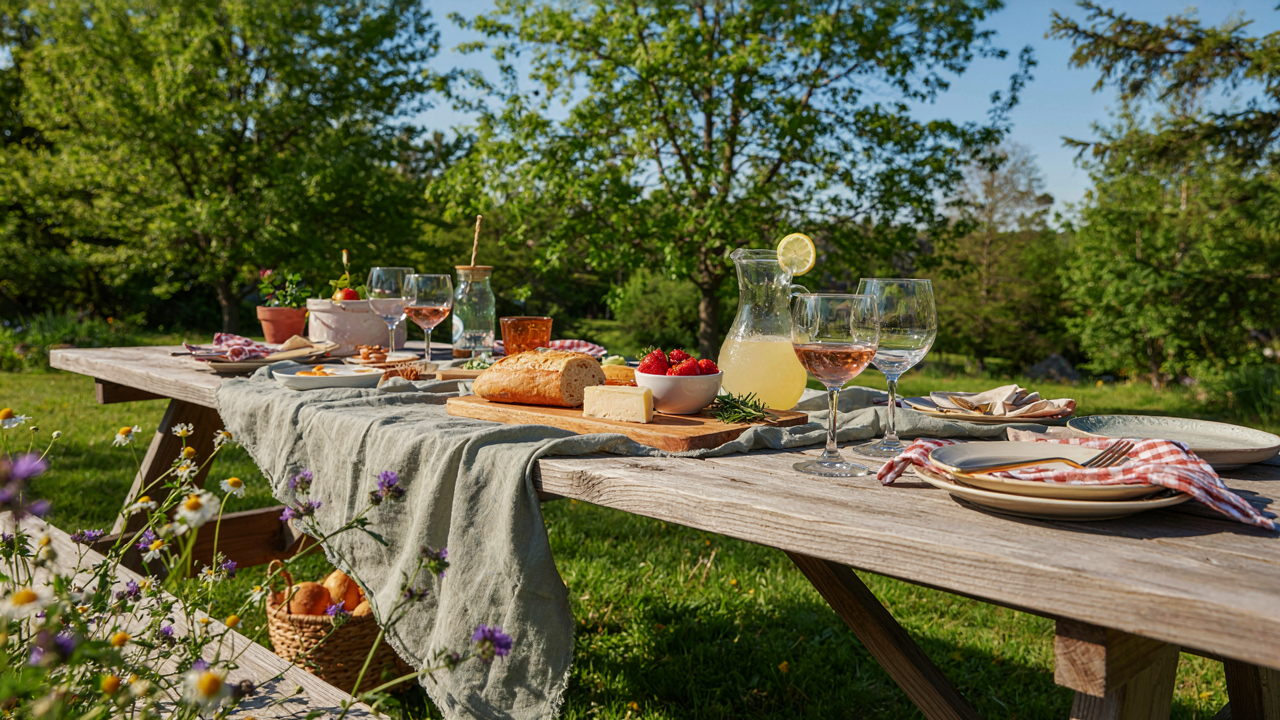
The Illusion Of Effortless Elegance: Why Your Runner Fails
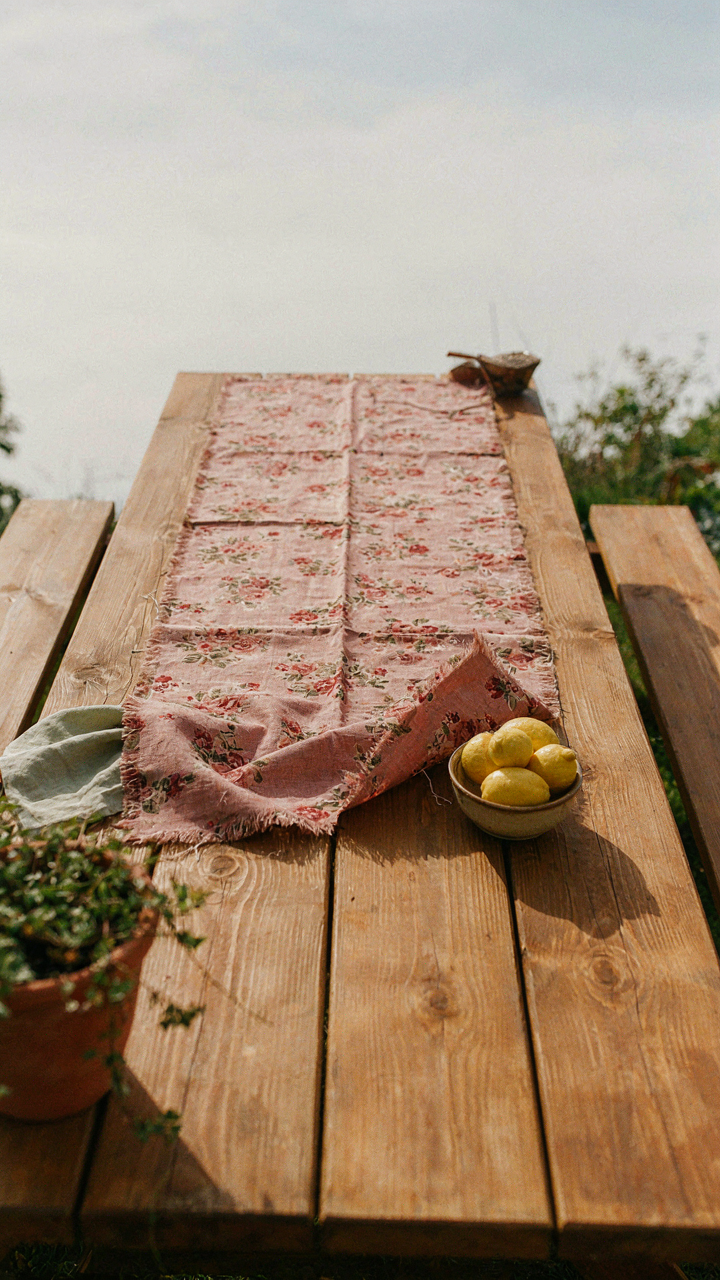
Where Your Runner Actually Falls Apart
You want people to notice the table, not the effort. That’s the real reason you’re reading this. Most DIY runners fail because they treat the runner as decoration first and a functional object second. You buy fabric that looks good folded in a store, drape it across the table, and watch it slip sideways after one person leans on it. The mechanism is simple: you’ve prioritized aesthetics over physics. A runner that moves is a runner that fails, full stop. The fabric weight, the anchor method, and the table surface interact whether you acknowledge them or not.
The common mistakes stack predictably. Cotton blend fabrics wrinkle after one meal and collect food stains like a magnet. Lightweight runners without gripping power slide with any elbow contact. You skip measuring the table overhang, so the runner either pools on the ground or sits too short. Cheap hem jobs fray after three washings. You choose a color that matches your dishes instead of one that hides the inevitable stains and spills. Each of these is a separate decision problem disguised as a single failure.
The Right Materials Actually Matter
Material selection isn’t about preference. It’s about what survives contact with food, weather, and human carelessness without deteriorating. Linen and linen blends resist staining better than cotton because their tight weave sheds liquids initially. Polyester dominates outdoor table runners because it resists UV damage, dries faster, and costs less to replace. Canvas, the traditional choice for outdoor gear, works well if you want durability over drape.
Weight determines grip. Runners under 4 ounces per square yard will migrate under use. A runner that stays centered through an entire meal requires either 5 to 7 ounce fabric or an anchor system. Most people skip this calculation and wonder why their runner becomes a centerpiece problem. Choose your anchor method first: ties sewn to the underside, non-slip shelf liner glued to the back, or weighted corner pockets filled with sand or rice. The material choice follows the anchor choice, not the other way around.
Deconstructing The DIY Picnic Table Runner Myth
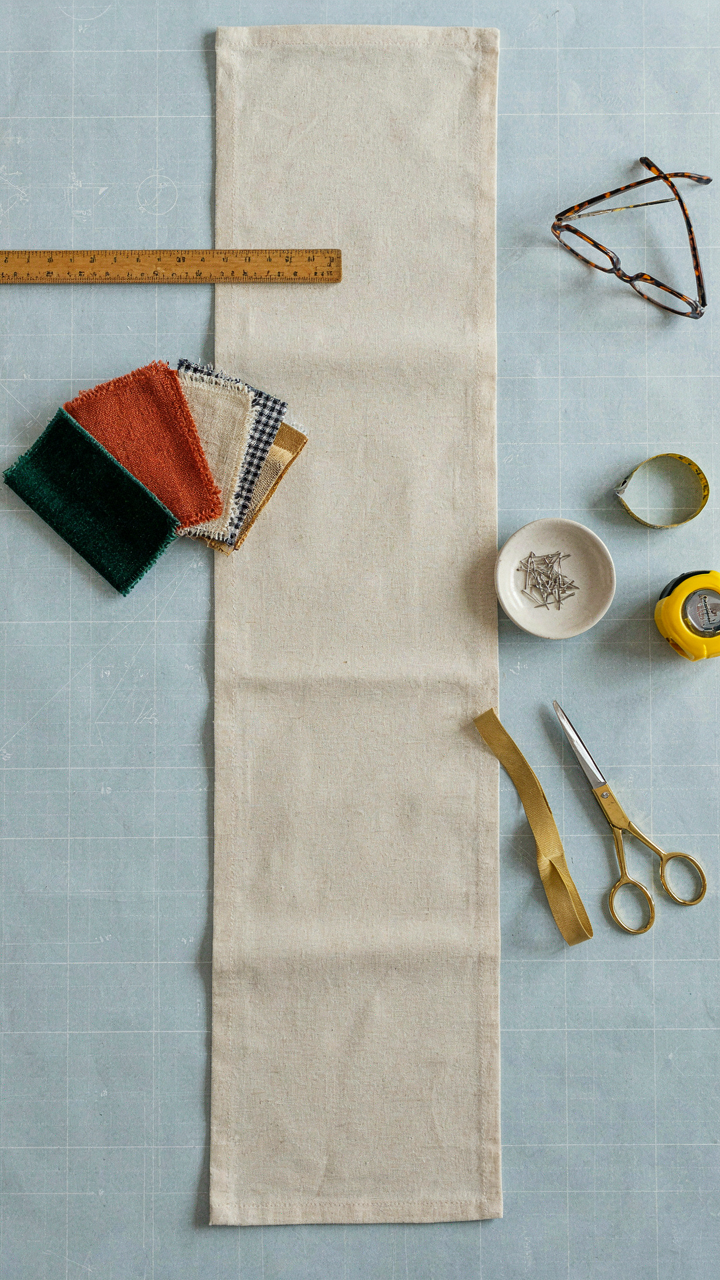
Most Advice Skips The Real Problem

You want to believe a table runner is simple because admitting it isn’t means you have to think harder about your outdoor setup. Here’s the mechanism: most DIY guidance treats a runner as pure decoration, when it’s actually solving a functional problem that changes based on your specific table, climate, and use case. A runner on a picnic table faces sun exposure, moisture, foot traffic, and temperature swings that indoor table runners never encounter. Generic advice ignores this entirely.
The standard playbook says fabric plus a backing plus basic sewing equals done. It doesn’t. It skips the material selection process that determines whether your runner lasts one season or five. Cotton absorbs water and mildews. Polyester fades in UV light. Linen wrinkles unpredictably in humidity. Nobody tells you this upfront because it requires actually thinking about the environment where the runner sits, not just the sewing steps.
Cheap Solutions Cost More Than Time
Economics has a concept called hidden costs. Apply it to table runners and you see the real expense. A runner made from budget fabric costs eight dollars but demands replacement every eighteen months. One made from solution-dyed acrylic costs thirty dollars and functions for five to seven years. Most DIY guides push the first option because it feels achievable.
The actual cost calculation changes everything. You pay for a runner twice when materials fail prematurely from sun, mold, or fraying. Most DIY advice counts only the upfront sewing time, not the labor of replacing failed runners or the mental friction of watching your work deteriorate. Build for durability from material selection forward, not from an impulse to save money on the first purchase.
The Biomimicry Protocol: Designing For Outdoor Resilience
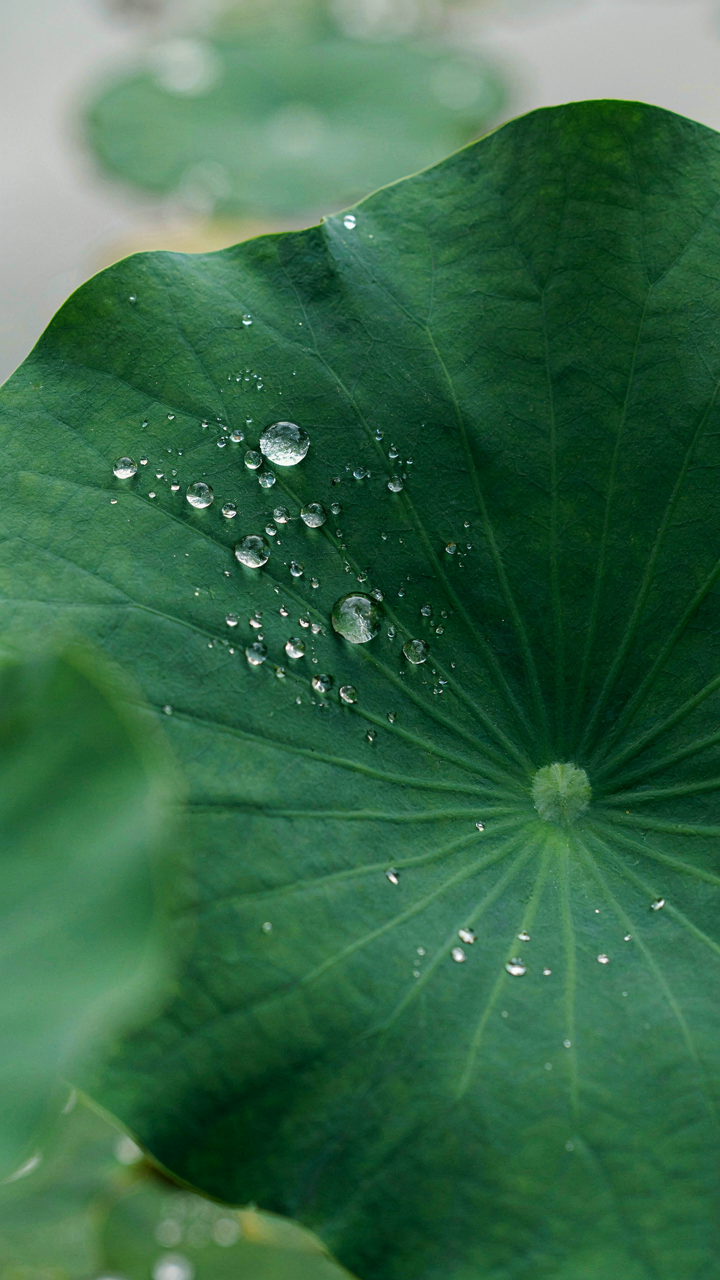
Self Cleaning Surfaces And Adaptive Anchoring

You want this section to validate that you’re being “smart” about design instead of just throwing fabric on a table. Here’s the actual mechanism: nature doesn’t fight environmental forces, it channels them. Biomimicry in textiles means studying how lotus leaves shed water or how desert plants hold soil during wind. A picnic table runner that mimics these properties uses tight weaves or hydrophobic coatings to push water off rather than absorb it, and employs tension-based anchoring similar to how tree roots grip soil through distributed load rather than single points of failure.
The anchor strategy matters more than the surface treatment. Most runners fail because they rely on weight or friction alone. Instead, use corner loops and center tie-downs that spread tension across multiple vectors, copying how tent guy-lines distribute stress. This prevents the runner from shifting when someone brushes it or wind hits it at odd angles. The self-cleaning property comes from material choice: solution-dyed polyester or polypropylene naturally resists staining because dyes bond molecularly rather than sitting on the surface. Rain beads and rolls off. Dust doesn’t cling. You’re not fighting nature. You’re employing its logic.
Iteration Cycles And Functional Optimization
Evolution doesn’t happen in one generation, and neither does effective outdoor design. This principle from evolutionary biology applies directly to runner construction: each use exposes weaknesses you can’t predict in theory. Build your first runner knowing it will reveal specific failure points. Did the stitching fail at stress points? Did water pool in seams? Did color fade on one side? These aren’t failures. They’re data. Document what happened, adjust material thickness, thread type, or corner reinforcement, and rebuild.
The optimization loop accelerates when you test across seasons. A runner that works in June might perform poorly in March because temperature shifts affect fabric tension and ground moisture levels. Real outdoor function requires at least two full seasonal cycles to finalize. Make small, precise changes between iterations: upgrade only the element that failed, not the entire runner. This prevents you from accidentally removing a solution while chasing a new problem. After three iterations, you’ll have a design that handles your specific climate, table height, and usage pattern better than any generic product.
Outdoor Table Runner Ideas: Beyond Fabric
Materials That Actually Last Outside

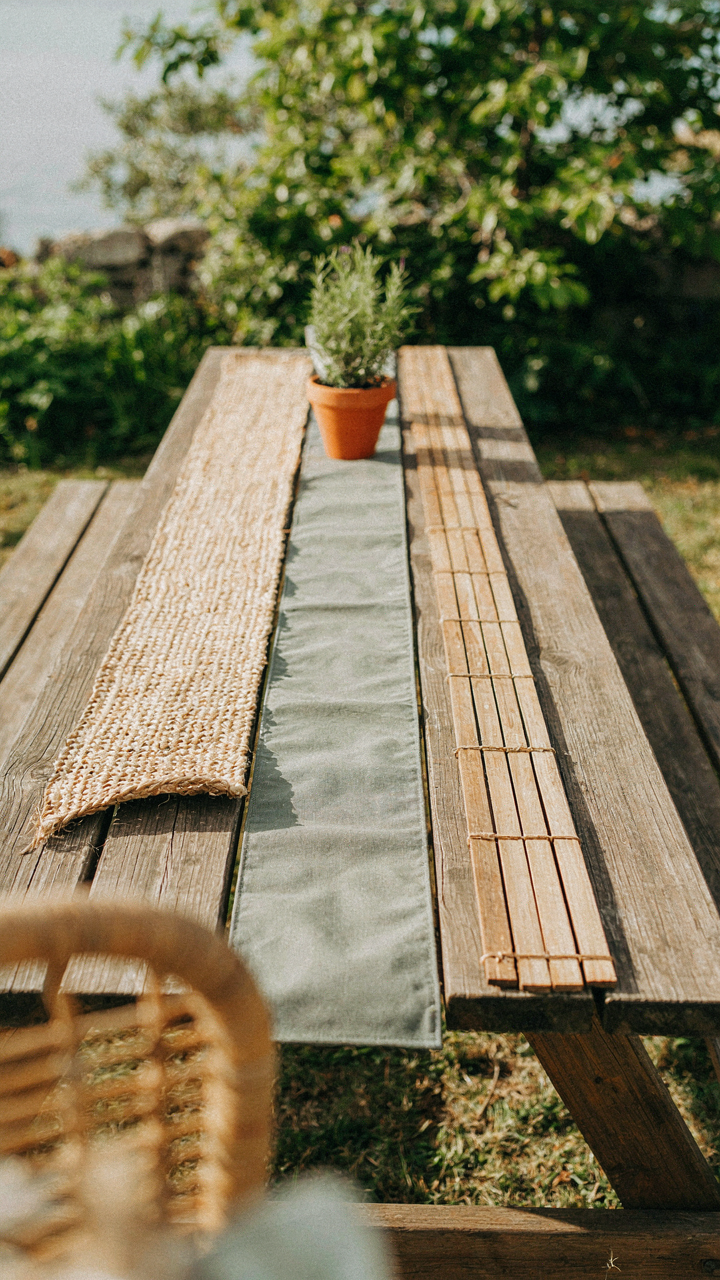
You want people to think you’ve solved this problem elegantly. The real mechanism is material selection based on degradation rates, not aesthetics. Cotton and standard poly blends fail in UV exposure within one to two seasons. Canvas, outdoor vinyl, and wool blends resist fading and mildew because their fiber structure doesn’t absorb moisture the way cellulose does. Pick materials rated for marine or outdoor use, not indoor décor alternatives.
Leather and cork also perform. Leather treated with outdoor sealant develops character through weathering instead of deteriorating. Cork naturally repels water and resists mold. Jute fails fast in wet conditions but works for covered patios where it stays dry. The decision tree is simple: if water sits on it and doesn’t bead, the material will rot. Test absorption by dropping water on a sample before committing to yardage.
Living Elements As Structural Design
Ecology borrows the concept of load-bearing capacity from engineering. Your runner’s durability depends on how well you integrate elements that regenerate rather than degrade. Fresh herbs and grasses sewn or woven into the runner’s edges serve dual purpose: they’re decorative and functional for harvesting. Mint, basil, and oregano survive outdoor conditions better than tender annuals.
Dried grasses pressed under clear vinyl create a visual layer that doesn’t require maintenance. Lavender stems bundled along the runner’s length release scent when guests brush past and don’t decompose rapidly if you use varieties bred for longevity. Moss, despite its reputation for decay, actually stabilizes when anchored properly and creates a texture that reads as intentional design rather than neglect. Change organic elements monthly rather than expecting permanence. This keeps the piece looking fresh and gives you a protocol instead of a problem.
The Picnic Table Hack: Stability And Wind Resistance
Keeping Your Runner Grounded In Open Air

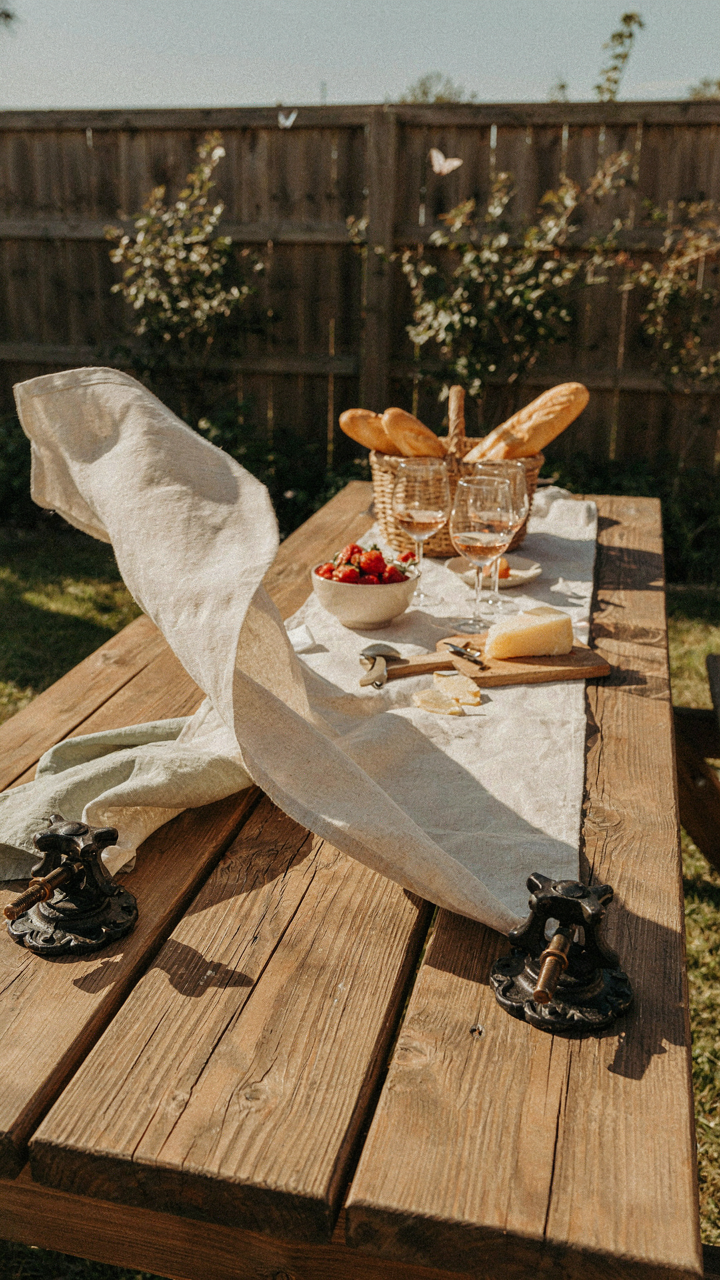
You care about this because a runner sliding off mid meal looks like negligence. The real mechanism is simple physics: wind exerts lateral force on fabric surface area, and without counter-force, the runner moves. Anchoring isn’t decoration. It’s the difference between a runner that stays put and one that becomes a flying hazard.
Common advice says to use clothespins or clips. That works if wind speeds stay under 10 mph and you’re okay with visible fasteners that damage fabric edges. Better: use tension-based anchoring instead of pinching. Sew D-ring loops into the runner’s underside at stress points, then thread paracord through table apron slots or wrap around legs. This distributes force across the runner’s structure rather than concentrating it at two pinch points. Paracord costs three dollars and holds firm without degrading premium fabrics.
The Weight Problem Nobody Solves Right
Runner weight distribution determines whether your setup survives a guest leaning on it or a sudden gust. Most DIY runners fail because makers treat them like flat objects. They’re not. A picnic table runner functions like a beam under load, and beams fail when weight concentrates at unsupported spans.
Design your runner to nest into the table’s natural contours rather than lie flat across it. Use a base fabric with enough body to hold shape, then add weight at the perimeter through reinforced hems or integrated pockets containing removable stones or sand. Place these weights at the table’s edge where they anchor the runner and prevent billowing. The runner stays centered because gravity works for you, not against you. Weight should sit no fewer than four inches from the runner’s edge to avoid tipping the whole thing if someone bumps the table.
How To Make A Boho Picnic Table Runner That Works
Texture Layers Beat Single Fabrics

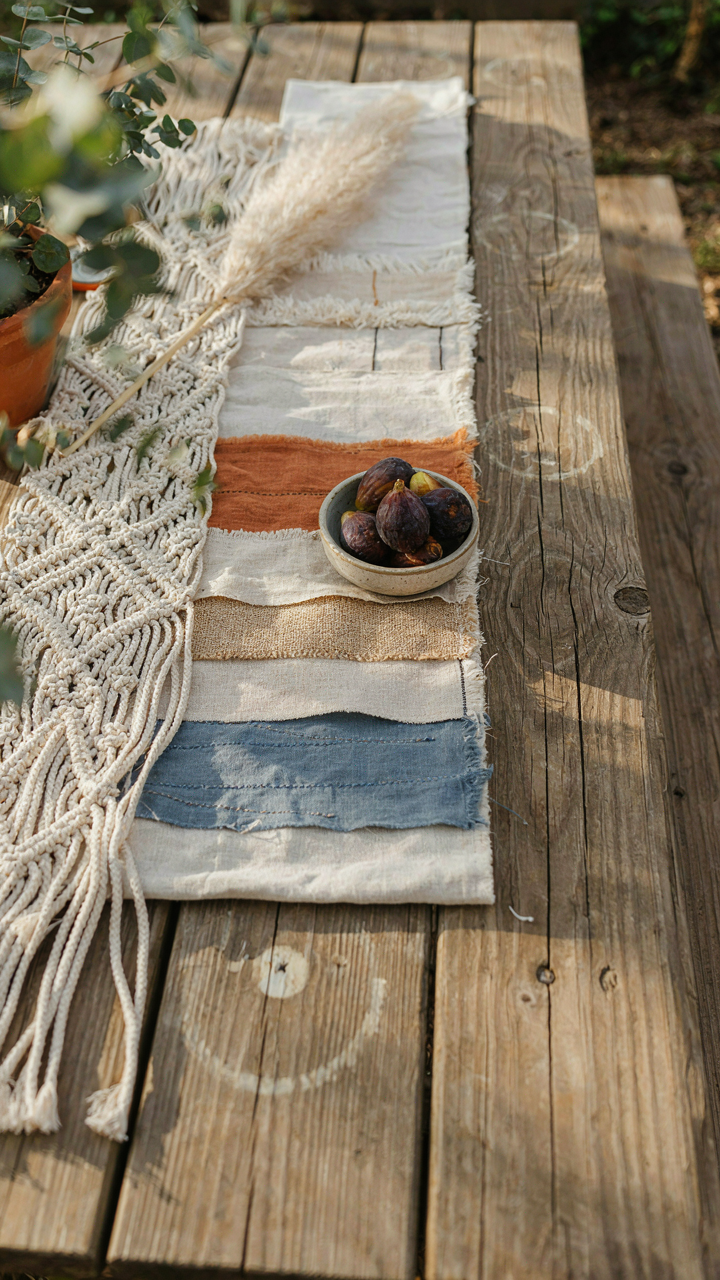
You want people to think you didn’t try. That’s the real reason boho appeals to you, and it works only if the construction reads as intentional restraint, not lazy. Borrowed from textile design, layering creates visual weight without bulk. A boho runner needs a base layer for structure, then textural additions that interrupt the surface.
Start with linen or cotton canvas as your foundation. This holds shape and prevents fraying at the edges. Then add your texture pieces: macramé trim, fringe, natural jute cord, or woven tape. Position these deliberately on two or three edges, not all four. The mechanism is contrast within constraint. Uneven placement signals confidence; even placement signals you followed a tutorial.
Authenticity Requires Knowing What To Reject
The boho industry sells you “distressed” everything, which is just mediocre construction rebranded. Real boho emerged from necessity and craft traditions, not from trying to look undone. Reject pre-made “boho kits” and manufactured edge treatments that mimic hand-work. They broadcast imitation immediately.
Natural dyes from plants and minerals actually fade and change over time, which boho aesthetic values. Commercial synthetic dyes remain static and perfect, which is the opposite of authentic. Source undyed linen or cotton, then age it with tea, coffee, or madder root if you want color variation. The final step is accepting one runner won’t be perfect. Irregularity is the proof it’s real.
Diy Beach Picnic Table: Adapting For Sand And Sun
Materials That Actually Survive Salt Air

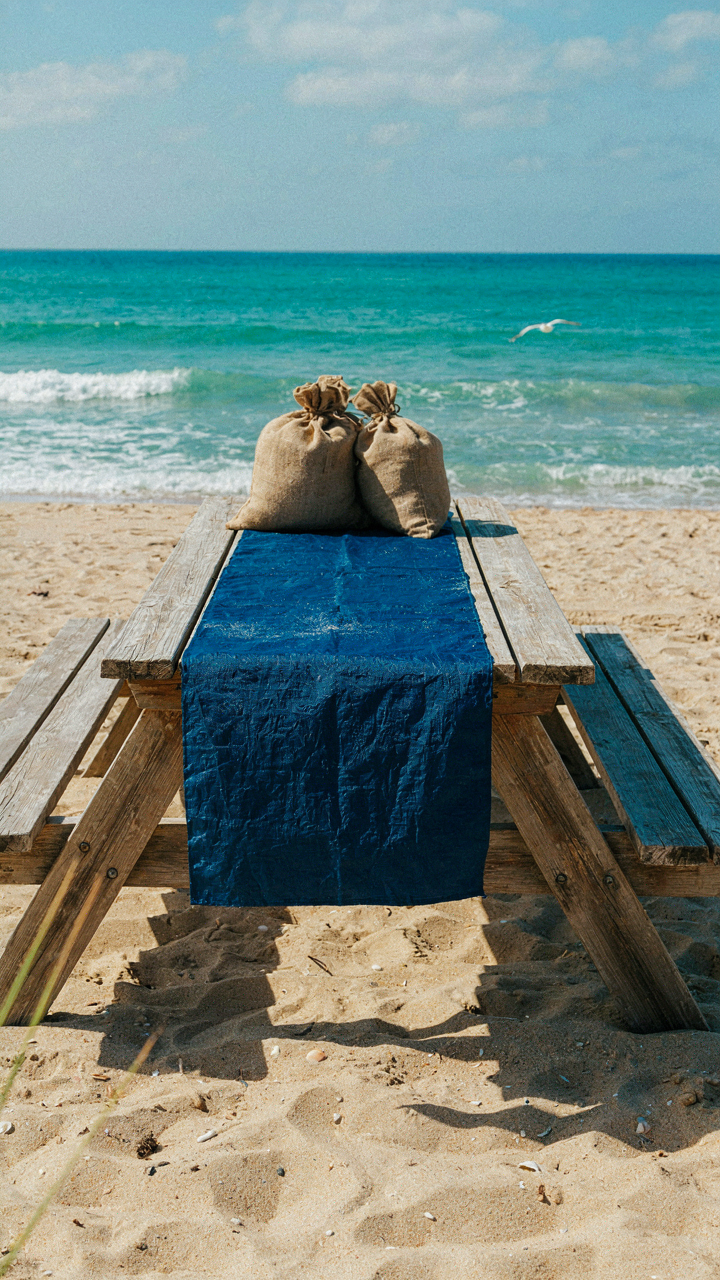
You want the beach setup without watching your investment corrode in six weeks. The real problem isn’t picking tough fabric—it’s understanding material degradation works like compound interest on damage. Salt spray doesn’t just sit on surfaces. It penetrates fibers, accelerates oxidation, and creates galvanic corrosion when dissimilar metals touch. Polyester with a polyurethane or solution-dyed coating outperforms cotton here because the fiber itself repels moisture rather than absorbing it. Solution-dyed polyester means the color goes into the fiber during production, not painted on after—critical difference when salt water is involved.
Stainless steel hardware prevents the rust bloom that regular steel fasteners create around mounting points. Aluminum tube frames corrode too, but the oxide layer that forms actually protects what’s underneath. Never mix aluminum and stainless hardware directly. The contact accelerates galvanic corrosion on the aluminum. Use rubber or nylon isolators between dissimilar metals. UV exposure breaks polymer chains over time, but marine-grade fabrics have UV inhibitors built in that extend usable life by years, not months.
Setup Speed Without Sand Infiltration
Beach environments demand a protocol that treats sand like an enemy combatant—predictable but relentless. Most people throw down a runner and watch sand migrate under every edge. The mechanism is simple: airflow creates pressure differentials that suck sand particles underneath your fabric. Use mounting clips that lock the runner edges flat against the table surface, eliminating the gap where wind funnel sand inward. Velcro strips work on clean table surfaces, but sand destroys Velcro adhesive fast. Heavy-gauge binder clips positioned every 12 to 18 inches along the length hold fabric taut and seal out infiltration.
Breakdown speed matters because wet sand hardens when exposed to sun and dries into your fabric weave. Roll the runner lengthwise immediately after use while sand is still loose and slides off easily. Store it in a sealed bag with a desiccant packet to prevent salt residue from hardening during storage. Pre-rinse with fresh water before rolling if you have access to it—this prevents salt crystallization that bonds sand particles to fibers and makes removal impossible next time.
Diy Kitchen Table Runner: Why Indoor Rules Don’t Apply Outdoors
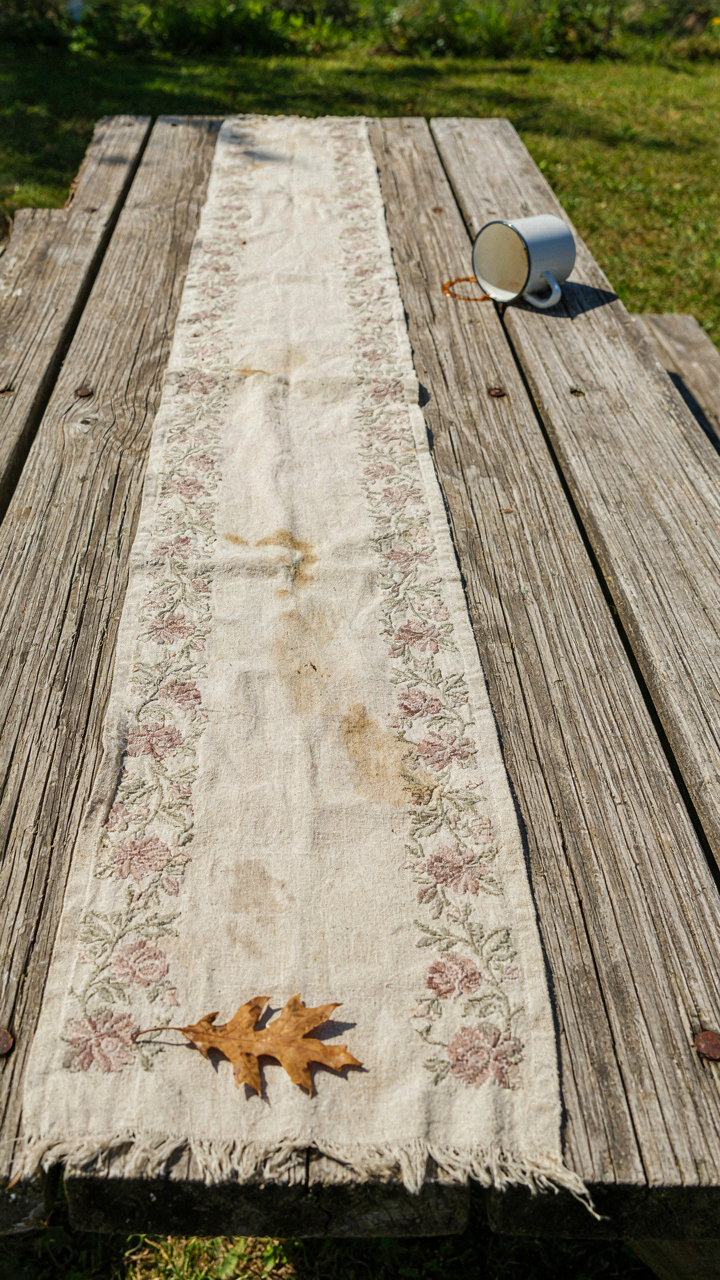
Weather Exposure Changes Everything

You want an indoor runner to work outside because you already own it or think you’re being resourceful. The real mechanism is material degradation under UV and moisture cycles. Cotton, linen, and synthetic blends rated for living rooms fail outdoors because they lack the chemical stability required for constant sun and wet exposure. Indoor runners assume climate control. Outdoor runners assume none.
Sunlight breaks down dye molecules and fiber structures through photochemical reactions. Water doesn’t just wet fabric; it activates mildew growth and mineral deposits that set into fibers. A runner that handles occasional kitchen spills won’t survive daily dew, rain, or direct afternoon sun. The difference isn’t about appearance—it’s about the rate at which materials chemically degrade. Indoor fabric left outside deteriorates 3 to 5 times faster than material engineered for exterior use.
Maintenance Demands Shift The Economics
Most advice says wash your outdoor runner like an indoor one. That’s incomplete. Outdoor runners require preemptive cleaning protocols that indoor runners never need because dirt accumulates differently. Dust settles, pollen embeds, and mold colonizes fabric exposed to air and moisture cycles that indoor runners never face.
Storage compounds the problem. Indoor runners roll into a closet and sit. Outdoor runners must dry completely before storage or they rot from inside out. Wet fabric left in a closed container creates anaerobic conditions where mildew accelerates. The real cost of outdoor runners is the maintenance schedule you establish before summer starts: weekly rinses, monthly deep cleans, and mandatory complete drying before any storage. Skip this protocol and your runner becomes disposable by mid-season.
Your Table Isn’t The Problem; Your Execution Is
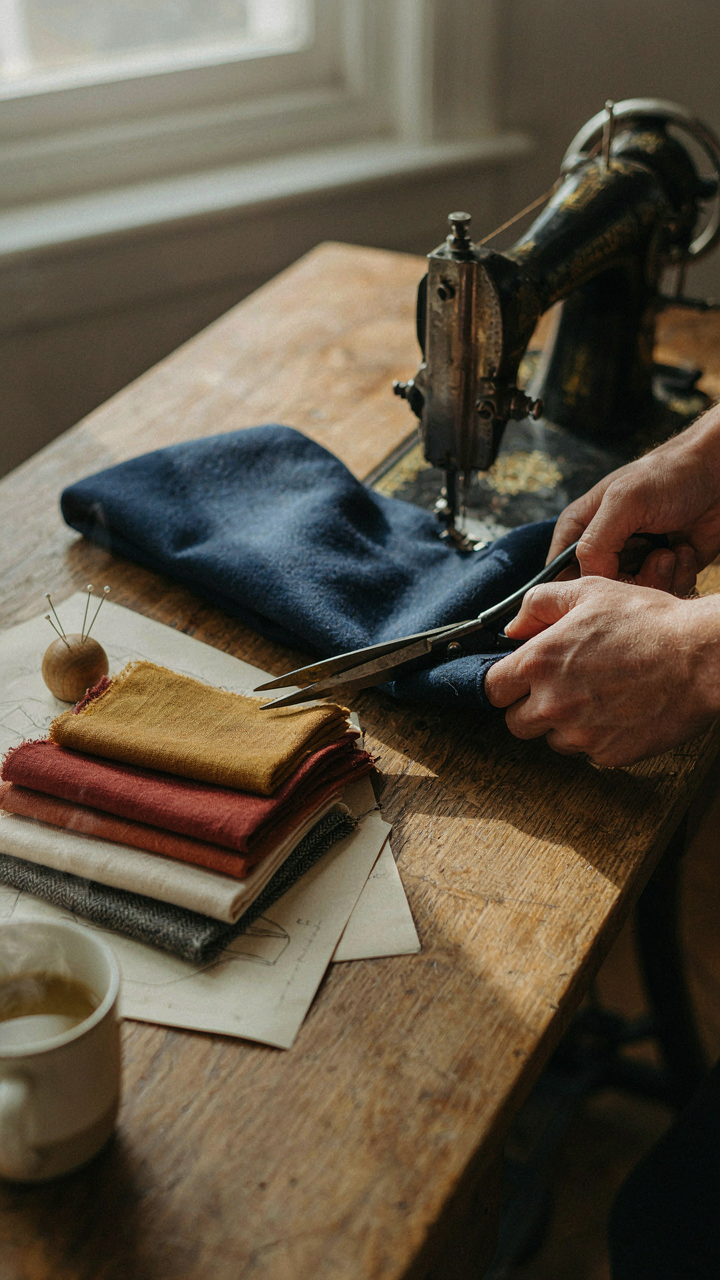

Most people buy a runner. You’re building one. That gap between consumption and creation is where confidence lives. Stop waiting for the perfect fabric or ideal weather. Pick your material today, cut it this week, and sew it this weekend. The runner you finish beats the runner you plan every single time. Done is the only aesthetic that matters.