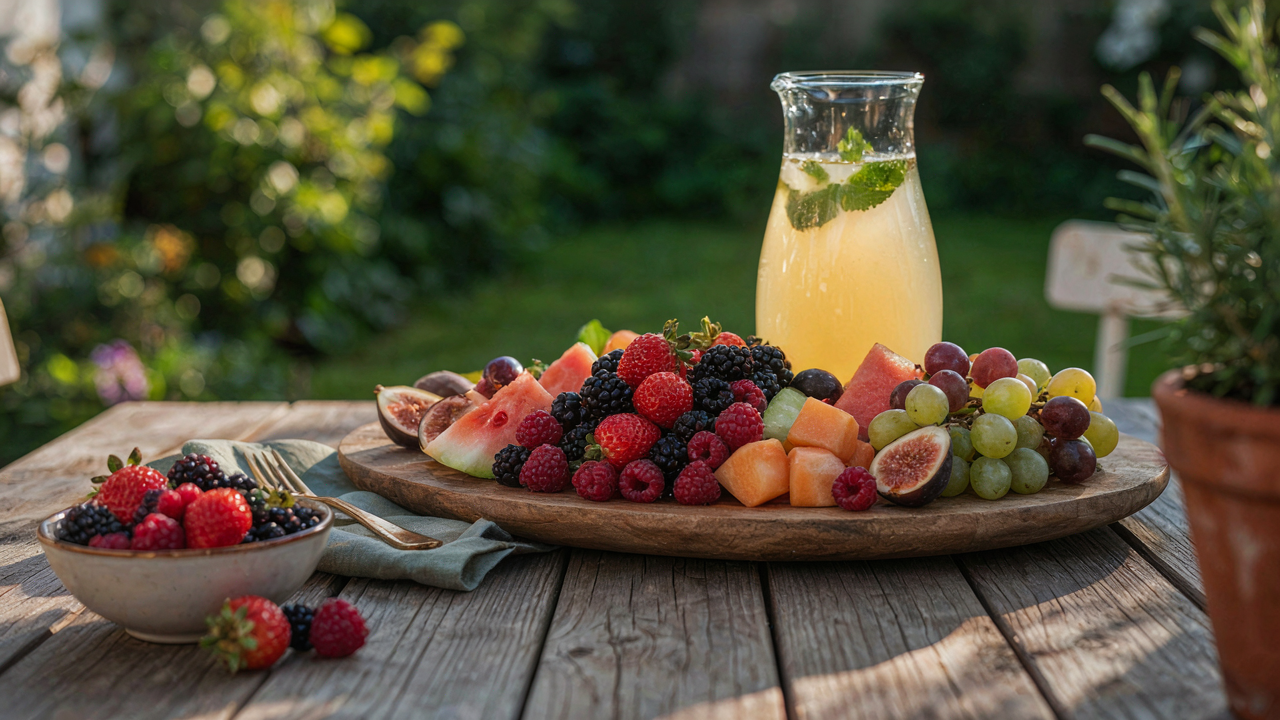
The Hydro Cool Protocol: Prioritizing Hydration
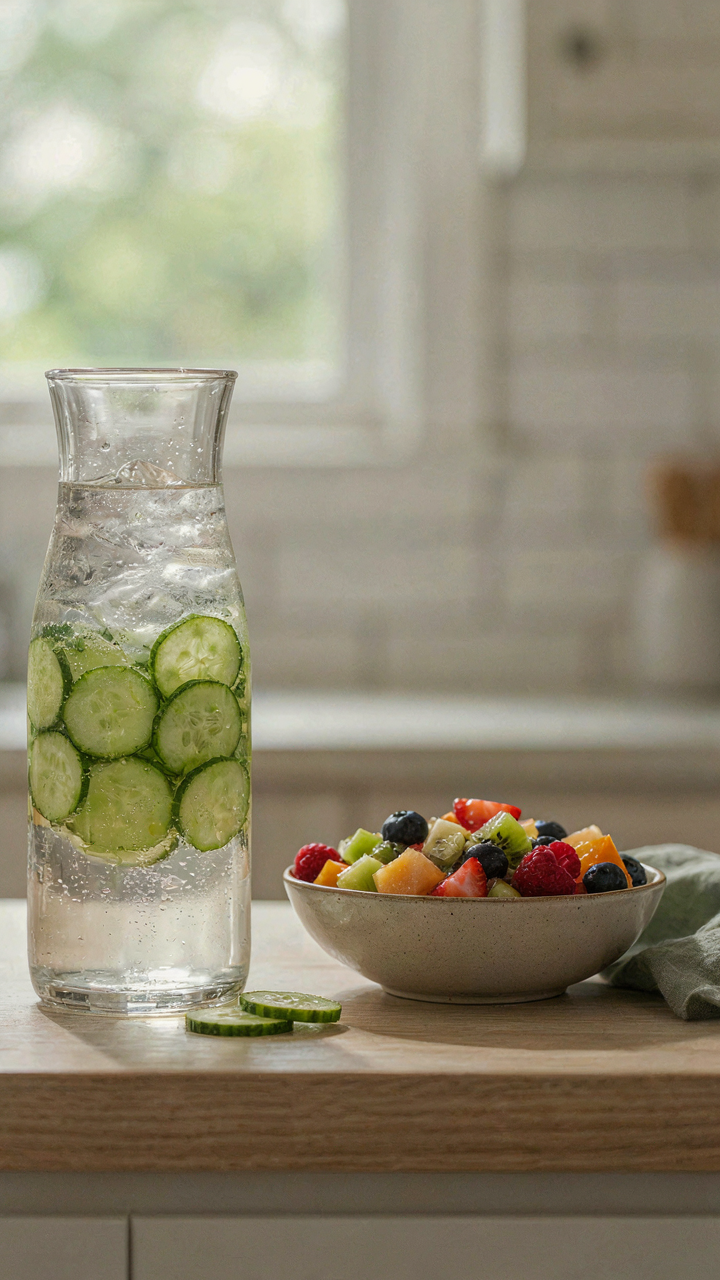
Which Fruits Actually Stay Wet
You want your platter to look fresh at hour three because guests judge you on execution, not intention. Here’s the mechanism: water content determines both visual appeal and structural integrity under heat. Fruits with high water density retain firmness longer and resist the collapse that signals neglect. Watermelon, cantaloupe, and honeydew contain 85-92% water. Berries sit lower at 80-85%. Grapes hold steady around 81%. Stone fruits like peaches land near 89%. The difference matters because fruits losing water first lose their cut edges to oxidation and their skin to wrinkling. Selection isn’t about taste preference. It’s about physics. Pick fruits that bleed less and hold shape longer under direct sun.
Citrus works differently than stone fruit. Oranges and grapefruits contain 86-88% water but their segmented structure resists the browning that berries show immediately. Pineapple at 87% water has acidic flesh that oxidizes slower than apple. Apple oxidizes fast despite 86% water content because its cellular structure breaks down quicker once exposed. Melon varieties stay visually intact longest because their dense flesh doesn’t collapse as water evaporates. This isn’t preference. This is choosing your fruit based on how its cellular structure responds to heat and air exposure over a four-hour window.
The Ice Architecture Strategy
Most advice says “chill your platter beforehand.” That’s incomplete. The real mechanism borrows from thermal engineering: heat transfer requires a temperature differential. A cold platter placed in 85-degree sun doesn’t stay cold without sustained intervention. The platter itself acts as a heat sink that warms to ambient temperature within ninety minutes. You need structural ice, not just pre-chilling. Use a base layer of food-grade ice packs frozen to minus eighteen degrees Celsius, positioned underneath the platter’s serving surface. This maintains differential heat transfer throughout the event. Place the ice packs in a shallow tray, then rest the platter on top. Refill or rotate fresh packs every two hours. This isn’t decoration. This is active cooling infrastructure.
Pre-chilling the platter alone gets you thirty to forty minutes of functional coolness. After that, ambient heat dominates. The fruit itself radiates warmth back into the platter once sun exposure begins. The tactical move: arrange fruit in sections that allow you to replenish ice without dismantling the entire display. Use removable dividers or compartments. Load ice packs in the outer ring of your serving surface, leaving the inner display zone accessible for rotation. Check ice pack temperature at the ninety-minute mark and replace any that have warmed above five degrees Celsius.
The Evaporation Equation: Minimizing Surface Area
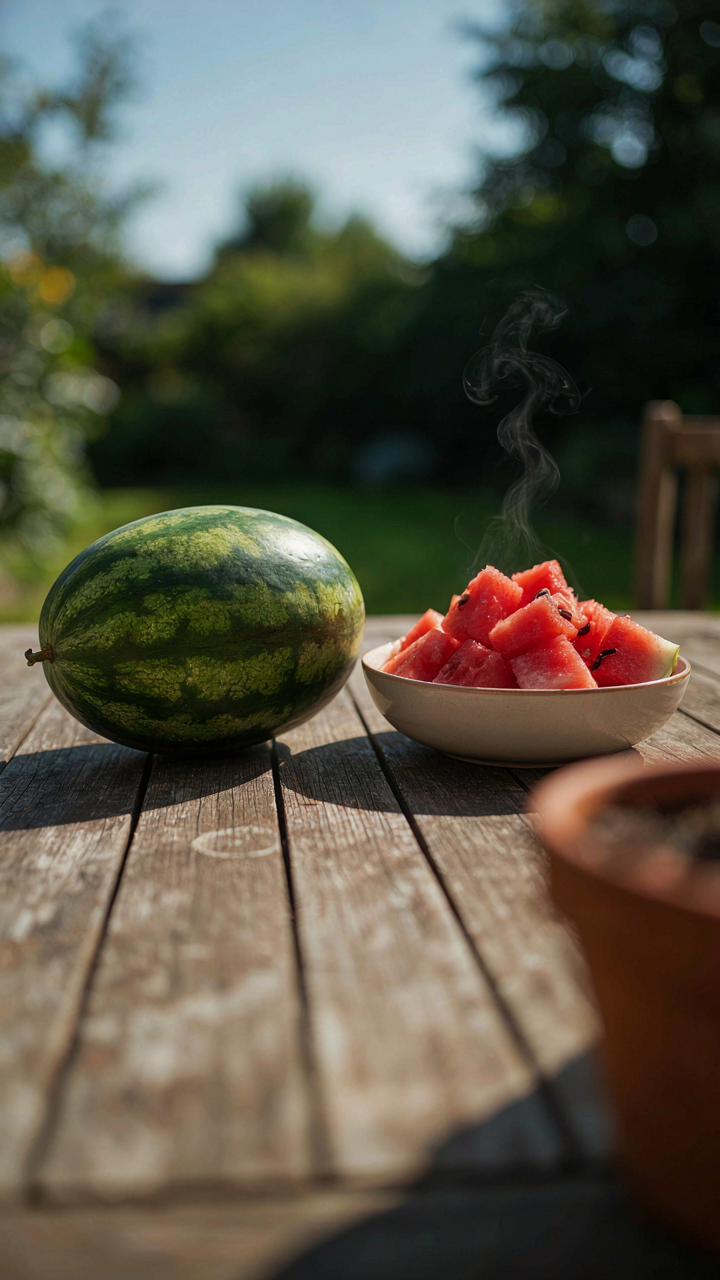
Leave Whole What You Can

You want your fruit to look abundant without sweating through the tablecloth. Here’s what physics tells us: evaporation accelerates with exposed surface area. Cut fruit oxidizes faster and releases moisture into the air at a rate you can’t control once the knife hits flesh.
Leave stone fruits whole or halved only at service time. Berries go on the platter last, not first. Citrus segments oxidize immediately, so slice them right before guests arrive. Melons whole or in large wedges stay firm longer than cubed fruit. The mechanism is simple: intact skin acts as a moisture barrier. Water moves out through cut surfaces at multiples of the rate it would through unbroken skin.
Stagger And Stack For Shadow
Layering isn’t decoration, it’s thermal management. Overlapping fruit creates microclimates where interior pieces stay cooler and lose moisture slower than exposed edges.
Arrange fruit in stacked or shingled patterns so each piece shields the one beneath it from direct sun and air circulation. Grapes cluster naturally and create shadow for each other. Strawberries placed point-up and touching reduce individual surface exposure. Pineapple rings overlapped like roof shingles trap humidity between layers. Stack melon rounds at angles rather than spreading them flat. The goal isn’t visual impact, it’s reducing the total exposed perimeter your fruit presents to the environment. Check the platter every thirty minutes and re-stack pieces that shift, closing gaps as they open.
Beyond Aesthetic: Functional Fruit Platter Designs
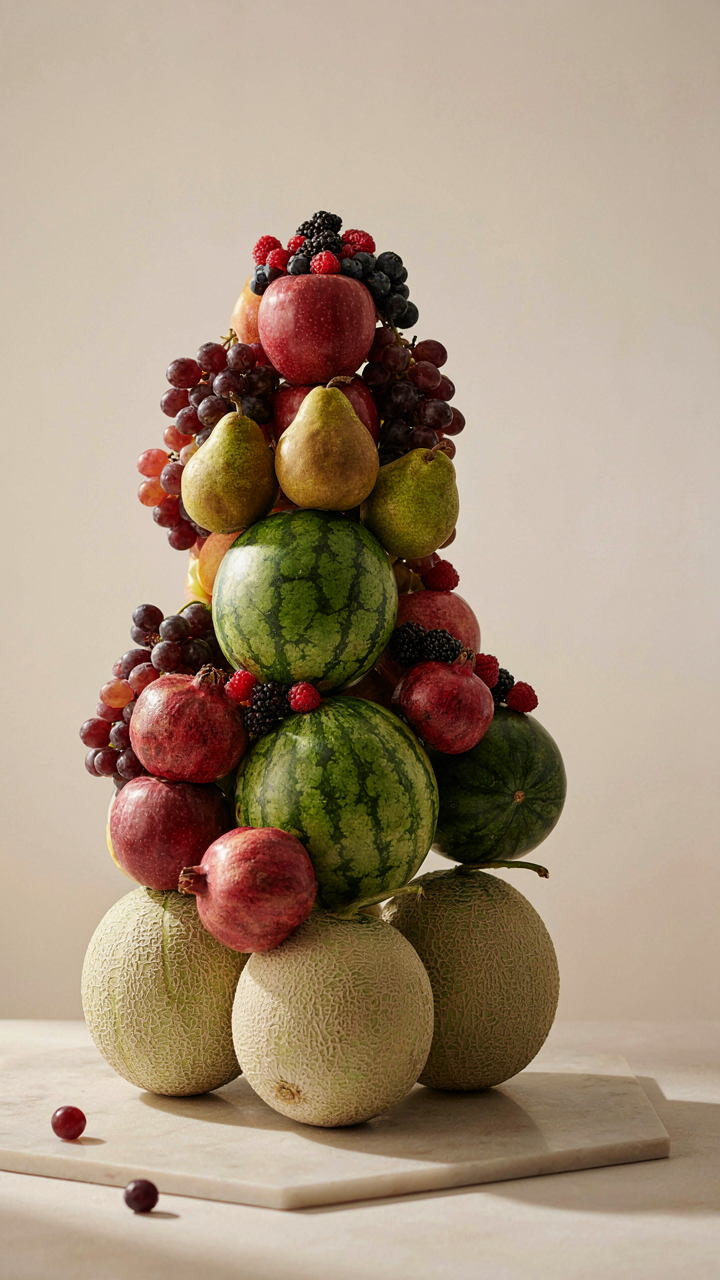
The Weight Distribution Problem

You want people to think you didn’t stress about this, which means you’re terrified the platter collapses mid-party. Fruit platter stability borrows from architecture’s load-bearing principle: heavier items carry weight while lighter ones distribute without adding burden. Melons and pineapples anchor the base. Grapes and berries sit on top. This isn’t decoration—it’s structural engineering applied to food. Dense fruit at the bottom prevents tipping when guests reach across.
The mistake everyone makes is treating a fruit platter like a flat canvas instead of a three-dimensional stack. Soft fruit bruises under pressure. Gravity doesn’t care about your vision. Position apples and pears on lower tiers where they support without crushing. Stack height matters more than surface coverage. A platter that holds together under guest traffic beats a pretty one that collapses.
Serving Speed Over Symmetry
Most advice says arrange fruit for visual impact. That’s wrong when the real problem is replenishment speed and guest access. Design for hand reach, not Instagram composition. Fruit positioned at platter edges gets eaten first. Replenish from the center outward so you’re not constantly rearranging. This keeps gaps invisible longer and cuts your maintenance labor by half during the party.
Empty sections broadcast neglect. The mechanism here is visibility of void—guests avoid emptied zones, so they compress themselves into crowded sections and create bottlenecks. Stagger your fruit placement so no single type dominates a quadrant. When strawberries run out in one corner, guests still have options elsewhere. Place toothpicks in accessible rows near cuts rather than scattered randomly.
The Microclimate Method: Localized Cooling Zones
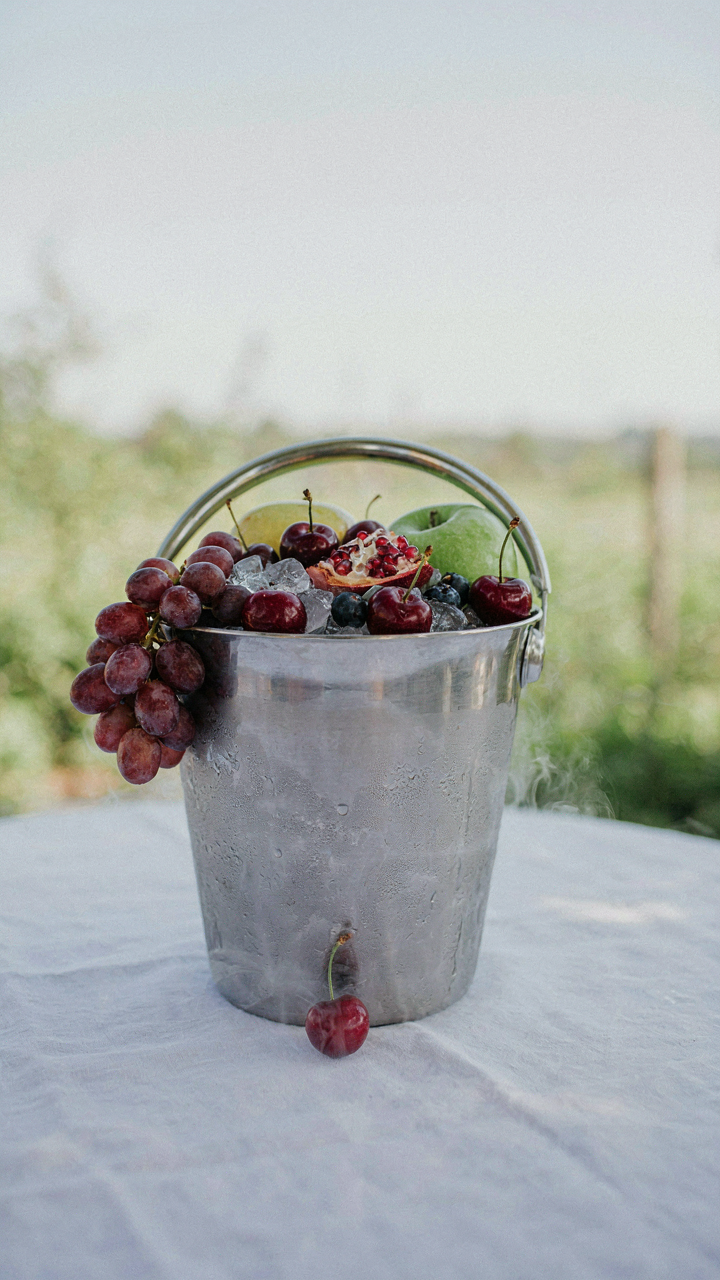
Ice, Gel Packs, And Cold Inserts

You want your fruit to stay firm and glossy for three hours so people assume you have your life together. The mechanism is simple: fruit degrades fastest at the surface, and surface temperature matters more than air temperature. Thermal dynamics shows us that a localized cold zone works like a heat sink, pulling warmth away from fruit before it spreads inward.
- Crushed ice in a shallow bowl: Place directly under the platter base or in a separate tier. Melts predictably and keeps fruit surface around 40-45 degrees Fahrenheit, slowing ripening and oxidation.
- Gel packs frozen solid: Position them beneath the platter’s rim or edges where guests won’t touch them. They maintain consistent temperature for 4-6 hours without the mess of melting ice water.
- Nested bowl method: Float a smaller bowl filled with frozen grapes or berries inside a larger bowl of ice. Creates dual cooling and gives you a functional, decorative element guests actually eat.
- Insulated platter bases: Use food-grade foam or vacuum-sealed bases designed for catering. Reduces heat transfer from the table surface by 60-70 percent, extending cold retention significantly.
- Pre-chilled stone or slate: Refrigerate for two hours before assembly. Stone holds cold longer than ceramic and looks intentional rather than like you’re struggling to keep things cold.
The mistake most people make is placing ice directly against fruit. This causes surface bruising and accelerates moisture loss through sublimation. Separate your cold source from the fruit by at least one barrier, whether that’s parchment, a secondary dish, or spacing.
Covering Without Trapping Heat
People tell you to drape plastic wrap over everything, which locks warmth inside and turns your platter into a greenhouse in fifteen minutes. The actual problem is airflow, not visibility. You need a covering that blocks direct sun and dust while allowing convection to move cool air around the fruit.
Use breathable fabric or mesh covers designed for food service. These materials stop UV radiation from heating the fruit surface while air still moves beneath. Tent the covering loosely so it sits two to three inches above the platter, creating an air gap that lets convection work. Avoid sealed plastic domes or tight-fitting lids entirely. Position your platter in shade and angle it perpendicular to the sun path, then cover it only during the hottest ninety minutes of the day. Remove the covering thirty minutes before guests arrive so condensation evaporates and fruit looks fresh, not sweating.
The Ripeness Paradox: Timing Is Everything
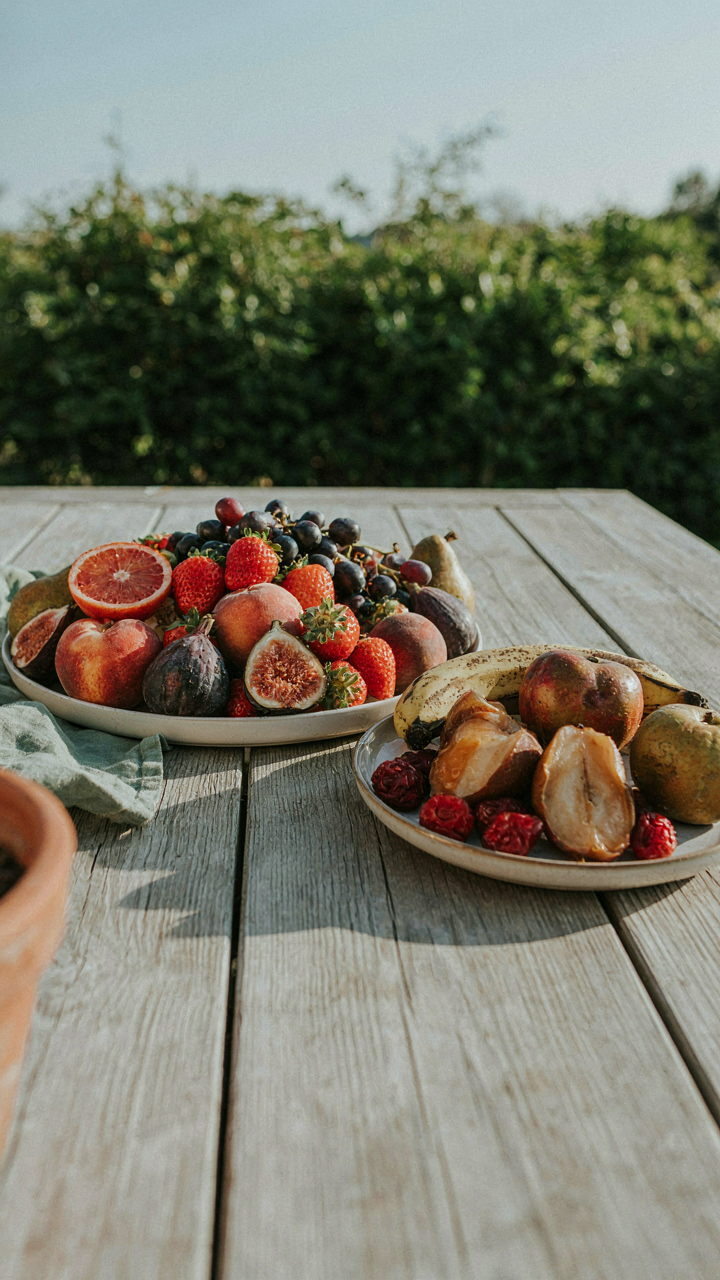
Buy Fruit Three Days Early

You want your platter to look abundant and pristine when guests arrive, not brown and collapsing by hour three. Here’s the mechanism: ripeness is a biochemical clock that accelerates once fruit reaches peak maturity. Buy deliberately under-ripe fruit and you extend the window where it stays photo-ready and structurally intact during heat exposure.
Most people buy ripe fruit the day before and watch it degrade. That’s tactical failure. Melons, berries, and stone fruits all ripen through ethylene gas production, which you can’t stop once it starts—only time it. Purchase fruit when it yields slightly to pressure, not when it yields immediately. This gives you a three to five day buffer on the platter itself.
Control Ripening With Temperature
Ripening speed is governed by ethylene production rates, which respond directly to temperature according to basic plant biology. Cold slows the process dramatically. A melon at 50 degrees ripens four times slower than one at 70 degrees. Use this lever deliberately instead of leaving fruit on the counter and hoping.
Store under-ripe fruit in your coldest zone, typically the back of the refrigerator at 38-40 degrees. Remove it twelve to eighteen hours before party time and keep it at room temperature in a dark spot. This accelerates ripening predictably without overshooting. Cut all fruit no earlier than two hours before guests arrive. Cold damage to flavor is permanent; bruising from prep is visible.
Charcuterie Recipes For Fruit: The Savory Edge
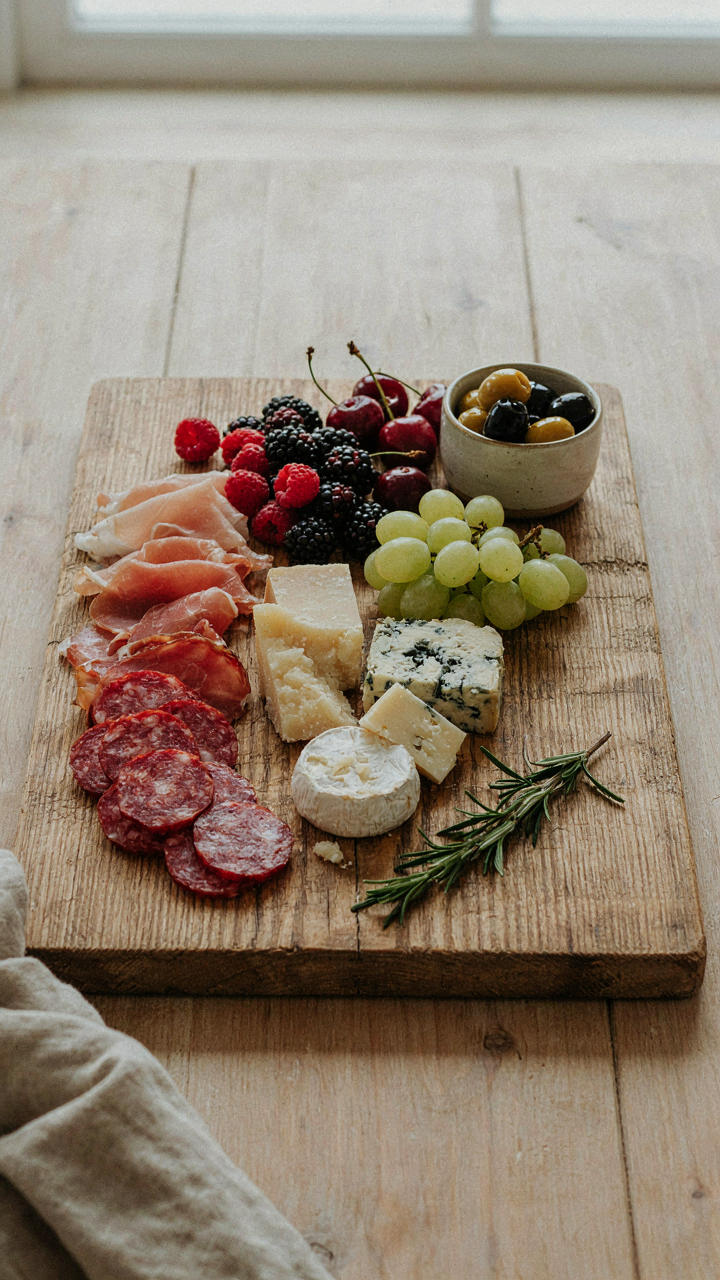
Unexpected Fruit Pairings For Savory Bites

You want this section because you’re afraid your platter looks amateur without the savory element everyone else has figured out. The real mechanism is contrast. Sweet fruit paired with salt, umami, and fat doesn’t taste like both things separately—it triggers a sensory reset that makes each bite feel novel. Prosciutto with melon works because the salt amplifies the fruit’s sweetness while the fat coats your palate. Stone fruits with cured meats operate on the same principle: the meat’s mineral notes cut through sugar fatigue, extending how long your guests stay interested in eating.
The mistake most people make is treating fruit as decoration for charcuterie instead of as an equal player. Figs with aged gouda isn’t figs that taste better because gouda is nearby. It’s a flavor compound where neither element dominates. Apricots with smoked salmon, blackberries with duck prosciutto, pineapple with serrano—these work because the fruit’s acid or tartness complements the meat’s richness, not because they look good together. Set them up so guests grab both in one bite, not sequentially.
Herbs And Spices Enhancing Fruit Flavor
Seasoning fruit is the real edge nobody discusses openly because it feels wrong. It isn’t. Biology tells us that volatile compounds in herbs and spices don’t just add flavor—they trigger olfactory receptors that enhance perception of sweetness and tartness simultaneously. Cracked black pepper on strawberries increases the fruit’s perceived complexity without tasting peppery. Torn basil on stone fruits amplifies their aromatic oils. Smoked paprika on citrus adds depth that makes the acid feel intentional rather than sharp.
The protocol is simple: apply herbs and spices moments before serving, not hours ahead. Dry heat on spices first—toast them lightly if you have thirty seconds. Basil, mint, and other fresh herbs go on last because their oils oxidize quickly. One pinch per fruit type, not more. Your guests will taste enhancement, not seasoning. They’ll leave thinking your fruit tastes better, not that you doctored it.
Kids Party Fruit Platter: Engineered For Consumption
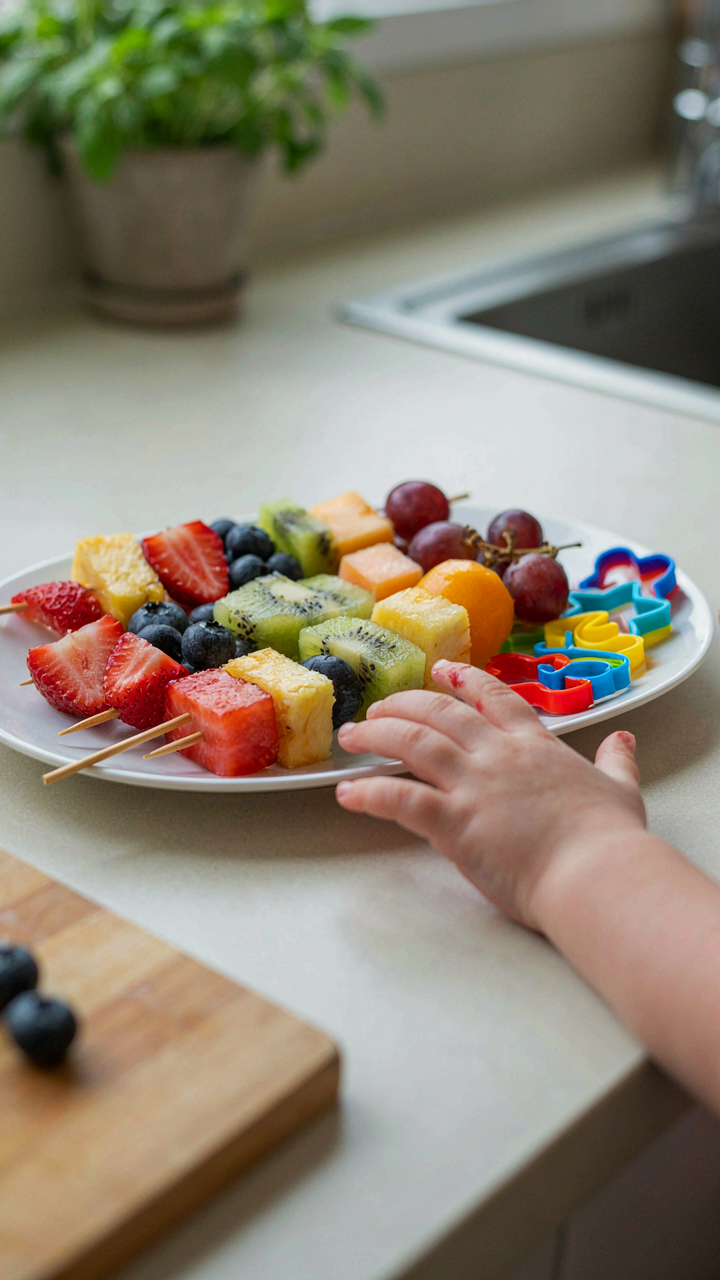
How Kids Actually Eat Fruit

You want them to actually eat it instead of leaving it untouched so you don’t feel like you wasted money on a platter nobody touched. The mechanism is simple: children’s motor control and bite capacity are fundamentally different from adults. A whole strawberry requires fine pinching. A grape requires precision grip strength they haven’t fully developed yet. Cut everything to thumb-sized pieces or smaller. Melon into one-inch cubes. Berries halved. Pineapple into spears they can grip without it rolling off the plate.
The spacing matters too. Crowded platters force kids to reach across other fruits or give up. Space each piece so a child’s hand fits between selections without collision. Remove all pits and seeds beforehand. A cherry pit becomes a choking hazard when a kid is distracted by other guests. Skin thickness on grapes and apples matters at this age. Many kids will spit out anything requiring work to chew. Peel grapes in advance. Slice apples thin so they yield immediately.
Presentation That Moves Inventory
Forget “rainbow arrangements” and other aesthetic nonsense that nobody remembers five minutes later. Kids respond to visual contrast and portion clarity, not color theory. Use white or neutral serving boards so fruit pops against the background. Red grapes vanish against a dark platter. Organize by fruit type, not by rainbow order, so kids can identify what they want and grab it without hesitation.
Height variation changes consumption rates more than any other single factor. Stack melon cubes in a small bowl or ramekin set on the platter. Group berries in a shallow dish rather than scattering them flat. This creates visual interest and makes portions feel intentional rather than random. Kids eat faster when the architecture tells them where to look. Place the sweetest fruits at eye level and toward the front. Pineapple and watermelon move first. Position those items where reaching requires minimal effort or navigation around other kids.
Fruit Platter Dynamics: Borrowed From Physics
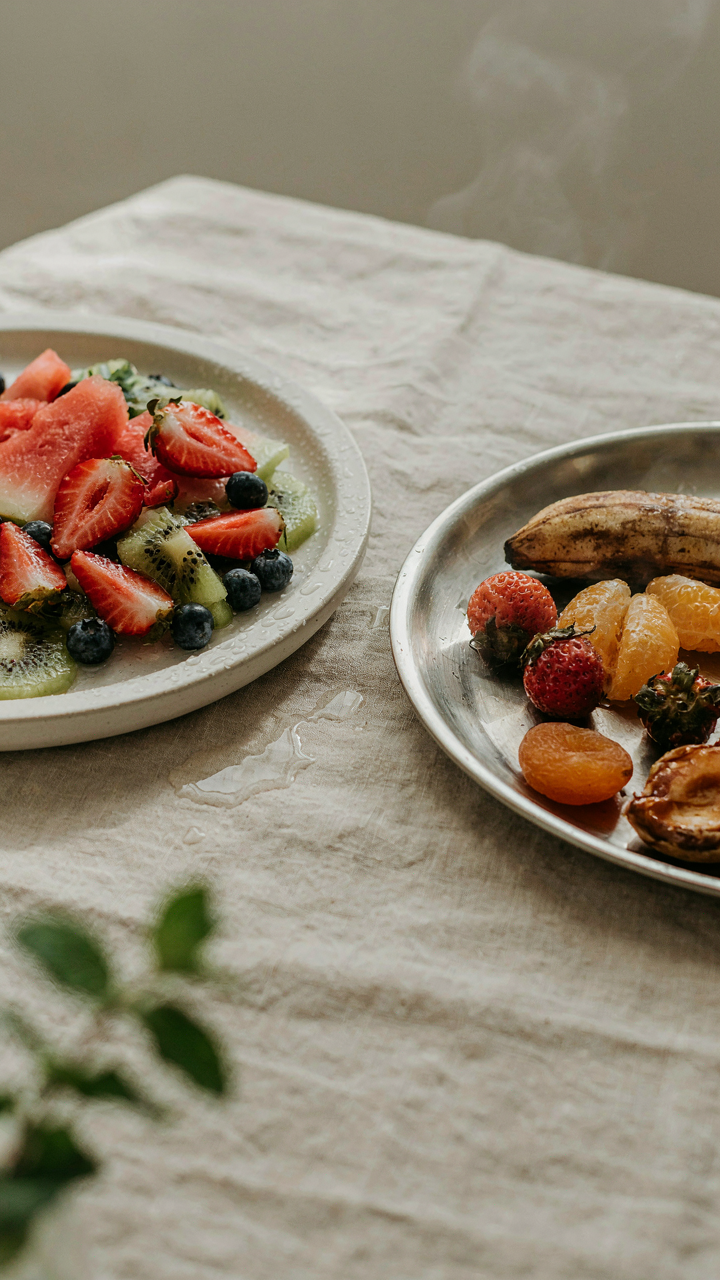
The Plate Becomes The Temperature Engine

You want your fruit to stay cold longer than your guests expect it to, and that matters because it signals competence. Here’s what nobody says: the plate itself is a thermal transfer mechanism. Physics calls it conductivity. Your platter is a heat conductor or a heat insulator depending on material choice, and it either accelerates or delays fruit decay.
Ceramic and melamine conduct heat faster than slate or wood. A white ceramic platter sitting in 85-degree sun will warm the fruit from below while air temperature warms it from above. Slate and untreated wood stay cooler longer because they absorb and dissipate heat differently. Metal platters amplify this problem. The mechanism is simple: choose dense, non-reflective surfaces that don’t conduct ambient temperature into the fruit itself.
Decay Is Inevitable Physics, Not A Failure
Everyone pretends a perfect platter stays perfect for hours. It doesn’t. Entropy isn’t metaphor here, it’s the actual thermodynamic law that applies to your fruit arrangement. Cut surfaces oxidize. Moisture evaporates. Bacteria colonize exposed flesh. The platter doesn’t fail after two hours because you arranged it wrong. It fails because the second law of thermodynamics is non-negotiable.
The real tactic is managing visible decay, not preventing it. Group fruit by oxidation rate. Citrus and berries oxidize slowly. Apples, pears, and stone fruit oxidize fast. Keep cut apples and pears separate until thirty minutes before serving, or submerge them in lemon juice to slow enzymatic browning. The platter doesn’t need to look untouched at hour three. It needs to look intentional, not abandoned, when decay starts showing.
Amazing Food Platters: The Art Of The Reveal
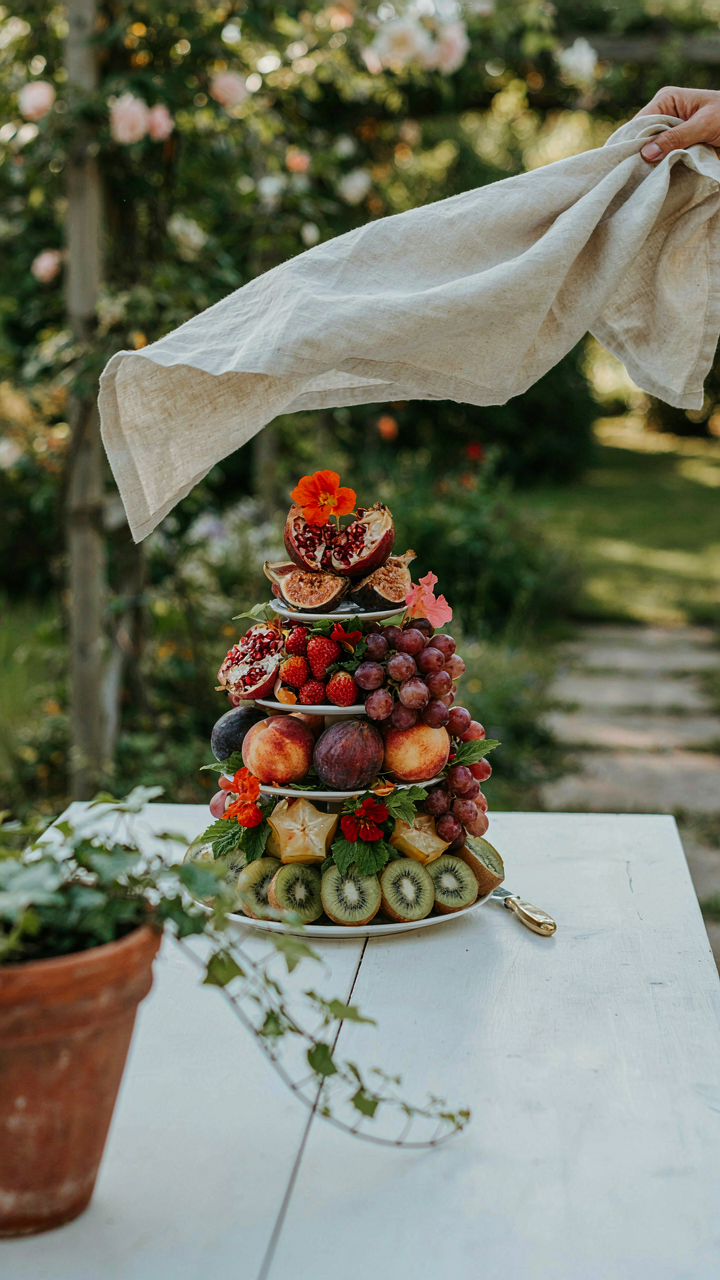
When To Actually Bring Out The Platter

You care about this because you want people to notice you thought it through, and you’re terrified they’ll forget it existed if you set it down too early. Here’s the mechanism: timing controls attention. Behavioral economics calls this the “peak-end rule”—people remember the high point and the final moment most vividly. On a fruit platter, you control both by deciding when guests see it. Bring it out at the start and it becomes background noise. Bring it out midway through the gathering, and it interrupts conversation, resets energy, and becomes the event people actually remember.
The practical play is this: watch for the moment when initial conversation plateaus but people haven’t started leaving. That’s 30 to 45 minutes into most garden parties. The fruit platter becomes a reset button. Guests gravitate toward it as an excuse to regroup, reconnect, and reset their hands. You’ve just created a second wave of engagement from the same gathering. This is why caterers don’t put fruit out at the beginning—it disappears before people settle in, and you’ve wasted your reveal.
The Scarcity Loop That Keeps People Eating
Psychology borrowed from retail proves this: items that appear limited get consumed faster and talked about longer. A full platter looks permanent. A platter that shows real depletion makes people act. This isn’t manipulation—it’s how human attention works. When guests see gaps in the arrangement, they assume the fruit was popular, so they grab what remains before it vanishes. The mental math is instant and unconscious.
Replenish strategically, not constantly. Let the platter deplete by 30 to 40 percent before you top it off. This creates visible scarcity without ever actually running out. Most hosts destroy this by keeping the platter pristine, which signals abundance and kills urgency. The mechanism is simple: refresh when gaps show, never when the platter still looks full. Your guests consume more, remember the spread better, and you’ve controlled the entire dynamic without saying a word.
Party Food Appetizers: Beyond The Fruit Bowl
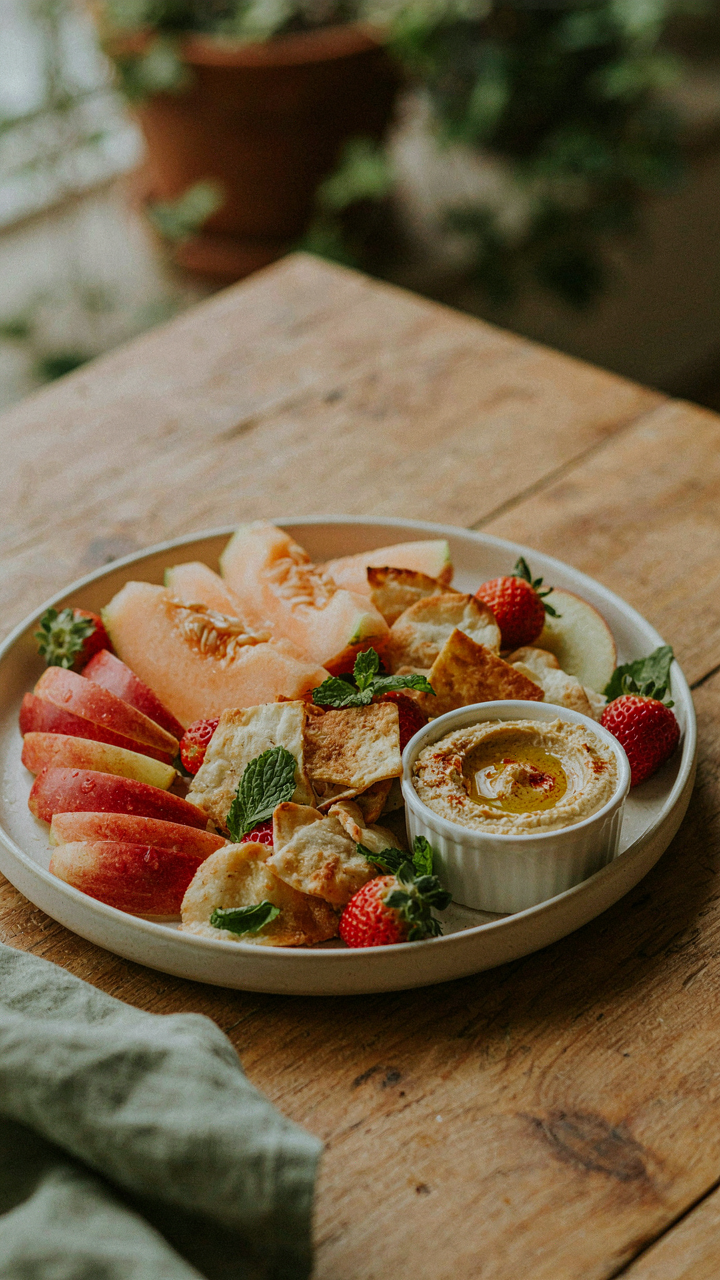
Fruit As Structural Component, Not Decoration
You want the fruit platter to signal abundance without screaming “I bought this last-minute.” The real mechanism is textural contrast. Borrowed from culinary balance, you’re applying the principle of opposition: soft plays against crisp, sweet against acid. Fruit isn’t filler between cheese and cured meat. It’s the reset button your guests’ palates need between salty bites. A slice of melon between prosciutto and aged cheddar doesn’t feel like abundance. It feels intentional. That distinction matters because guests notice.
Placement drives this perception more than selection. Grapes and berries cluster near proteins to signal they belong together, not as afterthought. Melons cut into spears lean against hard cheeses at angles that create visual weight without taking table space. Stone fruits halved and pitted sit in the gaps where nothing else fits. The fruit becomes the connective tissue that makes disparate items read as one deliberate board, not a collection of leftovers from different shopping trips. This is why amateur spreads fail: fruit gets pushed to edges.
Proteins And Starches That Don’t Compete
Most advice says “just add cheese and charcuterie to fruit.” That’s incomplete. The problem is flavor collision. Rich cured meats and aged cheese can overwhelm delicate fruit if you don’t architect the spread strategically. You need neutral anchors that let both shine. Bread, crackers, and nuts work because they absorb or bridge rather than dominate. They also solve the practical problem: guests need something to build on, not just snack from their fingers.
Introduce one starch that has zero flavor agenda: thin-sliced baguette, neutral crackers, or toasted nuts. These don’t fight the fruit or the proteins. They make the combination functional. Skip the flavored crackers, the honey-drizzled nuts, the herbed bread. Those add variables that force guests to navigate competing tastes. On hot days especially, keep it simple: crisp bread, salty nuts, fat from cheese and meat, acid and sweetness from fruit. The heat amplifies flavor perception, so restraint becomes strategy.
The Only Thing Wilting Faster Than Your Fruit Is Your Reputation For Overthinking
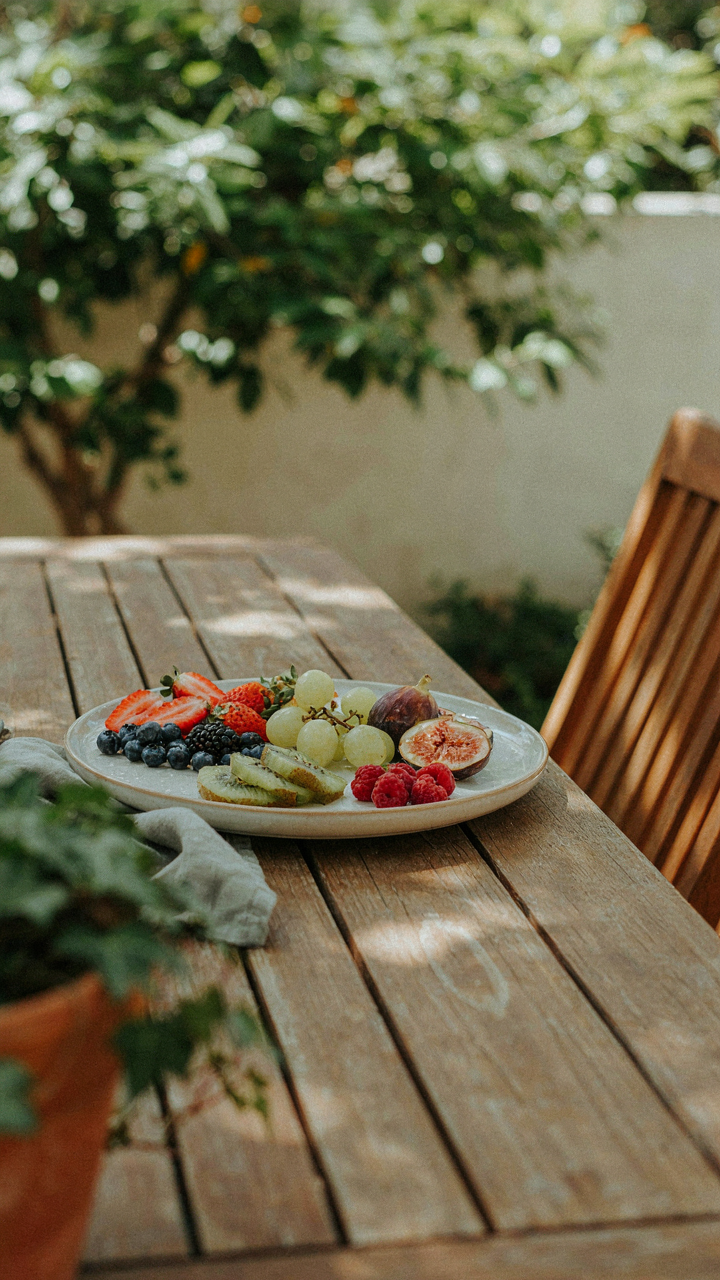
Stop designing your garden party fruit platter like it’s a museum exhibit. Your guests care about temperature and taste, not Instagram aesthetics. Buy quality fruit, keep it cold until the last second, and arrange it on ice. That’s the move. Everything else is noise you’re creating to feel busy instead of prepared. A great fruit platter isn’t complicated—it’s just not forgotten in the sun.