The Dispenser Delusion: Why “Cute” Is Code For “Ineffective”

When Instagram Design Kills Function
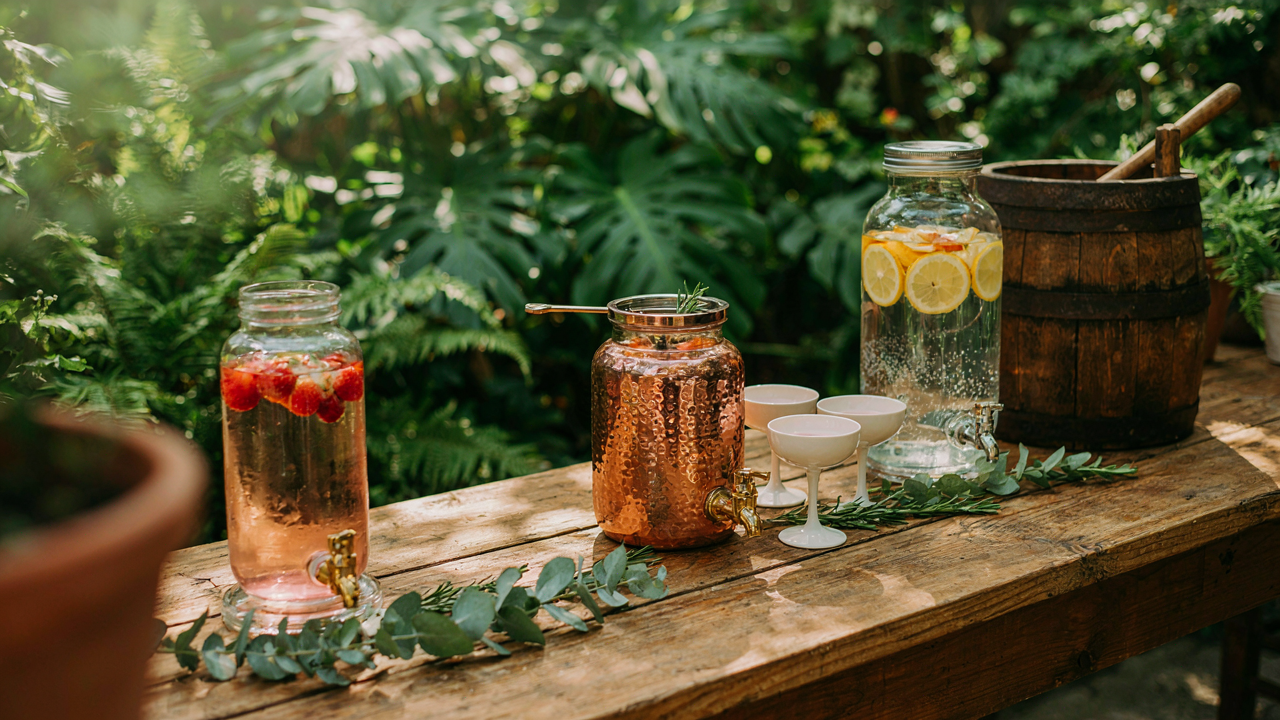
You’re choosing a dispenser because you want people to think you’re the type who hosts well-designed parties. Here’s the mechanism: aesthetic appeal triggers a status signal in your brain before utility registers. The problem is that Instagram-worthy dispensers almost always sacrifice flow rate, temperature retention, and refill access for visual novelty. A mason jar with a tap looks charming for approximately thirty minutes before guests wait in line, ice melts faster than you can replace it, and you’re contorting yourself to refill from underneath because the designer prioritized angles over practicality.
The real cost isn’t the money you spent on the dispenser. It’s the mental energy you burn managing a broken system while hosting. Dispensers designed primarily for appearance use materials that conduct heat poorly, feature spouts too narrow for ice, and position tap handles where elbows collide with bodies. You end up playing bartender instead of hosting. The moment a dispenser makes someone work harder to get a drink, it has failed its only job, regardless of how good it photographs.
What Actually Moves Liquid Efficiently
Fluid dynamics teaches us that flow rate depends on three variables: outlet diameter, pressure differential, and internal obstruction. A beverage dispenser’s effectiveness lives in these three mechanisms, not in its frame material or color. Most recommendations ignore this entirely and focus on aesthetics. The truth is brutal: a five-gallon cooler with a standard spigot outperforms ninety percent of “premium” dispensers because engineers optimized for throughput, not decoration.
Start with spout diameter first. A tap opening of less than half an inch creates a bottleneck that compounds during crowded service. Test any dispenser by timing how long it takes to fill a standard cup. If it takes longer than eight seconds, the tap is too restrictive and guests will abandon it or hoard cups to minimize trips. The second variable is pressure: gravity-fed systems work, but only if the liquid column sits high enough. Below eighteen inches of elevation, you’re fighting against every physics principle that makes dispensing work. Third, eliminate internal dividers, mesh screens, and decorative baffles. They trap fruit, ice fragments, and air bubbles that slow flow to a crawl.
The Gravity Fed Protocol: Optimizing Your Drink Dispenser Flow
Where You Place The Dispenser Matters Most
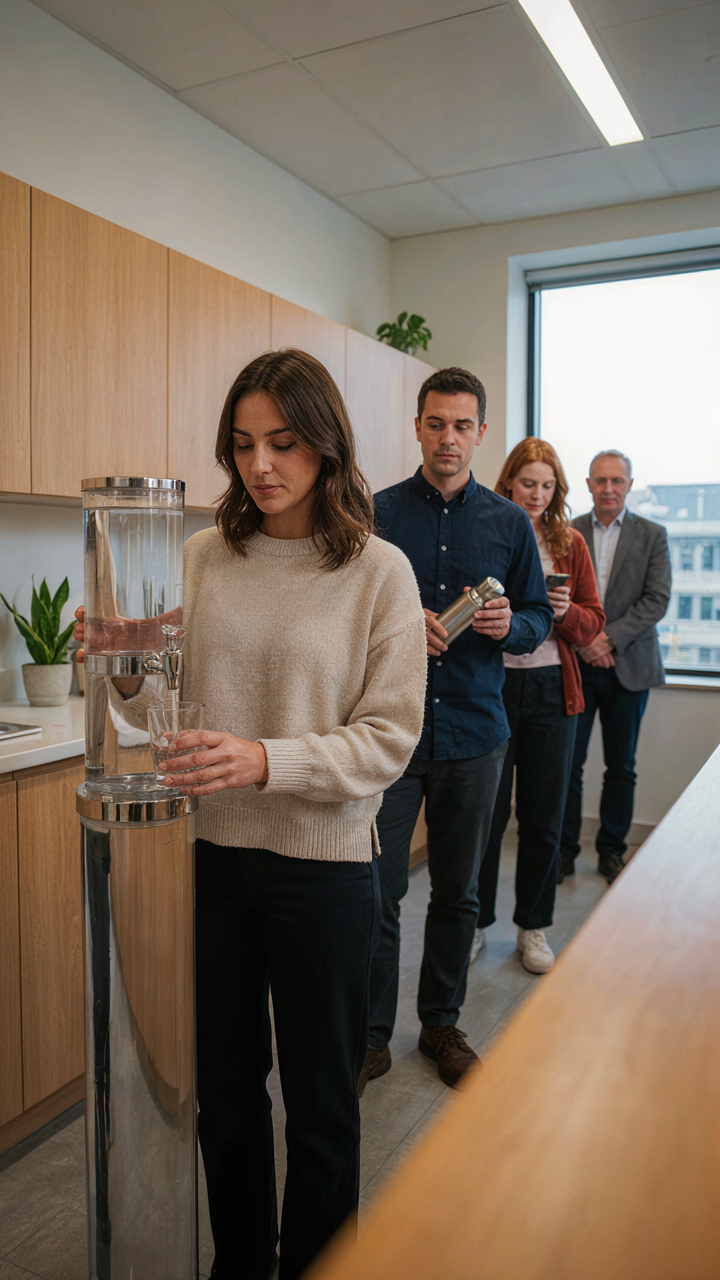
You want your guests to grab a drink without thinking about it, which means you’re really trying to avoid the social friction of a line. Gravity dispensers work on a simple mechanical principle: hydrostatic pressure increases with height, so the higher your liquid sits above the spigot, the faster it flows. This isn’t theory. A five-gallon container positioned at waist height delivers different flow velocity than one at ankle height.
Most people treat placement like an afterthought and position dispensers wherever space exists. The real constraint is sight line and foot traffic pattern. Place your dispenser where guests naturally congregate or walk toward seating, not in a corner that requires deliberate navigation. Height matters too. A dispenser at elbow-to-shoulder height lets people serve one-handed while holding conversation. Below that, they crouch or bend, which kills momentum and creates bottlenecks. Measure your setup before the event, not during it.
The Spigot Decides Everything
Everyone assumes spigot quality is cosmetic. It’s not. A cheap plastic spigot with a narrow valve seat creates back pressure that slows flow to a trickle, frustrating guests into abandoning self service and demanding you manually pour. The valve seat is the opening where liquid passes through. Stainless steel or brass seats maintain consistent diameter and resist mineral buildup that narrows flow over time.
Spigot length matters more than people admit. A short spigot positioned too close to the container body forces cups at awkward angles, causing spillage and hesitation. You need minimum three to four inches of clearance below the spigot outlet to accommodate standard cups. A lever handle beats a screw-turn design because it requires no fine motor control. Test your spigot under load with actual beverage before guests arrive. Run water through it for thirty seconds and confirm the stream stays steady, not tapering into a weak spray.
Fruit Infused Water: The Flavor Engineering Blueprint
Component Synergy Maximizing Infusion

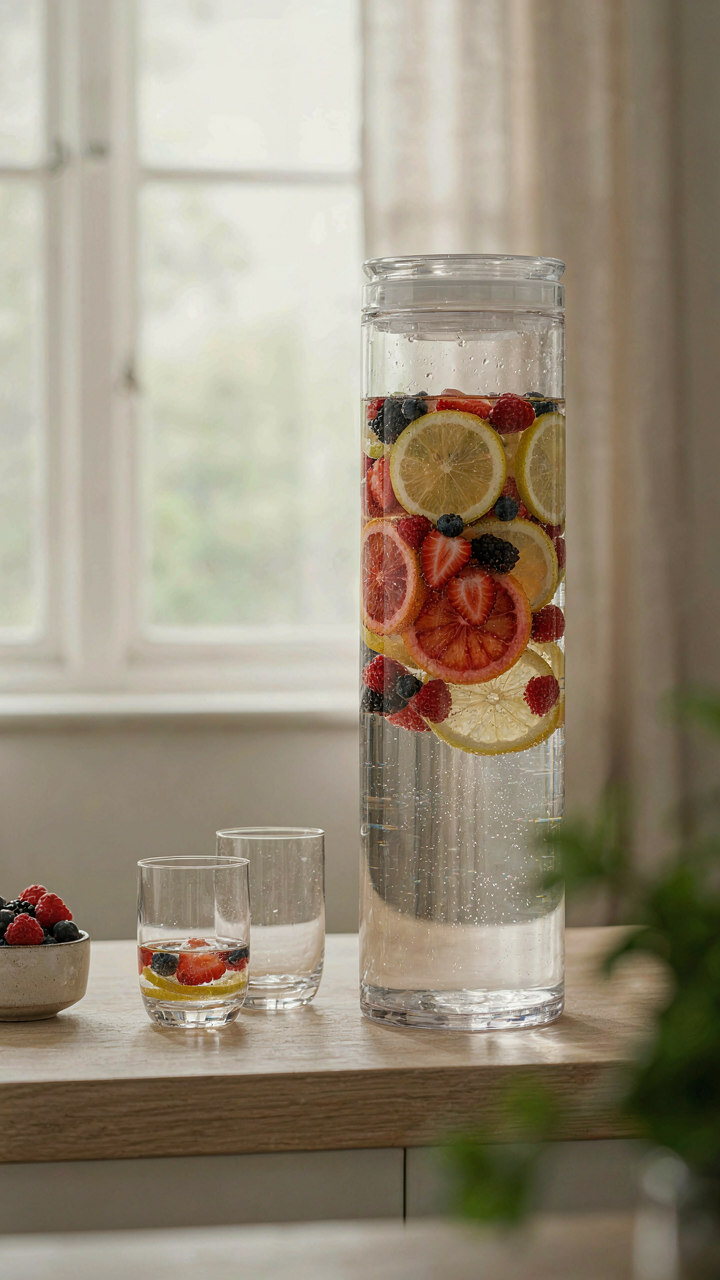
You want people to think you put effort into this. The real mechanism is osmotic pressure, borrowed from chemistry: the movement of water across a semipermeable membrane toward higher solute concentration. In a dispenser, fruit releases sugars, acids, and flavor compounds into the water. The rate depends on surface area, water temperature, and time. Cut fruit into smaller pieces and you accelerate the process dramatically. Most people just throw a lemon slice in and call it infused. That’s underperforming the system.
Water temperature matters more than duration. Warm water extracts flavor compounds faster because molecular movement increases. Room temperature infusions take 4-8 hours. Chilled water takes 12-24 hours. The tradeoff is chemical stability: citric acid breaks down slower in cold water, so cold infusions taste fresher longer. Use whole fruit pieces rather than juice to control intensity and maintain visual appeal in the dispenser. The peel contains essential oils that contribute bitter-bright notes. Stack fruit in layers at the base of your dispenser and you’ll see measurable flavor difference by hour two.
Stealth Flavor Delivery Via Fruit
The consensus advice says to use “complementary flavors.” That’s vague enough to be useless. What actually works is layering flavor compounds by solubility: fat-soluble oils from peels, water-soluble sugars from flesh, and acids from juice. Lemon and cucumber together aren’t random. Lemon peel oils and cucumber’s mild compounds don’t compete. Add mint leaves and you introduce menthol, which creates a cooling sensation that masks dilution.
People notice texture before taste. Visible fruit suspended in water creates psychological expectation of flavor intensity. The dispenser becomes a visual anchor for the entire refreshment station. Rotate fruit pieces every 2-3 hours at outdoor events to prevent settling and maintain even flavor distribution throughout the water column. When infusion weakens mid-party, add fresh fruit instead of replacing all water. This maintains guest momentum without shutdown periods.
The Glass Beverage Dispenser: A Robust Investment
Why Glass Over Plastic Containers

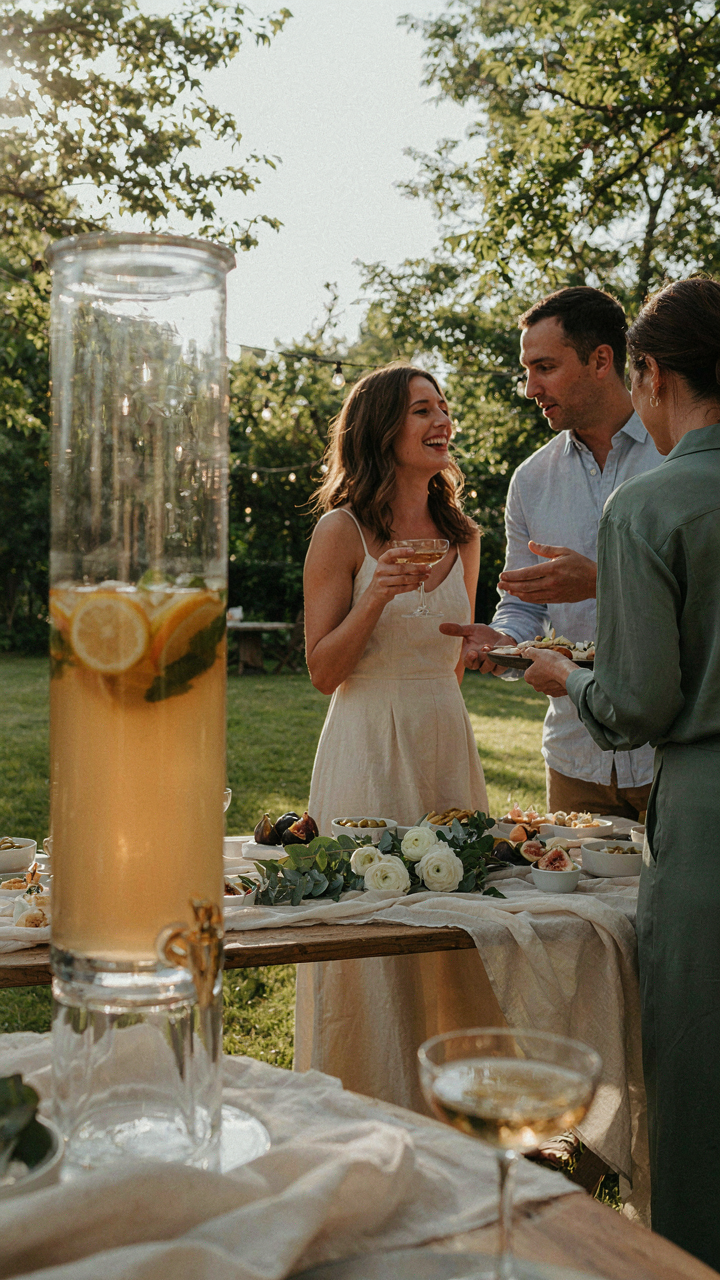
You want the dispenser to disappear into the background so guests focus on you, not the equipment. Here’s what actually matters: glass doesn’t degrade. Plastic containers leach chemicals into beverages after repeated UV exposure and temperature cycling. Glass remains inert across decades. Most advice skips this entirely, focusing instead on aesthetics. The mechanism is chemical stability. Glass won’t interact with citrus, alcohol, or chlorinated water. Plastic will.
A quality glass dispenser costs thirty to eighty dollars upfront and lasts indefinitely. Disposable plastic dispensers cost less initially but fail within two to three seasons from sun damage and thermal stress. The math is simple: glass amortizes to pennies per use over time. You’re buying a tool that survives your entire party life, not a consumable you replace annually.
Thermal Mass Keeps Beverages Colder Longer
Physics calls it thermal mass, and it’s the only mechanism that matters here. Glass has high volumetric heat capacity, which means it absorbs and stores large amounts of energy without temperature swings. A full glass dispenser acts as a passive cooling system. The volume of liquid inside regulates temperature fluctuation better than a thin plastic container ever could.
Fill a glass dispenser with ice water two hours before guests arrive. The glass itself reaches the same temperature as the beverage. When warm ambient air hits the outside surface, the thermal mass of the glass and liquid resists rapid warming. The dispenser maintains serving temperature for four to six hours without active refrigeration. This is why commercial outdoor bars use glass over plastic. Fill the dispenser completely to maximize thermal retention.
The Drink Station As A Decentralized Hub
How Zones Replace Bottlenecks

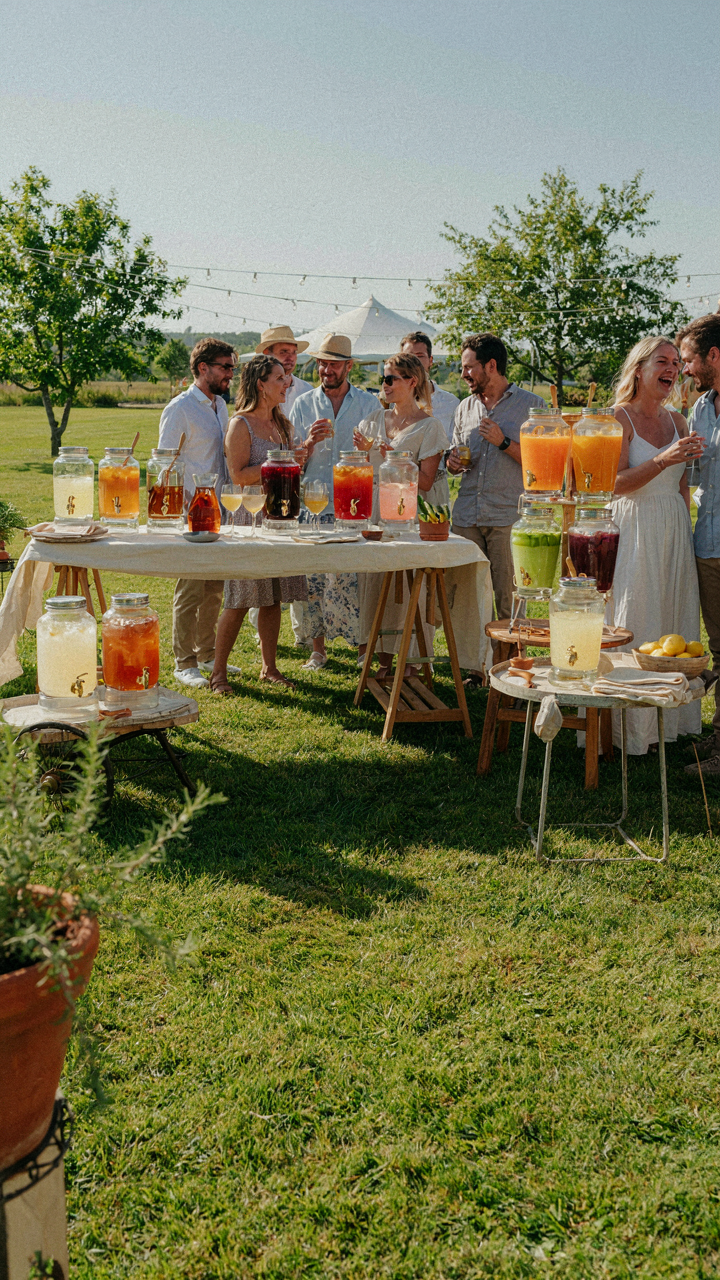
You want people to think your party is effortless. That’s the real reason you care about this. The mechanism is flow state in physical space. Treat your drink setup like a supply chain: create redundant nodes instead of one central bar. Every node reduces wait time and keeps guests moving. Multiple small stations scattered across your venue beats one “statement” dispenser every time.
The common advice says to centralize everything for control. Wrong. Centralization creates a choke point where fifteen people wait while one person pours. Position drink stations in three separate zones: entry, seating area, and secondary space. Each station needs identical core items so guests don’t migrate searching for options. This distributed model keeps traffic flowing and lets you actually enjoy your party instead of managing a queue.
Feedback Loops That Self Correct
Cybernetics studies systems that adjust based on feedback. Your drink station is a feedback system. If guests exhaust ice faster than you anticipated, you’ve discovered the actual demand signal, not a guess. Stock 40 percent more ice than your initial estimate, then watch what actually gets consumed. Measure the gap between what you prepared and what ran out. That gap is actionable data for next time.
Set up a simple protocol: check each station every 20 minutes during the party. Note what’s gone, what’s full, what nobody touched. This isn’t overhead, it’s information. People reveal their preferences through consumption patterns, not what they say they want. Adjust replenishment in real time based on what’s actually moving. The dispenser that runs dry tells you exactly where to focus resources for your next event.
The Ice To Drink Ratio: Maintaining Optimal Chill
Thermal Equilibrium For Beverage Longevity

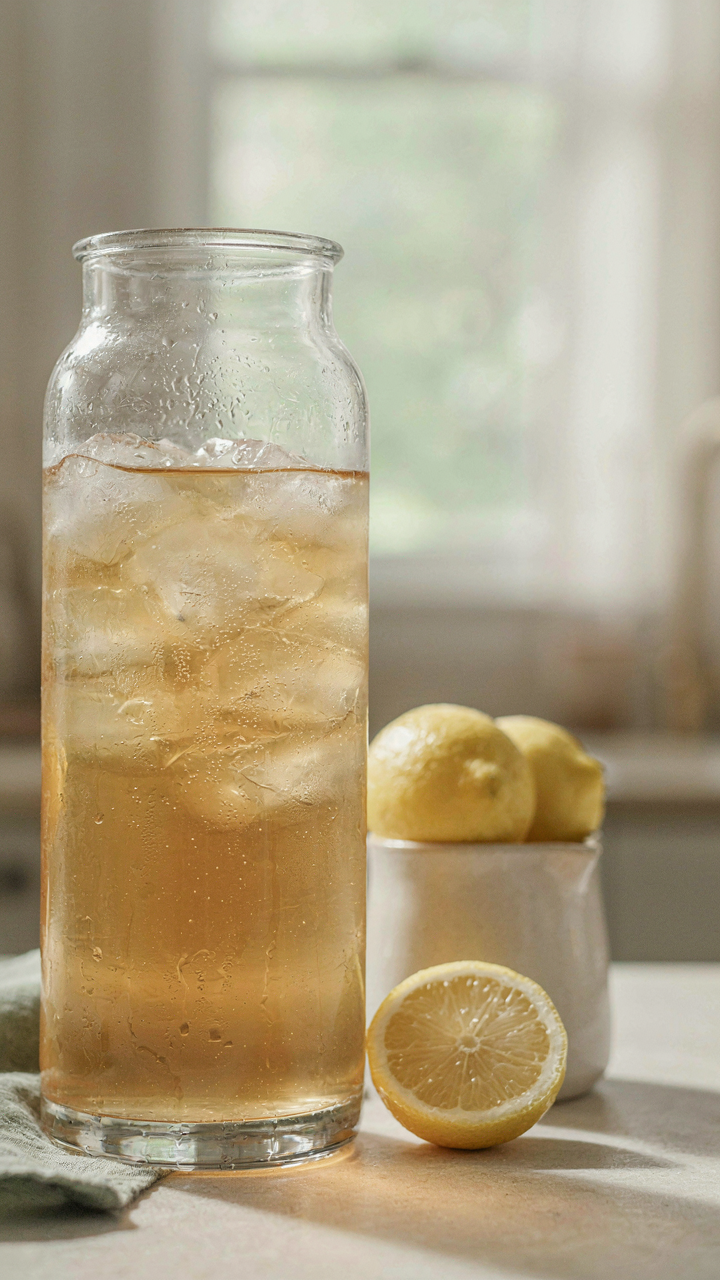
You care about this because warm drinks at a party signal you didn’t plan. Here’s the mechanism: thermal equilibrium is physics terminology describing when two objects reach the same temperature. Your dispenser and its contents are in constant heat exchange with the environment. Ice isn’t just frozen water—it’s a heat sink that absorbs ambient energy before your beverages do. The moment ice stops absorbing energy, your drinks start warming. Most people think more ice always wins. Wrong. Ice volume matters less than ice surface area exposed to your drink.
A full dispenser tank surrounded by ice maintains stability longer than a half-full one because the drink occupies more contact points with frozen surface. The dispenser’s material also governs heat transfer speed. Metal conducts heat faster than plastic, which means metal dispensers warm their contents quicker unless you compensate with ice volume. Calculate your dispenser’s thermal load by measuring how long drinks stay cold without ice, then work backward. You need ice volume that covers total surface contact plus accounts for melt time during your event duration.
Ice Quantity: A Tactical Consideration
Most party guides say “bring extra ice.” That’s incomplete thinking. You need to know your dispenser’s displacement volume first—how much total space exists inside—then subtract the beverage volume. That remaining space is your ice allocation zone. A five-gallon dispenser holding four gallons of liquid leaves one gallon for ice. One gallon of ice weighs roughly 1.5 pounds and lasts approximately two hours in ambient heat before becoming slush.
Calculate backward from your event length and guest count to determine consumption rate. If you’re serving fifty people over four hours with two-drink-per-person estimates, you move one hundred drinks. Multiply event duration by ambient temperature, then add 20 percent ice volume as buffer for underestimation. Load ice in layers, alternating with drinks if your dispenser design allows bottom-fill configurations, rather than dumping all ice on top where it melts fastest from sun exposure.
Beyond Water: Crafting Signature Outdoor Beverages
The Math Behind Batching Your Drinks

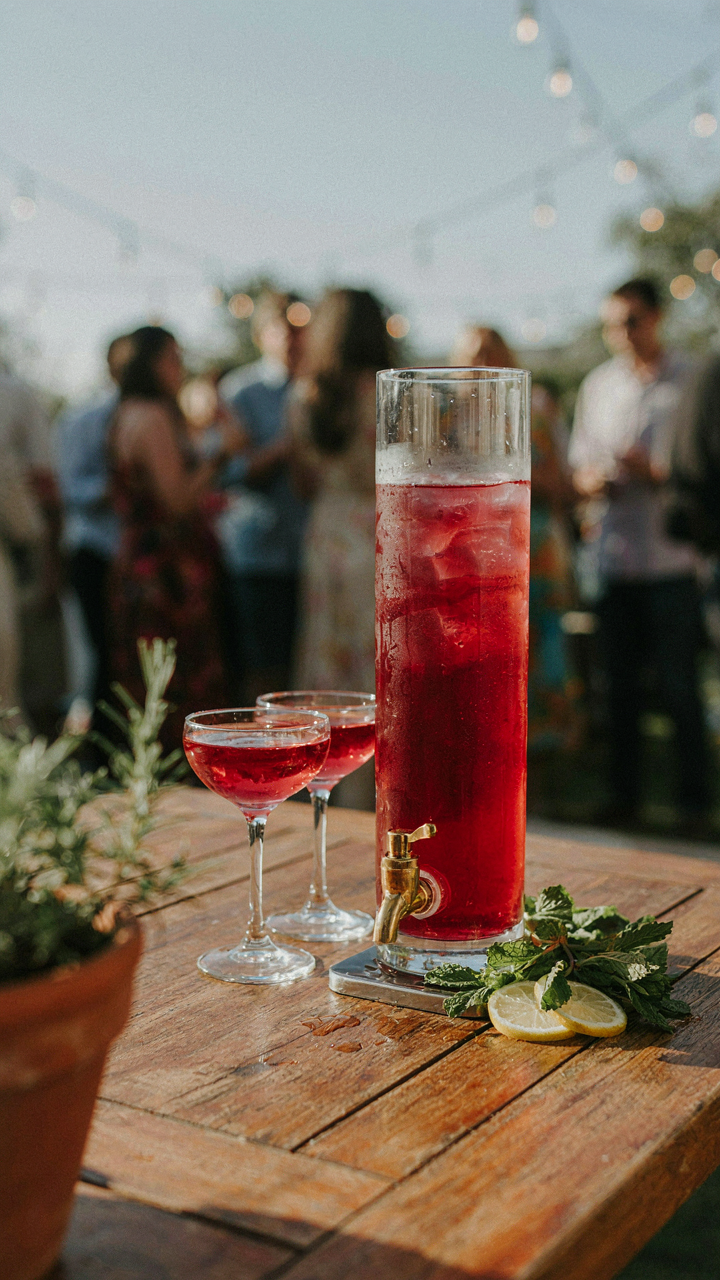
You want people to think you’re competent, and nothing screams “I didn’t plan this” like running out of a signature drink halfway through. Batching—the manufacturing principle of pre-mixing in volume—eliminates the bartender bottleneck and forces consistency. You make the recipe once, measure it, multiply it, and pour from a single vessel instead of making each drink fresh.
The payoff is mechanical: one large dispenser holds 2–3 gallons of pre-batched liquid. Guests serve themselves or grab a cup in seconds. No complexity per transaction. You control ratios precisely because you’re not improvising at speed. That control compounds—the same recipe tastes identical at drink one and drink fifty.
- Citrus batches: Pre-mix lemonade or iced tea concentrate with water the morning of, store in food-grade containers, chill fully before the party starts.
- Infusion bases: Steep herbs, fruit, or spices in cold water or simple syrup for 4–8 hours, strain, then batch at the dispenser to avoid sediment issues.
- Carbonation timing: Batch flat, then add carbonated water or club soda only 30 minutes before guests arrive to preserve fizz without over-carbonation.
- Temperature stability: Use insulated dispensers with ice compartments below the tap line to keep batches cold for 3–4 hours without dilution.
- Flavor layering: Batch the base liquid, then add fresh garnish juice or syrup at the dispenser tap to balance flavor without muddying the batch itself.
The operational win is simple: you stand near the food, not locked behind a makeshift bar. You talk to people. You notice when the dispenser empties. You refill before guests notice scarcity.
Depth Without The Alcohol
Skip the tired advice about “fancy” lemonades with three types of mint. Real elevation comes from borrowing the mixology principle of bitters and aromatic balance—using small volumes of high-flavor agents to shift perception without sweetness creep. A proper non-alcoholic drink trades sugar intensity for structural complexity.
Kombucha, shrubs made from vinegar and fruit, and botanical syrups handle this load. Kombucha brings fermented tang and slight carbonation naturally. Shrubs deliver vinegar’s acid punch and depth—one ounce per eight-ounce serving cuts through heat and prevents palate fatigue. Botanical syrups infused with rosemary, cardamom, or juniper flavor create the impression of craft without requiring a liquor license or a guest list that demands alcohol.

The dispenser becomes more valuable when the liquid itself demands no mixing stage. Fill it once with a properly constructed batch and watch consumption climb because the drink tastes intentional, not like a placeholder for something stronger. Adults notice the difference between a drink made with structure and one assembled from ingredients that don’t belong together.
The Glass Water Dispenser: Simplicity As A Statement
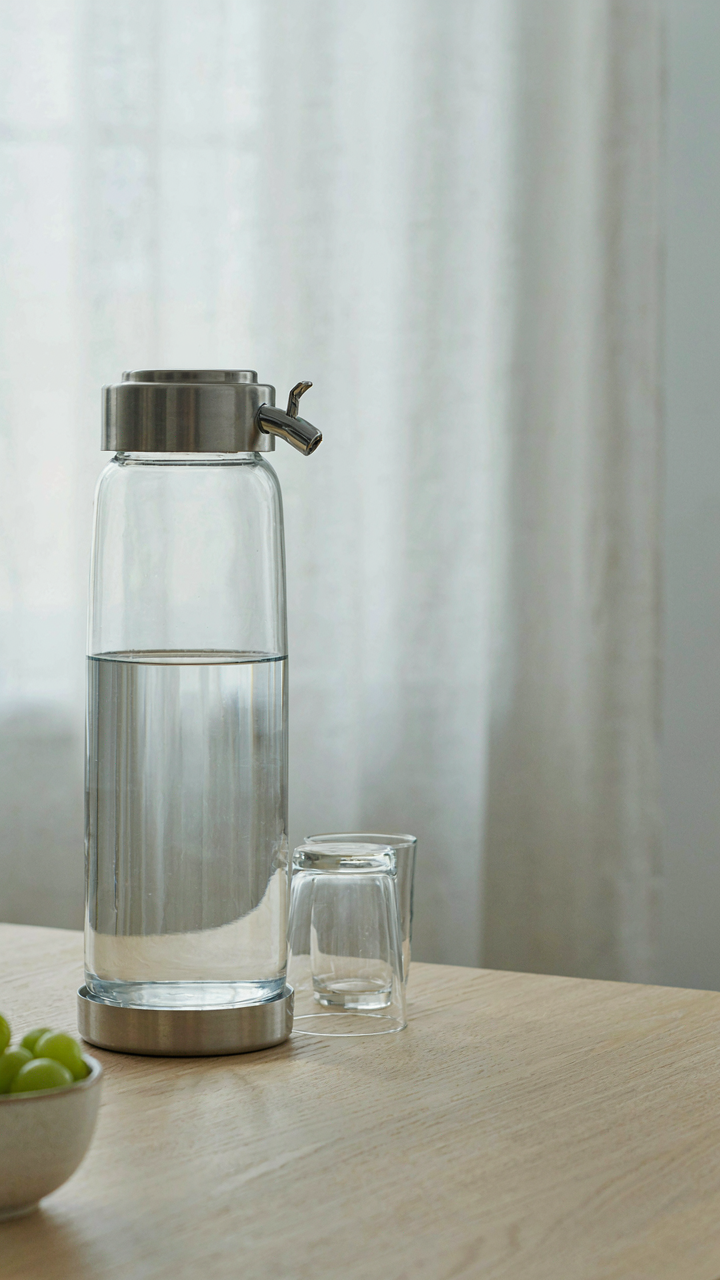
Why Glass Wins When Everything Else Fails
You want guests to think you’re thoughtful without trying. That’s the real reason this section matters to you. Here’s the mechanism: glass operates on visibility economics from retail design. You display what you want people to trust. Clear glass lets guests see the water level, the absence of mystery, the cleanliness. Opacity breeds doubt. Guests assume hidden problems. Glass eliminates that friction entirely because there’s nothing to hide.
The material choice itself communicates restraint. Glass doesn’t scream. It doesn’t need to. A five-gallon glass water dispenser with a stainless steel base sits on a table and does one job perfectly. No LED indicators. No unnecessary hardware. The design movement of reduction, traced back through Bauhaus and refined in modern minimalism, proves that constraint builds authority. Remove decoration and people believe the product more, not less.
The Mechanics Of Refill Without Disruption
Hydration logistics determines whether your dispenser stays full or becomes a liability guests resent. Use the gravity feed system standard in commercial dispensers: water sits in an upper chamber, pressure from its own weight forces flow through a tap below. The mechanism is physics applied directly—no pump needed, no power cord, no failure points. Position the dispenser at a height where guests reach the tap between shoulder and waist. Lower requires bending. Higher creates spillage.

Stock three replacement water containers if your party runs more than four hours and you have thirty plus guests. One active dispenser, one staged and ready, one as backup. The math is simple: a five-gallon container serves roughly fifteen people per hour before depletion. Most hosts underestimate consumption because they think people drink less at parties. They don’t. They drink more. Check the container level every ninety minutes. Empty dispensers signal negligence.
The Real Obstacle Isn’t The Dispenser; It’s Your Fear Of Looking Ordinary

Most people default to red cups and a cooler because they fear judgment. You’ll spend more mental energy worrying about what guests think than actually enjoying your party. Stop. Pick one beverage dispenser idea that excites you, not one that blends in. Screenshot three options right now and commit to one by tonight. The difference between memorable and forgettable isn’t creativity. It’s deciding that your comfort matters less than your guests’ experience.