The Illusion Of Abundance: Why More Food Means Less Flow
When Crowding Kills Movement
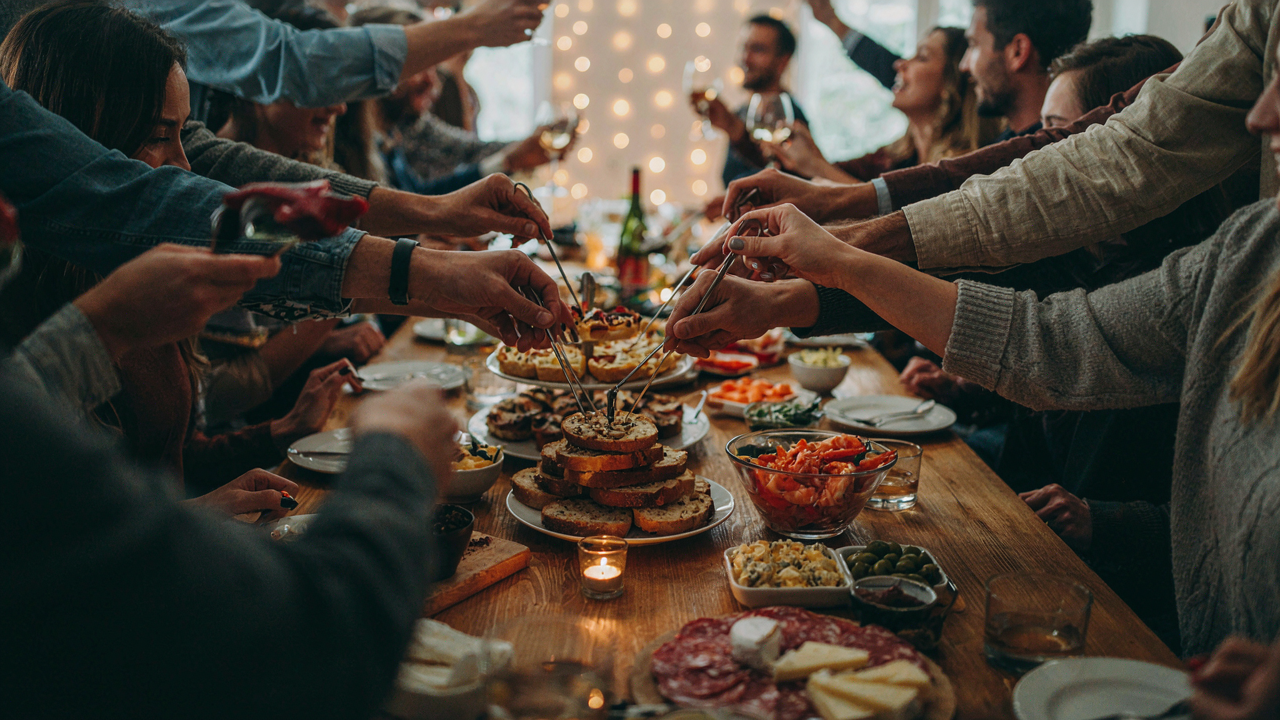
You think a packed table looks impressive. What it actually does is trap people. Congestion theory from traffic engineering maps directly onto appetizer tables: when density exceeds capacity, flow collapses entirely. Too many dishes crammed into one surface forces guests into gridlock. They hover, block others, reach across bodies, and abandon the table faster. The visual abundance you intended becomes a liability that murders engagement.
The mistake most hosts make is confusing “full” with “successful.” They load every inch of surface because empty space feels wasteful. Reality works opposite. When guests navigate to a dish, they need stopping space to pause, select, plate, and exit without collision. Overcrowded tables create friction that prevents repeat visits. Guests grab once and leave rather than linger, taste, and return.
Constraint Creates Velocity
The scarcity principle from behavioral economics doesn’t just apply to limited-time offers. It shapes how people move through physical space. Fewer dishes, strategically placed, make each one feel considered rather than abundant. Guests perceive limited options as premium. They move with intention toward specific targets instead of scanning passively. This creates a rhythm: approach, decide, consume, move. No loitering. No bottlenecks.
Place your strongest dishes at table endpoints rather than clustering everything at center. Space items six to eight inches apart minimum. This forces guests to move along the table’s length instead of crowding one zone. The result is distributed traffic flow instead of concentrated pressure at one spot. Guests circulate. They see everything. They return because navigation felt easy, not because there was more food.
The Queueing Theory Of Charcuterie: Optimizing Guest Throughput
Parallel Paths Beat Single Lines

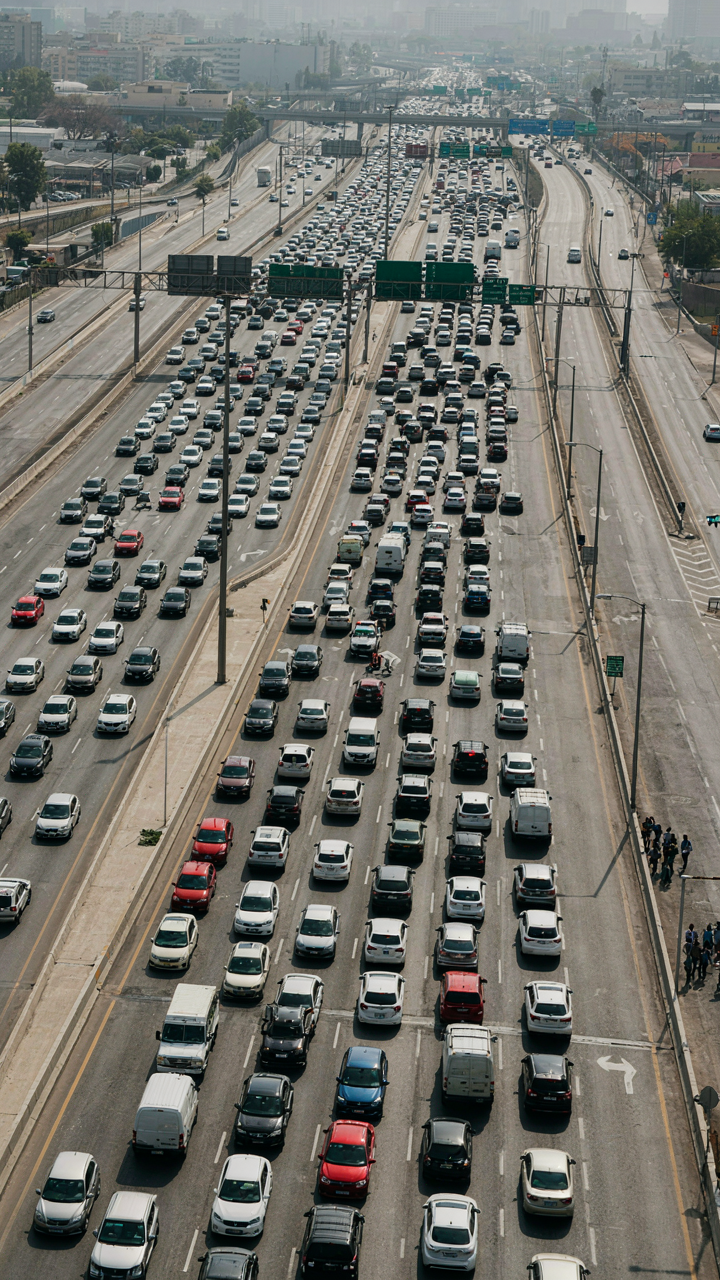
You want people to think your event was effortless. The real fear is watching guests stack up like a TSA line at 5 AM. Queueing theory, borrowed from operations research, proves that parallel service channels move volume faster than serial bottlenecks. A single-line table forces guests into one decision stream. Multiple approach points distribute demand across separate flows.
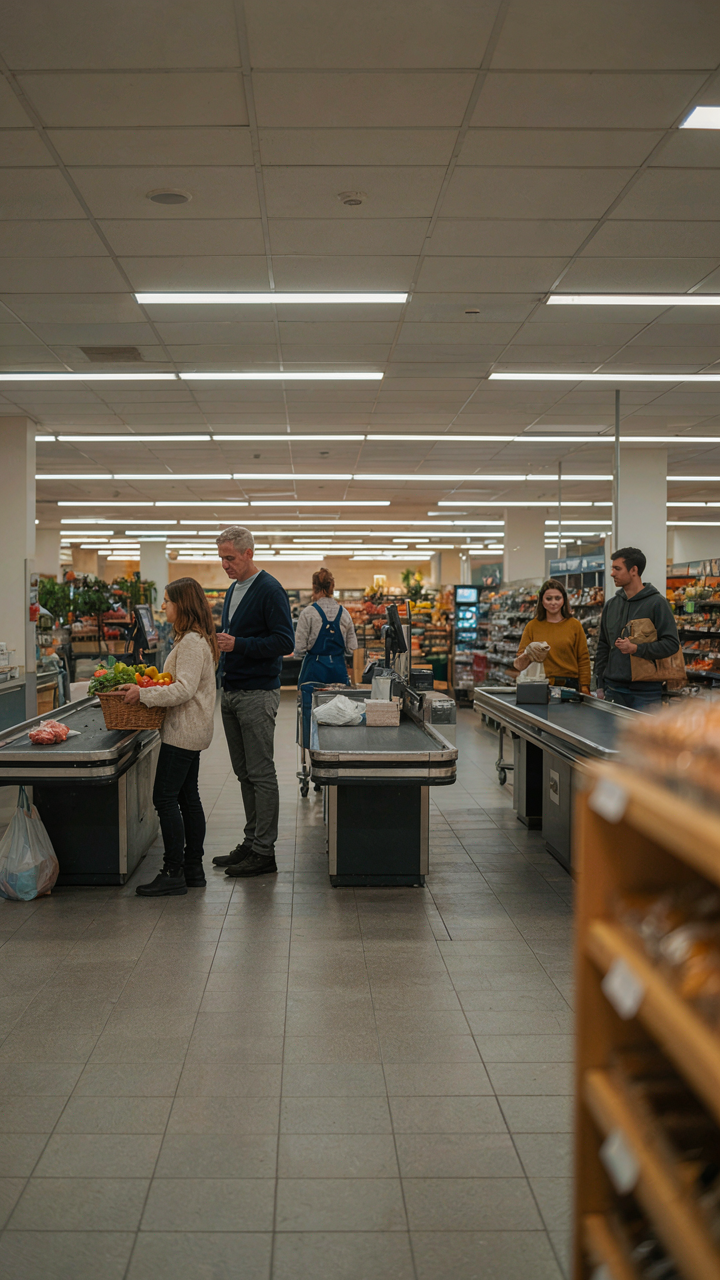
A two-sided table with identical stations lets guests choose access from the left or right. Three-sided layouts work better for larger events. Each side operates as its own queue with its own service pace. Guest throughput increases not because the table is bigger, but because you’ve eliminated the forced serialization that makes people wait. The math is simple: two parallel lines process twice as many people in the same time window.
Strategic Spacing Around Peak Items
Everyone says spread items out evenly. That advice ignores human behavior. Guests cluster around expensive proteins, cheeses, and dips. You need buffer zones, not decoration. A dedicated 18-24 inch perimeter around high-demand items absorbs the crowd without blocking access to surrounding food.
Place your focal-point items (prosciutto, aged cheddar, hot dips) at cardinal positions on the table, not the center. Surround each with bare staging space where guests can park their plates while deciding. This creates micro-staging areas that prevent the classic jam where three people converge on the same square foot of real estate. Enforce this spacing during setup, or the table devolves into a compression zone within the first ten minutes.
The 3 Zone Protocol: Deconstructing The Party Food Experience

Approach Engagement Exit

You want people to move through your table without thinking about it, which means you’re actually afraid of looking like you don’t know how to throw a party. Here’s the mechanism: traffic flow breaks down when guests face unclear decision points. Think of it in spatial terms—like an airport terminal. You need a decompression zone before the actual food.
Place the table so guests encounter it from one side only, never head-on from both ends. Position it perpendicular to the room’s main thoroughfare, not parallel. The approach zone extends two to three feet before the table edge. This space lets people slow down and assess without blocking others behind them. No crowding starts here because there’s no ambiguity about where to stand.
Directing Traffic With Plate And Napkin Placement
Everyone says put napkins and plates at the start of the table. They’re wrong. You need them at two points to engineer the actual path you want guests to take.
Place small plates and napkins at the entry point—the side where traffic naturally approaches. This stops the bottleneck dead. Space them eighteen to twenty-four inches apart on a secondary surface or tier slightly forward of the main table. The second stack goes at the far end, near the exit. This forces a deliberate flow from entry through engagement to departure. Guests grab, move, eat, and clear. The plate becomes the physical unit that controls pace, not the table itself.
Fingerfood Table Logistics: Beyond The Pretty Platter
How Often You Actually Refill Changes Everything

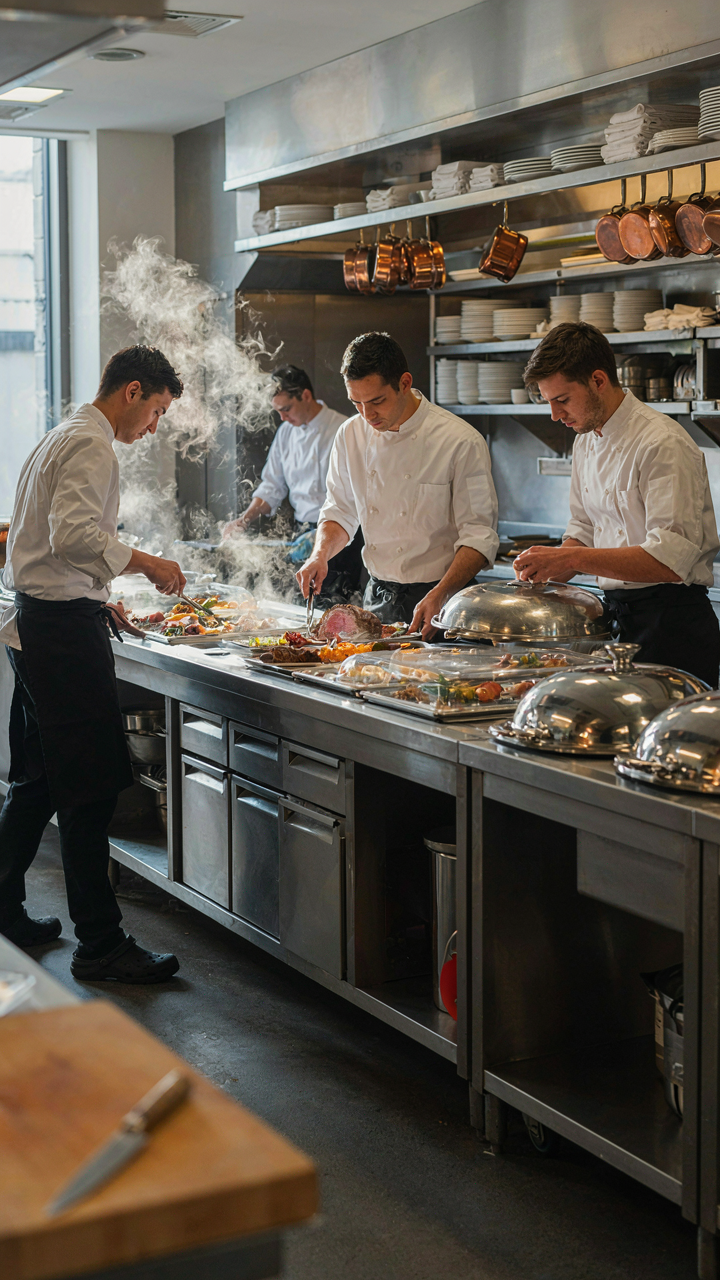
You want your table to look abundant without you sprinting back to the kitchen every four minutes—that’s the real tension here. The mechanism is this: replenishment strategy determines whether your table operates on supply scarcity or perceived abundance. Continuous restocking and batch restocking produce opposite guest behaviors. Continuous means you top off items every eight to twelve minutes before depletion hits. Batch means you let items run low, then restock aggressively in one push every twenty to thirty minutes.
Continuous restocking creates the illusion of unlimited supply. Guests graze without anxiety. They don’t rush. Batch restocking triggers scarcity psychology—guests accelerate consumption the moment they see gaps. The perceived shortage makes them grab more than they intended. Choose continuous if your event is under two hours and you have kitchen support. Choose batch if you’re solo or if creating urgency around food consumption serves your goals (limited-time offers, rapid table turnover). The refill cadence you pick controls guest traffic flow more than table position does.
Trash Integration Stops Chaos Before It Starts
Most hosts hide bins and expect guests to know where waste goes, then watch their tables devolve into napkin piles and sticky spots. Layout design without waste management is incomplete design. The mechanism borrows from supply chain logistics: every input point needs a corresponding output point or the system collapses.
Place a discrete bin or tray within arm’s reach of the appetizer table—no farther than three feet from the high-traffic edge. Small plates stack into a dedicated collection vessel. Used napkins land in a separate receptacle. This prevents guests from setting used items back on the table surface or leaving them on nearby furniture. A two-tier setup (plates below, napkins above) clarifies the action without signage. The bin should be opaque or positioned so guests don’t stare at their own waste. Restocking staff clears this bin every ten to fifteen minutes during service. This single protocol eliminates the grimy, depleted look that kills guest perception of a well-run event.
Gravity Tables: Using Physics To Predict Guest Movement
Where Popular Items Create Invisible Pull

You want your table to work like a well-oiled machine because watching guests stand confused makes you feel incompetent. Here’s the real mechanism: physics calls this gravitational pull, and your appetizer table operates on the same principle. High-demand items—shrimp, cheese, charcuterie—function as mass that draws guests into orbit. Guests don’t distribute evenly across your table. They cluster where value concentrates, creating density zones that predict exactly where bottlenecks form before they happen.
Place your highest-density items at the table’s perimeter, not the center. This sounds wrong because conventional advice says put stars in the middle. That’s lazy thinking. Perimeter placement forces guest traffic to spread horizontally along the table’s edge instead of stacking vertically at one spot. When shrimp sits at position three, everyone crowds into a two-foot radius. When it moves to the far left corner, you’ve just turned a congestion point into an entry ramp.
Resistance Points That Stop Movement Cold
The real problem isn’t what guests want—it’s what forces them to stop mid-reach. Physics uses flow resistance to describe friction in systems, and your table has it everywhere. Crowded platters, missing utensils, and narrow gaps between serving pieces all act as mechanical resistance. One guest hesitating while deciding creates a backlog. That hesitation compounds because people behind them pile up, and nobody moves until the jam clears.
Eliminate resistance by spacing serving vessels at least six inches apart and ensuring each item has its own dedicated utensil. Don’t share spoons between platters. Add a second utensil if guests typically grab multiple pieces. The goal is keeping hands moving, not stopping them mid-selection. Measure your table width, divide it by the number of platters, and enforce minimum spacing as a protocol during setup.
The Grazing Table Gambit: Engineered Serendipity, Not Chaos

Where Guests Actually Stop Moving

You want people to feel like they discovered something, not herded through a line. That’s the real reason you care about this section. Focal points work like gravity wells in physics: they create zones of attraction that pull traffic without visible force. Place your highest-contrast or most recognizable item at the table’s visual center or at the natural entry point. This isn’t decoration. It’s a redirect mechanism that breaks up clustering.
Most hosts bury their best focal point in the middle and wonder why guests bunch up at the first item they see. The mechanism is simpler: people enter a space and stop at the first point that registers as intentional. Your focal point should be impossible to miss within two seconds of approach. Use height variation, color contrast, or an unusual serving vessel. A tiered stand with a charcuterie arrangement or a dramatic cheese wheel creates immediate visual hierarchy and gives guests a reason to move past the congestion zone.
Building Pathways Through Abundance
Dispersion happens when guests can move in multiple directions without collision. Layout design borrowed from retail floor planning shows that people follow invisible flow paths based on how items are arranged. Avoid creating a single linear approach. Instead, distribute high-demand items across different zones so groups naturally spread apart instead of queuing at one spot.
Place complementary items in separate areas: cured meats on the left, cheeses and crackers on the right, dips and vegetables at the far end. Ensure 18 to 24 inches of open counter space between major clusters so guests can stand without blocking others. This forces natural movement and prevents the bottleneck where everyone reaches for the same bowl simultaneously. The goal is making it easier for people to move than to stand still.
Food Ideas For Birthday: Ditching The Buffet Line Mentality
Stagger Dishes Across Time

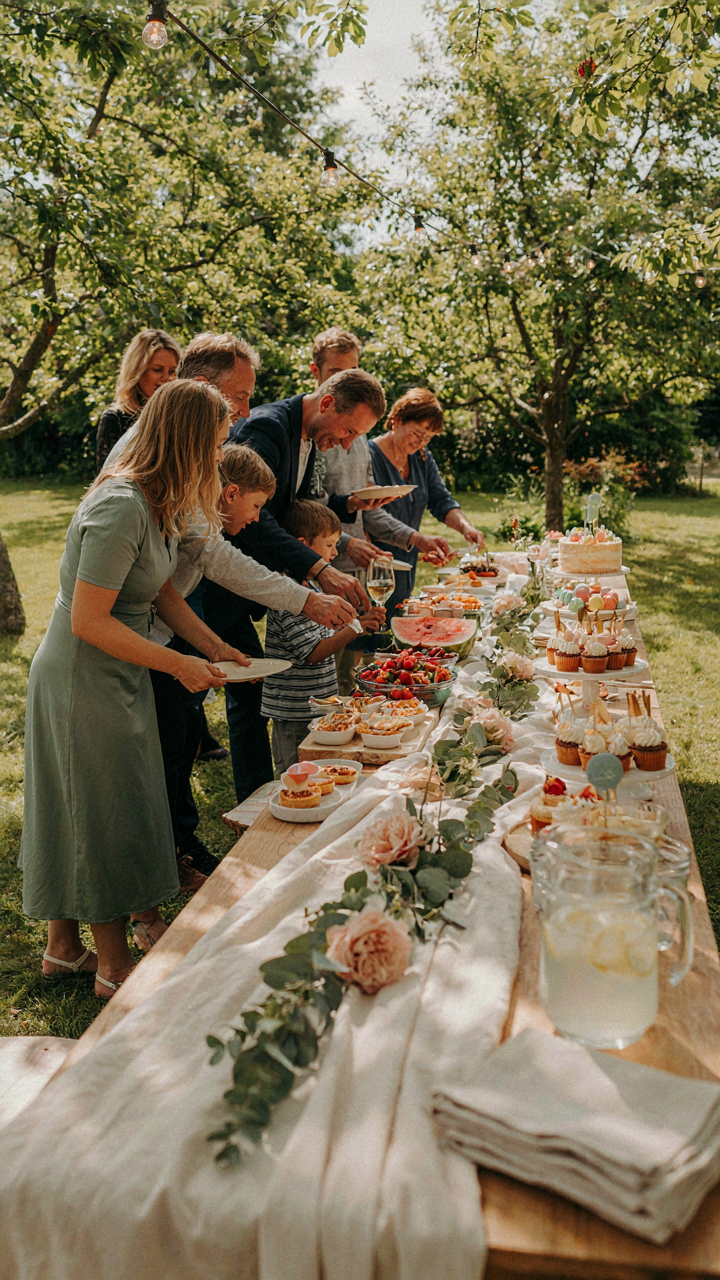
You want your guests to think you’re organized, but the real reason you care is control—you don’t want the chaos of 40 people converging on cheese at the same moment. This is basic load balancing from systems engineering applied to physical space. Instead of everything hitting the table at once, you release dishes in waves. Hot appetizers emerge after cold ones settle. Crudités appear while sliders finish. This spreads demand across 90 minutes instead of compressing it into 15.
The mistake most hosts make is treating the appetizer table like a restaurant pass—everything ready, everything visible, everything depleted at once. Wrong. You coordinate timing with your kitchen or prep area. Bring out shrimp first. Ten minutes later, add the charcuterie. Then the hot items. Guests naturally rotate through stations instead of stacking at one spot. The mechanism is simple: you control velocity by controlling supply. No supply spike means no bottleneck.
Multiple Stations Beat One Focal Point
You need at least two separate serving areas if more than 20 people are attending. Never place all food in a single location and call it done. A second station draws traffic away from the first, creating what designers call distributed load. One table with cold items, one with hot. One with proteins, one with vegetables and bread. Place them in different rooms or opposite ends of the space.
- Opposite corners of the same room: Forces guests to move through space rather than cluster at entry point. Creates natural traffic patterns.
- Different rooms entirely: Splits the crowd physically. Kitchen area handles hot items, dining room handles cold. Reduces overlap by 60%.
- Height variation between stations: Tall table for one, standard height for another. People perceive them as distinct destinations, not extensions of the same service.
- Dietary separation: One station dedicated to vegetarian and vegan options, another for meat and seafood. Guests self-sort by preference, no congestion.
- Staggered setup timing: Don’t open all stations at once. Close the first station 20 minutes in, open the third. Prevents all guests from moving to the same new location simultaneously.
Decentralization works because it eliminates the single point of failure. One overwhelmed table creates a traffic jam that radiates outward. Two stations with half the items each moves people deliberately and reduces wait time to near zero. The protocol is simple: measure your guest count, divide your menu in half, pick two locations 20+ feet apart, staff each station independently.
Charcuterie Table For 100 People: Scaling Without Sacrifice
Build In Modules, Not One Long Line

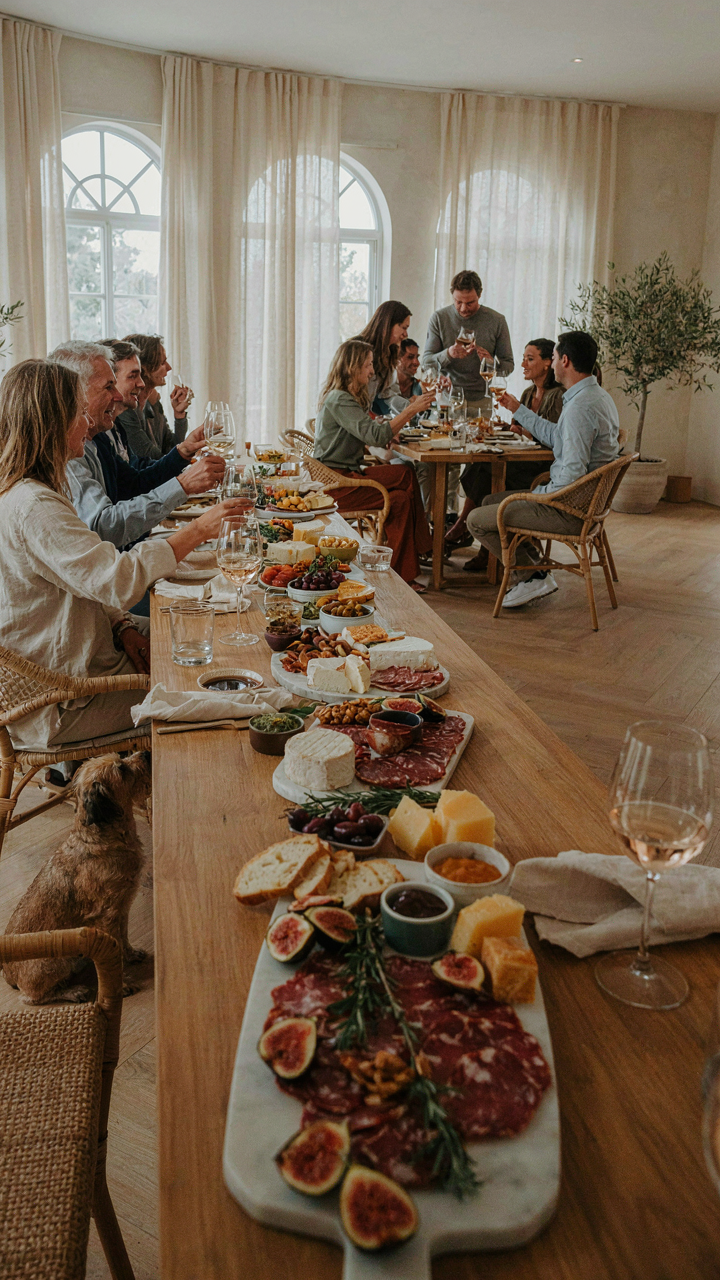
You want to avoid looking cheap by spreading everything too thin, but that’s exactly what one massive table does. The mechanism is simple: humans follow physics. Crowd density increases friction. Friction kills flow. Instead, deploy three separate stations of 30-35 people each rather than one table for 100. Each module operates independently, which means guests don’t queue behind strangers at a bottleneck.
Modular design comes from manufacturing, where batching identical work reduces setup waste. Apply the same logic here: each station repeats the same layout, the same board size, the same cheese-to-charcuterie ratio. You replicate what works instead of scaling one fragile arrangement. This redundancy looks intentional, not desperate. Guests distribute naturally across three equal targets rather than colliding at one.
Multiple Entry Points Eliminate The Crowd Dam
Everyone approaches from one angle, and your table becomes a traffic jam with appetizers. Add side access. Put one station perpendicular to the room’s natural flow, another at a 90-degree angle. Guests approaching from different directions never compete for the same edge. The second and third stations aren’t overflow. They’re the primary design. You don’t build around scarcity; you build around choice of approach.
The result is immediate: no one waits. No one circles back three times to find an opening. No one abandons the table frustrated. Each module serves its approach vector fully, which means your guests eat, engage, and move on. Station placement happens before the event starts, not during setup when you realize the traffic pattern. Measure sight lines from every entrance. Position stations where guests naturally enter the appetizer zone.
The Single Serve Revelation: Eliminating Congestion At The Source
Pre Portioned Items Beat Self Assembly Every Time

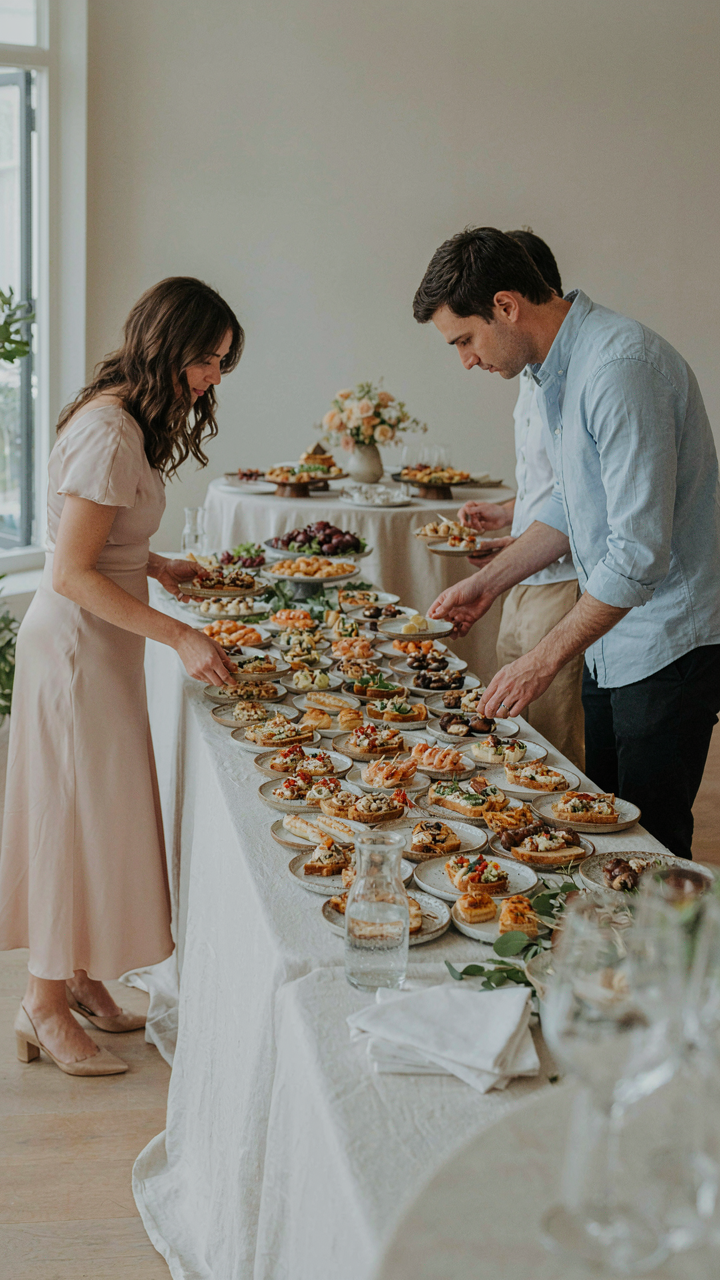
You want people to think your event was effortless. That’s the real driver here. Self-assembly appetizer stations feel like work, and work creates bottlenecks. The mechanism is simple: every decision point a guest faces adds latency to the line. Pre-portioned items remove decisions entirely. A guest picks up a finished piece and moves. No pausing to assemble, no cognitive load, no backup.
The common advice says self-assembly stations are more interactive and engaging. That’s incomplete. They are interactive, but interactivity at a congestion point is a liability, not an asset. Crudités with dip, bruschetta that requires topping selection, sliders where guests choose fillings—all of these create micro-delays that compound across fifty people. Pre-portioned spanakopita, prepared tartlets, and finished crostini move guests through in half the time. The goal is throughput, not theater.
Utensil Placement Dictates Flow Or Creates Gridlock
Serving utensils and plates aren’t accessories to your table layout—they’re infrastructure. Think of this in supply chain terms: every utensil on the table is a resource node, and every guest is a unit of throughput competing for access. When small plates, toothpicks, and serving spoons sit clustered near the food, you create a single chokepoint where guests collide while reaching.
Distribute utensils in a secondary perimeter. Place small plates at the table entrance, not at the end. Position napkins and toothpicks at the exit so guests grab them while leaving, not while hovering over the food. This breaks the congestion loop. Serving spoons should be duplicated and positioned at opposite ends of any shared dish. The rule: one utensil per six linear inches of table space. Fewer dependencies means faster movement.
Your Real Bottleneck Isn’t The Table; It’s Your Assumption That Hospitality Equals Appeasement
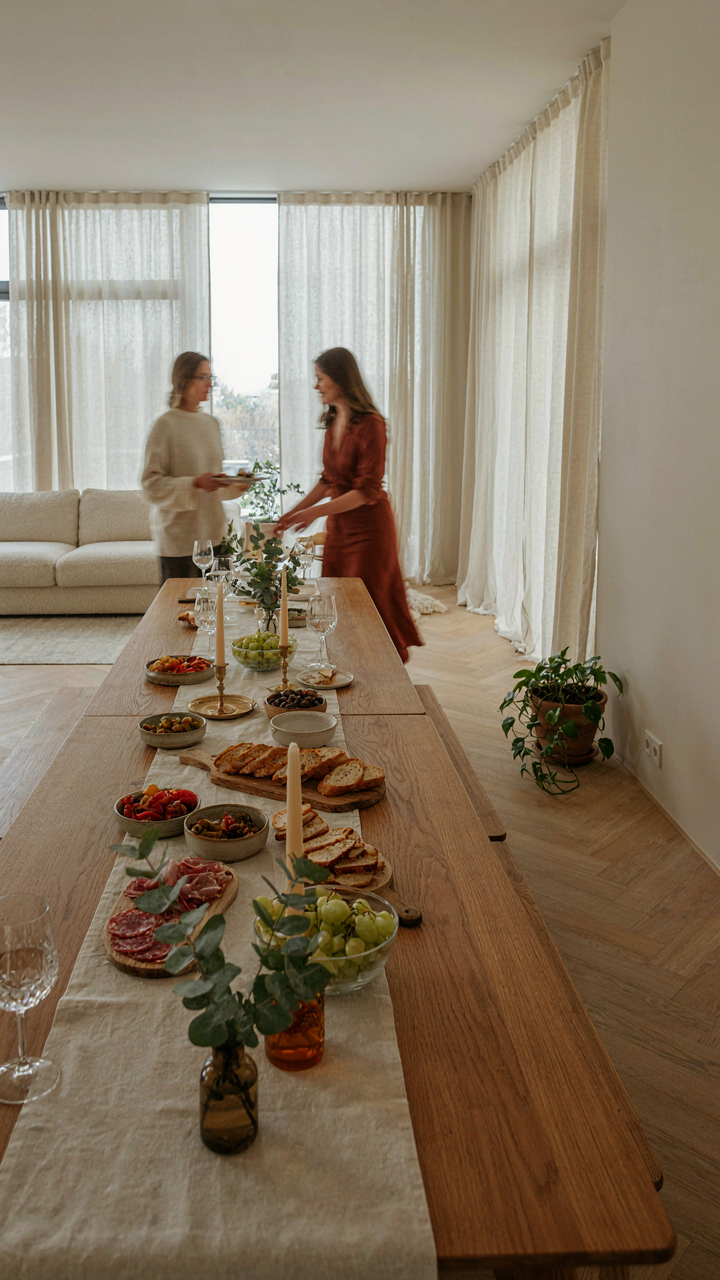
You think cramming everything into one spot makes guests happy. It doesn’t. It makes them frustrated. Real hospitality means designing a system where people flow, not pile. Move your table away from walls. Space your stations three feet apart minimum. Put the expensive stuff at eye level, not buried. Then watch what happens. Guests stop competing for food and start enjoying it. When you stop trying to please everyone at once, everyone actually enjoys themselves.