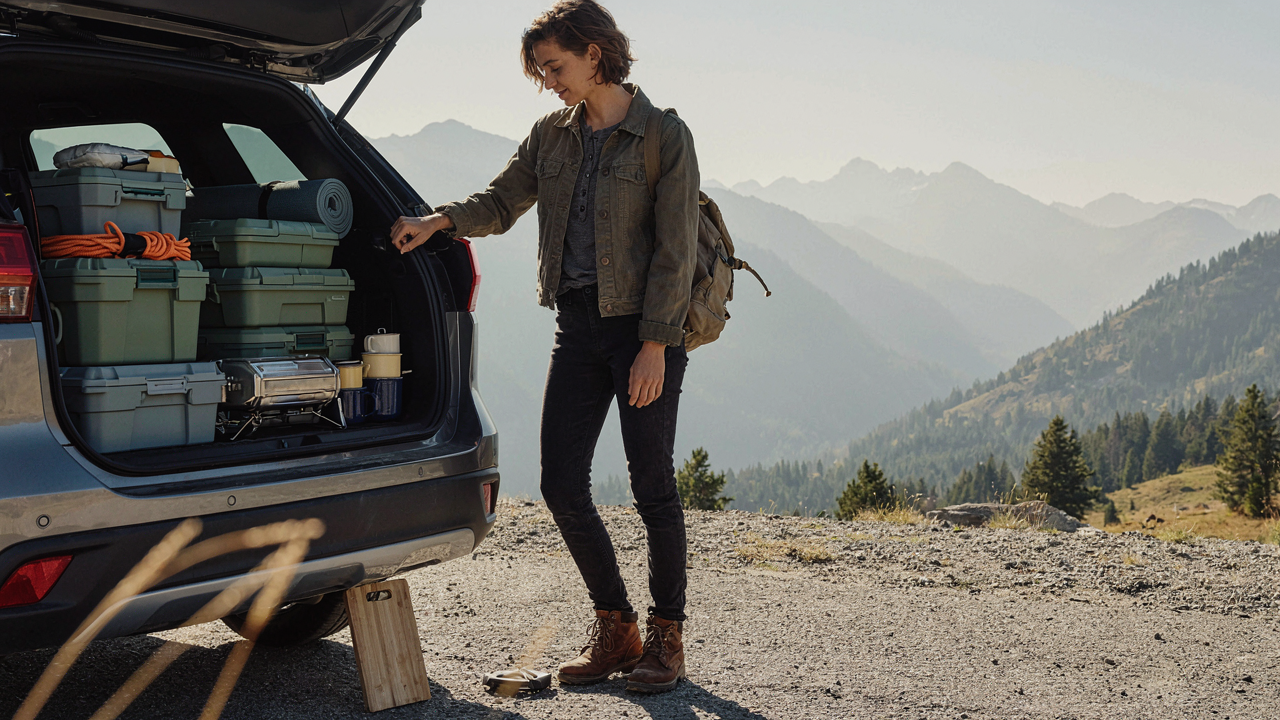
The Myth Of More Bins: Why Your “Organization” Fails

More Bins Multiply Your Problems
You want to feel in control. That’s why you buy another bin. But here’s what actually happens: each new container adds friction points, decision nodes, and maintenance overhead. This is systems thinking from engineering. In thermodynamics, entropy increases with complexity. A camping storage bin system works the same way. The more bins you own, the more decisions you make about what goes where, and the higher the cost to keep everything retrievable.
The common advice is stack bins and label them. That’s incomplete. Most people add bins reactively, after they’ve already lost something or run out of space. By then, they’ve already created a chaotic baseline. They’re organizing chaos instead of preventing it. The real mechanism is this: you need a fixed capacity first, then you design bins backward from that constraint. Without the constraint, you just buy more containers and call it a system.
When Your System Betrays You
Your needs change seasonally. Winter camping requires different gear than summer. A fixed bin layout treats camping storage like it’s static, but it isn’t. Systems that can’t adapt to shifting demands become friction points rather than solutions. They force you to either reorganize constantly or maintain duplicate storage for seasonal gear, which is the opposite of efficiency.
Start with a rotation-based protocol instead. Designate one bin for active-season gear and another for off-season. Move items between them quarterly. This removes the pressure to design a perfect permanent system and acknowledges reality: your camping needs are cyclical. The bin becomes a tool that serves your actual behavior, not a monument to an imaginary ideal version of yourself.
The “Adaptive Nest” Protocol For Camping Gear
Access Routes Before Container Shape

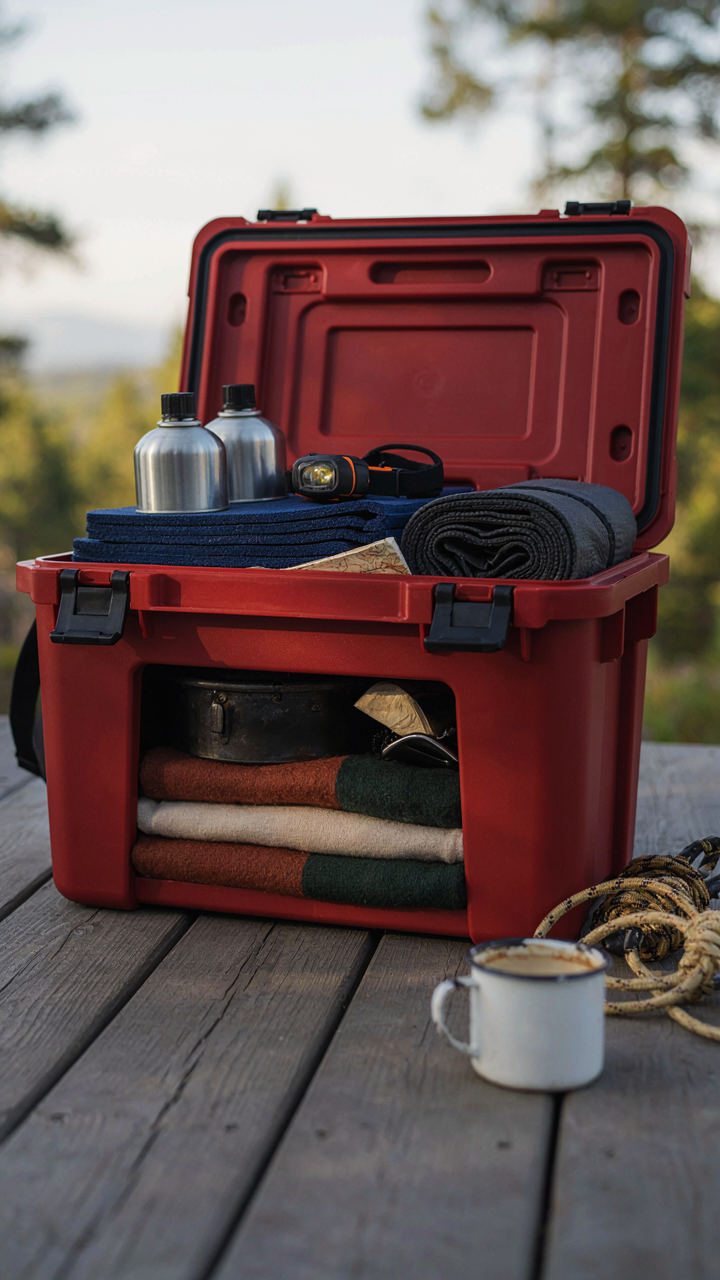
You want your camping storage bin to feel organized so you can tell yourself you’re prepared. That’s not the real problem. The real problem is that most people design bins around what fits, not around what they actually retrieve. Borrowing from logistics, your bin needs “velocity zones”—areas where high-turnover items live separate from seasonal deadweight. Frequency determines placement, not category.
Front-facing compartments or the first third of your bin should hold gear you touch every trip: fuel canisters, cooking utensils, first aid, headlamps. Everything else migrates backward. This isn’t intuitive because containers train us to maximize volume. Instead, maximize retrieval speed. A bin that forces you to unpack three layers to find your stove is a bin that doesn’t get used. Organize for the moment you need something, not for the moment you’re packing the car.
Filler Strategy That Doesn’t Waste Space
The standard advice is to buy modular organizers and subdivide your bin into neat boxes. That’s incomplete. Modular systems create dead zones—gaps between containers that trap gear and waste cubic inches. Use compression bags for soft goods like sleeping bags and tents, not because they’re trendy, but because they collapse to actual dimensions instead of holding air. Hard items (cookware, tools, batteries) stack directly into the bin’s floor and sides. The filler isn’t the organizing system. The filler is strategic emptiness that lets you rearrange based on what trip you’re running.
Pack your bin with the heaviest items lowest and centered, lighter gear on top and around the edges. This keeps the bin’s center of gravity stable in your vehicle and prevents top-heavy shifting on turns. When you’re not actively camping, leave 15 to 20 percent of the bin’s volume empty. This space absorbs new gear without forcing a complete reorganization. Your bin adapts by staying partially unfilled.
Car Tetris: Maximizing Space, Minimizing Frustration
Build Around Standard Sizes, Not Your Gear

You want your setup to feel custom because custom feels intentional and rare. Here’s what actually happens: custom inserts waste money and lock you into one configuration forever. The mechanism is constraint. Standard modular bins force you to work within proven dimensions, which trains you to pack smarter instead of buying more storage.
Rigid plastic bins come in predictable footprints: 27-inch, 35-inch, and 48-inch lengths are industry standard for vehicle storage. These dimensions match truck beds, cargo areas, and garage shelving. When you buy bins that follow these measurements, you’re not compromising. You’re aligning with the infrastructure that already exists. Switching between vehicles becomes friction-free because the bins stay compatible.
Use Vertical Real Estate Before Adding Bins
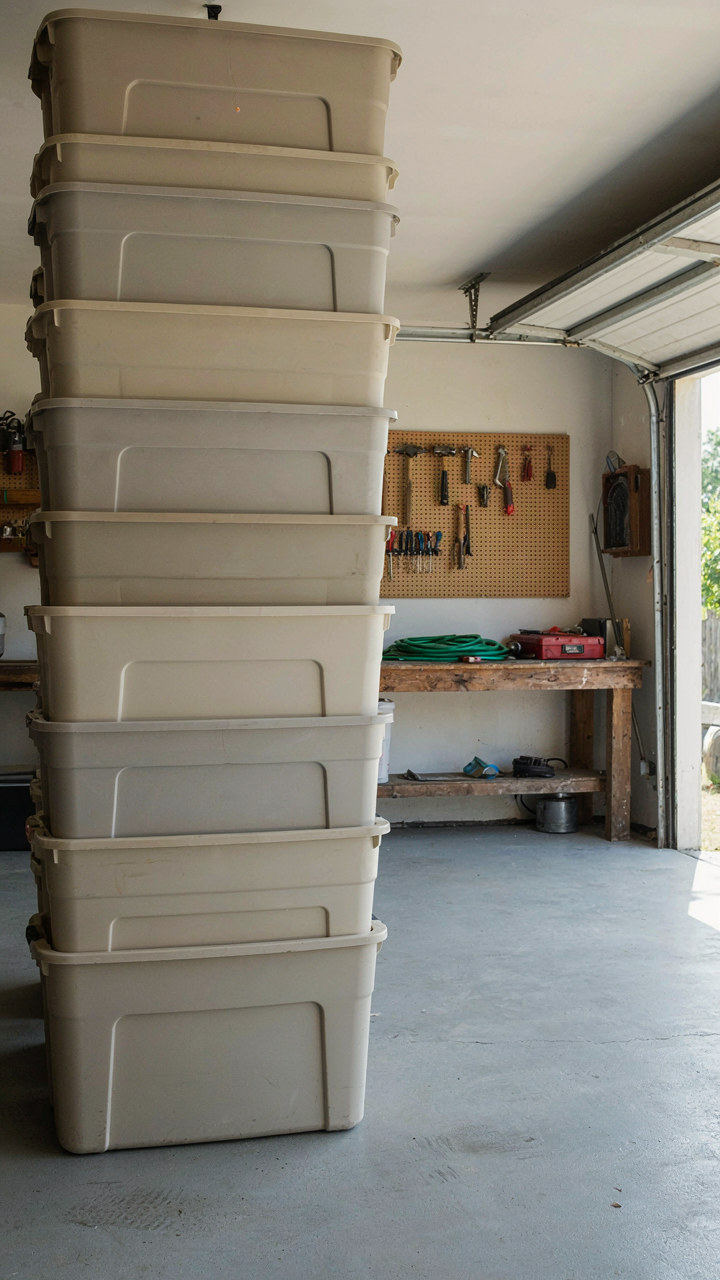
Stackability is borrowed from warehouse logistics. In that field, vertical density solves the floor-space problem. Apply it directly: your camping storage bin system gains capacity not by expanding outward but by stacking upward. Most people ignore the vertical axis because it feels less stable than it is.
Two stacked bins weigh less than one oversized bin and distribute pressure evenly across the base. The contact points matter more than the total height. Ensure the lower bin has a flat, reinforced lid rated for weight load, and the top bin sits centered. Check weight limits before stacking, but quality bins from established manufacturers support this without issue. Your garage suddenly holds twice the gear.
The “Single Layer” Principle: No Digging Required
Shallow Containers, Broad Access

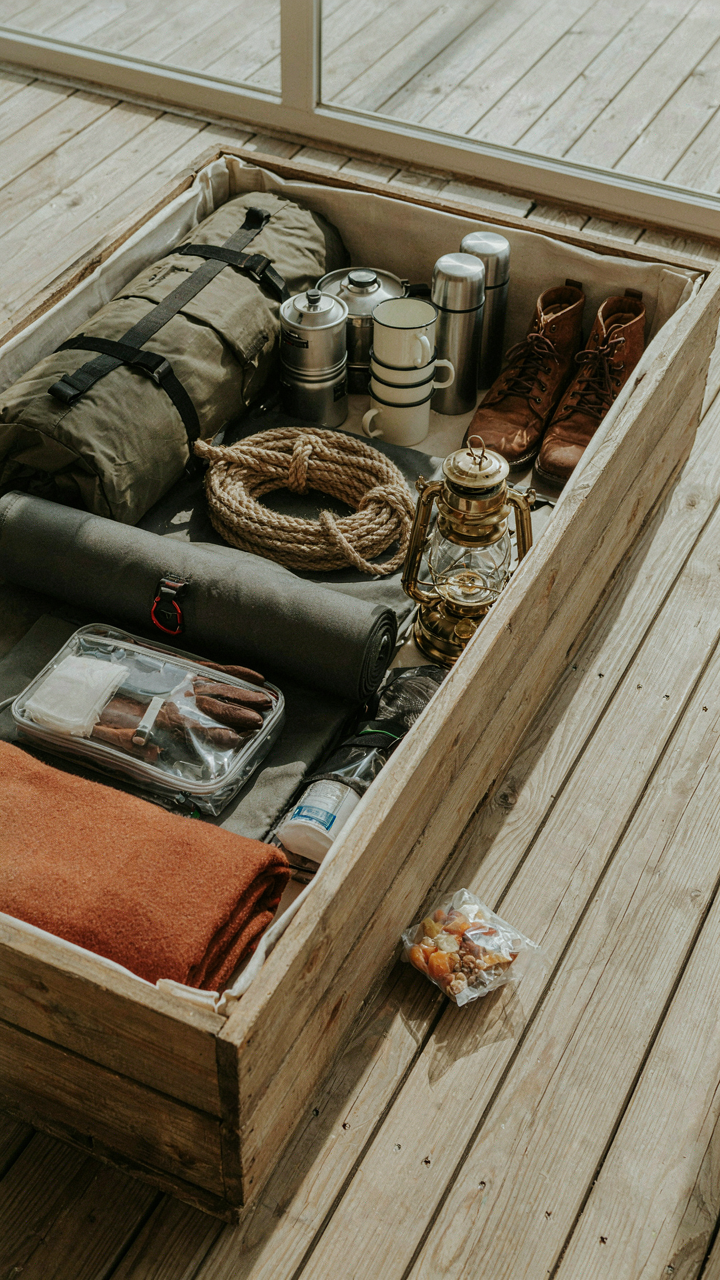
You want to feel organized without actually having to think when you pack or unpack. The real mechanism here is load depth: every item you store should sit at eye level or within arm’s reach on the first try. This isn’t about aesthetics. It’s a logistics principle from warehouse design called accessibility hierarchy, and it applies directly to your camping storage bin. Shallow bins force efficiency because you cannot stack depth.
Standard plastic storage containers run 12 to 18 inches deep. Most people fill them vertically, creating the ditch problem: you remember owning a headlamp, but it’s buried under three layers of rope and tent stakes. Shallow containers, typically 6 to 8 inches deep, eliminate that penalty. Everything you need sits visible in a single horizontal plane. You grab, you go. No inventory excavation required.
Visual Inventory At A Glance
The moment you open the bin, you should know what’s inside without touching anything. This isn’t a preference, it’s a time tax you’re either paying now or later. Clear polycarbonate containers beat opaque plastic because you see contents without opening them. Labeled lids compound the advantage: you know before you even walk to the garage what bin holds your cooking gear versus your shelter repairs.
The second efficiency gain comes from uniformity. If all your camping storage bins are the same depth and width, you stack them predictably in your vehicle or on garage shelves. You stop wasting mental energy figuring out Tetris arrangements. Consistency makes the system automatic. Once you’ve arranged your bins once, future trips require no spatial problem-solving. You load the same bins the same way every time, which means you never forget a category of gear because the structure enforces it.
The Forager’s Cache
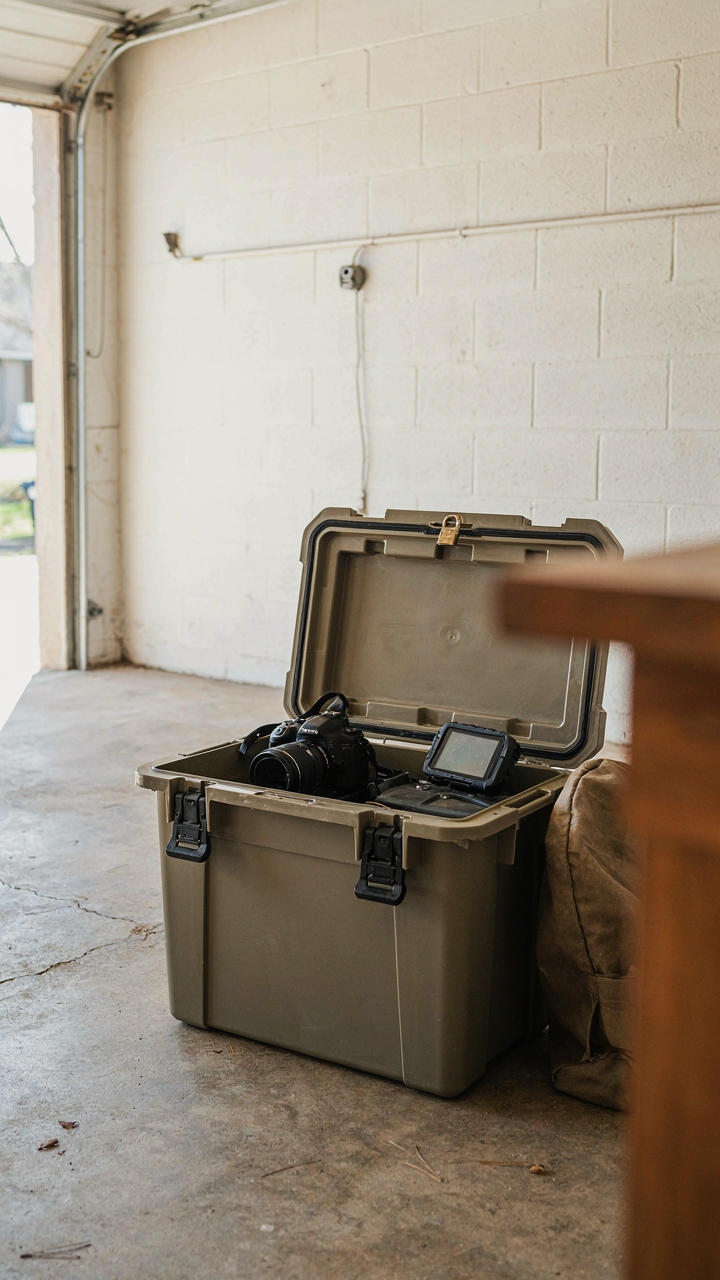
One Core Hub For Everything That Matters

You want to feel organized without actually changing your behavior. Here’s the mechanism: evolutionary biology calls this resource concentration. A forager doesn’t scatter high-calorie kills across the landscape. They cache them in one defensible location. Your camping storage bin works the same way. Consolidate irreplaceable gear, expensive items, and things you’d actually panic over losing into a single, lockable container. This isn’t about minimalism. It’s about friction reduction for the decisions that actually cost you money.
Most people spread critical items across multiple bins, their garage, their car trunk, and a closet. Then they buy duplicates because they can’t find the original. A single staging bin eliminates that tax. Use a weatherproof model with a secure latch. Store it at eye level or on a cart you can roll out. The goal is zero friction between “I need my camping gear” and “I have my camping gear.” Make retrieval so fast that you stop avoiding trips because setup feels burdensome.
Secondary Stations For Consumption Items
Low-value resources don’t belong in your premium storage real estate. Food, water, kindling, fuel, and common consumables belong in distributed, low-friction access points. Keep a smaller bin in your garage for easy restocking. Another in your vehicle if space permits. This prevents the bottleneck of one overcrowded bin that takes thirty minutes to dig through. You’re building a supply chain, not a museum.
The mechanism here is inventory velocity. Items you rotate frequently should never live behind items you use once a year. Assign cheap plastic bins or open-top containers to consumables based on usage frequency. Restock after every trip so you’re never deciding mid-packing whether you have enough fuel or dry wood. This forces discipline into preparation rather than leaving it to panic the night before. When restocking becomes automatic, forgotten gear stops being an excuse.
Garage “Hot Zones”: Ready For Rapid Deployment
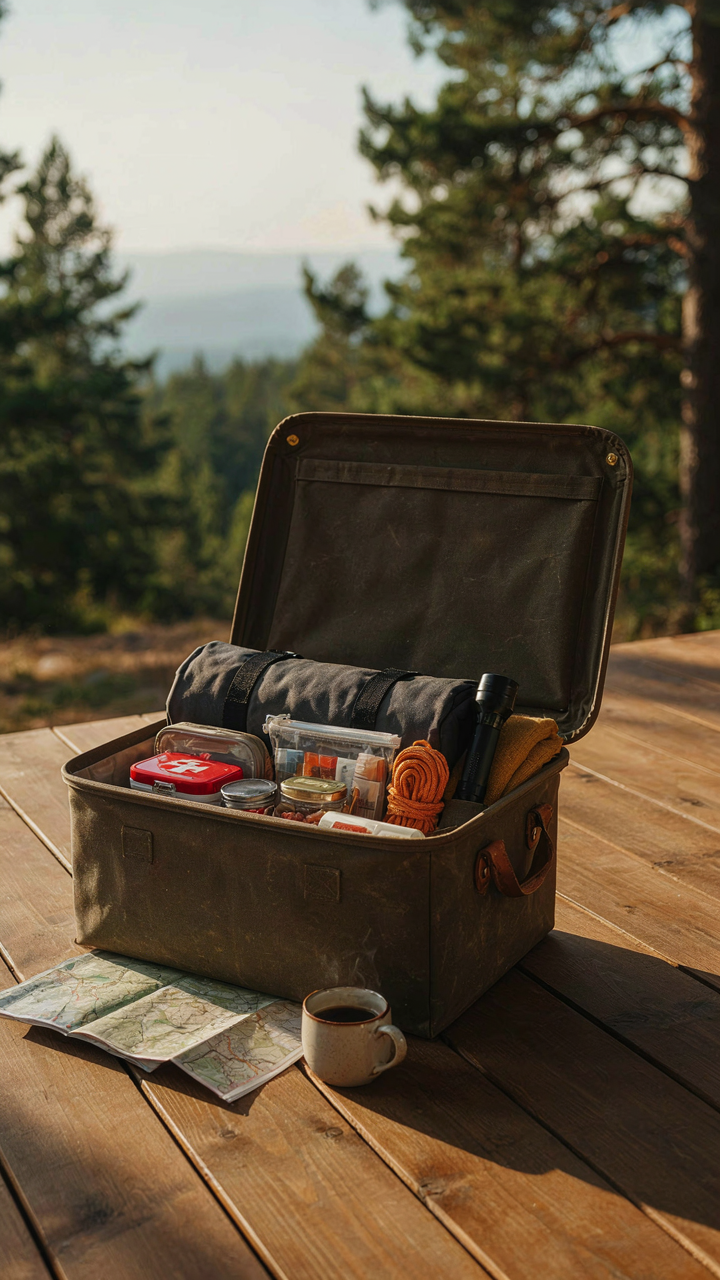
The Pre Packed Kit Strategy

You want to feel prepared without actually thinking about it when the trip arrives. That’s the real tension here. The mechanism is supply chain velocity: you’re building a staging area that collapses decision time to zero. Military logistics calls this “forward positioning.” A camping storage bin becomes your forward position, not your archive.
Most people throw everything into one bin and dig through it trip after trip. That’s friction masquerading as organization. Instead, segment your bin by use case. Create distinct micro-kits inside the larger bin, each sealed and labeled. This eliminates the moment where you stand in your garage wondering what you actually need.
- Core survival kit: Water purification tablets, first aid basics, fire starter, multi-tool. Everything stays together, always packed, checked once yearly.
- Sleep system bundle: Sleeping bag, pad, pillow in one compression bag. Grab one item, you get all three. No searching for the pad you buried.
- Cookware station: Stove, fuel, cookware, utensils in a nested container. Weight-optimized, nothing loose, fits in one corner of the bin.
- Lighting and power: Flashlights, headlamps, batteries, charging cables. Store vertically in a divided organizer so nothing rolls away or corrodes.
- Navigation and repair: Maps, compass, multi-tool duplicates, duct tape, paracord. Keeps emergency solutions separate from daily-use tools.
The second bin layer holds the optional gear: fancy cooking equipment, cameras, extra layers for specific seasons. Label these clearly so they stay optional. Your deployment time drops from thirty minutes to five because you grab the pre-packed core kit and leave. Everything else is a conscious choice, not a search operation.
The Seasonal Rotation Protocol
Seasonal rotation isn’t about swapping winter gear for summer gear on a calendar date. It’s about matching bin contents to actual trip frequency and climate patterns in your region. You rotate when conditions change, not when the calendar tells you to. Most people over-rotate, moving things constantly. Most also under-rotate, leaving heavy winter sleeping bags in the bin during July.
The protocol works like this: after each trip, assess what you actually used versus what sat untouched. Winter trips demand insulation and heat sources. Summer trips demand lightweight fabrics and sun protection. Spring and fall often blur these lines. Move items based on your next three scheduled trips, not arbitrary seasons. Keep a simple log in the bin’s lid: dates of last use, what performed, what failed. This log becomes your rotation manual. Your camping storage bin evolves from a static container into a feedback loop that knows what you need before you do.

Beyond Labels: Intuitive Grouping For Camping Organization
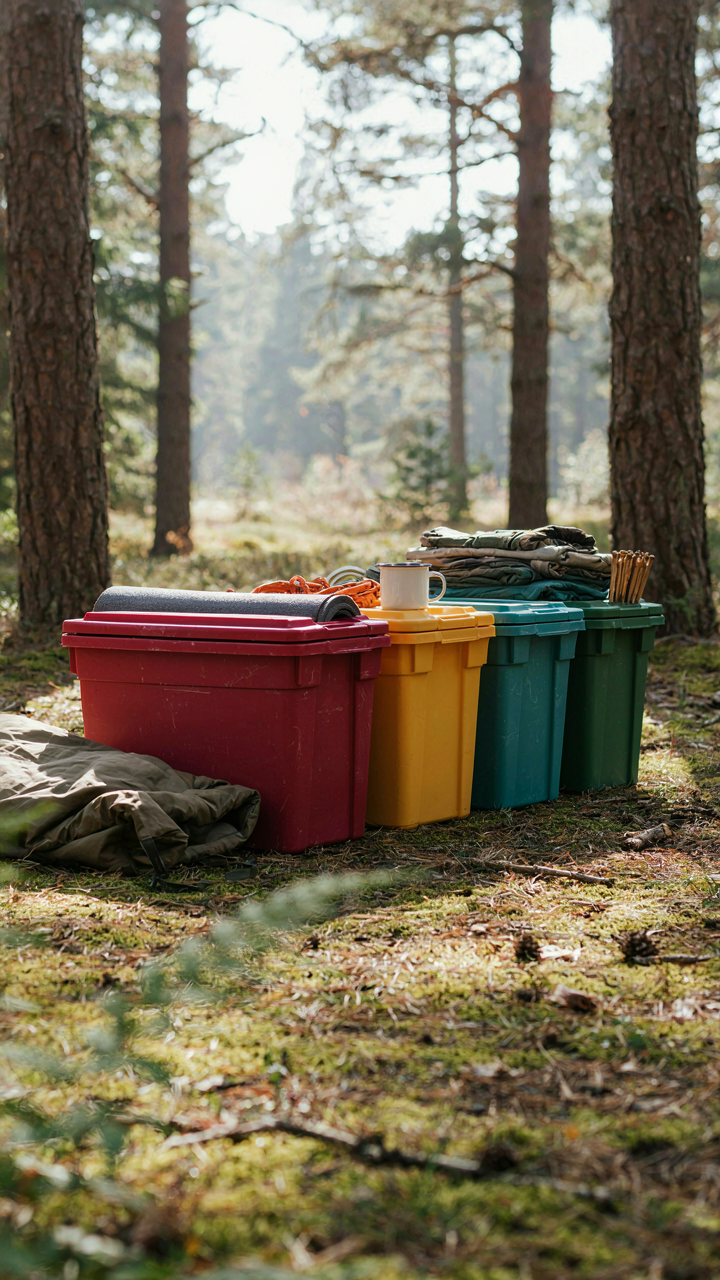
Color Coding Cuts Search Time
You want your system to feel effortless so you don’t have to think about where things go. The mechanism is simple: color bypasses your prefrontal cortex. Your brain recognizes color faster than it reads text, which matters when you’re standing in your garage at 6 AM packing a truck. This isn’t psychology theater. It’s how visual recognition actually works under time pressure.
Assign one color per category: shelter, cooking, safety, clothing. Use spray paint or permanent markers on bin lids and sides. The color sticks in muscle memory after two trips. You reach for the red bin without consulting a mental checklist. This eliminates the friction that makes people default to cramming gear wherever it fits, then forgetting what they brought.
Container Shape Signals Contents
Most advice says to just pick any bin and label it. That’s incomplete. Shape primes your hand to expect specific item dimensions before you open the lid. A wide, shallow container telegraphs that flat gear lives inside. A tall, narrow bin signals compact or vertical storage. Your hands know this already through repetition, but you can accelerate it deliberately.
Match bin proportions to what you actually store in each category. Sleeping bags go vertical in tall bins. Cooking equipment spreads flat in shallow containers. Ropes and cables coil naturally in medium boxes. This shape-to-content alignment means you spend less mental energy deciding how items fit. Your hands already know the protocol the moment you touch the bin. Grab the right shape, open it, place the item, close it.

Minimalist Gear, Maximum Freedom
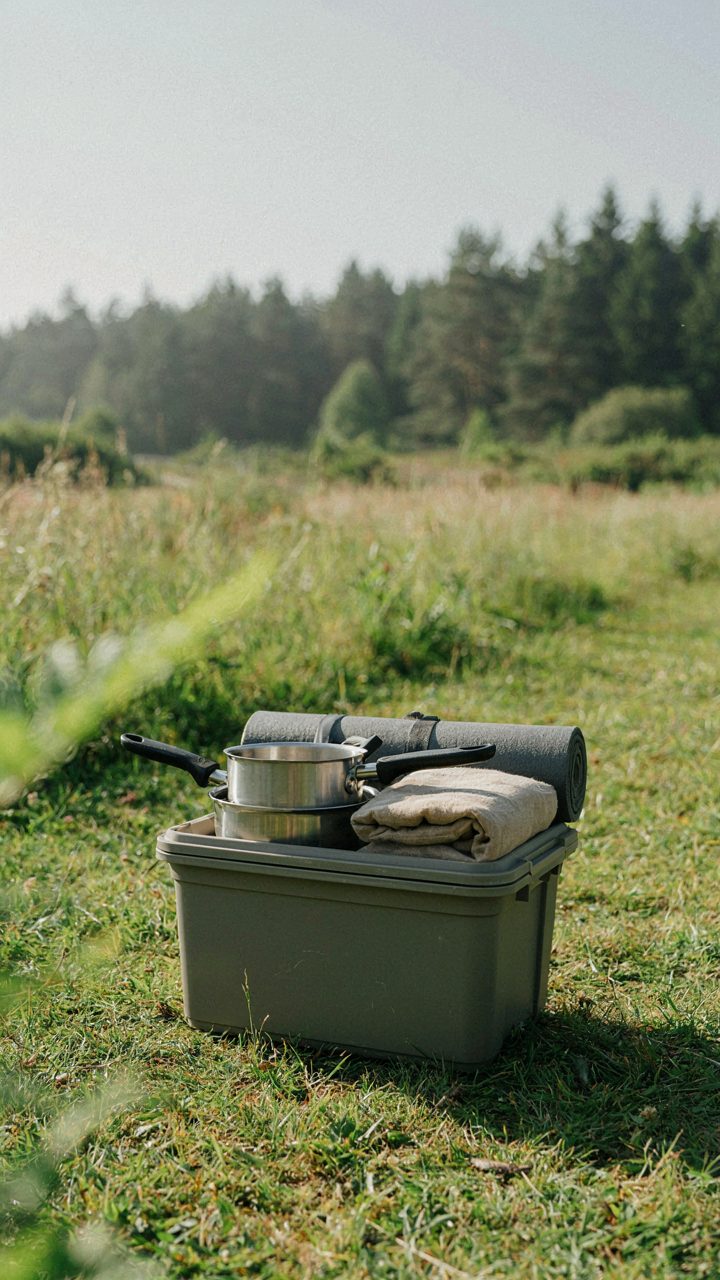
The Constraint That Clarifies Everything
You want permission to buy less. That’s the real ask here. Economics calls this the scarcity principle: constraint forces prioritization. Your camping storage bin becomes a physical budget. The moment you set a fixed size limit, every item demands justification. Most people ignore this and just accumulate. They rent bigger bins, buy more containers, pretend the problem is storage when it’s actually decision-making. The mechanism is brutal and simple: no bin expansion allowed. Ever. This kills the noise.
When your bin has walls, you stop treating camping gear like a collection and start treating it like a toolkit. You remove something before adding something. This friction is the feature, not the bug. It trains you to know your inventory. You remember what lives in there because you’ve touched it all recently. You recognize redundancy the moment you try to cram a third rope into a bin that’s already full. The bin forces you to become honest about what you actually use versus what you own out of fear or fantasy.
The Math Of Multiplying Function
Dual-purpose gear follows supply-chain logic: one item serving two roles reduces total count while maintaining capability. A tarp becomes shelter, groundcover, and windbreak. A rope handles guy-lines, bear bags, and equipment lashing. Multi-tool consolidates five discrete functions into one package. This isn’t about being precious or clever. It’s about physics: mass and volume stay constant, but functionality compounds. Your bin stays the same size while your effective toolkit expands. Most gear lists fail here because they list items, not functions. Wrong approach entirely.
Start with function, not item. Ask what you need to accomplish on a trip: weather protection, fire management, water transport, sleep system, repair capability. Then find the minimum number of objects that stack those functions. A wool blanket works as insulation, emergency shelter material, and ground layer. A steel pot cooks, carries water, and serves as a bailing tool. You’re not minimizing for aesthetics or Instagram points. You’re minimizing to fit everything into one fixed-size bin while maximizing what that bin can actually do.

The Real Problem Isn’t Your Gear; It’s Your Inflexible Mindset Pretending To Be A System
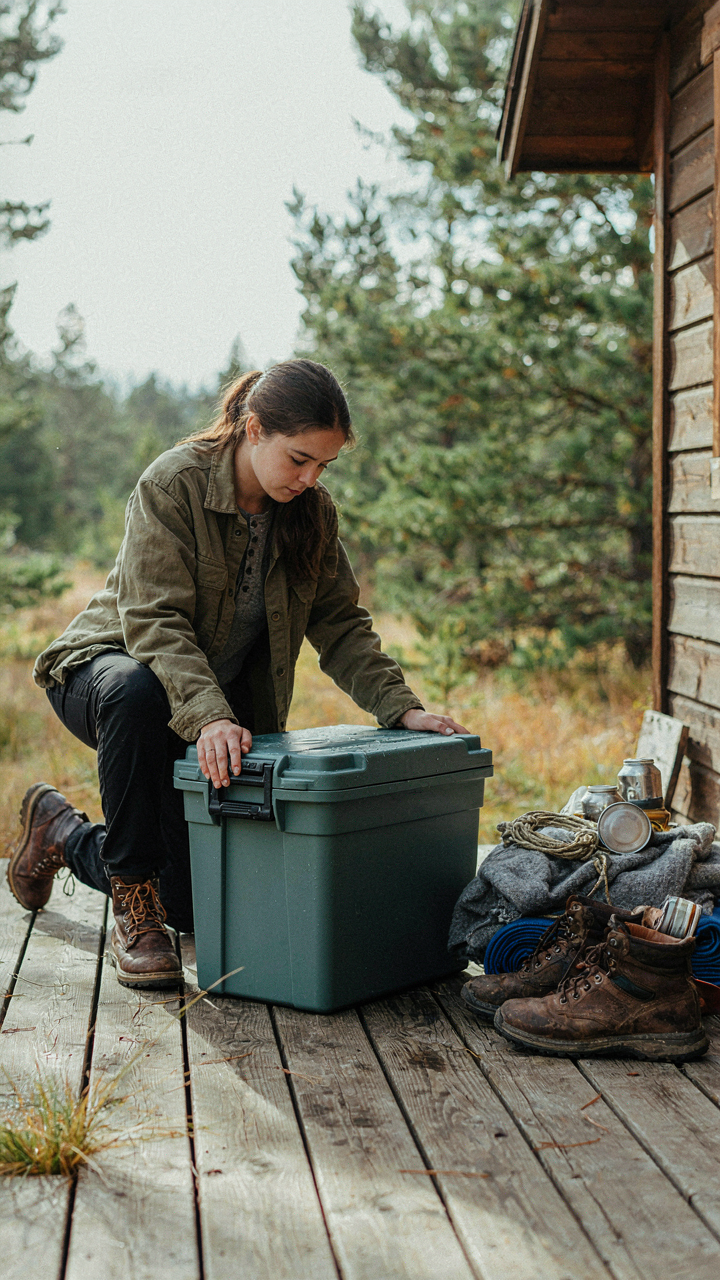
Most people buy a camping storage bin and expect their life to organize itself. It won’t. You need to stop treating storage as a solution and start treating it as a constraint that forces better decisions. Pick one bin today. Fill it with only what you actually use on trips. Delete everything else. Watch how fast your camping improves when you stop hauling garbage. A camping storage bin doesn’t fix chaos; ruthlessness does.