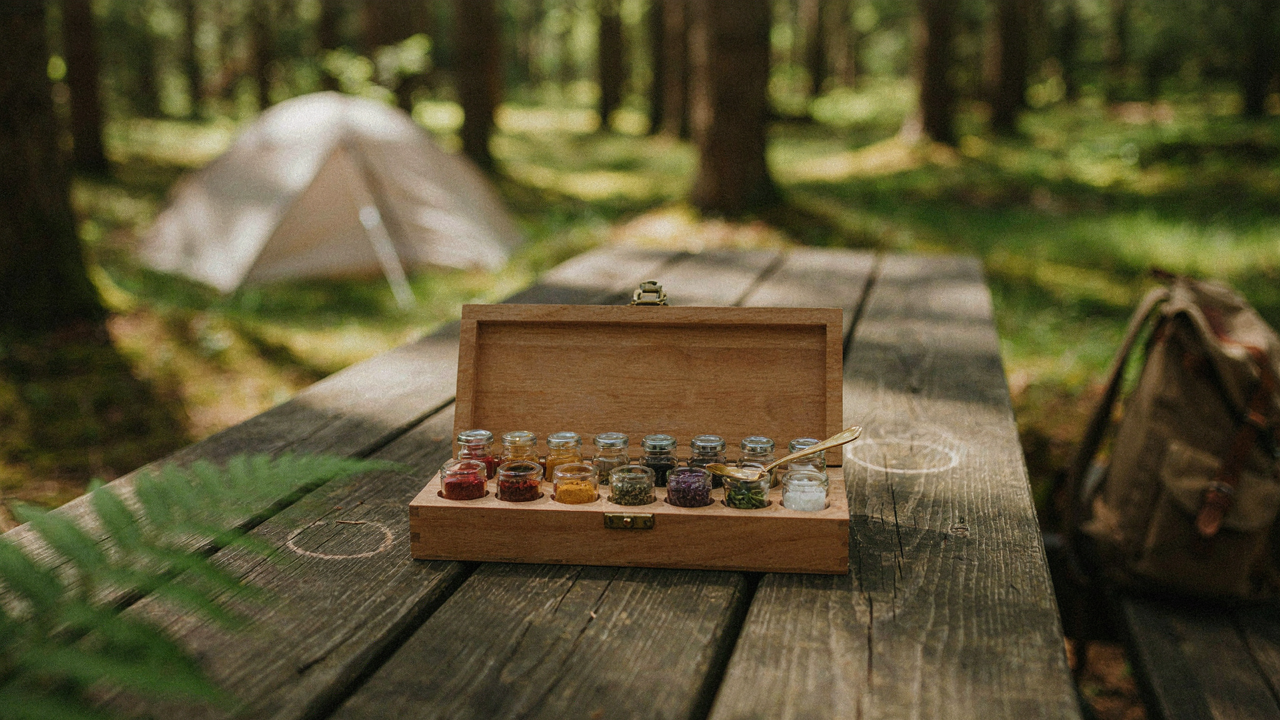
The Illusion Of Variety: Why Your Camping Spice Kit Fails
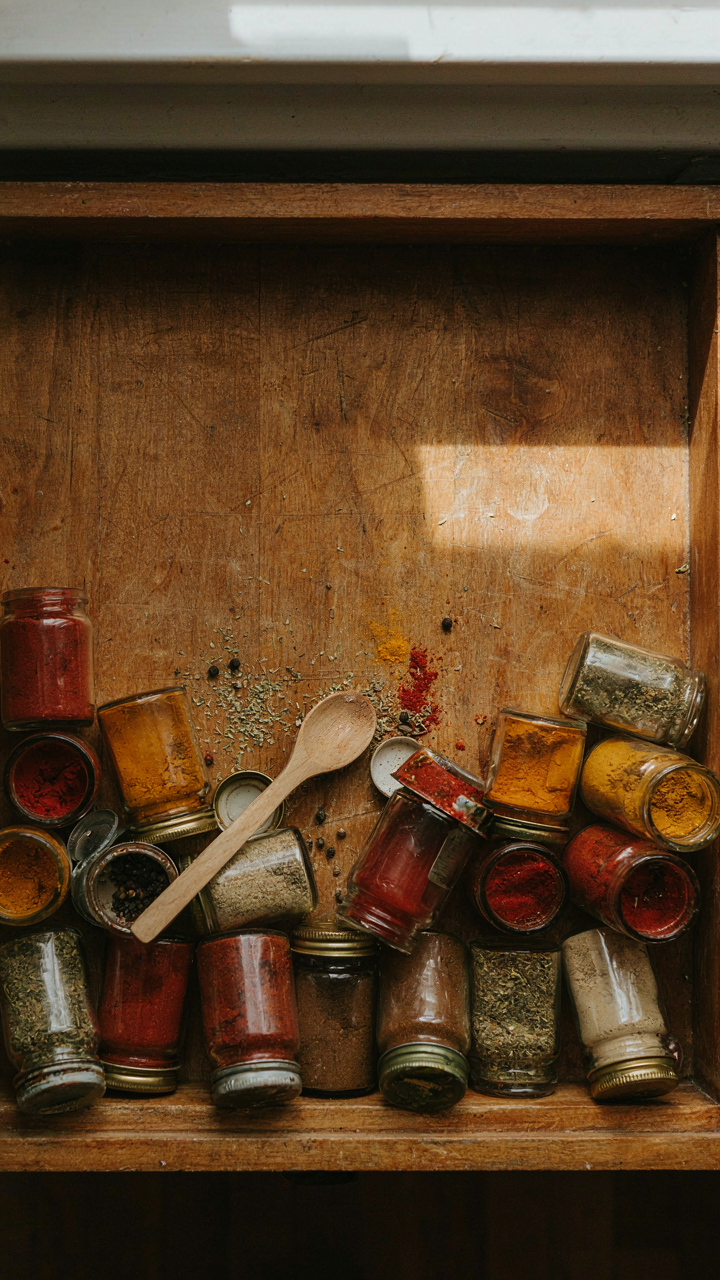
More Spices Doesn’t Mean Better Meals
You think a bigger kit signals preparedness. That’s the real trap. The mechanism is simple: you optimize for optionality instead of usability. Most campers pack twelve to twenty spices, then use three. The rest sit there, taking up weight and space, creating decision paralysis when you’re hungry and tired at the campsite.
The common advice says “bring variety.” That’s incomplete. What matters is anchor spices that work across multiple meals. Salt, black pepper, garlic powder, and cumin handle sixty percent of camp cooking. Everything beyond that is insurance you’ll never claim. Your kit fails because you conflated abundance with capability.
The Satiation Problem
Think of your taste buds like a market: too many signals competing for attention collapse into noise. This is satiation from economics applied directly to flavor. When every meal has different spices, your palate stops registering novelty by day three. You’ve trained yourself to taste nothing.
The fix is counterintuitive. Build your kit around repeating spice combinations across different bases. Cumin and chili powder work for beans, rice, and potatoes. Garlic powder and oregano work for eggs, vegetables, and canned meats. The constraint forces flavor coherence. You stop chasing variety and start building meals that actually taste like something after a week in the field.
The “Essential Eight” Bushcraft Spice Kit Protocol

Flavor Density Over Variety

You want to feel prepared without hauling dead weight. Here’s the mechanism: your taste buds have a signal-to-noise problem. Add too many spices and each one dilutes the impact of the others. The constraint of limited space forces the only decision that matters: which eight spices create the most flavor combinations with the least volume.
Start with spices that work across protein, vegetable, and starch. Salt and black pepper are non-negotiable baselines, but they’re not enough to rescue bland camp food. Cumin, paprika, garlic powder, onion powder, cayenne, and oregano form the backbone. These eight don’t compete for palate space. Each one pulls a different lever in your nervous system.
Force Multipliers In Dry Form
Economics calls this leverage: output divided by input. A single teaspoon of cumin shifts an entire pot of beans. Garlic powder and onion powder work the same way, concentrating what would take fresh ingredients to accomplish. Dried spices are already dehydrated, so they’re lighter than fresh and won’t spoil in a pack.
The mistake most people make is bringing spices that only work in one context. Oregano works in beans, rice, eggs, and meat. Paprika works in soups, on eggs, and as a rub. Cayenne adds heat to anything. Store each in a small plastic vial with a shaker top, and you’ll never waste a pinch or create spillage that attracts animals. Label every container clearly because you won’t remember which is which after dark.
Beyond The Jar: Sourcing And Prepping Your Travel Spices
Grind Fresh: Superior Flavor Science

You want people to think you’re the person who knows how to eat well in the backcountry. That status marker only works if the food actually tastes better. Chemistry explains why: grinding releases volatile oils trapped inside whole spices, and those oils lose potency within hours. Pre-ground spices you buy have already lost this battle. The aromatic compounds evaporate or oxidize the moment the grinder breaks the seed coat.
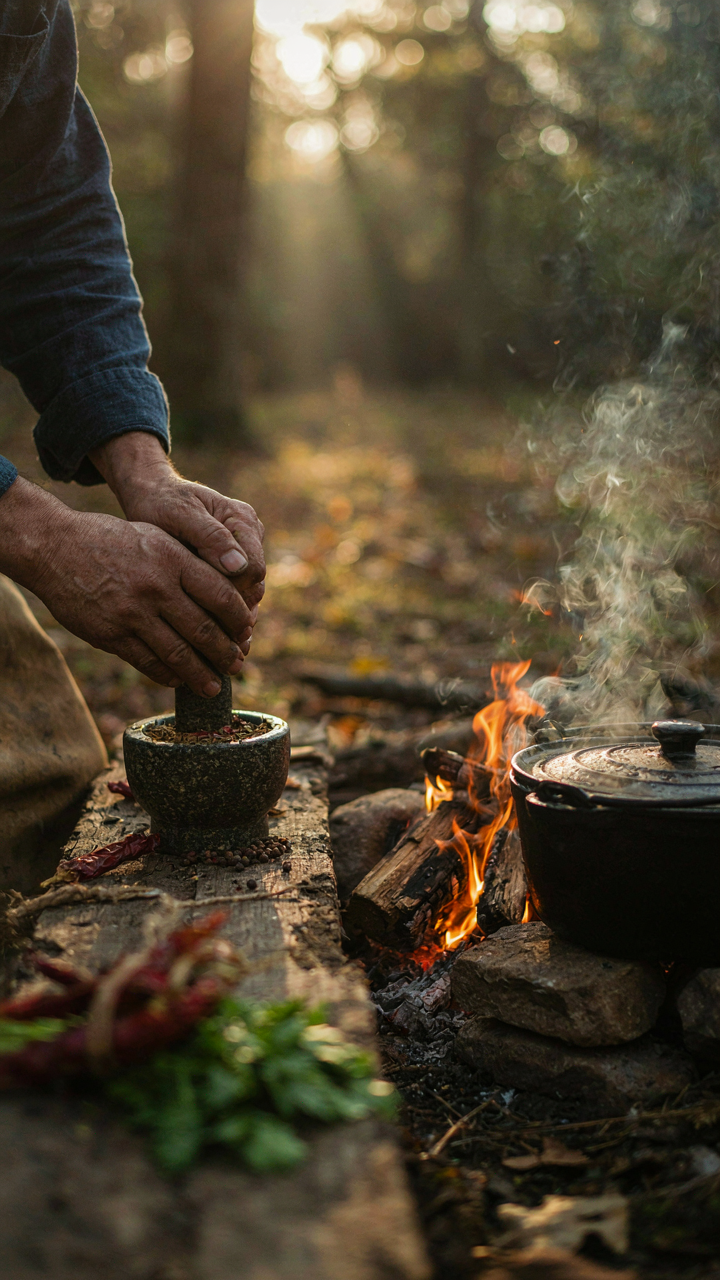
Bring a small manual grinder or mortar and pestle. Grind spices the morning of cooking or the night before, store them in an airtight container, and use them immediately. A two-ounce grinder weighs almost nothing and turns stale, dusty powder into something that actually seasons food. This is the difference between eating at a campsite and eating well at one.
Toasting Whole Spices: Unlocking Hidden Aromatics
The Maillard reaction is a biochemical process that creates new flavor compounds when heat applies to amino acids and reducing sugars. In camping spice prep, this means toasting whole spices over low flame before grinding releases aromatic notes that don’t exist in the raw form. You’re not just heating them. You’re triggering flavor creation.
Toast spices in a dry pan or small skillet over your camp stove on low heat for two to three minutes, stirring constantly. Stop the moment you smell the aroma sharply. Any longer and you burn them into bitterness. Grind immediately after cooling. Toast cumin, coriander, fennel, and cardamom this way. The difference is immediate and non-negotiable.
The Portable Spice Kit: Dispelling Container Myths

Weight Over Appearance

You want your spice kit to look like it belongs in an expedition catalog. That’s status anxiety, and it costs you ounces. The real mechanism is load management: every gram you carry subtracts from food, water, or shelter. Ultralight backpacking solved this problem decades ago by stripping containers to function alone. A spice kit follows the same physics. Durability matters only when it prevents spill or contamination. Everything else is decoration you’re paying weight for.
Small aluminum tins, plastic film canisters, or even pill bottles outperform branded camping containers because they shed aesthetic pretense. Seal them tight, label the top, and stack them in a ziplock. The container’s job is containment, not Instagram presence. Test any option by dropping it from waist height onto rock. If the seal holds and nothing leaks, it works. Replace it when it fails, not when it looks worn.
Sealing For Flavor Retention
Oxygen degrades spice faster than time does. This is oxidation, the same chemistry that rusts metal and browns apples. Your sealed container is a barrier against the mechanism that kills potency. Most camping advice treats sealing like an afterthought. It’s not. A loose lid lets humidity and air cycle through every time you open it, and spices lose volatile oils—the compounds that make them taste like anything—to evaporation.
Screw-top containers beat snap-lids because threads create friction that resists pressure changes. Test the seal before you leave camp by squeezing the container gently. If air escapes, upgrade it. Silica gel packets add minimal weight and absorb ambient moisture inside the container, which extends shelf life in humid climates. Store your kit in the coolest part of your pack, away from direct sun and heat sources. These steps preserve the difference between cardboard-tasting camp food and meals worth eating.
DIY Camping Spice Kit: The Antifragile Approach
Your Kit Adapts Or It Dies

You want a spice kit that works everywhere because you’re tired of bland camp food making you feel like you’re camping wrong. Here’s the mechanism: biology teaches adaptation, not rigid design. Your kit doesn’t survive by being perfect for one scenario. It survives by responding to what the environment demands. A static spice selection fails the moment conditions change. Temperature swings, moisture, limited cooking equipment, different protein sources each trip. The kit that flexes wins.
Most people build kits around recipes they plan to cook. That’s backwards. You should build kits around the variables you can’t control. Altitude affects cooking time and flavor perception. Ingredient availability at trailheads shifts by season. Cooking method changes based on gear. Your spice kit needs to handle salt loss in high humidity, flavor intensity shifts at elevation, and protein types you didn’t predict. Start by identifying which three spices work across the most conditions, then layer in situational spices as backup. This isn’t minimalism for style. It’s design for survival.
The Advantage Of Constraint
Every spice you pack creates weight and decision fatigue at the campsite. Evolution selects for efficiency because efficiency extends your range. A ten-spice kit sounds comprehensive until you’re standing at a stove at dusk realizing you forgot half of them or they clumped together. The minimalist spice selection wins because fewer options force better combinations and less cognitive load when you’re tired.
The real advantage isn’t fewer spices. It’s that constraint forces you to learn what each spice actually does instead of treating them as insurance policies. Salt, acid, and one heat-forward spice handle 70 percent of camp cooking. Cumin handles proteins. Black pepper handles everything else. Those five spices solve more problems than fifteen because you know their mechanics. You mix them in different ratios instead of grabbing a new jar. This approach scales across seasons, elevations, and protein types without adding weight or decision friction.
Integrating Your Backpacking Spice Kit Into Camp Cooking
Build Complexity Through Layering

You want your camp meal to taste intentional, not like you’re eating survival rations. That’s the real driver here. Layering works like chemistry: each spice interacts with heat, fat, and acid at different stages, creating depth instead of a flat one-note burn. Most people dump everything at once and wonder why their food tastes muddy.
Start with aromatics in fat first. Garlic powder or onion powder needs heat to activate its volatile compounds. Add your warm spices next: cumin, coriander, cinnamon if applicable. These release oils when heated. Fresh or bright spices like citric acid packets, dried cilantro, or chili flakes go in last, right before serving, so they don’t oxidize into bitterness. The sequence matters more than the quantity.
Timing Determines Potency
Wrong timing wastes your spice kit. Add cayenne too early and it turns acrid and flat. Add it at the end and it punches through every bite. This applies across your whole kit: volatile compounds have different flash points. Cumin tolerates ten minutes of simmering. Oregano survives it. Black pepper loses its bite after three minutes of heat.
Cook your base first, then taste. Add spices in stages rather than all upfront. If you’re simmering something over a camp stove for twenty minutes, introduce half your spice load at the ten-minute mark and the rest at finish. This keeps flavor alive instead of burned. Adjust your protocol based on cook time: longer cooking demands earlier addition of stable spices, last-minute additions for volatile ones.
Advanced Travel Spice Rack Tactics: The Flavor Matrix

Pairing Spices: Unexpected But Effective Combinations

You want to feel like you’re not just surviving camp food, you’re orchestrating it. Here’s the mechanism: most spice combinations fail because people layer flavors in the same direction instead of creating tension. Cumin and coriander both push warm and earthy, so they flatten each other. Cumin plus a acid like lime or lemon and a heat source like cayenne creates contrast, which your palate registers as complexity. The best camp meals use spices that push against each other, not reinforce the same note.
Garlic powder and smoked paprika seem obvious together, but add black pepper and a pinch of cinnamon to ground meat and you’ve created dimensionality that tastes intentional, not random. Turmeric with black pepper and fresh ginger hits sweet, savory, and warm simultaneously. Chili powder works in desserts with salt and cocoa because the heat disrupts sweetness. The rule: pick one dominant spice, one that contradicts it, one that bridges them. This three-spice method compresses complexity into minimal weight.
The Four Flavor Pillars
Culinary chemistry borrowed from cooking science identifies four sensory targets your mouth recognizes independently: sweet, savory, acidic, and bitter. A camping spice kit works because these four categories give you a decision tree instead of guessing. You’re not looking for the perfect combination, you’re balancing coverage across all four profiles so no single note dominates the palate.
- Sweet: Cinnamon, vanilla powder, or a touch of brown sugar. Creates comfort and offsets heat. Essential when your protein is bland.
- Savory: Garlic powder, onion powder, or mushroom powder. This is your base layer. Most camp meals under-deploy savory because it’s not glamorous.
- Acidic: Lime powder or citric acid crystals. Cuts through fat and wakes up dull meals. Weighs almost nothing and solves more problems than any single spice.
- Bitter: Black pepper, turmeric, or cocoa powder. Adds sophistication and prevents meals from tasting one-dimensional. Use sparingly—bitterness overwhelms quickly in confined spaces.
- Heat: Cayenne or chili powder. Acts as a flavor amplifier, not just fire. Small amounts heighten perception of other spices.
The mistake most people make is stacking only two or three of these. You end up with meals that taste one-note and forgettable. Test your spice combinations by asking: which profile am I missing? Add lime powder to a savory stew that tastes flat. Add a pinch of cinnamon to chili that needs depth. Add garlic powder to anything sweet you’re attempting. Each addition should close a gap, not add more of what’s already there.
Maintaining Your Travel Spice Kit: Longevity And Potency

The Enemy: Heat, Light, And Moisture

You’re worried about wasting money on spices that go dead before you use them. Here’s the mechanism: spices lose potency through volatile oil degradation, which happens faster under three conditions. Heat accelerates molecular breakdown. Light triggers photochemical reactions that break down flavor compounds. Moisture causes clumping and mold growth, which renders spices unusable long before they spoil visibly.
Store spices in airtight containers away from direct sunlight and heat sources. Keep them in a cool, dark place inside your camping kit, ideally in sealed glass jars or thick plastic containers with tight lids. Temperature swings in tents or vehicle storage wreck spices faster than steady, mild conditions. The goal is slowing the chemical clock that degrades what you paid for.
When Spices Stop Working
Most people throw out spices based on a date printed on the label, which is arbitrary and useless. The real signal is sensory. Open your containers and smell. If the aroma is faint or absent, the spice has lost volatility. Taste a small amount. If it registers as mild or flat, it no longer carries the potency you need for camping meals where you’re eating repetitive foods and need flavor impact.
Check your kit before each trip. Cumin loses strength faster than salt. Paprika and chili powder degrade quicker than peppercorns. Whole spices like coriander seeds last longer than ground versions because they have less surface area exposed to air. Replace ground spices every 6-12 months depending on storage conditions. Replace whole spices every 12-24 months. This is your maintenance cycle, not a suggestion.
The Myth Of The Perfect Camping Spice Kit

Your Trip Doesn’t Need What Instagram Thinks It Does

You want the validation of looking prepared. That’s the real driver here. The mechanism at work is scarcity mindset: you assume fewer spices mean worse meals, so you overpack to feel in control. This is inverted. The best camping meals come from constraint, not abundance. Limited spices force you to layer flavor through technique instead of relying on variety. You cook better when you have less to hide behind.
Most advice on camping spice kits treats them like scaled-down versions of home setups. Wrong. Home cooking and campfire cooking operate under different physics. At home, you control heat precisely and season after tasting. At camp, you season before the food hits heat, you adjust blind, and you work with fire that varies wildly. Your spice kit isn’t a pantry subset. It’s a tool matched to a specific constraint: mobility, limited heat control, and one-pot meals. Design it for that reality, not for how cooking works at your kitchen counter.
Cook Your Way Into What You Actually Need
Stop buying spice kits based on what the packaging promises. Buy based on what you’ve actually cooked. This cuts through the noise immediately. Spend a month camping with just salt, pepper, and garlic powder. Cook everything you normally eat. Pay attention to what you reach for more than once. That’s your signal. When you realize you want cumin or chili powder, you’ve earned the right to add it. You’re not guessing at aspirational flavor profiles anymore. You’re responding to real meals you’ve made and tasted.
The constraint forces clarity. You’ll discover that five spices you use repeatedly beats fifteen spices you forget exist. Your kit becomes a reflection of actual cooking patterns, not magazine recommendations. Start minimal, add only what solves a problem you’ve encountered. This method takes longer but produces a kit you’ll actually use, not one that sits in a stuff sack while you season everything with salt and regret.
The Real Problem Isn’t Your Spice Kit; It’s Your Refusal To Commit To Flavor
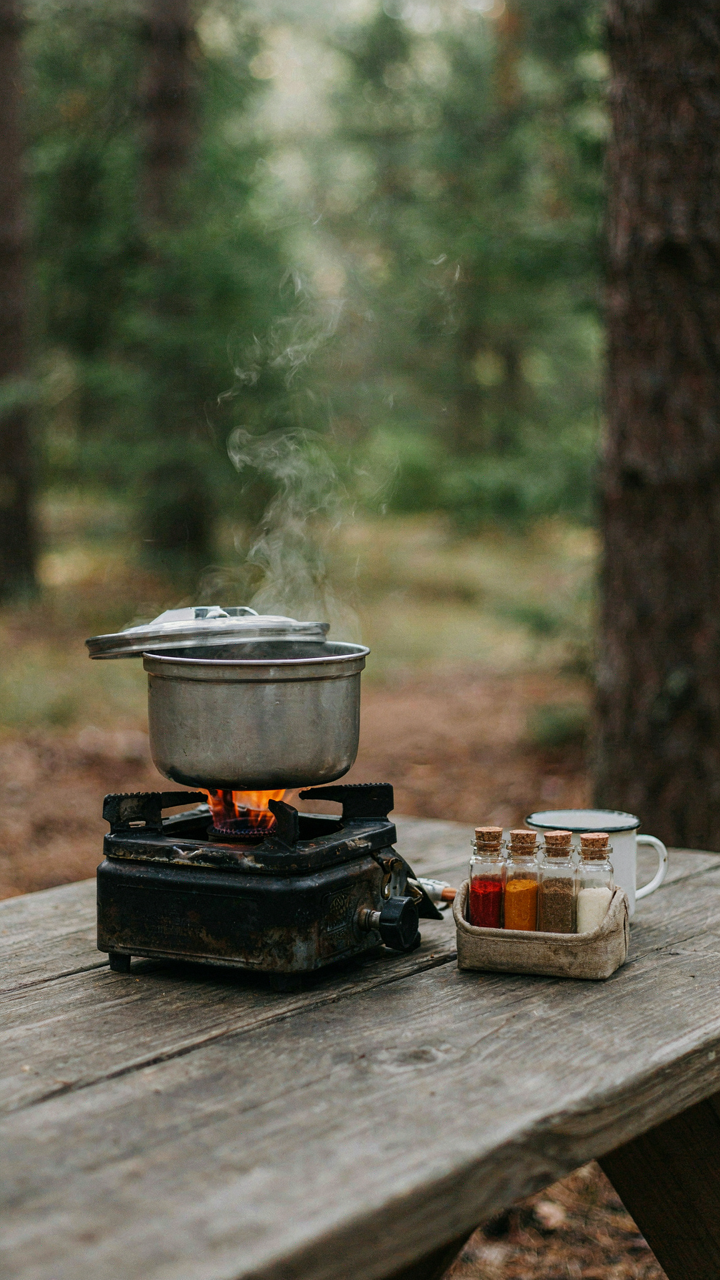
Most campers build a spice kit and never use it. They pack cumin and paprika like insurance policies, then cook bland chicken over a fire anyway. The kit isn’t the problem. Your assumption that camping food has to taste like survival rations is. Buy three spices you actually crave. Use them on every meal. Stop treating flavor as optional when you’re already uncomfortable sleeping on the ground. The difference between a forgettable trip and one you remember isn’t the tent or the view. It’s whether you ate like you deserved to.