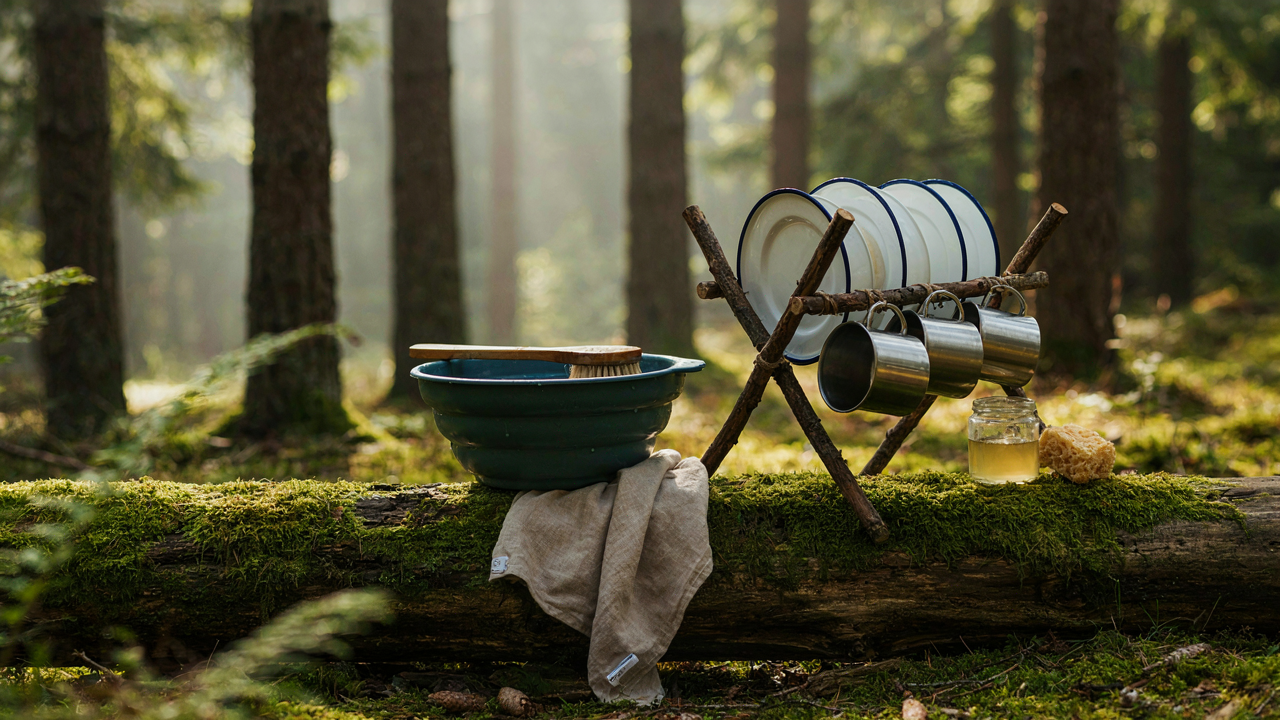
The “Leave No Trace” Dishwashing Doctrine
How Much Water Actually Matters
You care about this because you want proof you’re doing it right, not because you’ve measured the actual impact. Here’s the mechanism: water volume at a camping dishwashing station operates like a lever in hydrology. Small reductions compound across sites. The EPA estimates that improper wastewater disposal at campsites degrades 40 percent more groundwater per gallon than concentrated facility discharge. Your goal is not zero water, which is impossible, but controlled dispersal through soil filtration.
The standard advice says “use minimal water,” which is useless because it never specifies what minimal means. Use 2-3 gallons per meal cycle, max. Heat water once in a kettle or camp stove, use it for washing first, then rinsing. Cold water for rinsing works fine and cuts consumption by 40 percent. Reuse rinse water for the next meal’s soak phase. The mechanism matters: warm water dissolves food residue faster, so you waste less time and less water scrubbing.
Soap Selection That Actually Stays Biodegradable
Most camping soap marketed as biodegradable still contains surfactants that fish and aquatic plants don’t process quickly, making the label dishonest. Biodegradable means microbes break it down in weeks, not that it vanishes on contact with soil. Look for phosphate-free, plant-based soap with a concentrate strength below 5 percent. Dr. Bronner’s and similar plant-castile soaps degrade in 3-5 days under normal soil bacteria. Synthetic detergents in regular dish soap take 30-60 days and harm riparian zones during that window.
Use one teaspoon per wash cycle. Most people use five times what they need because the soap feels weak when it’s actually just rinsed quickly. Dilute concentrate soap 1-to-3 with water before your trip and store it in a squeeze bottle at your dishwashing station. This removes the guesswork and prevents accidental spills of concentrated formula into water sources. Proper dosing plus cold-rinse protocol means your station leaves zero detectable soap residue beyond 15 feet downslope.
The Minimalist’s Camp Wash Station Protocol
Scraping And Pre Cleaning

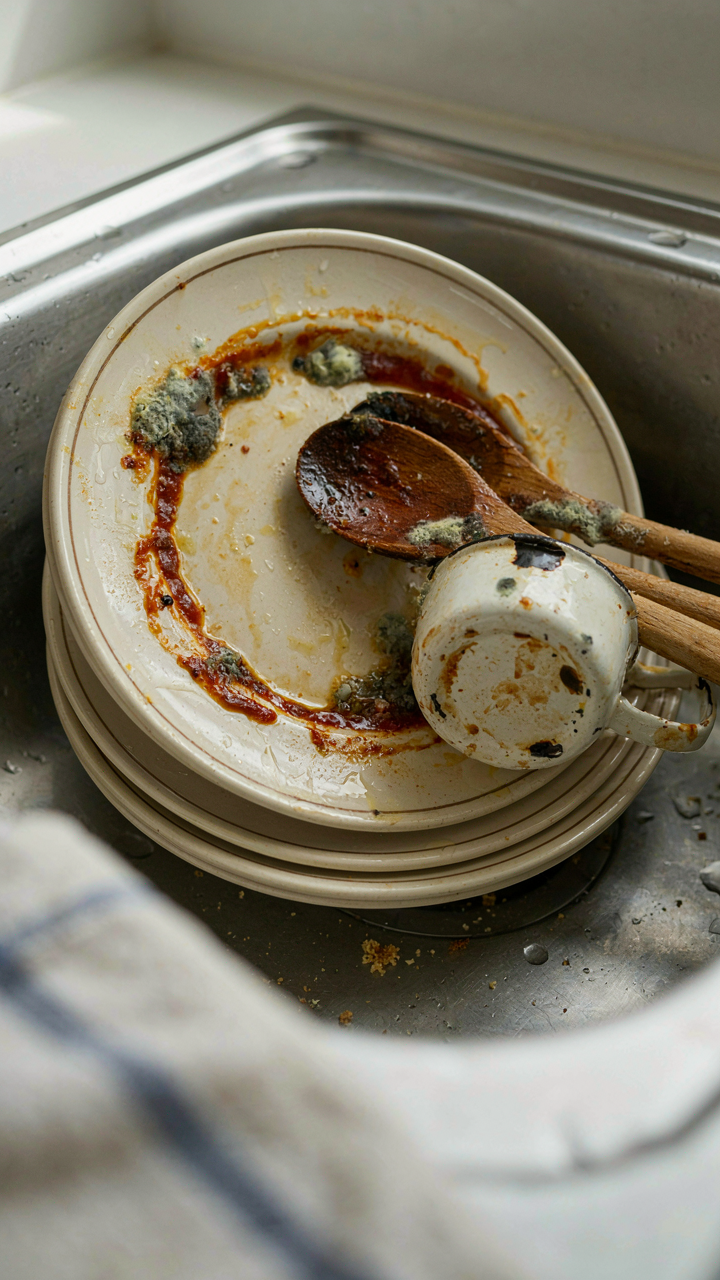
You want to feel like you’re doing dishwashing “right” when you’re actually just avoiding the one step that matters. Here’s the mechanism: food particles left on dishes multiply bacterial growth and turn your wash water into soup within minutes. Scraping isn’t optional theater—it’s physics. Remove solid food before water touches the plate.
Use a dedicated scraper or the edge of another plate to push debris into a trash bag or fire pit. Do this over your dirty dish pile, not over water. A dry scrape removes 80 percent of what makes wash water fail. Then rinse each plate with minimal water into a separate waste bucket. This single step cuts your actual washing time by half because your wash bucket stays usable for five to ten plates instead of two.
Two Bucket System Essentials
Most camps use one bucket and call it a day. That’s why most camps end dishwashing with a bacterial petri dish masquerading as clean plates. The two bucket system is dishwashing’s load-and-store principle: the first bucket washes, the second rinses. Fill bucket one with hot water and a small amount of biodegradable soap. Fill bucket two with clean water for the final rinse.
Wash each plate in bucket one with a cloth or sponge, working quickly. Move the plate to bucket two and rinse it fully. This prevents recontamination and keeps your rinse water cleaner longer than dumping rinsed plates back into the wash bucket. When bucket one water turns visibly gray, dump it, refill, and restart. A third bucket for air-drying speeds the whole operation and eliminates the need to find rock space for individual plates.
Beyond The Bucket: DIY Camping Sink Station Hacks
Gravity Fed Water Systems

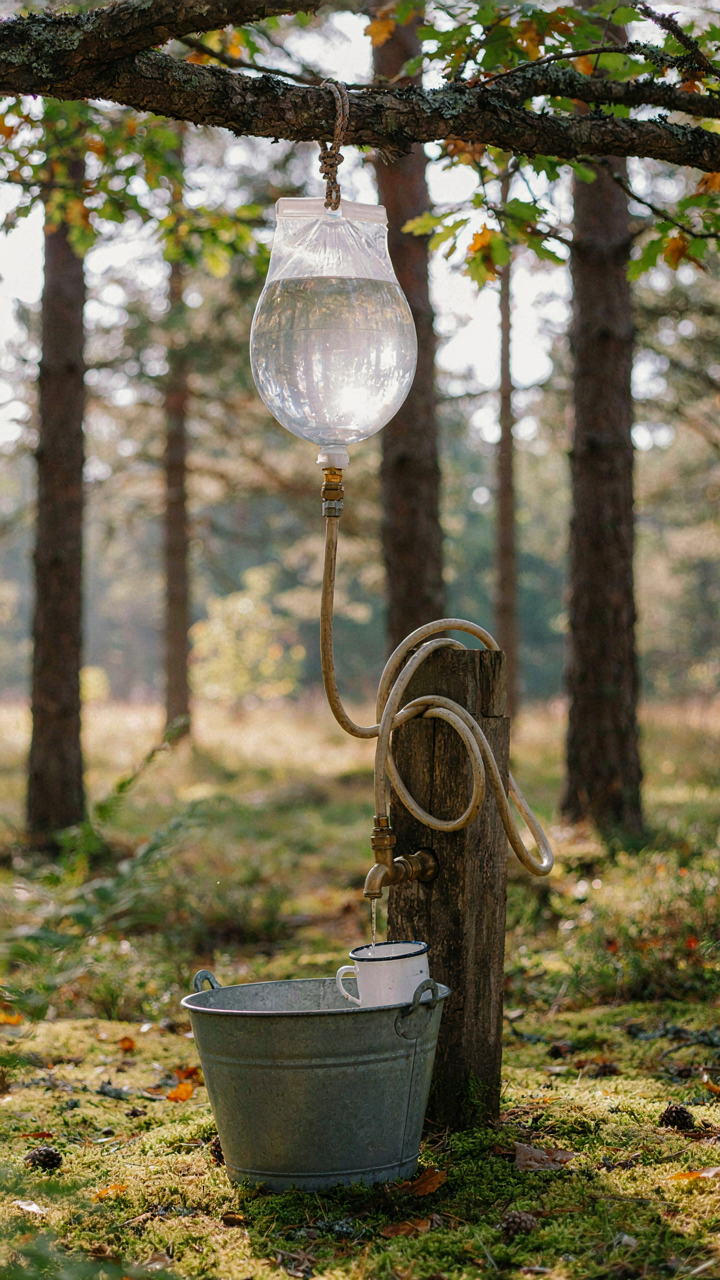
You want to look competent without buying expensive gear. The real mechanism is simple physics: elevation creates pressure without electricity. Gravity-fed systems work because water pressure equals the height of water above the outlet multiplied by water density. A bag or container suspended three to four feet high generates enough force to rinse dishes and hands without pumping or tilting. The system fails when people underestimate how much height they actually need or overfill containers beyond what their suspension point can support structurally.
The setup requires three components: a water container with a valve or spigot at the base, a rope or strap rated for at least twice the water weight, and a branch or pole that won’t snap under load. Five gallons of water weighs forty pounds. Your suspension point must handle that. Fill the container, hang it, open the valve, and water flows. The valve controls flow rate directly, eliminating waste and extending your water supply between refills. Close the valve when not in use to prevent spillage during camp setup or breakdown.
Portable Stand Considerations
Most camping advice treats stands as interchangeable, but they’re not. The stand determines whether your station works or becomes a frustration. A stable base must have a footprint at least as wide as the height of the suspension point above ground. Narrow stands tip when someone pushes a dish against the basin or when wind moves a full water container. The center of gravity matters more than the weight of the stand itself.
Material choice drives durability and repair logistics. Aluminum poles weigh less and resist rust, but they bend and don’t reshape easily in the field. Steel stands hold their shape but corrode without coating and weigh more. Collapsible designs save pack space but introduce more joints where failure points accumulate. Test the stand fully assembled under load before your trip. If a connection feels loose or creaks, fix it now or bring spare parts. Your standing height should position the basin at waist level to avoid back strain during a thirty-minute wash session.
The Waste Water Management Imperative
Where Your Dishwater Actually Goes

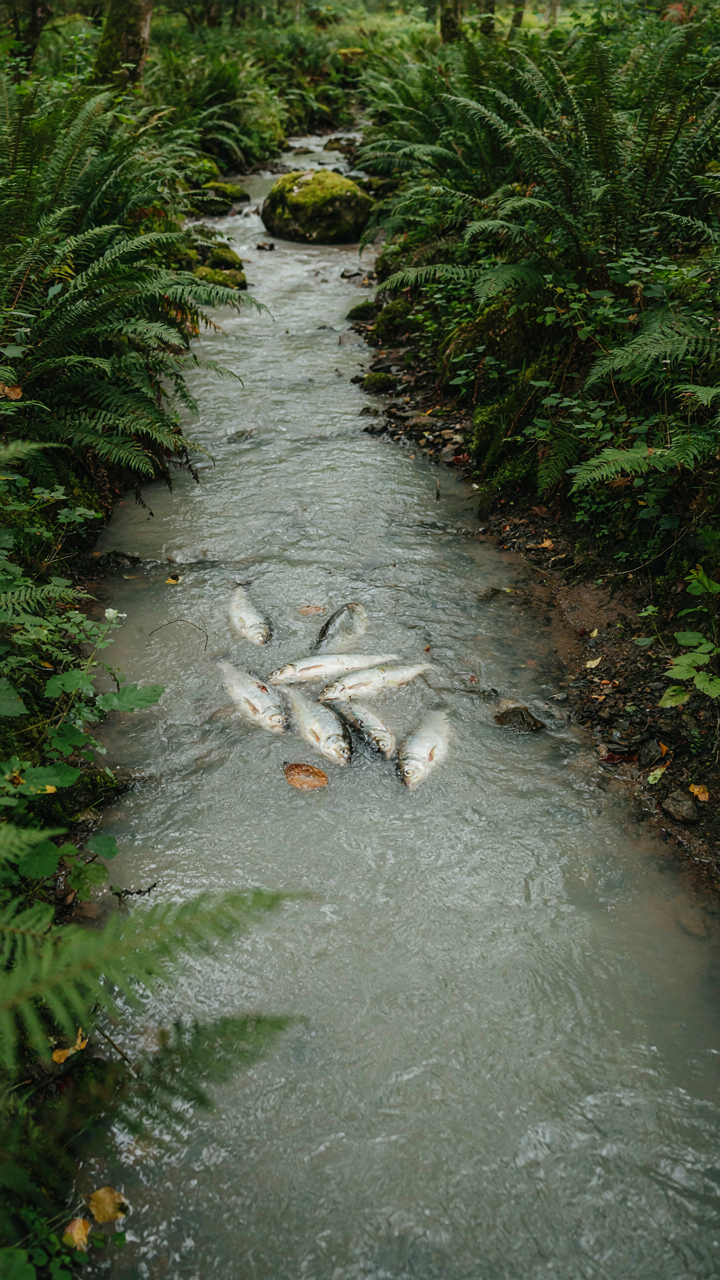
You care about this because you want to look like you’re not destroying the place, but the real mechanism is simpler: dishwater kills aquatic life at scale, and most campers don’t understand the biology. Greywater disposal works like a filtration system in reverse—instead of cleaning water, you’re moving contamination away from sources before it spreads. The dishwater leaving your station contains soap residue, food particles, and bacteria that concentrate in soil and groundwater if you dump it wrong.
Camp sites near water require fifty-foot minimum setback distances from lakes and streams. Dig a shallow sump hole or dispersal area downhill from your washing station, far from any water source your camp relies on. Don’t dump directly onto soil near a slope—water finds the fastest path down and reaches water sources faster than you think. Most regulations mandate this distance for a reason: contamination travels through soil faster than it breaks down.
Filtering For Minimal Impact
The common advice says “strain your water,” but that misses the point—you’re managing particle size and organic load, not just visibility. Ecology borrowed the concept of settling velocity from fluid dynamics: heavier particles drop out of water first if you slow the flow enough. A two-stage filter system handles what matters: first traps food solids, then lets finer sediment settle before water disperses into soil.
Build your filter with a mesh screen over a gravel-lined settling basin. Food scraps stay in the screen; you pack them out. Let the strained water sit for 30 minutes before dispersal—this isn’t optional if you care about soil absorption rates. The settling basin absorbs water at the rate soil actually processes it, not the rate you want to dump it. This single protocol step prevents runoff that crosses into neighboring water sources.
Optimize Your Camping Dish Washing Method

The Assembly Line Process For Efficiency

You want this section because you’re tired of dishes piling up and ruining your camp vibe, but the real mechanism is motion economy: every step you repeat costs time and energy, so eliminate redundant movements. Set up stations in sequence without backtracking. Position your wash basin, rinse basin, and drying rack in a line where water and dirty dishes move forward only, never backward. One person handles washing, the next handles rinsing, the third handles drying. This isn’t faster because you’re dividing labor. It’s faster because each person develops rhythm in a single task and never breaks it to hunt for the next step.
The psychology matters less than the physics. When one person attempts all three steps, they context-switch between tasks and lose efficiency each time. Assembly line discipline at a camping dishwashing station means you establish the sequence before anyone starts, you enforce the sequence, and you measure success by how little backtracking happens. Stack dirty dishes at the wash station entrance. Move clean dishes only forward toward the drying area. No exceptions.
Batch Processing Borrows From Manufacturing
Manufacturing borrowed batch processing from economics: the principle is that grouping identical work reduces setup costs and transition friction. Apply this directly to your camping dishwashing station by washing all plates together, then all bowls, then all cookware. You don’t switch water temperature or scrubbing intensity between item types because you’re handling the same surface and same food residue repeatedly. Your hands remember the motion. Your scrub brush finds its rhythm. One batch of plates flows through all three stations before a single bowl enters the wash basin.
Most campers wash dishes one at a time in random order, which forces constant micro-adjustments to water heat, scrub pressure, and rinsing technique. This is waste. Batch similar items because your muscle memory accelerates output and reduces errors like missed food particles. After you finish one batch completely, move to the next. Your dishwashing station should have enough basin capacity to hold at least one full batch without crowding, so items submerge fully and clean evenly.
Essential Gear For Washing Dishes While Camping
Tools That Survive Weight And Use

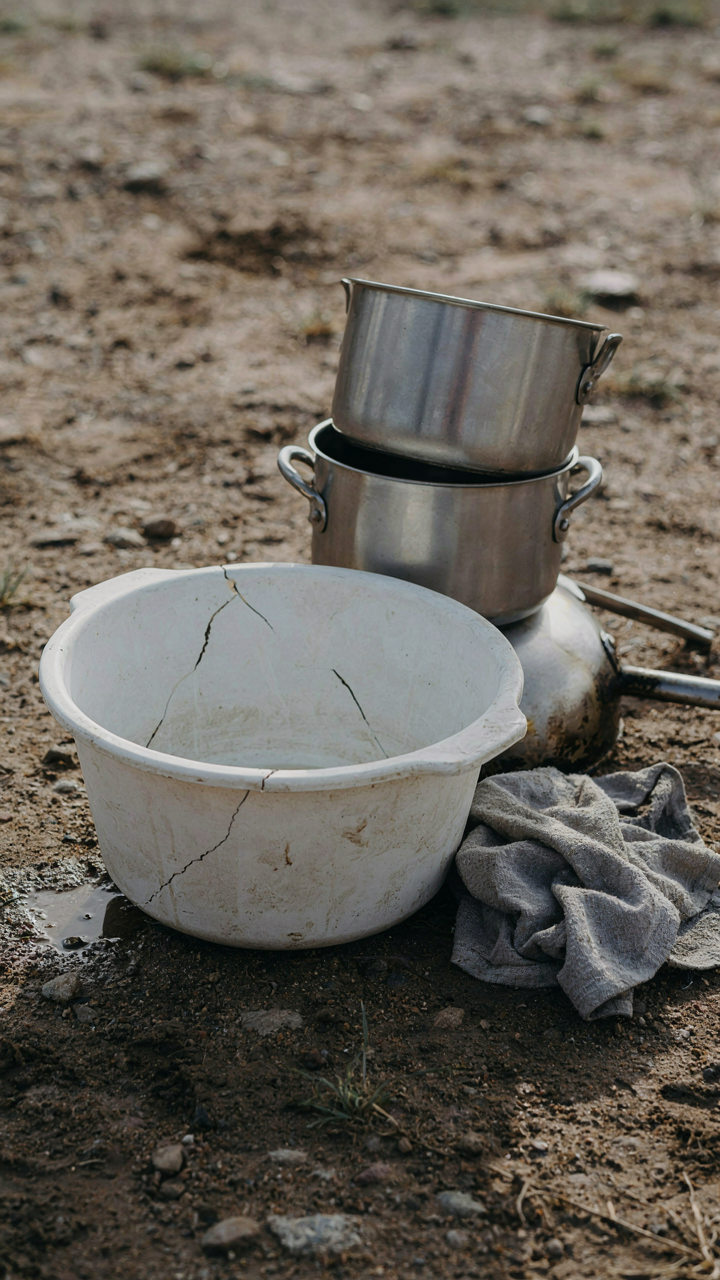
You want gear that won’t fail because you’re counting on it to stay functional in conditions where replacement isn’t an option. The mechanism here is simple: lightweight materials fail faster under repeated stress, so camping dishwashing tools trade some weight for reliability through material density and design redundancy.
- Stainless steel scrub brush: Won’t rust, bristles hold shape after 50 uses, handle won’t crack in temperature swings. Weighs 3 ounces.
- Collapsible silicone basin: Collapses to 1 inch when empty, expands to hold 5 gallons, tolerates boiling water without warping or chemical leaching.
- Cast iron or stainless grill grate: Doubles as a drying rack and pot scraper. Nests flat in your pack, lasts years with basic care.
- Bamboo or hardwood cutting board with handle: Doesn’t absorb water like softwood. Handle loops over a carabiner for storage and drying.
- Stainless steel mesh strainer: Fits over pots to catch food debris before it enters gray water. Folds flat, won’t tear like fabric screens.
The reason most people grab plastic tools is cost, not function. Plastic fails predictably on multi-day trips because it degrades under UV exposure and temperature variance. Real durability means choosing materials that work harder, not just cheaper, and accepting the small weight penalty.
The Borrowed Framework Method
Thermodynamics teaches us about energy transfer. In a dishwashing context, this means hot water is your primary tool, not soap, so your setup must prioritize heat retention and temperature control over soap volume. Most campers invert this and bring excessive soap, wasting weight on something that does minimal work when water temperature drops.
A camp stove or fire-heated pot stays your heat source. Insulated containers (even a wrapped pot in a box) keep water hot for the full wash cycle. Bring one compact bar of camp soap and a small brush. The heat does the cleaning. The soap breaks surface tension and lifts grease. The brush removes food particles. This sequence matters because skipping any step means the other tools work less efficiently.
Debunking “Luxury” Camping Dishwashing Station Ideas
Gadgets Create Dependency, Not Solutions

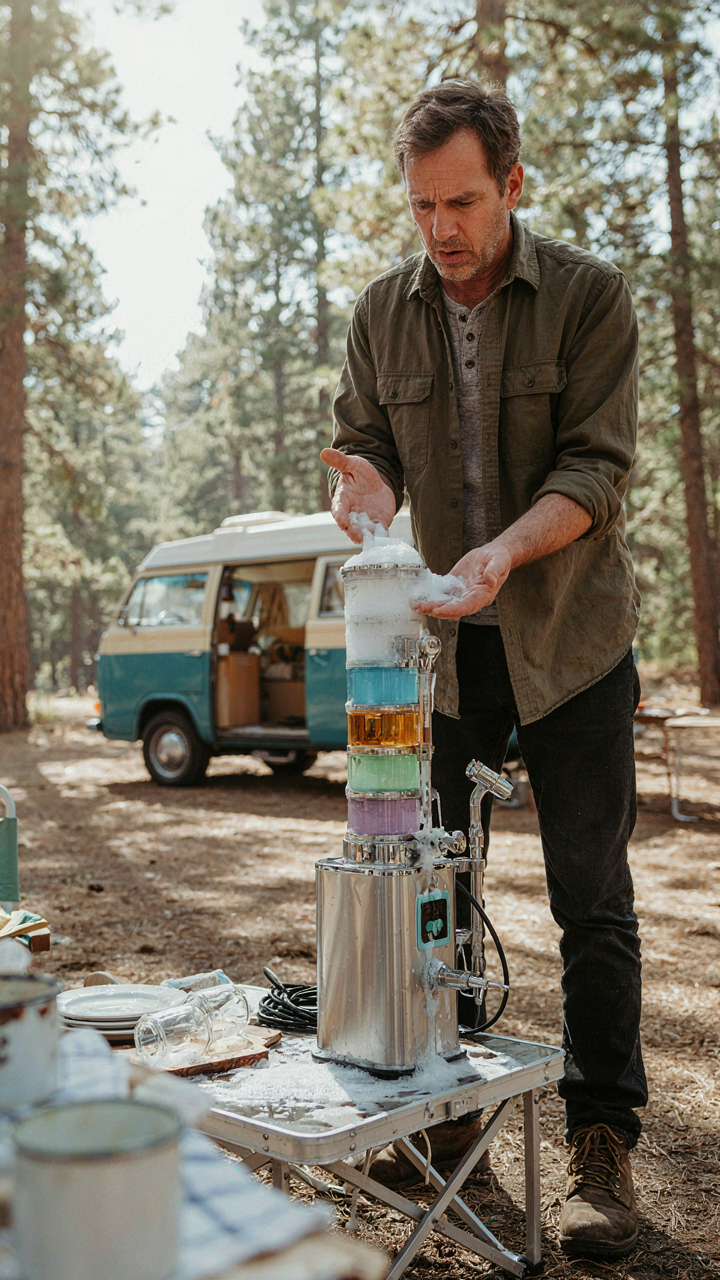
You want the setup to feel like you’ve solved the problem so you can stop thinking about it. The mechanism is simple: gadgets shift your mental load from “how do I actually wash dishes” to “does this equipment work.” You end up maintaining tools instead of managing a process. Every USB-powered heating element, collapsible basin with built-in drain valve, and multi-stage filtration system adds failure points. When one breaks at mile marker forty, your dishwashing collapses entirely. The old method—pot, water, heat source, soap—has no dependencies. It fails in zero ways because nothing requires electricity, seals, or replacement parts.
Camps that run efficient dishwashing stations don’t lead with equipment specs. They lead with protocol. A designated wash station location, a gravity-fed water container, and a simple three-basin system (wash, rinse, sanitize) outlast any novelty gadget by years. The friction of low-tech is actually the feature. It forces intentionality. You can’t zone out and let a machine handle it. You move through the work, you finish, you’re done. Luxury equipment promises to reduce effort but increases cognitive overhead and maintenance burden.
Convenience Is The Enemy Of Efficiency
Economics calls this the substitution effect: when you make something cheaper or easier to access, people use more of it. Apply this to camping dishwashing. A “convenient” station with hot water on demand, antimicrobial soap dispensers, and heated drying racks encourages laziness during prep. You wash fewer dishes before meals because cleanup seems manageable. You create more dirty dishes because the barrier to washing feels low. You end up with twice the work volume and the same time window. True efficiency isn’t about making each wash faster. It’s about making fewer dishes need washing in the first place.
Real camps reduce dishes by eating directly from cookware, using single utensils per person per meal, and serving one-pot meals. The time saved here dwarfs any equipment upgrade. A simple rinse protocol before meals—use the same pot for multiple components, wipe plates with bread—cuts water volume and soap need by half. Then washing takes thirty minutes instead of ninety. The station itself becomes irrelevant because there’s barely anything to wash. Start by cutting the problem, not by automating the symptom.
Advanced Field Sanitation: The “No Wash” Philosophy

Stop Cooking For An Audience You Don’t Have

You want a dishwashing station so you can prove you’re doing camping right. The real mechanism: every dish you wash is energy spent on theater instead of rest or exploration. The no-wash philosophy isn’t laziness. It’s logistics. You reduce the problem at its source by controlling input, not optimizing output. Fewer dishes means no station becomes necessary.
One-pot meals, eaten from the cooking vessel, eliminate the washing step entirely. Bowls work as plates. Utensils stay in your pack. You eat, wipe the pot clean with a cloth, and move on. This isn’t deprivation. It’s eliminating a fabricated need. Military field units operate this way because they understand that every task compounds fatigue over multiple days.
Eat The Container
Common advice says bring disposable plates to solve dishwashing. That’s half-measure thinking. The real answer is edible containers that become part of the meal. Tortillas, flatbreads, and lettuce wraps serve as both vessel and food. You consume the plate. No washing. No trash to pack out except scraps that break down fast.
Pre-made jerky, nuts, and cured goods require no cooking and no cleaning. Fresh fruit in its own skin. Cheese that doesn’t spoil over two or three days. These aren’t compromises on nutrition. They’re elimination of a process step. The dishwashing station disappears when you never create the condition that demands it. Start your trip by eating what containers you would have washed.
The Only Truly Clean Campsite Is The One You Leave Undisturbed. Stop Outsourcing Your Responsibility

Most campers set up a dishwashing station to feel responsible while actually avoiding the harder truth: you contaminate land the moment you arrive. A proper camping dishwashing station isn’t about cleaning better. It’s about leaving zero trace by treating every drop of water like it matters. Build your station today using the greywater disposal method outlined above. Then ask yourself why you came to nature in the first place. The campsite doesn’t exist to serve you. You exist to serve it.