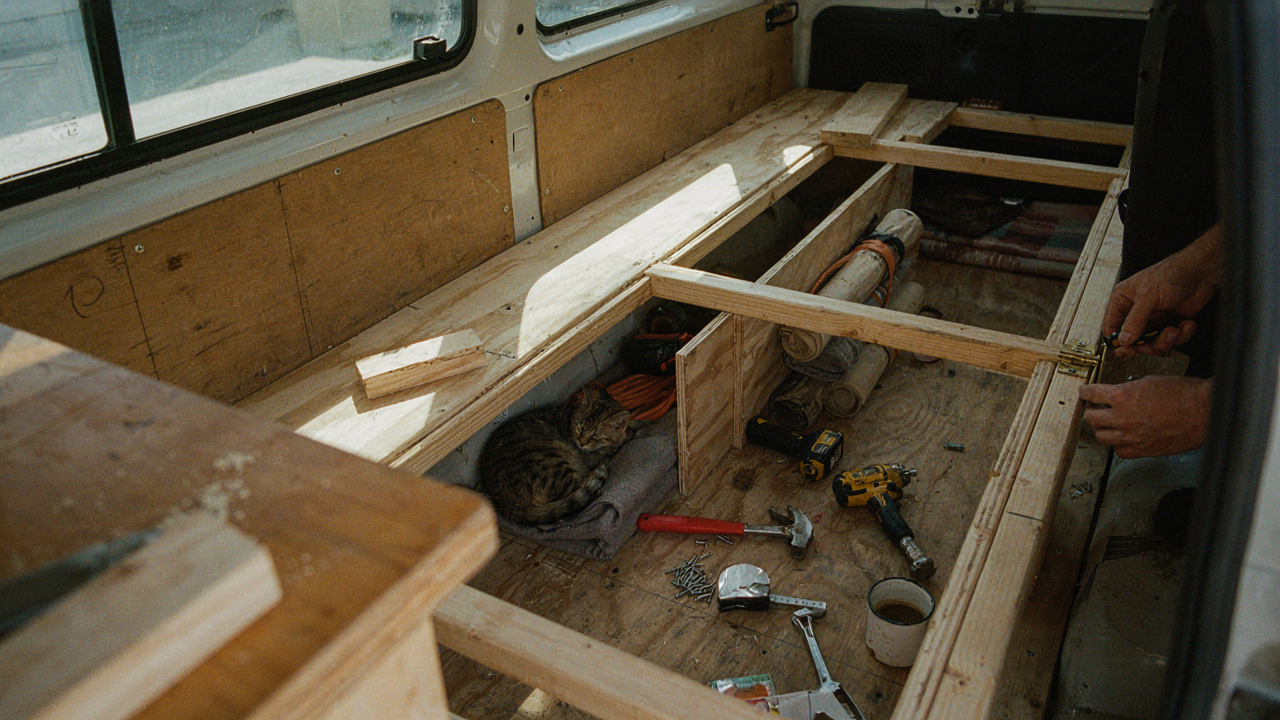
The “Hidden” Cost Of Visible Clutter: Why Your Van Bed Needs A Secret

Cognitive Load Drains Your Decision Making
You want to feel in control, and clutter signals you’re not. The mechanism is cognitive load: your brain processes every visible object as a decision point, consuming mental energy whether you notice it or not. A messy van bed platform forces your mind to constantly categorize, evaluate, and dismiss items instead of reserving that bandwidth for actual decisions. This isn’t aesthetic preference. It’s neurology.
Visual noise doesn’t just annoy you. It taxes executive function, the mental resource you need for navigation, route planning, and problem-solving in tight spaces. Studies on environment design show that working memory degrades under clutter. Your van isn’t large enough to absorb this penalty. Hidden storage solves this by moving decision fatigue into a single moment: choosing to open a compartment. Once closed, your mind returns to baseline.
Friction Points That Kill Functionality
Conventional van design advice says “maximize every inch.” It’s incomplete. The real problem isn’t space, it’s access friction. When your bed platform has exposed storage, you sacrifice workflow. Every item you need requires navigation around the bed. Every item you don’t need right now still occupies your visual field, creating decision paralysis about what to prioritize.
Hidden compartments under the bed eliminate this friction by establishing spatial hierarchy: immediate access items stay accessible, off-season gear disappears, daily-use tools stay at hand level. You stop negotiating with your own space. The platform becomes a functional anchor instead of a visual inventory system. This separation between active and archived items is what transforms a van bed from makeshift to livable.
The Un Instagrammable Truth: Prioritizing Function Over Flex
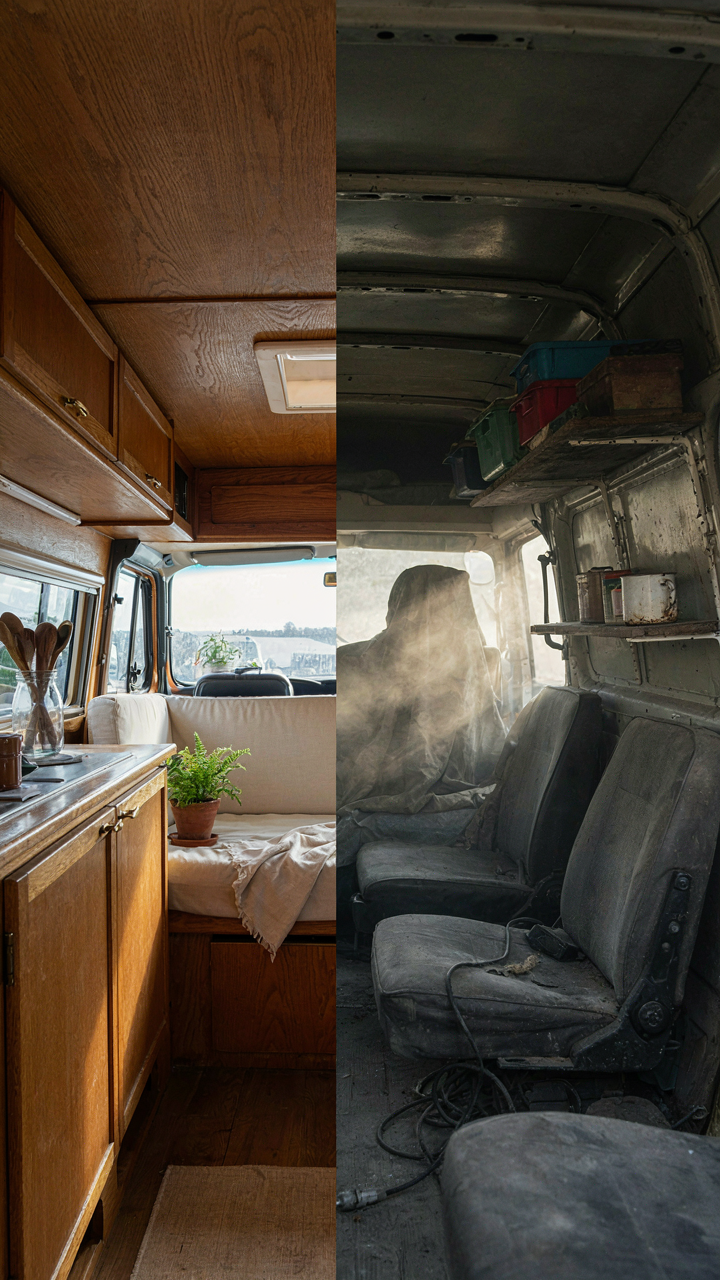
What You Actually Need Vs What Looks Good Online

You want people to think you figured something out that they haven’t. That’s why you’re drawn to the polished van builds with coordinated wood tones and perfect lighting angles. But the mechanism that kills most DIY bed platforms isn’t aesthetics—it’s the gap between how you imagine using the space and how you’ll actually use it daily. Your platform will fail when it doesn’t match your real friction points.
Start by tracking what breaks your current sleep setup for a week before building. Is it back pain from sagging? Waking up hot? Gear scattered on the floor? A platform that looks gallery-ready but doesn’t solve your actual problem is expensive storage for your ego. Write down three specific problems. Build for those. Everything else is decoration you’ll resent paying for.
Designing For How You Live, Not How You’re Photographed
Construction design borrows from load-bearing principles: the best structure supports the heaviest stress at its weakest point. Your platform’s real weakness isn’t the wood joinery—it’s daily movement. You’ll climb on it tired. You’ll shift your weight unevenly getting out at 3 AM. You’ll throw gear on it without thinking. This is where platforms fail, not in the joints.
Rigid platforms create problems. They don’t flex with the van’s frame during turns, and they trap moisture underneath from breath and skin contact. A platform that works is one you’ll actually maintain: accessible for cleaning underneath, designed with a slight give that absorbs impact, and structured so the most-used areas see reinforcement first. Build your platform around the corner you use for pillows and the edge you push off from when standing. Ignore the rest.
The Minimalist Van Bed Protocol: Less Stuff, More Life

What You’re Actually Afraid Of Losing

You think this section is about organization. It’s not. You’re afraid that minimalism means deprivation, that fewer possessions equal a smaller life. The mechanism is simple: we confuse ownership with capability. A van bed platform forces you to separate what you own from what you actually use. Most people never do this exercise because it reveals how much dead weight they’ve been carrying. The van makes it visible because space is finite. You can’t hide mistakes in a 4×8 footprint.
Decluttering works like thermodynamics in closed systems. Energy flows toward balance. When you remove objects that don’t serve a function, you create mental and physical capacity for what matters. The van bed isn’t just furniture. It’s a constraint that teaches you what friction looks like when you live inside your choices. Remove three items you haven’t touched in two weeks. That’s the protocol. Do it before you build anything.
What Actually Needs To Live In Your Van Bed
Before you stock your platform with gear, understand the difference between redundancy and insurance. Common advice says “pack light and minimal.” That’s incomplete. You need functional redundancy for systems that fail. A backup charging cable isn’t clutter. A fourth throw pillow is.
- Sleep system (mattress, topper, sheets, blanket): Non-negotiable comfort tier. A worn mattress creates cascading fatigue that degrades everything else. Invest here first.
- Storage containers (clear plastic, labeled): Visibility kills forgotten items. You can’t declutter what you can’t see. Stack vertically under the platform.
- Lighting (LED strip, headlamp, lantern): One source fails. Two sources leave you reading at midnight. Three sources means you have options without hoarding.
- Climate control (fan, thermal layer, moisture absorber): Condensation ruins bedding faster than anything else. Desiccants and airflow solve this mechanically.
- Cable management (velcro straps, conduit): Prevents device decay and keeps the under-platform storage accessible. Hidden storage stays useful only if you can reach it.
The hidden storage beneath your platform becomes a liability if you pack it with seasonal items you visit once yearly. Store only backup supplies and tools you use monthly. Items you access less than that belong elsewhere or don’t belong at all. Check your platform storage every thirty days. Anything untouched gets removed.
Beyond The Blueprint: Understanding Your Van’s Structural DNA
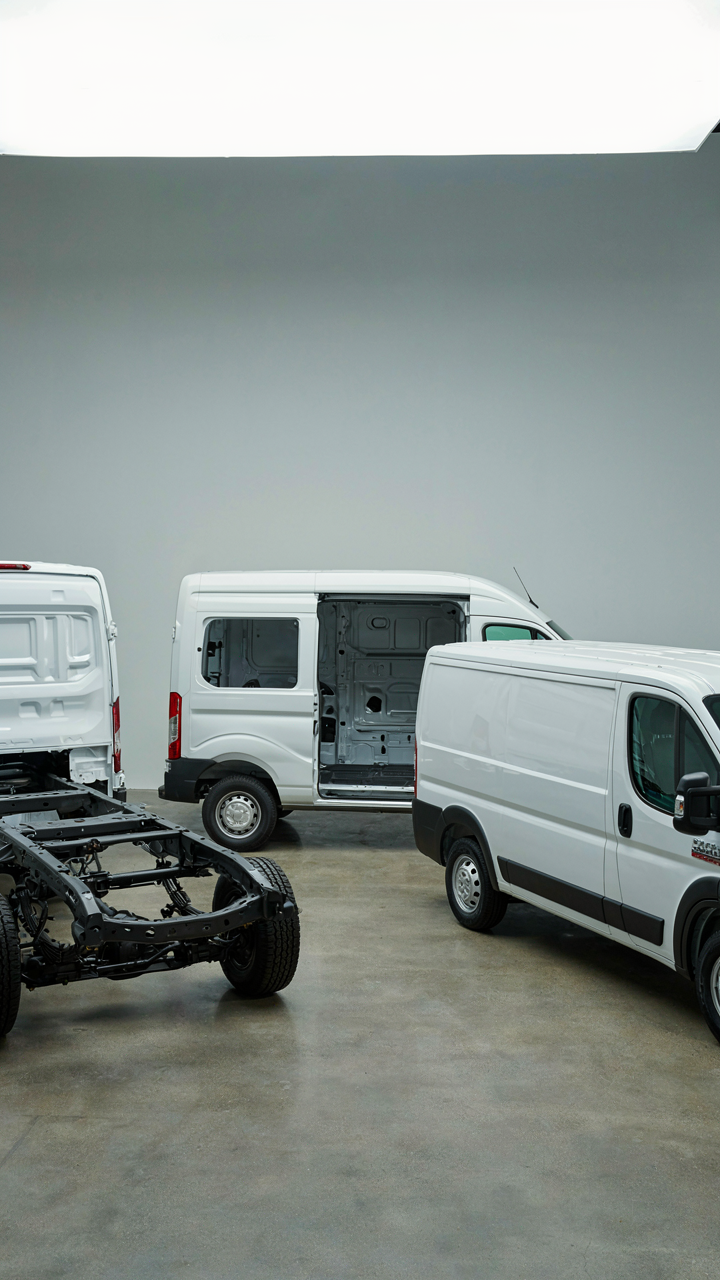
Your Van Frame Is Not A Generic Box

You want to believe all vans are built the same so your plans work everywhere. They’re not. A Ford Transit sits on a ladder frame. A Mercedes Sprinter uses unibody construction. A Promaster has a different weight distribution entirely. The frame type determines where your bed platform can actually attach without creating stress points that crack welds or pop rivets over time. You need to know what you’re bolting into before you design around it.
Most people skip this step and build platforms that work until the first pothole. The frame construction changes how loads transfer through the vehicle. A ladder frame lets you bolt perpendicular supports directly to the rails. Unibody construction requires you to work with the existing floor structure and reinforce localized areas rather than distribute load across the whole chassis. Pull your van’s factory service manual or contact the manufacturer’s technical line. Identify whether you have a ladder frame or unibody, then map where the main structural members sit beneath the floor.
Where Weight Actually Goes
This is physics applied to your build: load path analysis determines where failure happens first. Don’t assume the floor is equally strong everywhere. Most vans concentrate structural strength at the perimeter and along the center tunnel, with weaker composite or thin-gauge steel in the middle sections. A 400-pound bed platform distributed across a weak zone fails differently than the same weight concentrated over frame rails.
Measure, don’t estimate. Use a stud finder to locate the metal beneath the floor covering. Mark the locations with tape. Get a floor plan sketch and note where the rigid structure actually lives. Your attachment points must sit directly over these zones. Bolting into the weak sections means your platform shifts under acceleration, vibration loosens fasteners, and rust develops around puncture points where you drilled through the floor skin. Anchor to the frame or verified structural floor members only.
The Van Extend A Bed Mechanism: The Physics Of Perceived Space

How Leverage Multiplies Your Usable Reach

You want to believe a platform magically gives you more room. It doesn’t. Physics gives you more room. The real reason people fail at van bed platforms is they treat them as static furniture instead of a lever system. In mechanical advantage, a fulcrum (your bed support structure) and an arm (the platform extension) let you move or position mass with less force. Your bed platform works the same way: the hinge point or support edge becomes the fulcrum, and the cantilever distance determines how far your sleeping surface extends without collapsing.
The mechanism is straightforward. A platform that extends 18 inches from a single support edge needs dramatically different engineering than one extending 6 inches. Every additional inch of reach demands either thicker materials, more support points, or a stronger connection at the fulcrum. Most DIYers under-build at the pivot because they can’t see the stress concentrating there. Bolt your main frame to the van wall or floor first, then calculate how much weight the extended arm carries at its farthest point, then size your support structure backward from that number.
Disorder Breaks Systems Before Materials Do
Organization isn’t a nice feature of hidden storage; it’s the operating system that keeps your platform functional. Every item you can’t find becomes an excuse to shift weight, move boxes, and stress joints you can’t access for repair. The real problem nobody names: storage chaos creates uneven load distribution, and uneven loads destroy platforms faster than bad welds. You’re not just organizing; you’re controlling mass placement to protect structural integrity.
Map your storage zones before building. Assign heavy items (tools, water containers) to locations directly above or nearest to main support beams. Keep lightweight items (bedding, clothes) in cantilever zones where they won’t amplify bending stress. Use dividers and labeled containers so you never hunt through storage during a bump or turn. A platform fails not because the design was wrong but because the weight inside it was chaos. Lock everything down, label everything, and inspect your hidden storage quarterly to catch items that shifted or containers that cracked.
From Lumber Yard To Lit Van: Sourcing Smarter, Not Harder

Material Choices: Durability Versus Weight

You want to feel like you made a smart decision without actually doing the math. Here’s what actually matters: weight is load capacity in disguise. Every pound you add to your platform eats into payload. A full-size van has roughly 1,500 pounds of usable capacity after accounting for fuel, water, and you. Your bed platform should weigh under 200 pounds total, which forces real constraints on material selection.
Pressure-treated lumber sounds durable but it’s soaked in water. You pay for that density every mile. Plywood and pine achieve similar strength at 40 percent less weight. Birch plywood costs more upfront but resists moisture better in coastal climates and doesn’t degrade as fast under constant vibration. The real trade-off isn’t durability versus weight. It’s initial cost versus long-term material failure. Choose based on your climate and how often you move, not on what the lumber yard guy recommends.
The Right Tools Beat Having More Tools
Everyone buys a full cordless drill set and uses three items. This wastes money and space you don’t have. You need a miter saw or circular saw for crosscuts. A drill-driver handles fasteners and pilot holes. A level under two feet catches platform problems before assembly. A tape measure longer than 16 feet prevents math errors. A square checks that corners actually sit at 90 degrees.
Every other tool creates debt, not value. Pneumatic nailers require a compressor. Sanders slow down your timeline. Clamps you use once become storage problems. If you can’t cut a straight line with a circular saw and a clamped guide, buying an expensive miter saw won’t fix your technique. Buy quality in what you use weekly. Skip everything else. This keeps your setup mobile and prevents the garage mentality from creeping into van life.
The Camper Bed Ideas Fallacy: Copying Without Context
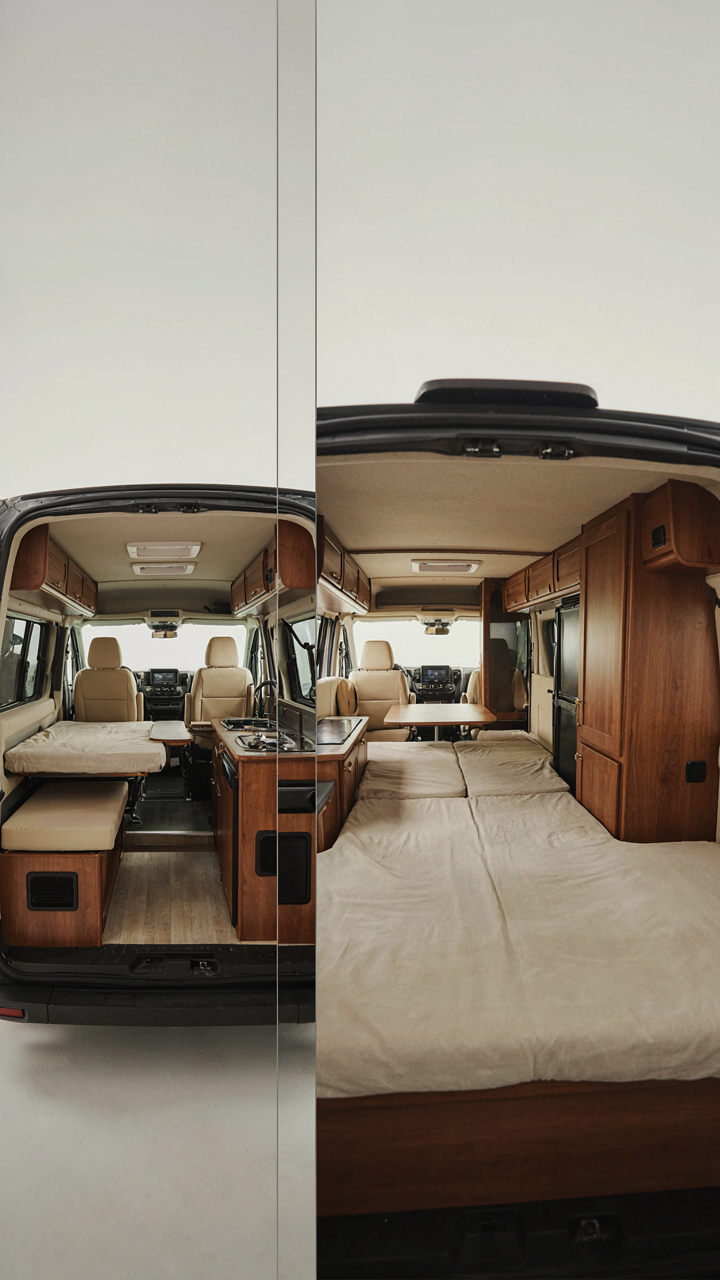
Why Most Camper Bed Designs Fail You

You want to believe that someone else’s build will work for you because it saves the hard work of thinking. The real mechanism at play here is context collapse. You see a bed platform that works in a short-bed Ford Transit and copy it into a Sprinter, ignoring that van length, width, weight distribution, and your actual sleep position are variables that completely change the outcome. Most camper bed designs fail because they treat the platform as a finished product instead of a template that demands customization to your specific vehicle and body.
The common advice tells you to maximize storage underneath, then build upward. That’s incomplete. What fails is that people ignore the load path: where does weight actually travel when you’re sleeping? When you place plywood on frame rails without accounting for your van’s existing geometry, you either create stress points that damage the vehicle or build a platform that shifts during turns. You need to map your van’s actual structural points first, then design the bed around those points, not around what looks good on Instagram.
Tailoring Your Build To Your Habits
Habit engineering applies here, borrowed from behavioral psychology. Your sleep position is the load case. If you sleep on your back centered on the platform, the forces distribute differently than if you sleep on your side hugging one edge. Before you cut a single board, spend two nights in your van sleeping where you actually sleep. Note which areas get pressure, which direction you roll, whether your legs hang off the end. This isn’t overthinking. This is data collection that prevents you from building something you’ll hate using.
The second layer is how you actually access the bed. Not how you think you access it. Most people design for the moment they’re getting in, then ignore the reality of daily living: reaching under for stored items, cleaning beneath the platform, retrieving gear in the dark. Measure the gap between your platform edge and the van wall in the spots where you’ll reach most. If that gap is less than eight inches, storage becomes friction you pay for every single day. Design around friction first. Everything else is decoration.
Diy Van Bed Frame: Engineering For The Inevitable

Build Stronger Than You Think You Need

You want this to last because replacing a bed platform mid-trip feels like failure. The real mechanism here comes from structural engineering: load path redundancy. Most DIY platforms fail not because they can’t handle the static weight, but because they concentrate stress at connection points and ignore dynamic loads—bouncing, cornering, road vibration. A bed that works in your garage fails on year two of actual use.
Over-engineer the frame by choosing materials that handle both compression and torsion. Use 2×6 pressure-treated lumber for the perimeter instead of 2×4, and space support beams at 16 inches on center instead of 24. This costs maybe 30 dollars more and eliminates the most common failure mode: diagonal flex when the van corners hard. Bolt connections with grade 8 hardware, not screws. Screws pull out. Bolts stay.
Designed To Come Apart And Go Back Together
You’re not building something permanent, so stop treating it like furniture. The mindset shift is this: design every joint to be disassembled without tools or with only one tool. This isn’t weakness, it’s the only realistic maintenance model for something living in a moving vehicle.
Use knock-down fittings, T-slots, and bolted lap joints instead of glued or welded connections. When a support beam develops a stress crack or a bolt corrodes, you unscrew four bolts and swap the component. No cutting, no rebuilding, no days without a bed. Keep a spare bolt kit in your van—M10 grade 8 bolts, lock washers, nylock nuts. When a bolt starts spinning loose from vibration, you notice it because you’re checking fasteners every two weeks, not because the platform collapses at 2 AM.
Van Conversion Build: The Hidden Storage Imperative

When Reach Defeats Purpose

You want hidden storage because you’re afraid of theft, not because you enjoy puzzles. That’s the real tension nobody names. The mechanism is simple: you’re trading access speed for security visibility. The more concealed your storage, the slower you retrieve what you need. The more accessible it is, the more obvious it becomes to anyone watching your van.
Accessibility means your bed platform doubles as a tool you use daily without friction. This demands drawers, hinges, or lift mechanisms positioned at waist or knee height. Concealment demands the opposite: burying valuables under structure, behind panels, inside walls. You cannot optimize for both simultaneously. Most van builders fail here because they try to hide everything, then abandon the whole system because retrieving a sleeping bag takes five minutes.
Deterrence Over Secrecy
This is basic security economics: you’re not trying to make theft impossible, you’re trying to make your van a worse target than the one next to it. Thieves operate on time cost. A visible storage compartment takes thirty seconds to force. A hidden one disguised as part of the frame takes three minutes. In that gap, most opportunistic theft never happens.
The real protection comes from opacity and integration. A lockable deck box under your bed platform reads as generic camping gear. A custom-built compartment welded into the frame reads as “this person thought about this.” Burglars recognize intention. They also recognize rushed jobs. If your hidden storage looks half-finished or obviously retrofitted, you’ve advertised that there’s something worth hiding. Build hidden storage to look like it was never storage at all, or make it so integrated into the structure that distinguishing it from the frame itself is the work. Use a keyed deadbolt on access panels, not a padlock. Padlocks signal “valuable thing here.” Deadbolts signal “this is part of the van.”
Van Beds: Why Most Solutions Are Still Incomplete

The Moisture Problem Nobody Wants To Admit
You want to believe your platform will just work. Humidity kills van interiors faster than anything else, and most DIY builds ignore it entirely. Think of your bed platform as a thermal boundary layer in physics terms. The platform sits between your body heat above and cold metal below, creating a condensation trap. Moisture accumulates where temperature gradients meet, and your bed is ground zero.
The real mechanism is simple: warm air from your body and breath rises, hits the cold van roof, and deposits water directly onto your mattress and frame. Cheap foam mattresses absorb this moisture and rot from underneath where you can’t see it. You need air circulation underneath the platform, not just under the mattress. Install your platform on spacers at least two inches tall, then add crosswise slats with quarter-inch gaps instead of solid plywood. This lets air move beneath the sleeping surface instead of pooling there.
Building For The Person You’ll Become
Your needs in month three look nothing like month eighteen. Most builders design static platforms and regret it when their life changes. The platform should accommodate future modifications without requiring complete deconstruction. Use a modular frame approach: build the base to accept bolt-on extensions, removable storage cubes, or upgraded mattress heights without structural compromise.
Design your platform frame with accessible bolt points on all sides. This means M8 bolts through backing plates, not welds or fixed joinery. If you discover you need to raise the bed six inches for under-bed storage later, you can do it by swapping out spacers or leg extensions. Your original frame stays intact and functional. This prevents the abandoned builds scattered across van communities, where someone spent a hundred hours on something they can’t adapt.
The Real Problem Isn’t Your Van’s Size, It’s Your Inability To Define What Truly Matters

You obsess over bed platform dimensions when you haven’t decided what you actually need to store. Stop. Grab a notebook today and list everything you own that must fit in your van. Not someday. Today. This brutal inventory forces you to build a platform aligned with your real life, not some fantasy. Most people design their van bed first, then panic when reality doesn’t fit. You’ll do it backward. Your bed platform only matters if it solves a problem you’ve already named.