
The Unseen Weight: Why Most “Lightweight” Advice Fails

The Real Misconception About Tow Limits
You want to believe your vehicle can handle more than it actually can. Here’s the mechanism: manufacturers publish a tow rating, and buyers interpret it as permission instead of physics. The rating assumes ideal conditions—empty bed, no passengers, minimal cargo—that almost nobody maintains in real use. Your actual safe capacity drops the moment you add fuel, groceries, or a passenger. Most people ignore the tongue weight entirely, which is the single leverage point that makes or breaks camper stability. Tongue weight should never exceed 15 percent of your vehicle’s dry weight, yet owners routinely run 20 to 25 percent to “fit” a bigger camper. The result isn’t a problem until it is.
The second error is confusing towing capacity with payload capacity. Your truck might tow 5,000 pounds, but your payload limit is separate and often the real constraint. When you add a camper tongue weight to your existing gear, you’re cutting into payload first. Manufacturers designed these limits to protect frame integrity, suspension geometry, and braking performance. Cross one, and you’ve shifted from camping to engineering failure. The camper won’t tip the moment you exceed the number—it tips during a lane change, a hard brake, or a gust on the highway. The gap between theory and disaster is smaller than your margin of error.
When Tow Capacity Assumptions Cost Money
Economics has a term called “hidden costs”—expenses that don’t show up on the invoice but appear in your bottom line later. Exceeding tow capacity turns this economic principle into concrete damage: transmission fluid degradation, premature bearing wear, suspension sag, and brake fade. You don’t see these costs until your transmission fluid is brown instead of red, your shocks are leaking, or your brakes feel spongy. A transmission rebuild runs $2,500 to $5,000. New suspension components and brakes add another $1,500 to $3,000. These failures compound because overweight towing doesn’t break something immediately—it accumulates stress across multiple systems over months. By the time you notice, you’ve already paid the price in component lifespan. The hidden cost isn’t the camper you bought cheap. It’s the repair bill disguised as normal wear.
Ignoring tow capacity also creates a false economy around purchase decisions. A buyer compares two campers at the dealership: one weighs 3,200 pounds, the other 2,800 pounds. The heavier one costs less per square foot of living space, so it feels like the better deal. But that extra 400 pounds might push you over your vehicle’s safe margin, requiring new tires, heavier-duty shocks, or a vehicle upgrade altogether. Suddenly the “cheaper” camper forced a $15,000 vehicle purchase or $3,000 in suspension modifications. The mechanism is straightforward: overweight camping equipment exports its cost to vehicle maintenance and replacement cycles. Know your actual tow capacity, subtract 10 percent for safety, and build your camper choice backward from that number.
The Kinematic Efficiency Protocol: Matching Mass To Motive

How Trailers Actually Behave Behind Small Vehicles

You want to know this section because you’re afraid of flipping or getting stuck, but that’s not the real problem. The mechanism you need to understand is how a trailer changes the physics of your vehicle, not just adds weight. Kinematics from physics tells us that motion depends on mass, velocity, and the forces that act on a system. In towing, your trailer becomes a pendulum that amplifies steering input and braking force. A small vehicle towing creates a coupled system where the trailer’s inertia lags behind the tow vehicle’s direction change. This lag creates sway under acceleration, braking, and turns. The trailer doesn’t follow the car like a shopping cart. It resists directional changes with rotational force.
Most advice says “just stay under your vehicle’s towing capacity.” That’s incomplete. Capacity tells you the maximum load, not the maximum load you can control. A 5,000-pound SUV with a 3,500-pound towing capacity can technically handle that weight, but the vehicle’s wheelbase, suspension geometry, and brake balance determine actual handling safety. A lighter camper at 2,200 pounds behind a small vehicle behaves radically different from a 3,500-pound rig. The mass distribution inside the camper, hitch height, and tongue weight all shift where forces concentrate during maneuvers. Control happens long before you hit capacity. Measure your vehicle’s actual braking deceleration and cornering grip first, then work backward to safe camper weight.
The Power To Weight Ratio That Nobody Calculates
The common advice ignores this entirely: optimal towing isn’t about horsepower or engine displacement. It’s about power-to-weight ratio at the tow vehicle level, and most people use the wrong denominator. Engineers calculate power-to-weight by dividing engine power by total vehicle weight, but for towing dynamics, you need power-to-curb-weight-plus-trailer-weight. A vehicle with 150 horsepower and a 3,000-pound curb weight handles differently with a 1,500-pound camper versus a 2,800-pound camper. The power available to move everything forward drops dramatically. Acceleration slows, engine braking weakens on descents, and fuel consumption rises.
Real calculation: divide your vehicle’s horsepower by its curb weight. Call this the baseline ratio. Then divide that same horsepower by curb weight plus your planned camper weight. The second number is your actual operating ratio. If the operating ratio drops below 0.04 horsepower per pound, uphill performance and brake cooling become compromised. A small SUV with 180 hp and 4,000-pound curb weight has a baseline of 0.045. Add a 2,200-pound camper and you’re at 0.029. You’ve just crossed from manageable to marginal. Keep your combined system above 0.035 hp per pound to maintain reserve power for emergency maneuvers and hill grades.
Beyond The Brochure: Real World Ultra Lightweight Camper Trailers
What Materials Actually Weigh

You want the spec sheet to prove your purchase choice is right. That’s the real reason you’re here. But manufacturers list materials without telling you their actual mass contribution, so you end up comparing nothing against nothing.
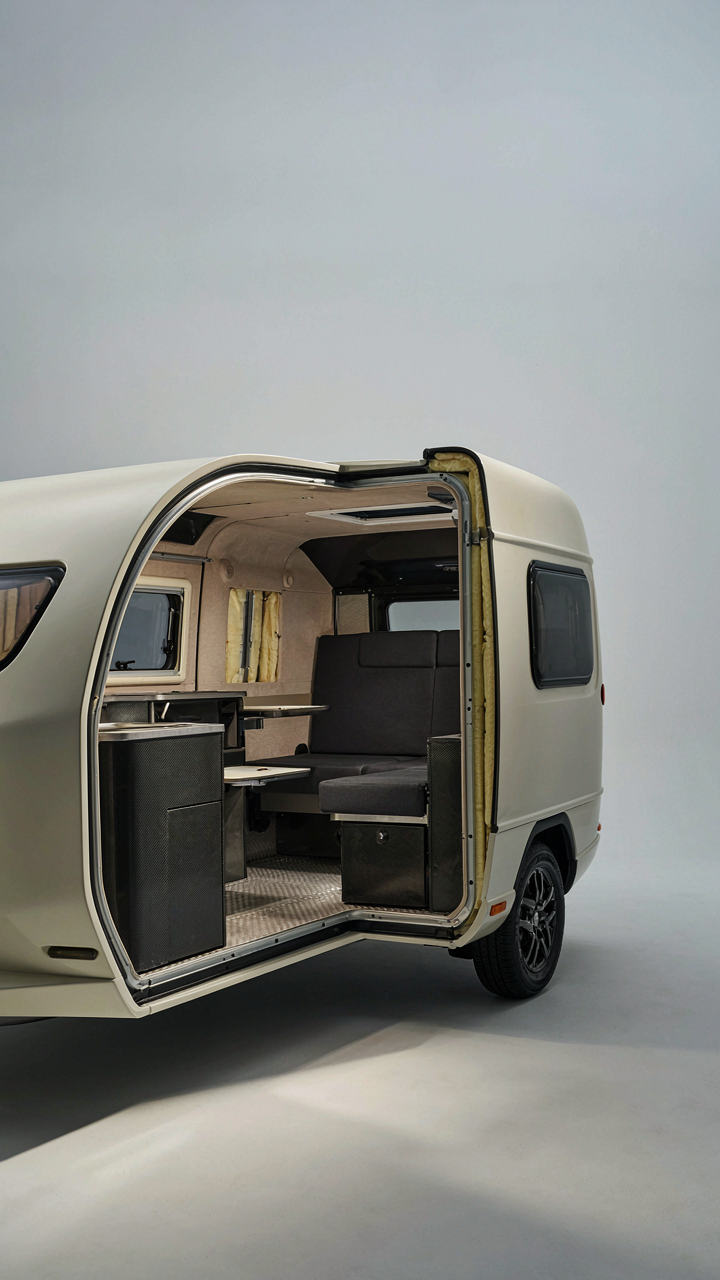
The weight hierarchy in a camper is structural first. Aluminum framing weighs roughly half what steel does per unit volume, which is why it dominates modern lightweight builds. Plywood shells add significant mass compared to foam composite panels, but plywood handles repetitive stress better over years. The floor structure matters most because it spans the entire footprint. A traditional wood floor with steel supports runs 400-600 pounds on a 16-foot trailer. A composite floor with aluminum joists cuts that to 200-300 pounds.
The Dry Weight Deception
Manufacturers ship campers empty: no propane, water, or gear. The dry weight number is a floor, not a ceiling, and it deliberately obscures what you actually tow.
A camper rated at 3,500 pounds dry weight gains 600-800 pounds the moment you add propane, water, and the basic fixtures manufacturers include. Add your personal gear and you’re at 4,200 pounds minimum. The towing capacity on your vehicle is calculated with a full tank and passengers, so that 3,500-pound spec compresses your real safety margin by half. Check the actual axle rating, not the manufacturer’s claim. Call the trailer’s axle supplier directly if you have to. The gap between “dry weight” and “what you’ll actually pull” determines whether your vehicle handles the load or whether you’re one rough road away from brake failure.
The Minimalist’s Manifesto: Tiny Campers, Maximum Experience

Stripping Down To What Actually Matters

You want a lightweight camper because you’re afraid of being trapped by your own setup. The real mechanism is constraint-based design. Remove one item and you’re forced to solve its function differently, often better. This is how essentialism works in product design: each element must earn its weight or disappear. A tiny camper doesn’t succeed because it’s cute. It succeeds because every cubic foot and every pound serves a specific purpose.
Start by cataloging what you actually use on a trip, not what you think you should use. Most people overpack by 40 to 60 percent based on worst-case scenarios that never materialize. Your stove, bed, water system, and storage need to function flawlessly. Everything else is negotiable. Ruthless elimination at the design phase determines whether your camper feels spacious or suffocating.
Mobility Unlocks Everything Else
Physics calls this payload efficiency: maximizing useful output relative to input cost. In camper terms, less mass means your tow vehicle’s engine does real work instead of fighting resistance. A 2000-pound camper behind a four-cylinder truck doesn’t just reduce fuel consumption. It changes where you can actually go. Rough forest roads, high mountain passes, ferry weight limits. These become accessible instead of theoretical.
The freedom isn’t romantic. It’s mechanical. When your camper weighs half what the alternatives weigh, you stop planning trips around weight capacity and start planning them around where you want to be. This shifts the entire psychology of ownership. You’re not managing constraints. You’re ignoring them. Your tow vehicle stays reliable longer because the drivetrain operates in its designed range, not constantly overextended.
DIY Or Die: Crafting Your Own Small Camper Advantage

Build It Yourself, Own The Weight

You want this section because you think building saves money. It does sometimes. But the real reason to build is control over every pound that touches your axles. Manufacturers optimize for profit margin, not for your specific tow vehicle’s limits. When you design and build, you make the trade-off decisions yourself instead of accepting someone else’s compromise. You see exactly where weight hides and cut it ruthlessly.
A custom build forces you to confront the physics of load distribution. Every material choice cascades. Plywood versus aluminum framing. Propane versus electric heating. Real insulation versus marketing claims. Manufacturers bundle features you don’t need to justify higher price points. You eliminate the dead weight. Most importantly, you stop paying for someone else’s design mistakes. Your truck’s payload capacity becomes a design constraint, not an afterthought.
Constraints Create Better Designs
Design operates like a military supply chain: scarcity forces innovation. Limited payload means you cannot afford redundant systems or heavy materials. This pressure produces cleaner solutions than unlimited budget ever could. The common mistake is thinking DIY means “figure it out as you go.” It doesn’t. You need a weight budget before you buy a single piece of material.
Start by calculating your vehicle’s actual payload capacity, then subtract fresh water, propane, and cargo weight you’ll carry. What remains is your camper’s maximum dry weight. Work backward from that number into every subsystem. Insulation thickness, water tank size, frame material, appliance wattage. Each decision must justify its weight. This method eliminates guessing. You hit your target because you built to it from day one, not because you hoped things would fit.
The Aerodynamic Imperative: Cutting Drag, Not Corners
Wind Resistance Kills Your Fuel Economy

You want better gas mileage because you’re tired of stopping at pumps, but that’s surface level. The real issue is that drag compounds every mile you drive. Physics calls it parasitic load—the energy your engine burns just fighting air instead of moving forward. A boxy camper creates a pressure zone behind it that your vehicle’s engine has to overcome continuously. At highway speeds, aerodynamic drag becomes your largest fuel consumer, not rolling resistance or engine friction.
This isn’t theoretical. A vehicle towing a box-shaped camper burns noticeably more fuel than the same vehicle towing nothing. Reducing frontal area and smoothing the transition between your truck or SUV and the camper’s profile cuts fuel consumption measurably. Every mile at 60 mph versus 70 mph saves fuel, but so does changing the shape of what you’re towing. The drag coefficient of your setup determines how much engine power converts to forward motion versus wasted heat and noise.
Profile Shape Matters More Than Weight
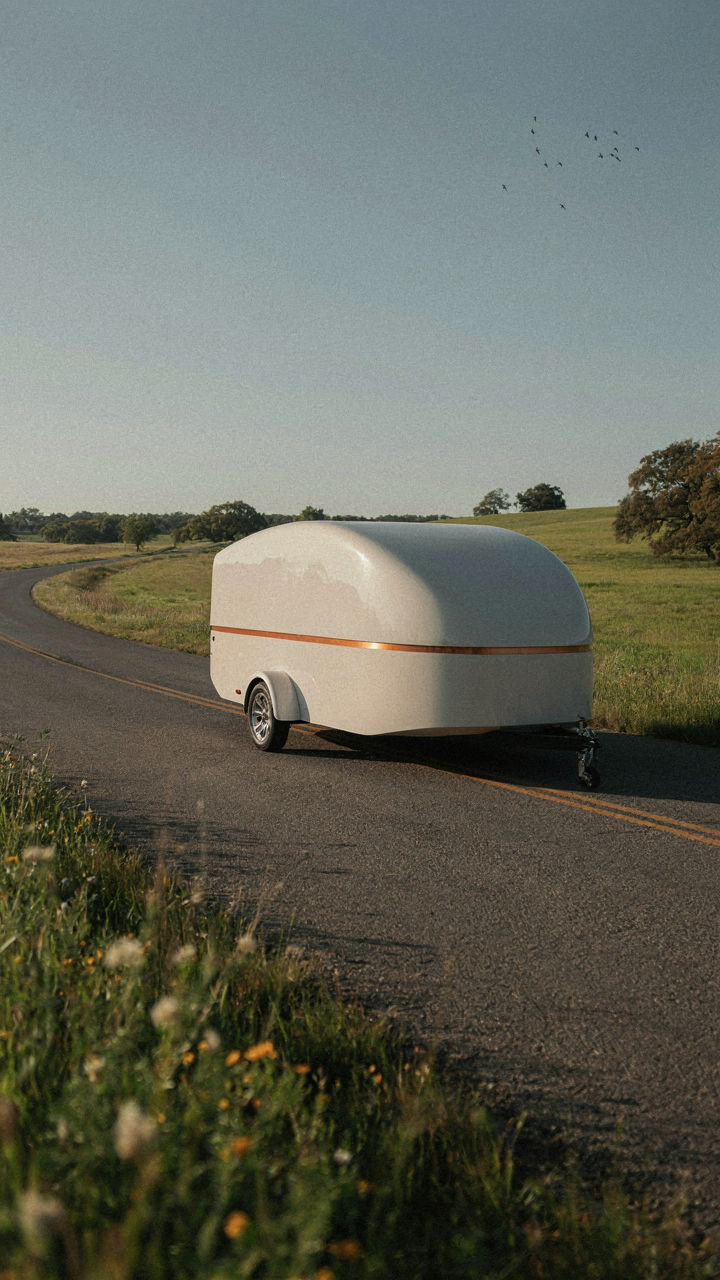
Most advice says build light and call it solved. Wrong. A lightweight box that cuts air like a brick still drains your fuel tank. Aerodynamic efficiency requires shaping the camper’s nose and tail to reduce pressure differential. Teardrop and travel trailer designs with tapered tails work because they minimize the turbulent wake that forms behind blunt shapes. This isn’t aesthetic choice—it’s applied fluid dynamics that directly impacts your fuel consumption and how hard your tow vehicle works.
Flat-front designs create a high-pressure zone that your vehicle must push through. Rounded or tapered rear sections let air flow around the camper instead of colliding with it. The angle of the transition from roof to tailgate makes a measurable difference in parasitic drag. When you design or select a camper, match the nose profile to your vehicle’s height and the tail to a gradual angle rather than a vertical drop. This combination reduces the aerodynamic penalty of towing and extends range without adding weight.
The Gear Reduction Algorithm: What To Pack, What To Ditch

Ruthless Prioritization Starts With Honesty
You want permission to bring things you don’t need. That’s the real problem here. The mechanism is simple: every pound you pack trades directly against payload capacity, fuel economy, and how far you can venture before your tow vehicle starts working against you instead of for you. There’s no hiding this math.
Start by splitting your gear into three buckets: survival (shelter, water, navigation), function (cooking, sanitation, sleep), and comfort (everything else). Most campers fill trucks with the third bucket and call it planning. Delete 60 percent of what you think you need before your first trip. You’ll learn what actually matters by missing it, not by guessing.
- Shelter and water systems: Tent, tarp, containers. Non-negotiable. These keep you alive and functional. Weight them first, then optimize around them.
- Sleep system: Sleeping bag rated for your climate zone. A pad. Nothing beyond this prevents rest or hypothermia.
- Cooking fuel and containment: Stove, fuel canister, one pot, one pan, utensils. Cook once daily if weight is critical. Eat pre-made meals instead of raw ingredients.
- Navigation tools: Map and compass. GPS fails. Batteries die. Paper doesn’t. Total weight under one pound.
- First aid and repair: Bandages, pain relief, blister treatment. Multi-tool. Paracord. Duct tape. Accidents happen in remote places. Size your kit for a 48-hour self-rescue scenario.
- Lighting: Headlamp with spare batteries. One flashlight creates dependency and weight bloat. Headlamps work hands-free and weigh 3 ounces.
Most lightweight camping advice skips the hard part: deciding what failure mode you can actually live with. Solo trips demand different gear than family runs. Winter camping demands weight you can’t skip. Know your trip type first, then cut accordingly. Every item you pack is a bet that its utility justifies its weight penalty on your tow vehicle’s suspension and fuel bill.
Multi Use Items Multiply Efficiency
Economics calls this “economies of scope” when one asset serves multiple functions instead of multiple assets doing one job each. A tarp isn’t just rain coverage. It’s emergency shelter, sun shade, ground barrier, firewood staging area, and cargo cover. A sturdy cooking pot becomes your dishware, your water carrier, and your pressure vessel for boiling. A length of rope works as a clothesline, a gear organizer, and a safety line. One item replacing three cuts weight in thirds while keeping function intact.
The lightweight camper who owns fourteen specialized items weighs more and solves fewer problems than the one who owns five tools that interlock. Cotton canvas tarps outlast ultralight fabrics because they take abuse without tearing. A cast iron pan weighs more than aluminum but functions as a griddle, a reflector, and a heat battery that cooks after the fire dies. Stainless steel flatware doesn’t break like plastic. Choose items built for overlap, not items built for single use, then stop acquiring tools you hope to need someday.

Small Camping Trailer: Maximizing Space, Minimizing Footprint

Dead Space Is Wasted Money
You want to feel like you’re not cramped, which means you’re actually hunting for permission to spend less. The mechanism is this: small campers fail when builders treat storage as an afterthought instead of the primary structural logic. Every cubic inch either stores something or it doesn’t. There’s no middle ground.
Under-bed drawers pull out on heavy-duty slides and hold gear you’d otherwise strap to the roof, which kills aerodynamics and adds weight where it matters most. Wall cavities between studs become medicine cabinets, spice racks, or charging stations if you frame them during build. Overhead cabinets reduce floor clutter and keep weight distributed higher, improving tow stability. The real move is designing storage depth to match what you actually carry, not guessing. Manufacturers who add 8-inch-deep cabinets when you need 4 inches waste material and add pounds that compress your payload capacity.
Built To Shift, Not To Sit
Architecture borrowed the term “load-bearing” from structural engineering, and compact campers need to apply the same principle to every surface. A sleeping platform can double as under-storage. A dinette bench holds frozen food in winter or firewood in summer. The wall behind the driver’s seat becomes a gear wall if you install French cleats.
Modular means nothing if modules don’t swap or nest. Real modular design means your water tank, propane tank, or battery box can move based on season or trip type to keep the axle load centered. Vertical storage racks on doors eliminate deep cabinets that waste interior width. Fold-down tables save floor space without requiring removal. Build your camper so nothing serves a single purpose, or you’re paying for dead weight.

Maintenance Myopia: Protecting Your Investment From Obsolescence

The Real Cost Of Deferred Care
You’re buying a lightweight camper partly to escape the guilt of owning something expensive you don’t use. The mechanism most people miss: lightweight systems fail faster under neglect than heavy ones because they operate closer to their material limits. Aluminum oxidizes. Seals dry. Appliances designed for weight savings have no redundancy. The camper you tow twice a year will rot from the inside out if you treat maintenance like something that happens when it breaks.
Every system in a lightweight camper trades durability for weight reduction. This means intervals between service actually tighten, not loosen. The 3000-hour lifespan of a standard RV water heater compresses when the unit weighs half as much. Inspect seals quarterly, not annually. Drain tanks completely before winter storage. Run the engine and furnace monthly, even off-season. The difference between a camper that lasts twelve years and one that lasts five is the owner who accepted this trade-off at purchase.
Rot Before Rust Becomes Visible
The real enemy isn’t what you see. It’s water in places you don’t check. Lightweight campers use plywood frames and composite materials that absorb moisture silently. By the time you notice soft spots on the floor, the structural integrity has already collapsed halfway. Manufacturers know this. They design for the warranty period, not the resale value you’ll claim later.
Address the unsealed penetrations now: roof vents, solar mounts, antenna bases, and light fixtures. Apply marine-grade silicone sealant annually. Check the underside after rain for pooling. Lightweight campers sit lower than heavy ones, meaning water runs toward vulnerable points faster. Use a moisture meter on floor samples every six months during humid seasons. The cost of prevention is a caulk gun and an afternoon. The cost of repair is structural replacement and a total loss.
The Real Obstacle Isn’t The Camper; It’s Your Overcomplicated Vision Of Freedom

You don’t need the perfect setup. You need to move. Most people never build a lightweight camper because they’re waiting for some imaginary version that doesn’t exist. Stop researching today. Pick one idea from this article and spend this weekend pricing materials. Your small tow vehicle isn’t a limitation, it’s a filter that cuts through the noise. A camper you actually build beats a dream you never start.