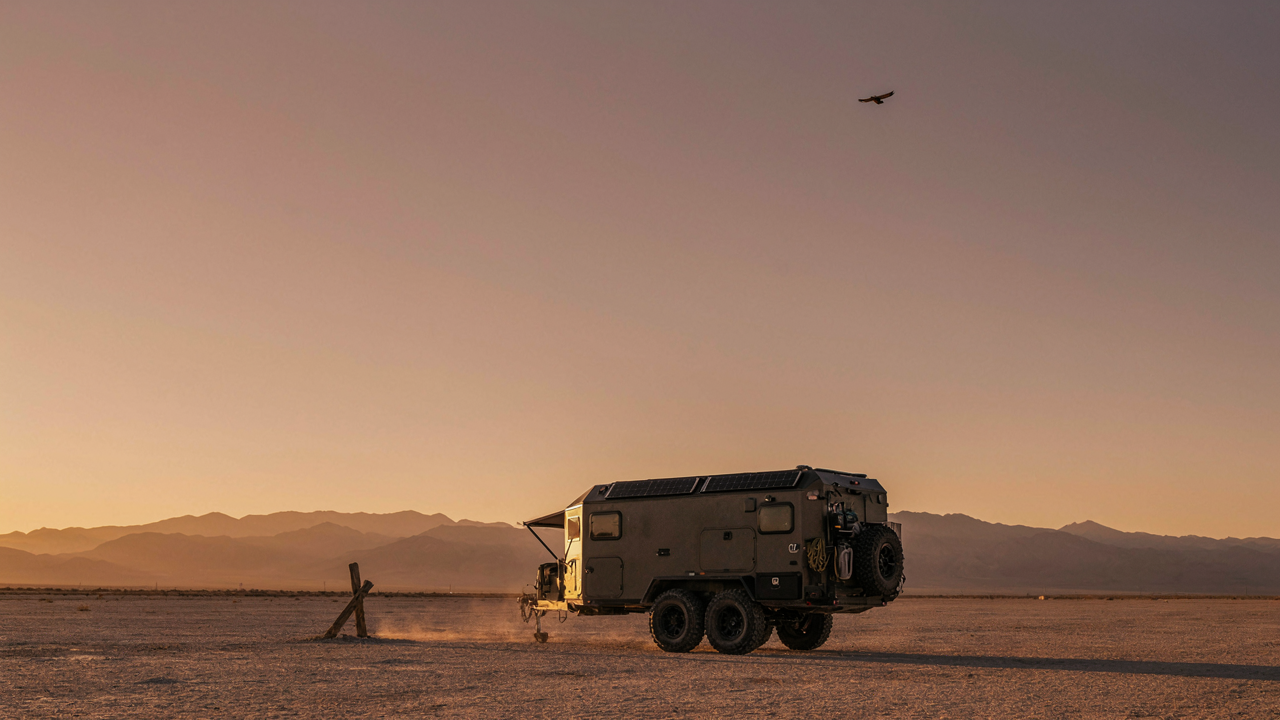
The Unspoken Truth About Custom Overland Trailer Builds
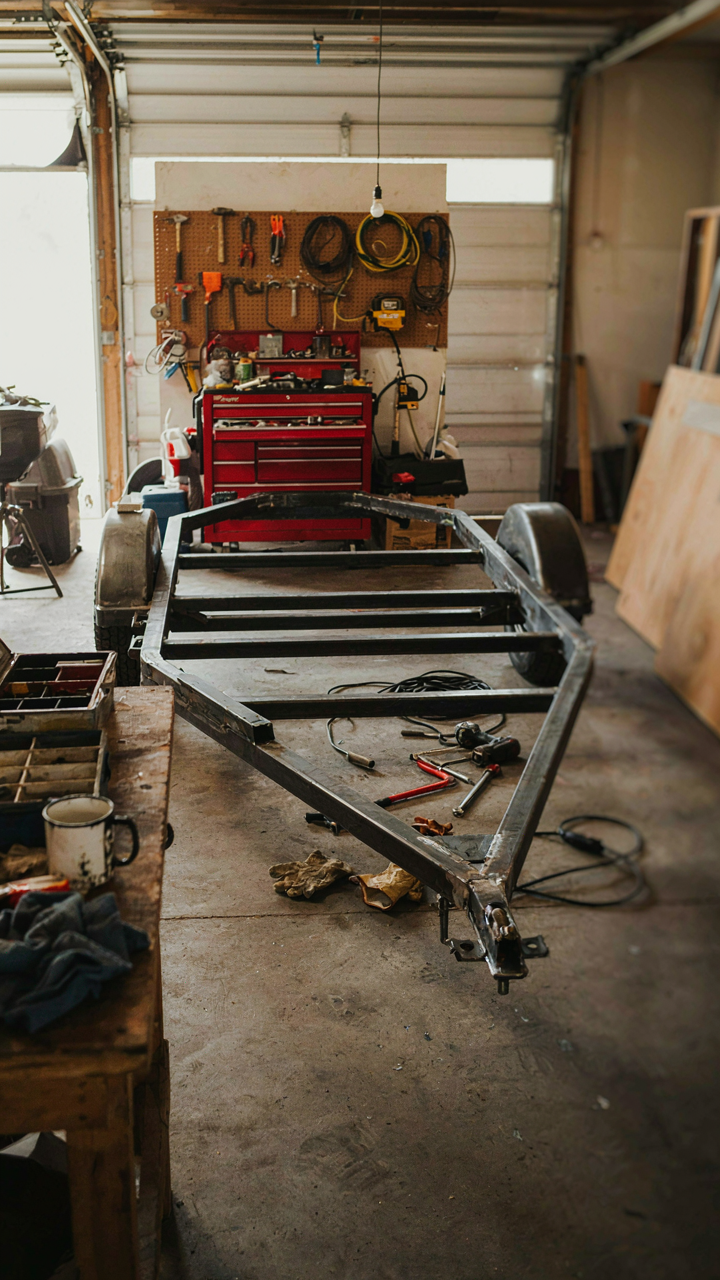
Why Most Dream Builds Stall Before Completion
You want to believe you’ll finish this. That’s the real reason you’re reading this section. Most people don’t finish custom builds because they treat it like a project when it’s actually a lifestyle commitment. The mechanism is simple: you underestimate friction. Every weld, every electrical run, every water line requires problem-solving that doesn’t appear in YouTube videos. You hit a decision point, pause for research, and three weeks pass. That pause compounds.
The builds that get completed share one trait: they treat constraints as features, not obstacles. A finished basic build beats an 80% perfect build stopped in a garage. This isn’t motivation talk. It’s math. Movement beats perfection. You need a hard completion date before you order the first component, and you need to remove optionality by pre-deciding on core systems like battery chemistry, water capacity, and insulation strategy before fabrication starts.
The Cost You Can’t Buy Your Way Out Of
Economic theory calls it opportunity cost. In trailer builds, it’s the hours. You can throw money at problems and buy pre-fab components, but you still burn calendar time learning, testing, and troubleshooting systems that won’t work as advertised. A build takes six months minimum if you work weekends. That’s 250 hours. Most people don’t have 250 spare hours without sacrificing something else. They sacrifice the build.
The complexity multiplier is real and non-linear. A basic steel frame with a roof and a battery is one problem set. Add solar, water heating, waste management, and electrical distribution, and you’ve added five simultaneous problem sets that interact. One failure cascades. A corroded water connector floods your electrical bay. A faulty regulator kills your battery bank. You don’t see these links until you’re deep in testing. Budget for discovery by building the simplest functional version first, then adding systems one at a time after proving each component works in isolation.
The Minimalist’s Manifesto For An Off Road Camper Trailer

Separate What You Actually Need From What Sounds Good

You want your trailer to feel complete before you leave, and that feeling is expensive. The mechanism is simple: your brain conflates readiness with fullness. A packed trailer feels safer than a sparse one, even when the sparse one works better.
Start by listing what keeps you alive in the field. Water, shelter, power to charge essentials, heat or cooling depending on climate, and recovery tools if you break down. Everything else is negotiable. Most builders add weight and complexity they never use because the alternative feels irresponsible. It isn’t. Restraint is the real responsibility.
Combine Functions To Kill Dead Weight
Military logistics uses a principle called consolidation of supply—fewer types of items with overlapping purposes reduce dependency chains. Apply this to your trailer: one power system charges devices and runs the fridge and lights. One water tank feeds the shower and the drinking supply and the radiator flush. One structural beam supports the bed and anchors tie-downs.
The common mistake is treating each system as separate. People add dedicated 12V circuits when the main battery handles the load. They install separate gray water tanks when they could route everything to one tank with proper filtration. They build fixed storage when modular crates serve multiple trips with different configurations. The audit step: list every component, then list every function it serves. If a component serves only one function, it’s a candidate for elimination or consolidation.
Chassis First: Foundation Of Your Camping Trailer DIY
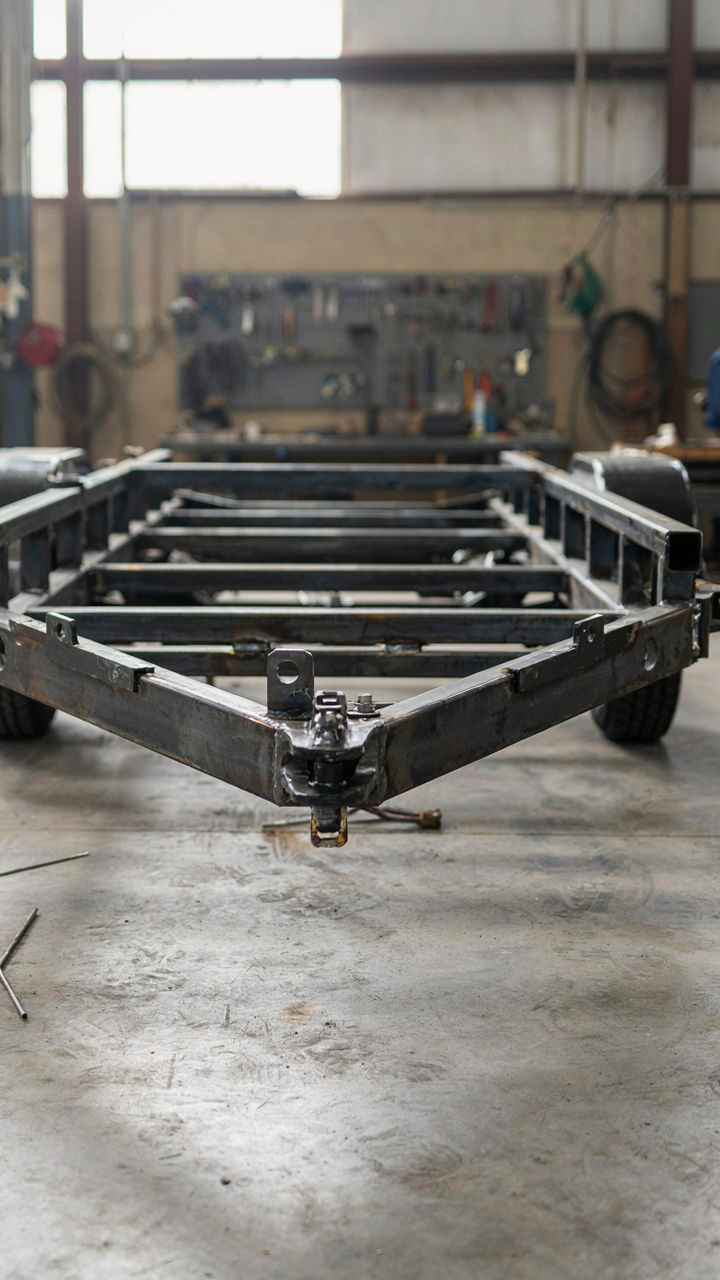
The Frame Carries Everything You’ll Break

You want this section to validate that you’re building smart, not just spending money on a trailer that holds together. Here’s what actually matters: the chassis is a load-bearing system, and load distribution isn’t about spreading weight evenly—it’s about where the stress concentrates and whether your frame can handle the reversal cycles that happen over rough terrain.
Most builders treat frame design like it’s decorative. They don’t. The tongue weight, cargo load, and dynamic forces from washboard roads all create bending moments along the frame rails. A 16-foot trailer with 2,000 pounds of gear doesn’t just sit there. Every rock, every rut, every pothole introduces a compression spike followed by a tension spike. Your frame experiences thousands of these cycles per trip. Undersized or poorly welded rails fail not from one big hit but from metal fatigue at stress concentrations—usually near welds or where the frame transitions from box section to channel.
Axles And Suspension Kinematics
Suspension behavior mirrors basic mechanical advantage: the arc your axle traces under load determines how your trailer responds to terrain. Most people choose suspension by load rating alone. That’s incomplete. A leaf spring trailer rides differently than an independent setup because the effective leverage ratio changes as the suspension compresses. Leaf springs also offer damping inherently, while modern trailing arms require separate dampening tuning or you’ll bounce for days on corrugated roads.
Your axle selection drives everything downstream: tire size, brake capacity, bearing preload, and turning radius. A heavier axle rated for 5,000 pounds handles overloading slightly better, but it compounds unsprung weight and reduces ground clearance on terrain you’re actually traveling. Choose the minimum axle rating that supports your actual loaded weight plus 30 percent buffer, then verify the suspension geometry maintains wheel alignment through full compression and rebound cycles without binding. Test this on a lift before you hit trail.
The Energy Autonomy Protocol For Overlanding Trailer

Solar Harvesting Efficiency And Battery Storage Ratios

You want solar on your trailer because it feels like freedom. The real mechanism is this: solar panels generate peak output only during a narrow window, and most overlanders size their systems to vanity specs instead of actual consumption patterns. Borrowing from electrical engineering, your system’s voltage regulation is the constraint that determines everything else. A 200-watt panel won’t charge a depleted battery bank faster than your charge controller allows. Size backwards from consumption, not forwards from panel count.
Most advice tells you to match panel wattage to daily amp-hours needed. That’s incomplete. You need to account for seasonal sun angle, dust accumulation, and the fact that you consume power at night when panels produce nothing. Battery storage must cover your nighttime draw plus a reserve buffer for cloudy days. Use a 3-to-1 ratio as a starting point: if you consume 30 amp-hours daily, your usable battery capacity should be 90 amp-hours minimum. Lithium batteries give you 80 to 100 percent usable capacity. Lead-acid only gives you 50 percent safely, so double your physical battery size if you go that route.
Water Purification And Waste Management A Closed System
A closed system means nothing leaves your trailer as contamination and nothing enters your water supply untreated. You’re not just filtering for sediment. Overlanders who run gravity filters and call it done are drinking bacteria and chemical residue. The mechanism: three-stage purification handles sediment, biological pathogens, and chemical compounds separately because one filter does not do all three jobs.
Install a mechanical pre-filter first to catch sediment and extend cartridge life. Add a ceramic or carbon stage second to remove bacteria, protozoa, and most chemicals. A final activated carbon stage handles taste and odor. For greywater, capture it in a separate tank and never mix it with blackwater. Blackwater goes into a sealed holding tank you empty at designated facilities. Greywater can go to ground safely after basic straining if your location allows it. The protocol is compartmentalization: each water type moves through dedicated plumbing to prevent cross-contamination.
The “Resilience Engineering” Of Your Off Road Tent Trailer

Where Your Supply Chain Actually Breaks

You want to feel safe out there. That’s the real motive. Military logistics uses the term “single point of failure” to describe any component that, when it breaks, collapses the entire operation. Your trailer has several. Water runs through one pump. Power runs through one battery bank. Cooling runs through one fan. The mechanism is simple: redundancy costs money upfront, so you skip it. Then you’re stranded.
The difference between a trailer that fails and one that doesn’t isn’t luck. It’s identifying which systems cannot be repaired in the field with what you actually carry, then building a backup for those systems only. Fresh water, electrical, and temperature control are non-negotiable. Everything else is secondary. Map your trailer’s dependencies the same way a supply officer maps a forward operating base: if this fails and I cannot replace it within five miles, I need a backup.
When Your Design Gets Stronger Under Stress
Biological systems don’t engineer for perfection. They engineer for recovery. In evolutionary biology, this is called antifragility: the system doesn’t just survive stress, it gets better from it. Your trailer should work the same way. The common advice says “build it tough.” That’s incomplete. Building it tough means you’ve over-engineered to prevent failure. Building it antifragile means you’ve designed it to handle failure when it comes.
Modular connections beat welded permanence every time. If your water system uses quick disconnects instead of hard-plumbed lines, you can swap a failed filter or pump without tools beyond a wrench. If your electrical system uses breakers and terminals instead of solder joints, you can troubleshoot and isolate problems in the dark. If your frame uses bolted attachment points instead of welded mounts, you can rebuild stressed areas without cutting. Redundancy through modularity is how you move from fragile to antifragile.
Shelter Systems: Beyond The Generic Tent On Your Overland Trailer Build
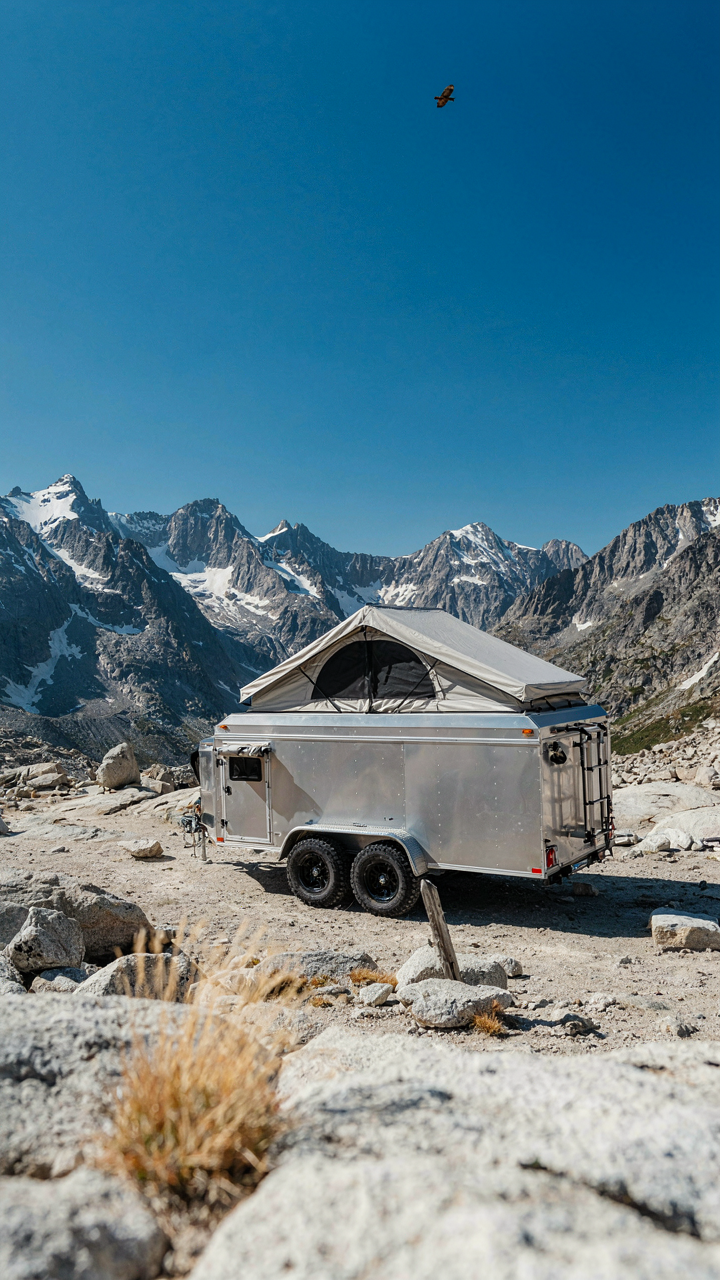
Hard Sided Versus Soft Sided: Environmental Trade Offs

You want the shelter that makes you look prepared without actually costing you money or weight. Here’s what matters: hard-sided enclosures (aluminum, fiberglass, composite panels) trade thermal mass for structural integrity. Soft-sided canvas and fabric systems do the inverse. Hard shells retain heat and resist wind pressure but add 300-800 pounds depending on size. Soft sides compress for transport, weigh 80-150 pounds, and fail catastrophically in sustained wind above 40 mph because fabric has no compression strength.
The real mechanism is permeability versus durability. Hard shells create vapor traps unless you engineer active ventilation. Soft-sided canvas actually breathes, which prevents condensation but requires treatment every 18-24 months. Neither choice is objectively superior. Hard shells suit fixed-site camps where weight doesn’t matter and weather severity justifies the investment. Soft sides work for mobile trips where you break camp every 2-4 days and don’t face extreme wind loads. Your trip duration and climate determine which system survives intact.
Modular Attachment Points And Rapid Deployment
Attachment points are load paths, not decoration. Welding random brackets to your trailer frame creates stress concentrations that fail under longitudinal forces during braking or off-road compression. Real deployment speed comes from pre-engineered connection systems that repeat the same action identically every time. This eliminates setup variation that kills your timeline.
Proven systems use captive bolts or quick-pins mounted to reinforced cross-members. The frame itself must distribute loads across at least three contact points per side. Test your attachment protocol once fully loaded, then photograph the exact configuration. Your deployment checklist becomes: unlock pins, extend structure, secure guy lines, verify tension. This takes 8-12 minutes, not the hour you waste hunting missing hardware or re-tightening loose connections. The mechanism is elimination of decision points during setup.
Tool Selection & Repair: The Real Overland Trailer Build Kit
Multi Function Tools Over Gadget Sprawl

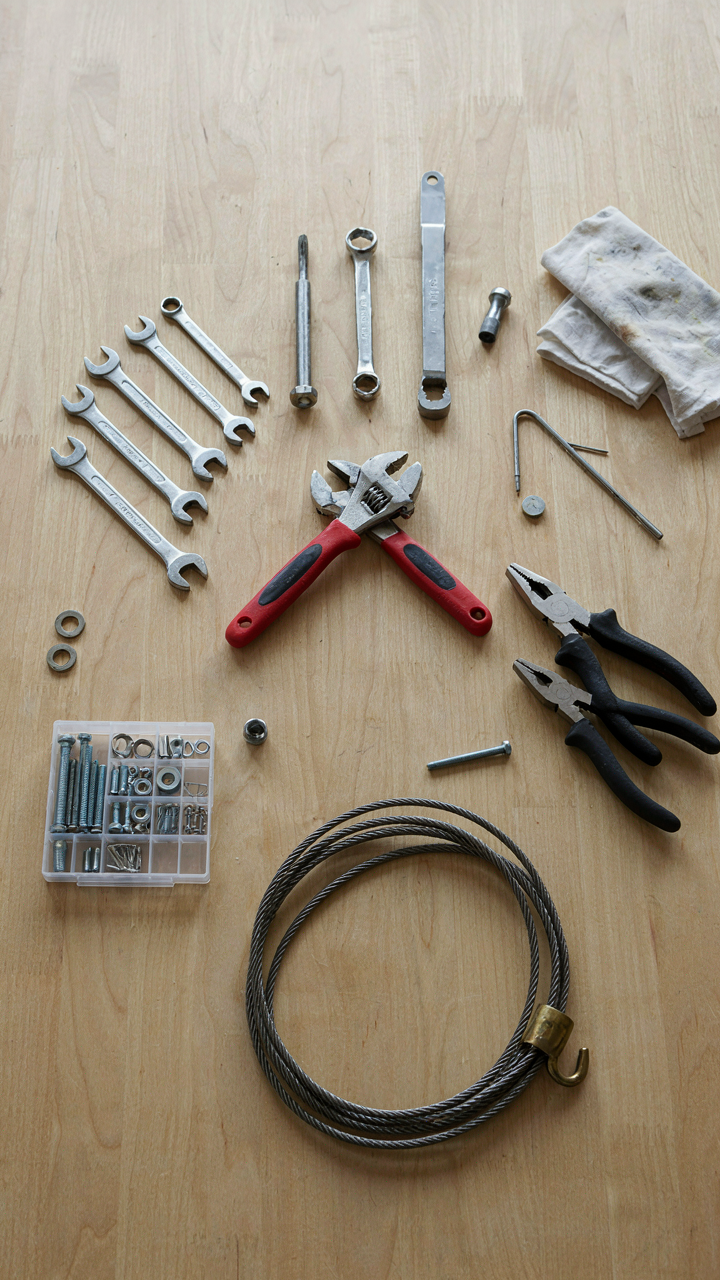
You want to feel prepared without admitting you’re afraid of being stranded. The mechanism is constraint: limited space forces prioritization, and prioritization exposes what actually matters versus what soothes anxiety. Most people pack tools they’ll never touch because buying feels like planning.
- Multi-bit screwdriver or bit set: Covers electrical connectors, cabinet hinges, and fastener variety without dedicated slots for each size.
- Adjustable wrench pair: One 8-inch and one 10-inch handle nearly all trailer fasteners, suspension bolts, and hitch components.
- Needle-nose pliers with cutting edge: Wire management, electrical diagnostics, and crimping applications in a single tool.
- 12V impact driver with bits: Battery-powered, handles stuck fasteners better than hand tools, and runs off trailer auxiliaries or portable power.
- Compression fitting kit: Tightens water line leaks field-side without replacement parts or welding equipment.
- Multimeter: Diagnoses 12V electrical gremlins before they strand you, tests battery state, and validates charging circuits.
Single-purpose gadgets occupy real estate and add weight. A good multi-tool beats five specialized items because you’ll actually carry it. The rule is simple: if the tool does one job only, it stays home unless that job breaks the trip.
When Systems Fail On The Road
Failure cascades in trailers because subsystems are dependent. Electrical failures kill water pumps and refrigeration. Suspension damage changes brake behavior. Bearing grease contamination spreads corrosion into the hub. Know the chain before you leave pavement.
Water and electrical failures account for 80 percent of mid-trip repairs. Water lines crack under vibration or freeze depending on climate. Electrical connections loosen from thermal cycling or corrode from moisture exposure. Wheel bearings seize when water enters through worn seals during water crossings. Brake fluid absorbs moisture over time and loses stopping power. Propane regulators fail when dirt clogs the inlet, cutting heat and cooking. Your repair strategy starts with preventing these five, not treating them. Inspect bearings every 500 miles, check electrical connectors for corrosion weekly, drain water systems before cold weather, test brake fluid annually, and clean propane regulator intake monthly. If a failure happens anyway, prioritize immobility over comfort: fix suspension or brakes before addressing conveniences like refrigeration or hot water.
UTV Overland Trailer Integration: The Synergy Advantage
Matching Trailer Dynamics To Tow Vehicle Capability

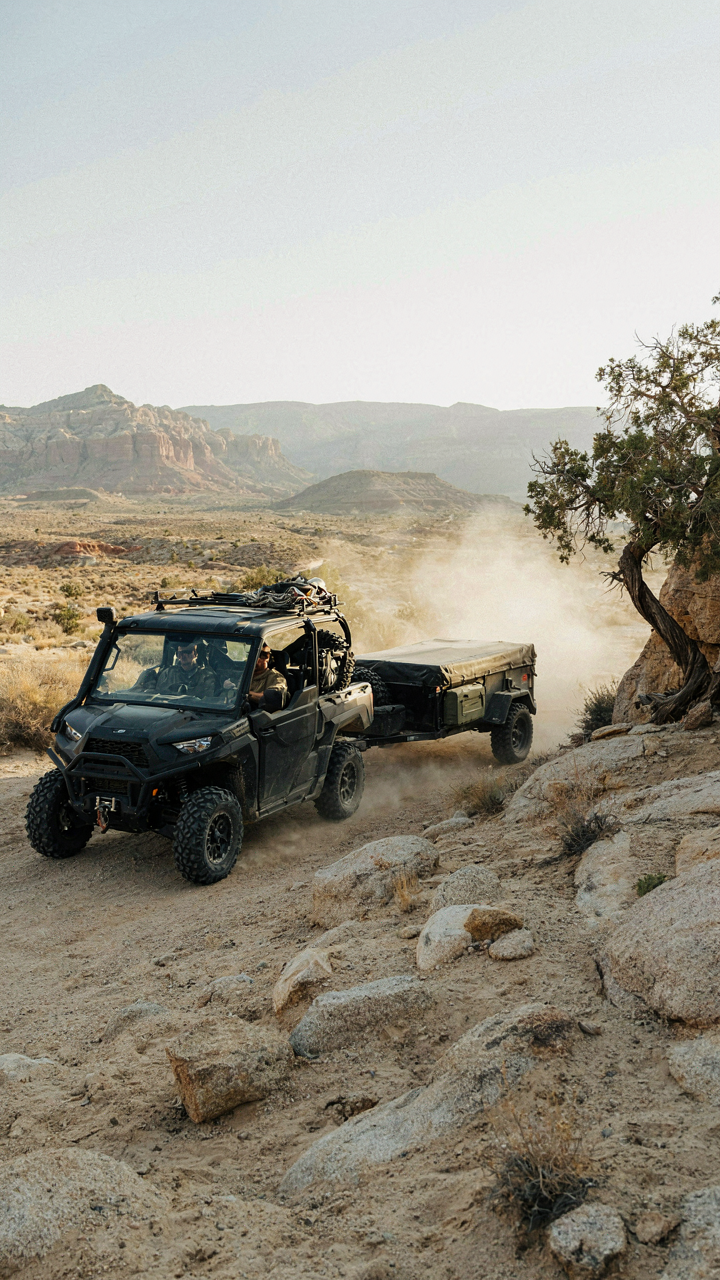
You want to believe your UTV can handle any trailer you bolt to it. The real constraint isn’t what the hitch rating says—it’s the physics of weight transfer and how your vehicle’s suspension responds under load. When you add a trailer, you’re not just adding mass; you’re shifting the balance point behind the rear axle, which reduces front-end grip and changes how your UTV turns and brakes.
Most people focus on tongue weight and GVWR numbers and miss the actual mechanism: your UTV’s suspension geometry dictates how much vertical load it can accept before geometry breaks down. A light trailer with poor weight distribution destroys handling worse than a heavier trailer balanced correctly. Match your trailer’s loaded weight to your vehicle’s rear suspension capacity, not just its towing rating. Test the combination on pavement first. If the rear squats excessively or the front feels twitchy, the trailer is too heavy or poorly balanced for that vehicle.
Weight Distribution And Articulation For Extreme Terrain
Articulation—borrowed from suspension engineering—means how independently each wheel responds to terrain. When you tow a rigid trailer over rocks, you’re forcing both vehicles to move as one unit, which kills the UTV’s ability to flex and maintain all four tires in contact with the ground. This is why tandem-axle trailers perform worse than single-axle trailers on extreme terrain, despite seeming more stable.
Place 55 to 60 percent of your trailer’s total weight forward of the rear axle. This keeps the nose from pitching down on descents and prevents tail-wagging on climbs. Use a weight distribution hitch if your trailer exceeds 10 percent of your UTV’s loaded weight. On technical terrain, a lighter, single-axle trailer with forward weight bias will articulate with your vehicle and maintain traction better than a heavier, poorly balanced setup. Verify weight distribution by measuring tongue weight at a truck scale, not by guessing or relying on visual inspection.
Your Greatest Limitation Isn’t The Trail; It’s Your Unexamined Assumptions About Self-reliance


Most people build trailers to escape. They don’t build them to confront themselves. You’ll spend thirty grand on solar panels and water systems when the real work is auditing why you believe you need total independence to feel alive. Stop researching gear specs tomorrow. Spend two hours instead writing down every assumption you hold about what self-reliance actually means. Your trailer build reveals your philosophy. Make sure it’s yours, not inherited. The trail doesn’t humble you. Your own contradictions do.