The Environmental Fortification Protocol: Beyond The Parasol
Weather Defense Through Structural Placement
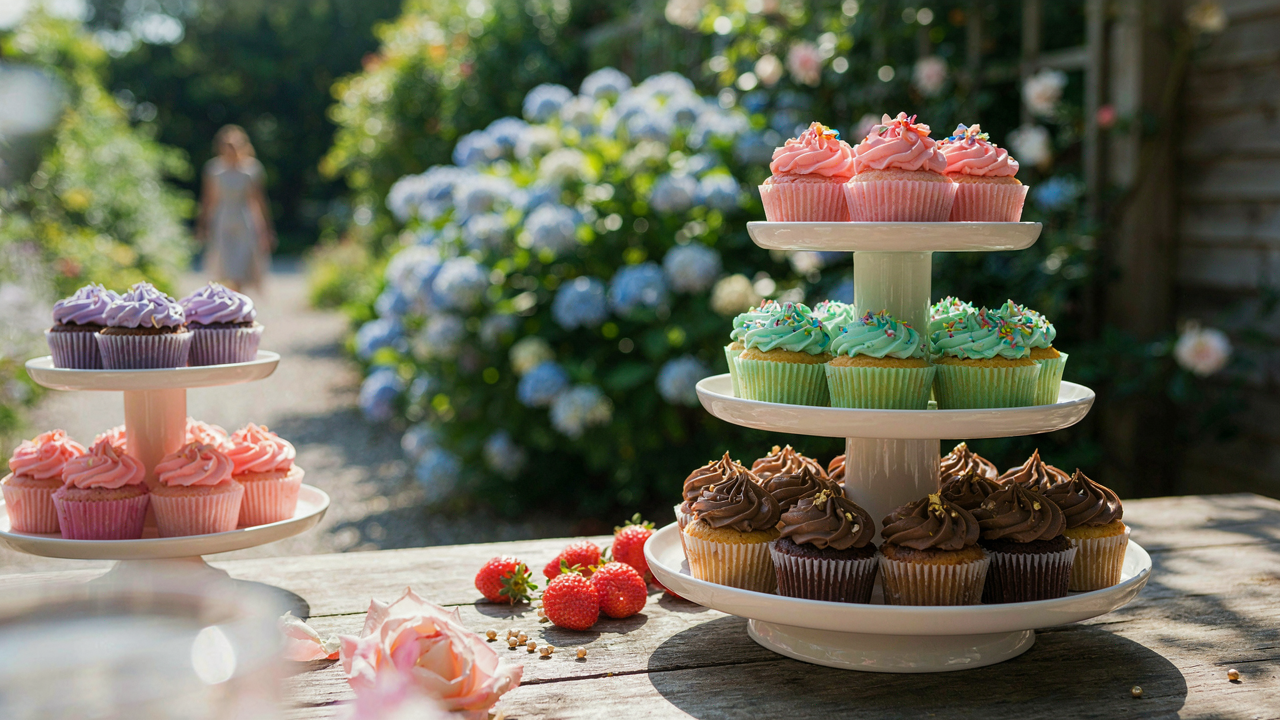
You’re worried your cupcakes will look like failures in front of people who matter. That fear is valid, which is why the real mechanism isn’t about buying better covers. It’s about positioning. Bakers use the concept of thermal mass from physics: objects absorb and release heat based on their environment. Your outdoor display works the same way. Place cupcakes in partial shade where they receive filtered light, not direct sun. The shade of a building wall or mature tree prevents frosting from sweating within thirty minutes of setup.
Wind creates two problems: it dries frosting unpredictably and knocks displays over. Position your table perpendicular to prevailing wind patterns, not parallel. Use the table’s mass itself as a windbreak by placing taller cupcake stands toward the wind source and shorter ones behind. Humidity matters more than people admit. High moisture makes buttercream slump; low moisture can cause fondant to crack. Check the forecast’s dew point, not just temperature. If dew point exceeds 65 degrees Fahrenheit, refrigerate cupcakes until thirty minutes before service.
Design That Excludes Unwanted Visitors
Pest control belongs in the display design phase, not as an afterthought. Insects navigate by scent and sight, so your physical arrangement either invites them or repels them. Elevation is your primary tool. Cupcakes on a single ground-level table attract ants and ground insects instantly. Elevate your display to waist height or higher. Use tiered stands that create air gaps between levels. This breaks the scent trail insects follow and forces them to cross open space where they’re exposed.
Enclosed cake domes or clear acrylic covers work, but only if you deploy them correctly. Place covers over individual cupcakes or small clusters, not as a blanket solution. Covers trap humidity inside if sealed too early, degrading your display within two hours. Install covers fifteen minutes before guests arrive. Surround the display with citronella candles positioned at the table’s perimeter, not near the cupcakes. The flame creates air movement that disrupts insect flight patterns while the scent masks the cupcakes’ aroma. Space candles eighteen inches apart for continuous coverage.
Gravity’s Grasp: Engineering Stable Cupcake Wedding Display
Load Bearing Base Architecture

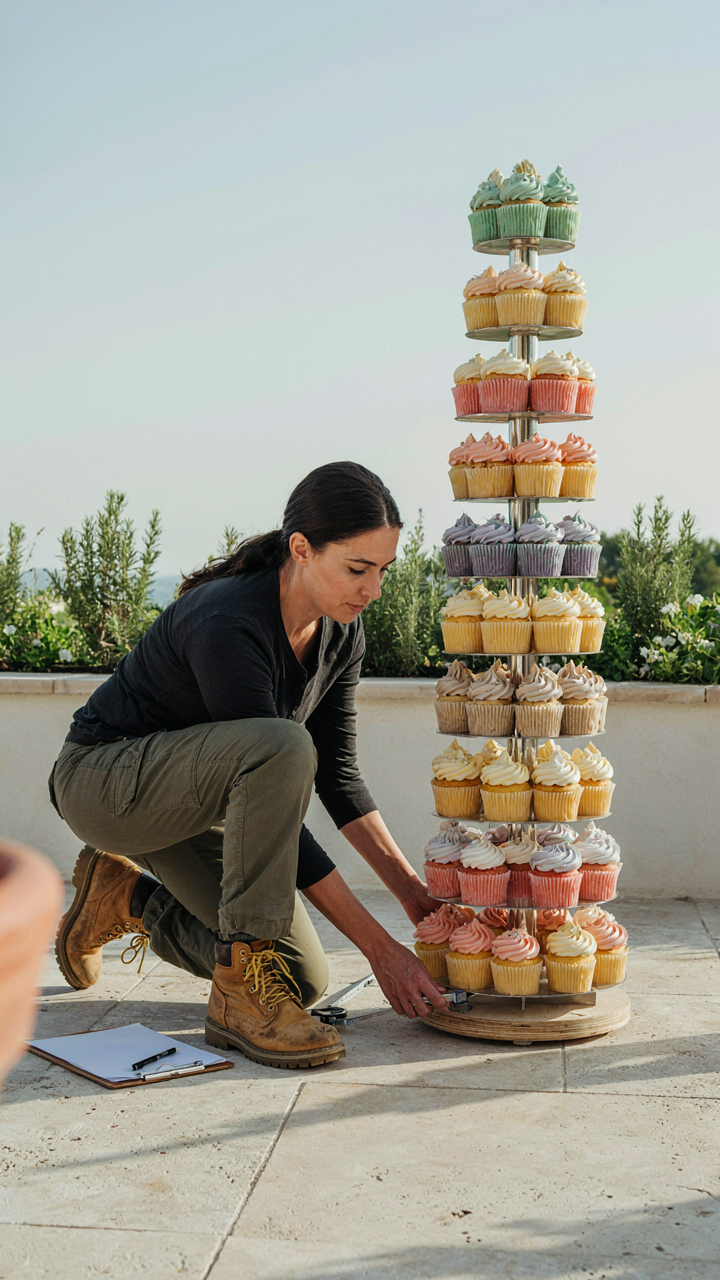
You want your display to survive the event without becoming a liability. The real mechanism is center of mass. Borrow from structural engineering: a cupcake tower is a cantilever beam. The base must counterbalance the weight pushing outward at every tier. Most people just buy a stand and hope. That’s negligent.
Calculate total cupcake weight first. A standard cupcake weighs 1.5 to 2 ounces. A twelve-tier display holding sixty cupcakes totals four to five pounds of payload alone. Add the structure itself, and you’re moving ten to fifteen pounds. The base footprint must be wide enough that the center of gravity stays directly above it, not beyond the perimeter. A narrow pedestal fails immediately on uneven ground.
Use a weighted base with a low center of gravity. Cast iron or concrete inserts, not decorative filler. The base should weigh one and a half to two times the total payload. This ratio prevents tipping. Metal tiers distribute load better than wood. Acrylic or metal rings handle stress more predictably than cantilever arms jutting from a central pole.
Stabilizing Anchors For Soft Ground
Wind and foot traffic create forces you can’t predict at a garden party. The stand needs to lock into the earth, not just rest on it. Soft soil and grass mean your display is floating on nothing.
Drive stakes through the base into the ground at least eight inches deep. Use galvanized steel or stainless stakes, not wood. Wood splinters and fails under repeated vibration. Stakes should pass through pre-drilled holes in the base frame. Position them at the perimeter where they create the widest triangle of resistance. Three anchor points create redundancy. Four points eliminate rotation entirely.

For uneven terrain, shim the base level first using steel shims or rubber wedges. A tilted display multiplies side loading and will fail faster than a level one. Check levelness with a standard bubble level before placing cupcakes. Recheck after the first hour of the event when settling occurs. Lock anchor stakes with secondary fasteners—lock washers or threadlocker compound—so vibration doesn’t work them loose over three to four hours.
The Logistics Loop: Minimizing Display Downtime
Setup And Breakdown Timing
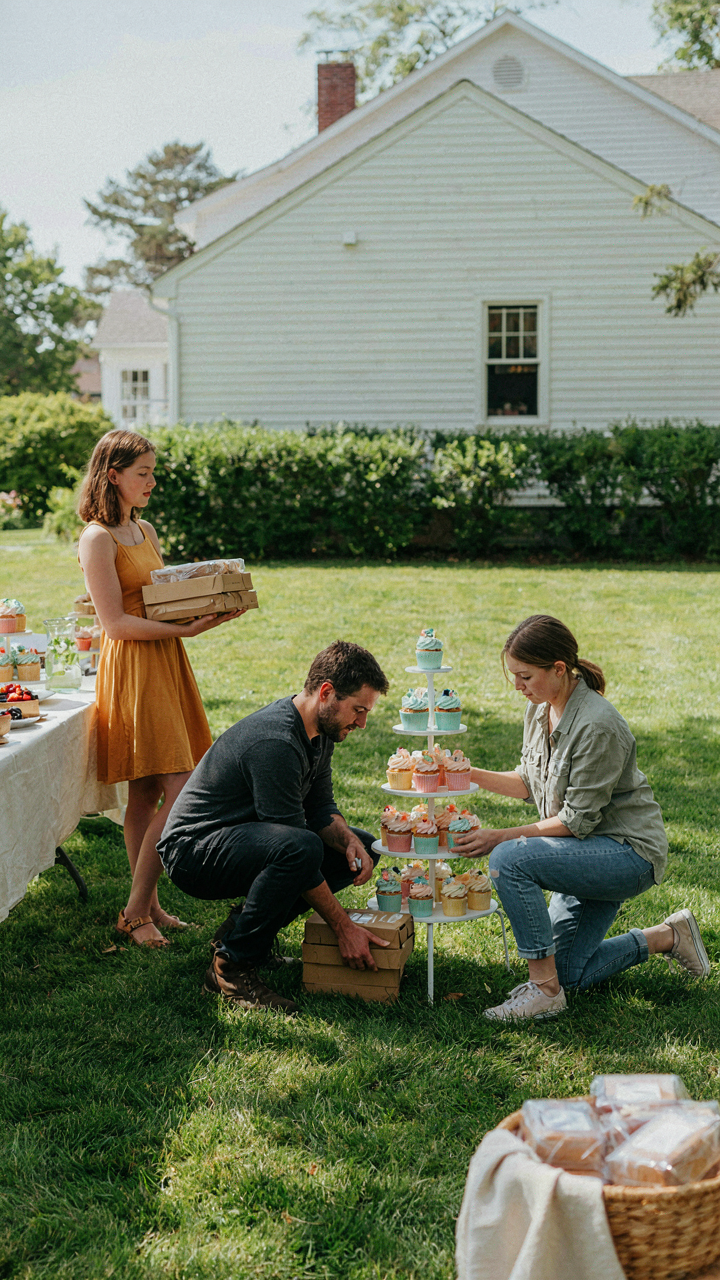
You want your display to look effortless, which means you’re actually afraid of the visible chaos that precedes it. Here’s what nobody says plainly: your setup window determines whether guests see a finished product or a work site. The mechanism is simple. You need a hard start time that places your full display live at least 45 minutes before the first guest arrives. This isn’t about perfectionism. It’s about preventing the awkward moment when someone watches you jam the last cupcake into a tiered stand while they’re holding a plate.
Breakdown timing works backward from the same logic. Most people dismantle displays while guests are still present, creating a visible death spiral that kills the party’s energy. You move the display to a staging area the moment the cupcakes stop moving—typically 20 minutes before you plan to end service. This gives you a clean closure instead of a slow fade. Stage everything on a back table or in a shaded corner. Strip the display structure, pack components, and store items in labeled containers before cleanup turns into a chaotic salvage operation.
Replenishment Without Visible Gaps
The real mistake people make here is treating replenishment as an afterthought instead of a staged supply chain. Think in terms of logistics buffers, borrowed from operations management: you maintain a reserve stock positioned separately from the display itself. This reserve sits in a cooler 10 to 15 feet away, out of sightline but accessible in under 60 seconds. You replenish in two-cupcake intervals whenever the display dips below 60 percent capacity, not when it’s visibly empty.

Contingency planning means you’ve already calculated expected consumption rate based on guest count and party duration. If you’re hosting 30 people for two hours, plan for 60 to 75 cupcakes, then bake 90 to account for factors like heat damage or accidental drops. Keep replacement cupcakes in a secondary cooler that never enters the display zone. If a cupcake fails due to heat, frosting damage, or weather, you swap it in place without a guest noticing. Document which flavors deplete fastest so you frontload those variations on your next event.
Rustic Cupcake Display: Aesthetics Of Resilience, Not Just Charm
Materials That Handle Weather Without Failing
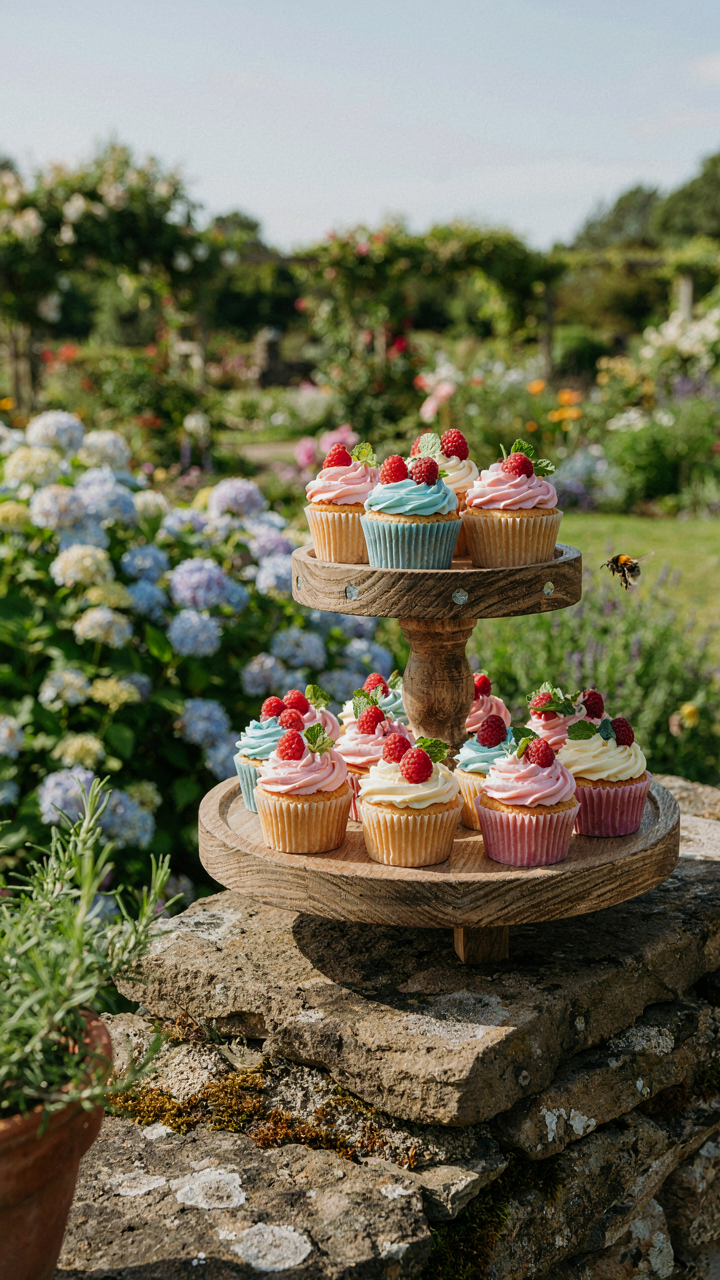
You want rustic to mean “I planned this” instead of “this fell apart.” The mechanism is material selection based on water retention and structural degradation rates, not sentiment. Wood doesn’t work outdoors without treatment because cellulose absorbs moisture and swells unevenly. Treated timber, reclaimed barn wood sealed with exterior-grade finish, and composite materials like recycled plastic lumber hold their shape through humidity swings that destroy untreated displays within hours.
Metal stands corrode unless galvanized or powder-coated. Galvanization creates a zinc barrier that oxidizes slowly, protecting steel underneath. Tiered metal displays with proper coating survive rain and sun without rust blooming through. Concrete and stone platforms absorb water but don’t deteriorate structurally, making them reliable bases. The real cost isn’t the material—it’s the finish. Cheap wood with no sealant degrades faster than quality material properly protected.
Design Built For Actual Weather, Not Instagram
Rustic doesn’t mean fragile. The engineering principle here is load distribution under variable conditions: heavy cupcakes, wind, temperature shifts, and moisture all stress a display simultaneously. Sloped surfaces shed water instead of pooling it. Tiered designs lower the center of gravity and reduce wind catch compared to tall single-tower displays. Legs should splay outward slightly, creating a wider base that resists tipping when ground softens from rain.

Elevation matters tactically. Displays lifted 12 to 18 inches off the ground allow air circulation underneath, preventing moisture buildup and mold growth on lower shelves. Metal grating or slat-style platforms work better than solid surfaces. The aesthetic of exposed bracing and visible support structure isn’t decoration—it signals structural integrity and allows you to engineer for stress points. When design serves function first, the rustic look follows naturally.
The “Dessert Ecosystem” Method For A Wedding Dessert Table
How Insects Actually Target Your Display
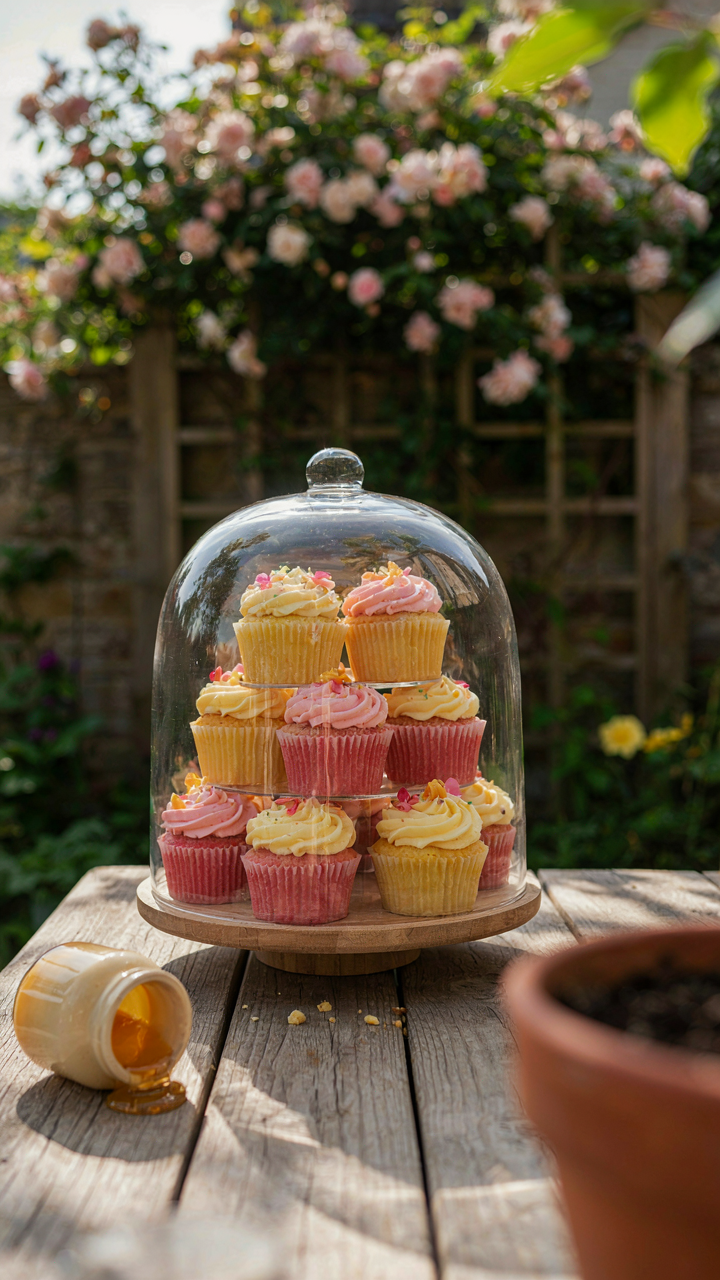
You want your cupcakes to look untouched when guests arrive—that’s the real fear driving this section. Here’s the mechanism: insects don’t randomly swarm. They follow pheromone trails and visual cues. Apply biology’s predator-prey dynamics to your setup. Wasps, bees, and flies move along established routes. They hunt for entry points, not the whole display. Your job is to break their navigation pattern before they land.
Most advice tells you to “keep food covered” or “use citronella.” That’s incomplete. You need to understand that insects navigate by scent plumes and movement. If you place your cupcakes in direct sun near flowering plants or trash, you’ve created a highway. Instead, position your dessert table in shade, away from mulch and garden beds. Use physical barriers strategically. A fine mesh tent or netting doesn’t just block bugs—it disrupts their approach vector entirely. They can’t land if they can’t locate the entry.
Building Thermal Stability Into Your Setup
Temperature swings destroy cupcake integrity in minutes, but most hosts ignore the physics entirely. Thermal mass—the capacity of a material to absorb and release heat—is your control lever. A cupcake sits exposed, absorbing solar radiation. It warms fast. Frosting softens. The display collapses by hour two. Physics tells you to use mass and shade together.

Place your display table on a material with high thermal mass: stone, concrete, or thick wood, not thin card tables. Position it in partial shade created by trees or a tent, not full sun. The mass absorbs heat slowly rather than letting cupcakes experience rapid temperature swings. Add tiered cooling elements beneath the table—not visible to guests—like frozen water bottles wrapped in neutral linens. This maintains stable surface temperature without active refrigeration or melting ice visible on your display.
Beyond The Tier: Innovative Cupcake Display Ideas Wedding
Geometric Structures That Command Attention
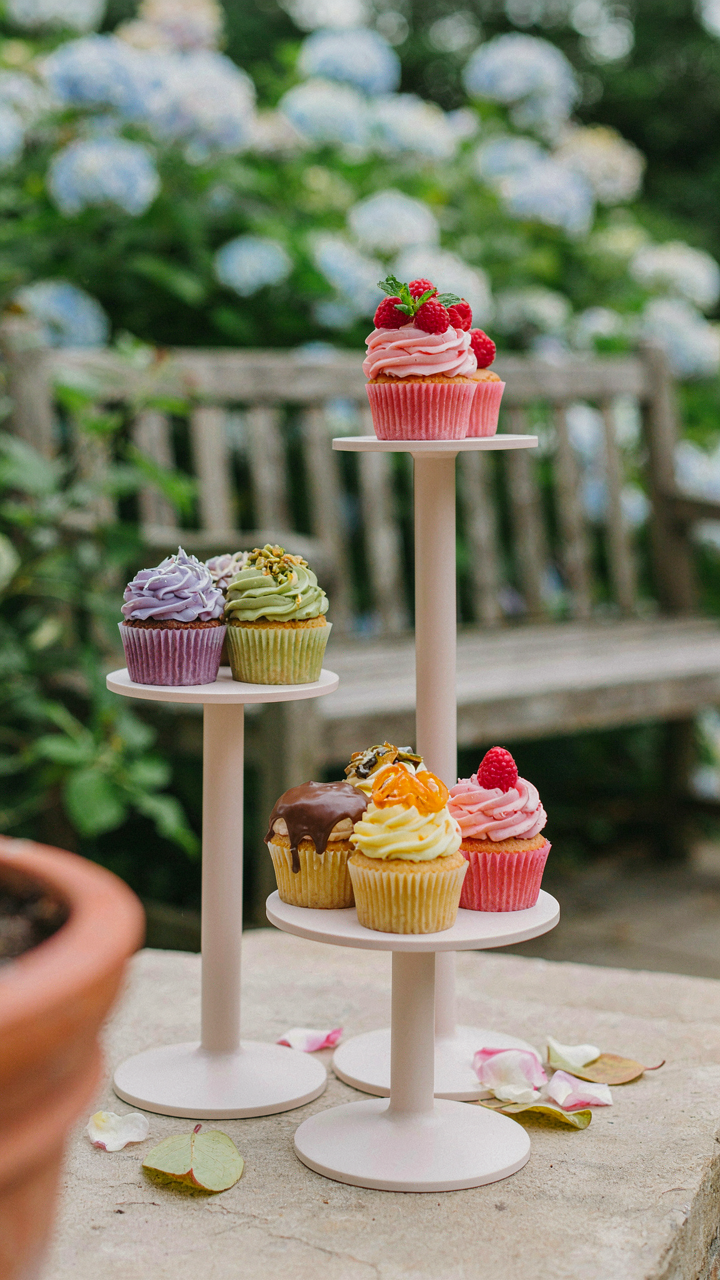
You want people talking about your display before they taste anything. That’s the real reason you’re reading this. The mechanism is simple: human eyes track vertical lines and geometric breaks faster than flat surfaces. Architecture borrowed this from visual hierarchy—the principle that contrast and structure guide perception. Cupcake displays work the same way. A pyramid tier is predictable. A hexagonal honeycomb structure, a staggered diamond formation, or an asymmetrical staircase pattern stops the eye because it contradicts the expected shape. The setup requires a structural foundation. Use metal wire frameworks, acrylic rods, or food-safe pegboard cut to your design, then anchor cupcakes into holders that grip firmly without damaging them.
Most displays stay centered and symmetrical because that’s easier to execute. Wrong approach. Off-center geometric structures create visual tension that registers as intentional design rather than catering-table accident. A tilted rectangle beside a vertical column beside a curved sweeping form tells a story instead of just holding desserts. The installation step matters more than the design itself. Build your structure first, test stability with water-filled cups to match cupcake weight, then secure everything to the table with museum wax and cable ties before adding cupcakes.
Engagement Through Guest Interaction
Interactive displays aren’t gimmicks—they’re mechanisms that move guests from passive observers to active participants. When someone builds their own cupcake configuration or selects from modular pieces, they’ve invested time and choice into the display. That investment converts to memory and social proof. The structure comes from behavioral economics. Displays with choice architecture perform better than static arrangements. Set up a base system with removable cupcake holders. Guests select from flavor options and position them into empty slots on a grid, pegboard, or modular tower. The display evolves throughout the event and becomes a collaborative artifact.

This format works because it solves a guest problem nobody names plainly: the anxiety of not knowing what to pick first. By giving them agency over placement and selection, you remove that friction. Track which configurations get built most often—that data tells you what flavor combinations actually resonate versus what you assumed people wanted. The practical execution: prepare 20 to 30 percent more cupcakes than a static display requires, use labeled flavor cards so guests know what they’re choosing, and refresh empty slots every 30 minutes so the display stays full and functional through the event duration.
Rustic Wedding Cupcakes: Presentation That Performs
Frostings That Survive The Elements
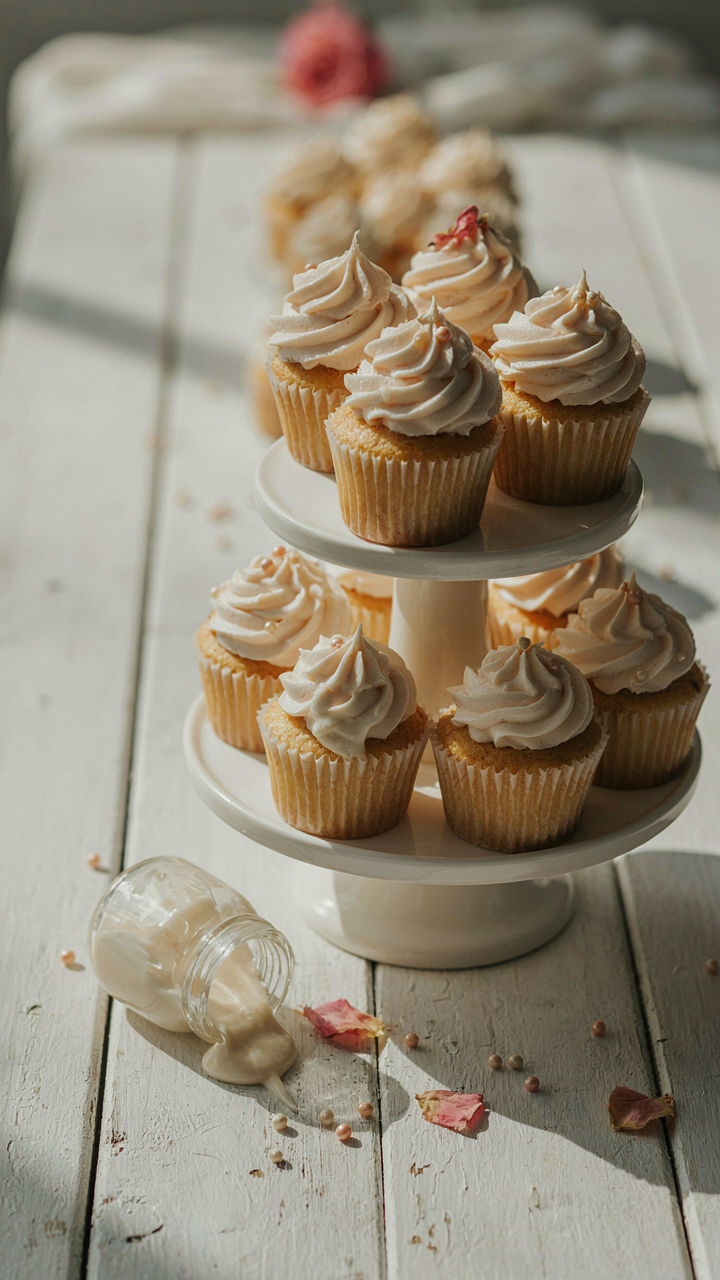
You want your cupcakes to look intentional at the end of the party, not like they lost a battle to the sun. The real problem is that most frosting recipes prioritize taste over durability, and outdoor conditions—heat, humidity, air exposure—accelerate breakdown. Buttercream sweats and collapses. American frosting cracks. Whipped cream separates. You need frosting engineered for hostile conditions, not your kitchen counter.
- Swiss Meringue Buttercream: Higher melting point than American buttercream due to egg protein structure. Stays stable in heat longer and resists weeping even when humidity spikes mid-afternoon.
- Ermine Frosting: Cooked flour and butter base creates a firmer crumb that resists heat sag. Historically used before refrigeration for this exact reason. Holds shape better than standard buttercream.
- Stabilized Whipped Cream: Gelatin or cornstarch reinforcement prevents separation. Won’t hold all day outdoors, but survives 3 to 4 hours reliably under partial shade.
- Cream Cheese Frosting With Cornstarch: Thickener extends stability without destroying tang. Requires shade and ideally stays below 75 degrees, but won’t separate like unsupported cream cheese alone.
- Fondant Or Modeling Chocolate: Not frosting technically, but the most durable surface layer. Blocks direct sun exposure and air contact. Works best over a supportive base frosting underneath.
Application thickness matters as much as formula. Thin frosting layers melt and slide. Thick applications—quarter inch minimum—create thermal mass that slows heat penetration to the cake itself. Seal exposed cupcake tops with a thin crumb coat first, then apply final frosting. This buffers the cake structure and prevents premature moisture loss.
Anchoring Cupcakes Against Displacement
Most guides suggest tiered stands and call it done. That’s incomplete. The mechanism here is stability through weight distribution and friction, not decorative arrangement. A cupcake displaces when wind force exceeds the resistance created by its own weight plus surface grip. Light cupcakes on slick surfaces lose every time.

Use tiered displays with cupcake liners that have textured bottoms or ridged bases. Paper liners sit flat and can slide; foil liners grip slightly better. Set tiered cake stands on level ground and verify they don’t rock. Uneven surfaces create tipping vectors. For outdoor tables in wind zones, secure the stand base with museum putty or adhesive dots rated for outdoor conditions. Position heavier cupcakes—those with denser crumb or thicker frosting—on lower tiers where wind force decreases with proximity to ground. Lighter cupcakes belong higher up only if the display anchors properly first. Check stability before guests arrive. A cupcake that falls reflects poor execution, not charm.
The Anti Fragile Display: Embracing Imperfection In Wedding Cupcake Display

When Your Display Breaks, It Improves
You want a display that looks untouched by time or weather because you’re terrified people will judge your party as cheap or poorly planned. Here’s the mechanism: the displays that survive best aren’t rigid structures but modular systems with redundancy built in. Borrow from engineering’s concept of graceful degradation—a system keeps functioning even when parts fail. Your outdoor cupcake display should degrade gracefully. Use tiered stands with individual cups rather than a single shared platform. If one cupcake gets knocked over, the structure holds. If weather damages one section, guests don’t see a collapsed monument.
The real advantage appears over time, not at setup. A display made of separate three to six inch pedestals lets you replace damaged tiers without rebuilding the whole arrangement. Wooden blocks, concrete pavers, or individual cake stands all work because they’re independent units. Weather hits one, you swap it. A guest bumps a tier, you reposition it. The display survives the party intact because it was designed to survive individual failures, not prevent them.
Rapid Fixes Without Visible Scrambling
Everyone says to have backup cupcakes on hand. That’s incomplete advice. You need a system that lets you execute fixes in under two minutes without signaling that anything went wrong. The mechanism is separation of display and supply. Your visible display holds cupcakes meant to stay there. Your supply station sits twenty feet away, partially screened. When a cupcake gets damaged, crushed, or eaten by a guest’s dog, you don’t refill the display from an obvious reserve. You swap out the entire tier or pedestal from your supply area.

This works because guests perceive the display as finished inventory, not a live operation. Keep identical backup tiers pre-positioned or stored nearby under a cloth cover. When you need to swap, you move one complete unit and replace it with a fresh one. This takes ninety seconds and requires no explanation. The display always looks intentional and complete. You’re not patching visibly. You’re rotating inventory like a restaurant does during service.
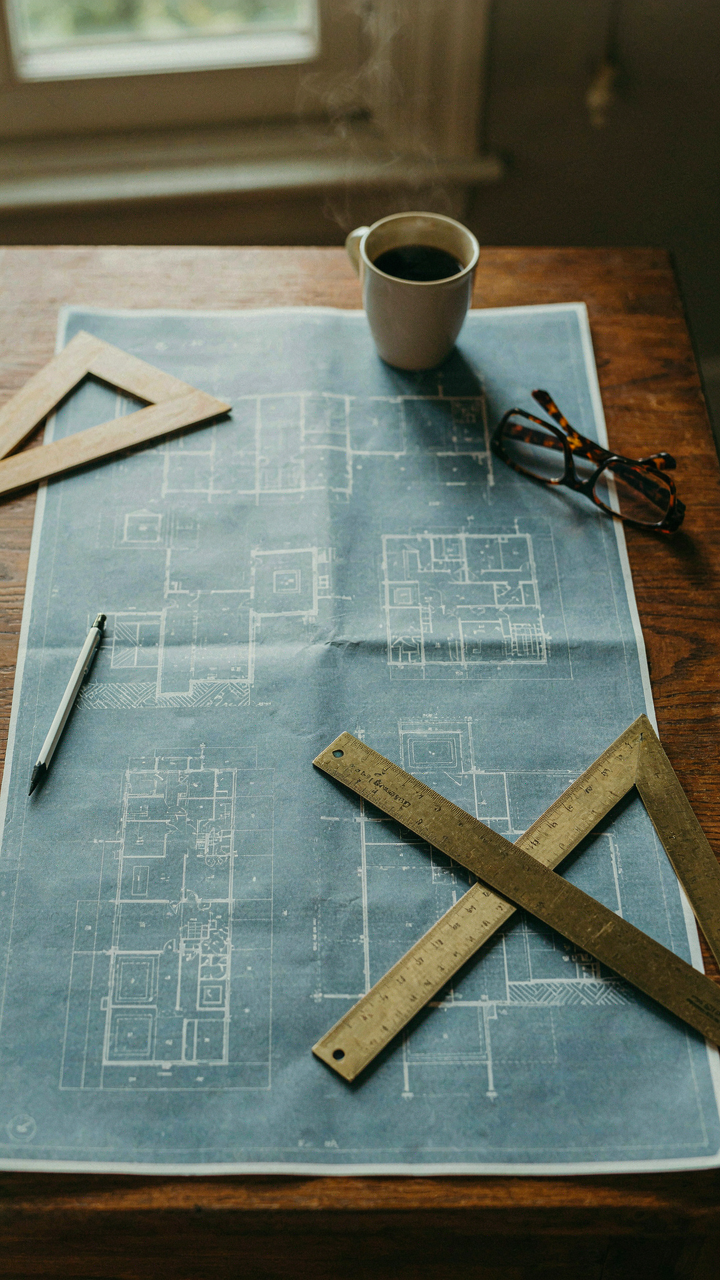
Operationalizing Elegance: The Cupcake Display Blueprint
The Setup That Prevents Collapse
You want people to remember your event as polished, not the moment a tiered display tipped over in the wind. The real mechanism here comes from systems thinking: a cupcake display is a load-bearing structure with variables. Weather, surface stability, and guest traffic all apply force. Control those, and elegance follows automatically.
Start your checklist 48 hours before guests arrive. Test your display surface for level ground using a physical level tool, not your eye. Identify wind direction and speed at your venue by visiting the actual location at the same time of day as your event. Mark where direct sun will hit the display between setup and service, since heat softens frosting and wilts decorative elements faster than you’d predict.
The Breakdown That Saves Money
Most people treat post-event cleanup as damage control. That’s backward. Treat it as asset recovery. Cupcakes that didn’t sell, display structures, and materials can reduce waste by 60 percent with one simple protocol: photograph everything before breakdown, inventory reusable components, and separate compostable materials from structural pieces immediately while your setup is still visible.
The mechanism is friction reduction through categorization. Uneaten cupcakes get frozen or gifted within two hours, before temperature damage accelerates mold. Tiered stands, risers, and backdrop materials get cleaned and stored in labeled containers the same day. Cupcake liners and any non-contaminated decorative paper go to compost. This workflow takes 20 minutes and transforms a chaotic teardown into a documented, repeatable process.
Your Charming Display Is A Liability: Master The Elements, Master The Event
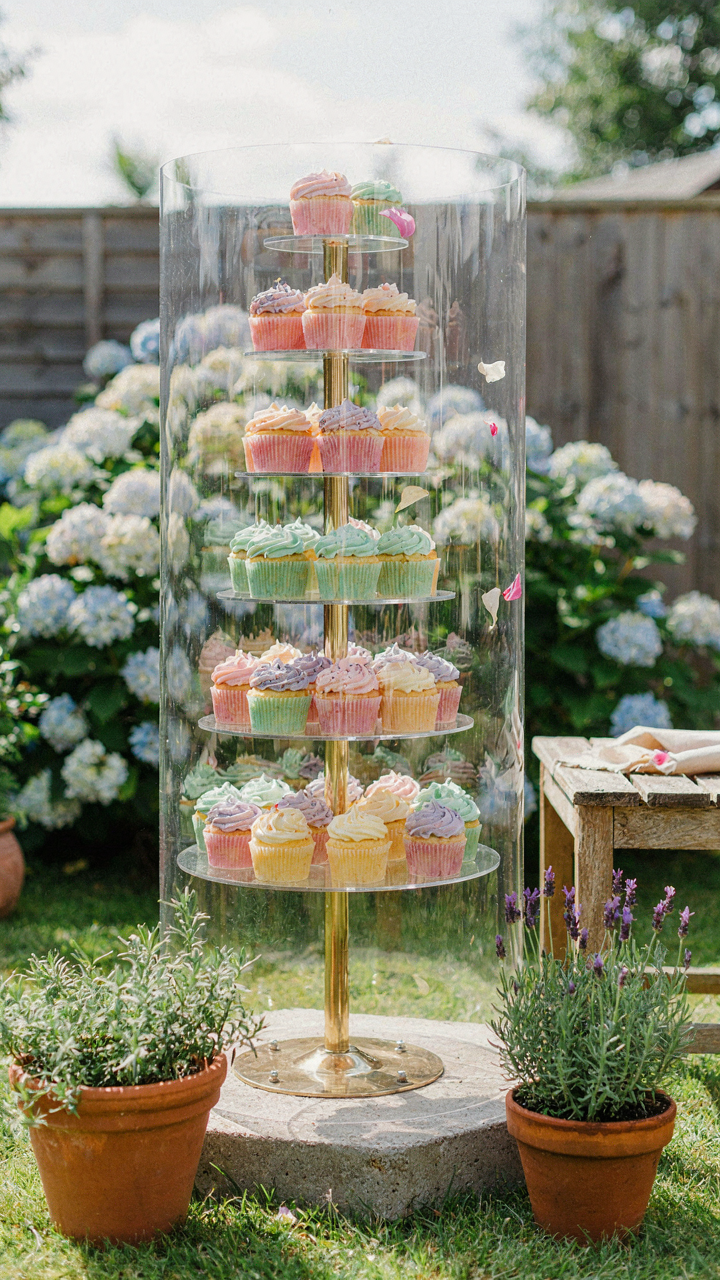
Most people build an outdoor cupcake display, then hope the wind doesn’t destroy it. That’s backwards. The real shift is treating weather as your design constraint, not your enemy. Wind, heat, and humidity aren’t problems to avoid. They’re the actual design brief. Today, scout your garden party location at the same time of day the event happens. Note where the sun hits hardest, where the wind accelerates, where the shade sits. Build your display around these facts, not against them. Your cupcakes don’t need protection from the elements. They need you to stop fighting them.