The “Less Is More” Protocol For Outdoor Birthday Treat Bars
Curate Your Treats With Intention
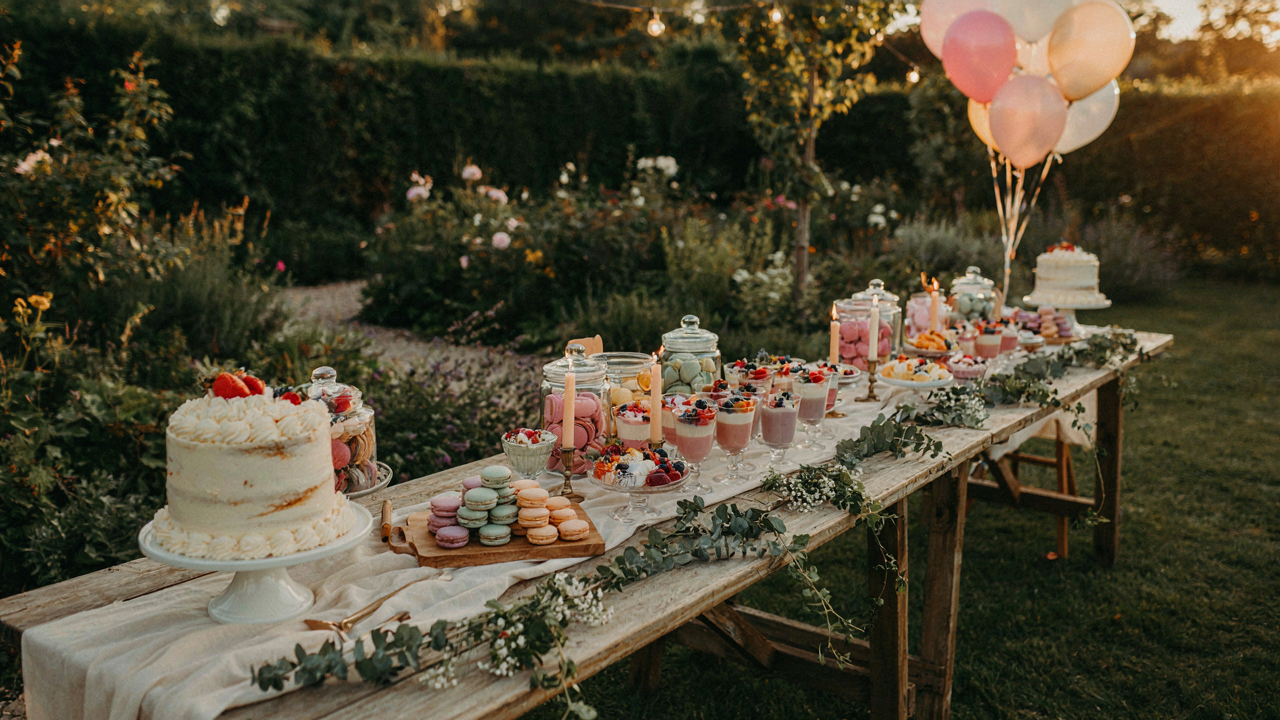
You’re worried that fewer options make your party look cheap. That’s not the mechanism at work. Economics calls this the paradox of choice: beyond five to seven options, guests experience decision fatigue and enjoy less. They stand there frozen, unable to commit, then leave without eating anything. The math is brutal. Three exceptional treats outperform twelve mediocre ones every single time. Start by selecting one chocolate option, one fruit-based option, and one savory-sweet hybrid. Stop there.
The real work happens before guests arrive. Eliminate treats that don’t align with your party’s vibe or season. Offer what you can actually keep cold or fresh throughout the event. A melted brownie or stale cookie tanks your entire setup faster than having fewer choices. Each treat you include must justify its place. This isn’t minimalism for aesthetic reasons. This is operational efficiency disguised as restraint.
Quality Compounds Guest Experience
Cheap treats make people question everything else at your party. One premium chocolate truffle generates more conversation than thirty mass-produced candies. Guests remember the treat, not the quantity. Source items from local bakeries or make them yourself if possible. The perceived effort shifts how people interpret the whole event. This is where your setup either feels thoughtful or thrown together, regardless of how much you actually spent.
The constraint forces better execution. With fewer treats to manage, you can maintain proper temperature, presentation, and rotation. Staff the bar better. Refill faster. Keep everything visible and accessible. Your guests see consistency, not chaos. They eat what they came for, enjoy it fully, then move on to socializing. That’s the actual outcome you’re building toward, not the number of options they didn’t choose from.
Beyond The Sugar Rush: Crafting A Memorable Bonfire Event
When Treats Become Part Of The Experience

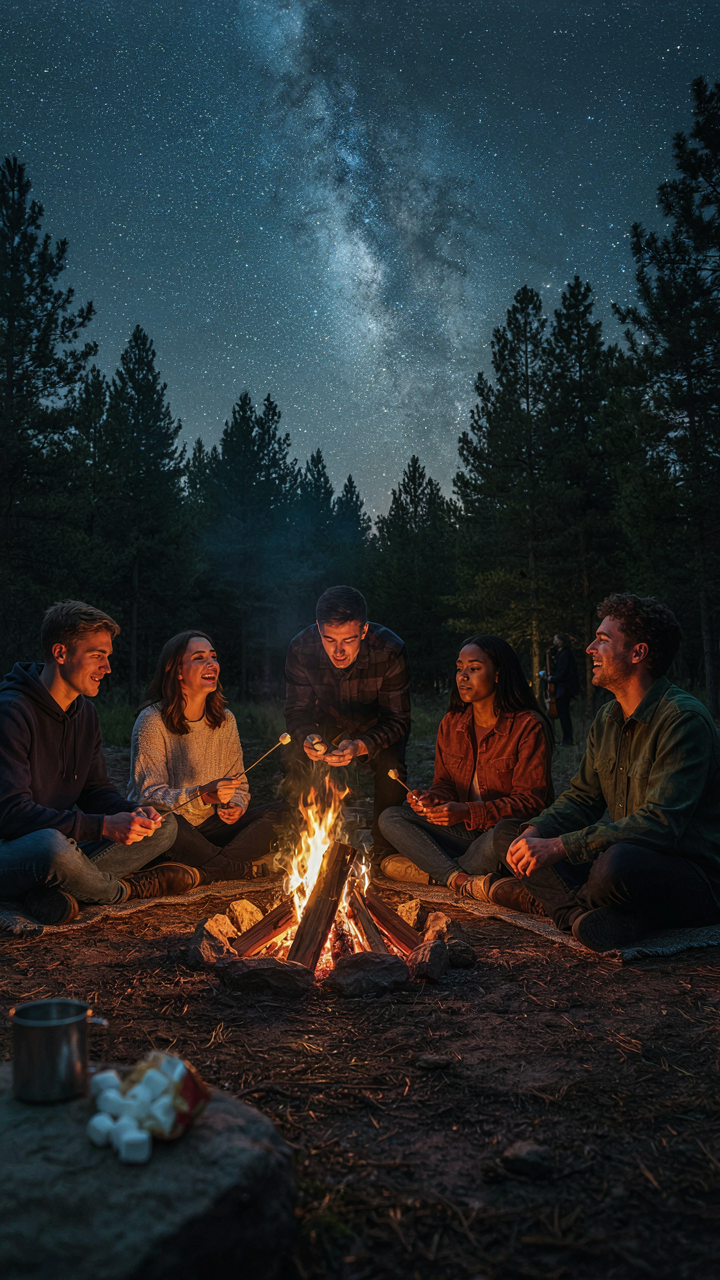
You want people talking about your event for weeks because you orchestrated something they didn’t expect, not because you served decent candy. Here’s the mechanism: treats become memorable when they’re integrated into the activity itself, not just placed on a table. Bonfire events create natural friction points where guests stand around waiting for food to cook or for the fire to settle. Your treat bar fills those dead moments with intentional engagement. The timing matters more than the presentation.
Most people think treats need to look Instagram-worthy to work. That’s backwards. Guests remember the moment a chocolate melted on their tongue while staring at flames, not how the bar photographed. Position your treat station near the fire but far enough that guests feel the heat without singeing marshmallows. This creates a natural workflow: guests approach the fire, rotate their skewer, step back to grab a chocolate or caramel while waiting for the perfect toast. The treats aren’t decoration. They’re pacing devices that keep energy steady throughout the event.
The S’mores Station As Conversation Engine
Most people miss that s’mores bars work because they force proximity and interdependence between guests. Borrow the concept from urban planning’s “nodes and paths” logic: a node is a destination point where activity concentrates, and guests naturally cluster there. Your s’mores bar becomes that node. People can’t assemble their own s’more in isolation. Someone holds the graham cracker, someone else monitors the marshmallow, someone passes the chocolate. This dependency creates conversation and repeated small interactions instead of awkward standing-around.
Set your s’mores station with individual components separate but organized: graham crackers in one spot, chocolate squares in another, marshmallows on skewers nearby, napkins stacked high. Don’t pre-assemble anything. Let guests build. This extends their time at the station and increases the chance they’ll help each other and laugh at failed attempts. Stock double the chocolate you think you’ll need. Dark chocolate burns less predictably than milk chocolate and offers a cleaner flavor that cuts through sweetness. Have at least two long skewers available per three guests so nobody waits for a turn.
The “Effortless Enjoyment” Framework For Easy Outdoor Birthday Party Food
How Guests Actually Navigate Your Setup

You want people to think the food just appeared there. That’s the real reason you care about this section—not logistics, but the illusion of ease. The mechanism is borrowed from retail design: conversion funnel theory. Your treat bar is a funnel, and every friction point you add drops your conversion rate. Guests won’t use what requires effort to reach.
Position your main table at eye level and arm’s reach from the natural gathering point. Most outdoor parties generate a gravitational center—usually near seating or shade. Place your treat bar within three steps of that zone, never isolated at the property edge. Remove visual obstruction between guests and the display. Low centerpieces work. Tall vases block sight lines and create hesitation. Guests who can’t immediately see what you’re offering won’t walk over to find out.
Managing The Actual Workload During The Event
The standard advice says “prep everything ahead so you can relax.” That’s incomplete. You can prep and still drown if you don’t architect the refill system. Set up a staging area behind or adjacent to your main display—a small table or cart stocked with backups. Assign one task per 15 guests: one person refills the main spread every 20 minutes on a timer, not when it looks empty. This prevents the dead zone where the bar looks picked over and guests stop approaching.
Use serving vessels that drain or collect debris separately from the food itself. Tiered trays with removable layers let you swap out a tired layer without touching the active one. Keep wet wipes and small trash immediately adjacent to the bar—don’t make guests hunt for disposal. Establish a single point where dirty napkins and used sticks go. Guests will self-police the mess if you make disposal frictionless and visible.
Designing A Dessert Table Birthday That Actually Works
What Your Display Says Before Anyone Eats

You want guests to think your spread cost more than it did. That’s the real reason you’re reading this section. The mechanism is scarcity theory from economics: fewer items on display signal exclusivity and higher value, while crowded tables signal bulk and cheapness. Restaurants use this constantly. Fine dining shows three desserts with space around each one. Chain restaurants cram twelve options into the same footprint and charge half the price.
Most birthday setups fail here because the host treats display like a storage problem, not a perception problem. You’re not trying to fit everything. You’re arranging what stays visible to create the impression of curation. A single-tier table with twelve treats scattered across it reads as “I bought a lot of stuff.” The same twelve treats arranged on two tiers with negative space between clusters reads as “I chose these carefully.” Height, spacing, and surface area control how guests perceive value before they taste anything.
Creating Clarity Through Constraint
Common advice says to use tablecloths, runners, and decorations to make the table look fuller. That’s backwards. Visual noise destroys impact. Your eye lands nowhere because everything competes. Neuroscience confirms this: the brain processes images faster when fewer elements occupy the visual field. Remove the clutter.
Start with a neutral base, typically white or natural wood, and build with negative space. Group items by type and height, leaving actual gaps between groupings. A tiered stand holds three macarons. Empty space sits next to it. Then a single cake. Space again. Then drinks. The eye moves through the arrangement instead of getting stuck in a visual jam. This separation also makes individual items feel intentional rather than circumstantial. End your design process by removing one more thing than feels comfortable. That discomfort is where clarity lives.
The Social Gravity Model For Your Camping Graduation Party
Treats As Anchor Points For Interaction

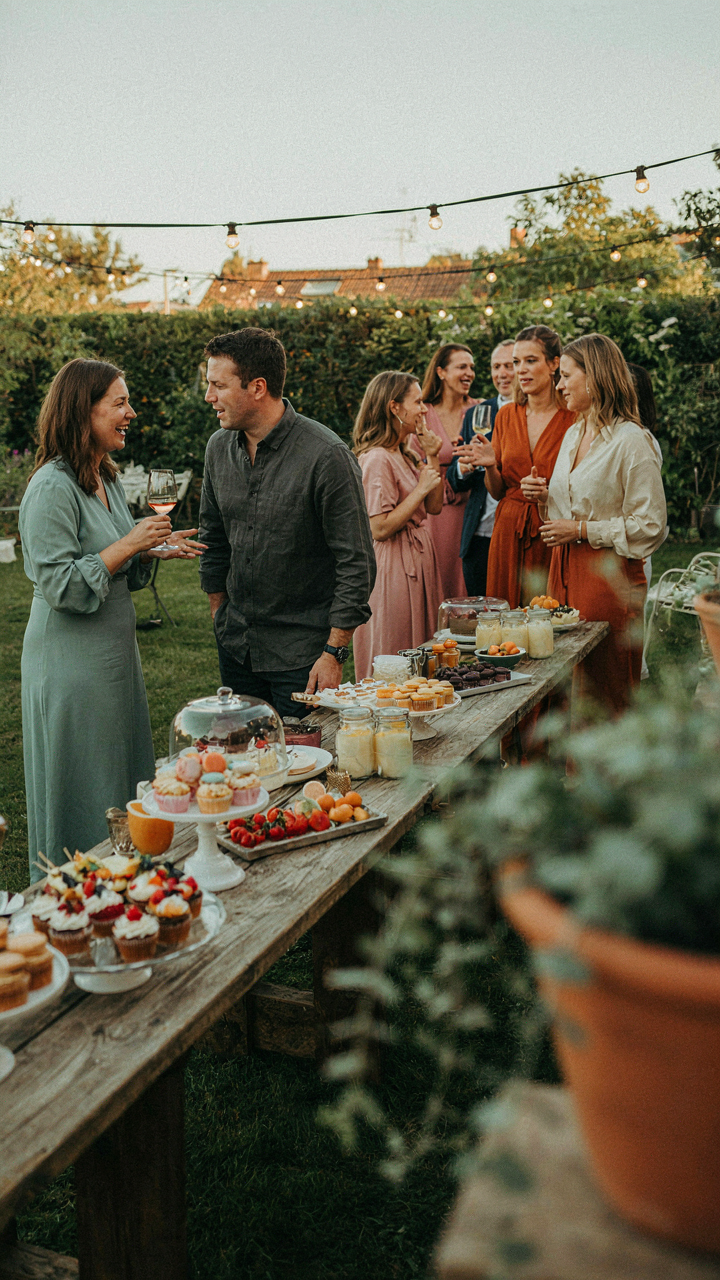
You want people to remember your event as the one where everyone actually talked to each other instead of standing in separate clusters on their phones. Behavioral economics calls this the “choice architecture” problem: treats function as decision nodes that force proximity and conversation. Place your outdoor birthday treat bar in a spot that creates natural bottleneck traffic. High-movement zones near seating or water access work better than corners. The bar becomes the reason people cluster, not the dessert itself.
When guests approach a treat bar, they pause. That pause breaks momentum. Someone else arrives during that pause. They recognize each other, make eye contact, and exchange words while selecting items. This is the actual mechanism. Most hosts think the treats matter. They don’t. The stopping point matters. You’re not competing on flavor or presentation. You’re engineering a forced proximity event where conversation happens because movement slowed down long enough for it to.
Repeat Loops Through Predictable Restocking
Reinforcement learning shows us that behavior strengthens when followed by immediate reward in consistent patterns. Your outdoor birthday treat bar works the same way: guests return multiple times if they notice fresh items appearing at predictable intervals during the event, not just sitting out pre-loaded. This is the real loop. Deploy a restocking protocol every 30-45 minutes, not once at the start. Make it visible. Have someone bring new trays or replenish empty containers while people watch.
The repetition creates an expectation. Guests begin checking back because they’ve learned that “new stuff appears.” They tell others. Traffic to the bar increases naturally without you promoting it. Each return trip is a social interaction opportunity. You’ve shifted the treat bar from a static display into an active reason to move through your space multiple times. Assign one person the job of restocking on that schedule. Write the times down. Execution matters more than sophistication.
Cute Bonfire Ideas: Engineering Atmosphere, Not Just Aesthetics
Lighting And Warmth: Primal Comfort Triggers
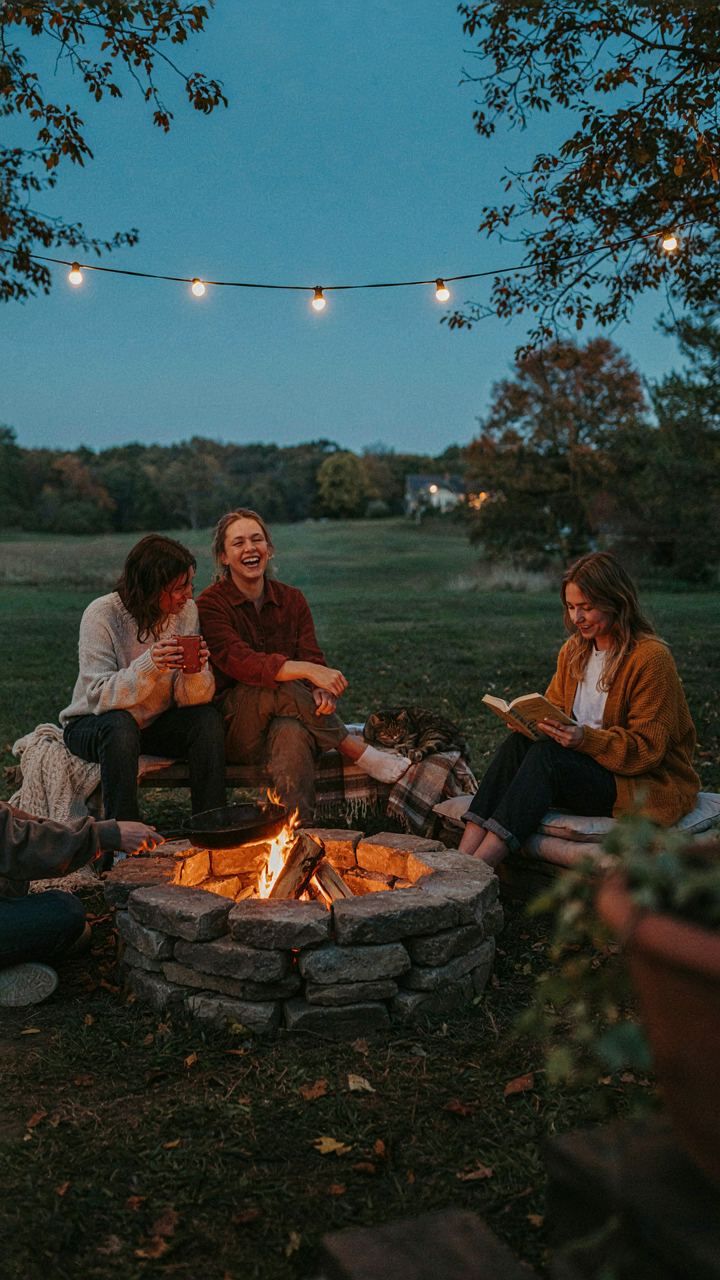
You want people to linger at your treat bar because you’re afraid they’ll scatter to their phones the moment the energy dips. The mechanism is simple: fire and light trigger the mammalian relaxation response. Neurobiology calls this the parasympathetic nervous system activation. A bonfire near your treat station becomes a gravitational anchor. People don’t choose to stay because the s’mores look nice. They stay because their body chemistry shifted the moment they felt heat and saw flame.
Placement matters more than size. Position the fire source fifteen to twenty feet from your treat bar, close enough to cast light on the setup but far enough that heat doesn’t compromise food or melt chocolate faster than guests can eat it. Low, consistent light from the fire beats overhead strings because it eliminates harsh shadows on faces and creates the optical illusion of a smaller, more intimate gathering. The fire does the work. Your job is removing obstacles to what your guests already want to feel.
Sound And Scent: Subtle Environmental Cues
Most people waste money on curated playlists nobody remembers. What sticks is ambient sound you don’t consciously notice. The crackle of a live fire masks awkward silences and creates psychological permission to relax. If you layer in a playlist, keep it instrumental and at conversational volume. The goal isn’t entertainment. It’s removing the tension of dead air while guests choose what to eat and who to talk to.
Scent operates below conscious awareness but shapes behavior directly. Wood smoke drifting toward your treat bar anchors the bonfire experience into the food itself. If you’re burning seasoned hardwood instead of pine, the smoke becomes part of the sensory package. Add a cinnamon stick or star anise to the edge of the fire briefly—not for flavor in the food, but for olfactory context. This compounds the signal that this gathering is intentional and designed. The specific action: light the fire thirty minutes before guests arrive so the smell has time to permeate the space.
The Garden Birthday: Leveraging Nature As Your Decor
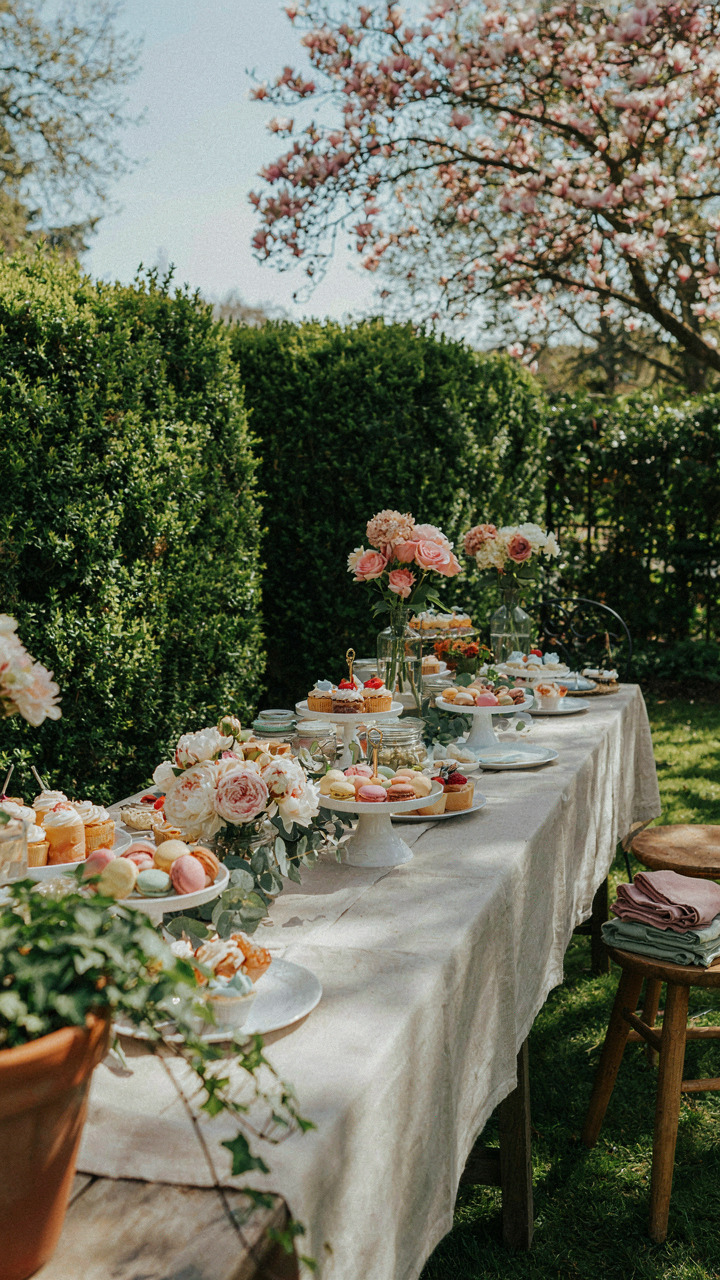
When Plants Become Your Setup

You want your treat bar to look intentional, not like you threw tables in a yard and called it done. That’s the real driver here. Borrowing from landscape architecture, trees and shrubs function as “vertical anchors”—they define space without walls, create sightlines that guide guests, and provide natural frames for your treats. A mature tree becomes the focal point your bar orbits around, not competes with.
Position your treat table perpendicular to or underneath existing vegetation, not in empty space. Overgrown hedges, garden beds, and mature branches create psychological enclosure. Guests perceive contained areas as more curated, even when nothing has changed except their proximity to existing growth. Use what’s already there instead of fighting against empty lawn.
Treats That Sit With Plants, Not Against Them
The common mistake is treating your treat bar as separate from the garden. Wrong move. Color coordination matters here: pastels clash with dense green foliage. Whites, deep golds, and jewel tones read against vegetation without competing for attention. Wooden risers, dark platters, and neutral linens let the treats stand out while keeping the eye moving between treats and landscape.
Layer your treats vertically and offset them toward open space, pushing dense plantings to the perimeter. This creates visual rhythm that matches how gardens naturally organize—dense structure at edges, breathing room in the middle. Your guests should feel the treats are planted in the garden, not placed on top of it. Measure sightlines before setup to confirm treats remain visible from key gathering areas.
The “Birthday Board” Fallacy: Why Simplicity Wins
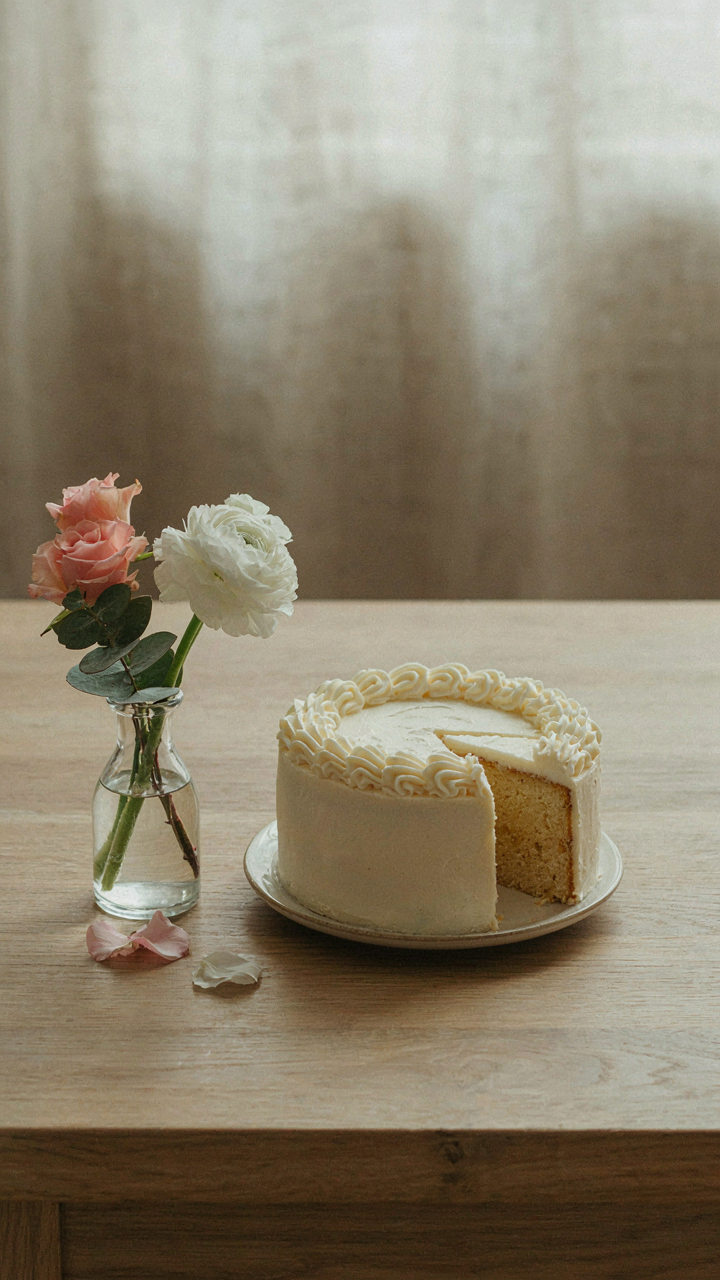
Stop Chasing The Instagram Version

You want the setup to look like someone paid a designer to build it. That’s the real reason you’re reading this section. Here’s what actually moves the needle: Pinterest perfection kills function. The mechanism is aesthetic debt. When you chase visual complexity, you trade operational capacity for status signaling. A tiered display with hand-lettered labels and color-coordinated treats looks stunning in photos but collapses under real logistics. Guests can’t reach items. Refills become impossible without breaking the arrangement. The host spends the party maintaining appearance instead of engaging people.
The high-performing outdoor birthday treat bars violate every design trend you’ve seen. They use flat surfaces at elbow height, minimal decoration, and repetition over variety. A single repeated element (matching containers, one dominant color, clean lines) reads as intentional and elegant without demanding constant curation. The setup that looks “effortless” requires ruthless constraint during planning, not improvisation on event day. Build for what works. Let the aesthetic follow.
What Actually Gets Used
Ergonomics applies to treat bars the same way it applies to a factory floor. The constraint is reach, visibility, and grab-ability. Most setups fail because they prioritize appearance zones over usage zones. A guest approaching your bar should locate what they want in under three seconds and grab it without contacting three other items. This means: items at eye level, grouped by category (not color), and positioned so the most popular treats occupy the center-front real estate.
Function trumps form here, and the data is obvious. Bars with deep shelves waste space because guests only access the front eighteen inches. Tiered towers create accessibility dead zones at the top and bottom. The treat bar that moves inventory fastest uses a single-depth counter, items arranged left-to-right by category, with refill access from behind. No guests hunting. No items hidden. No restocking mid-party. Build the system around actual movement, then style whatever’s left.
Graduation Bonfire: From Ritual To Remarkable
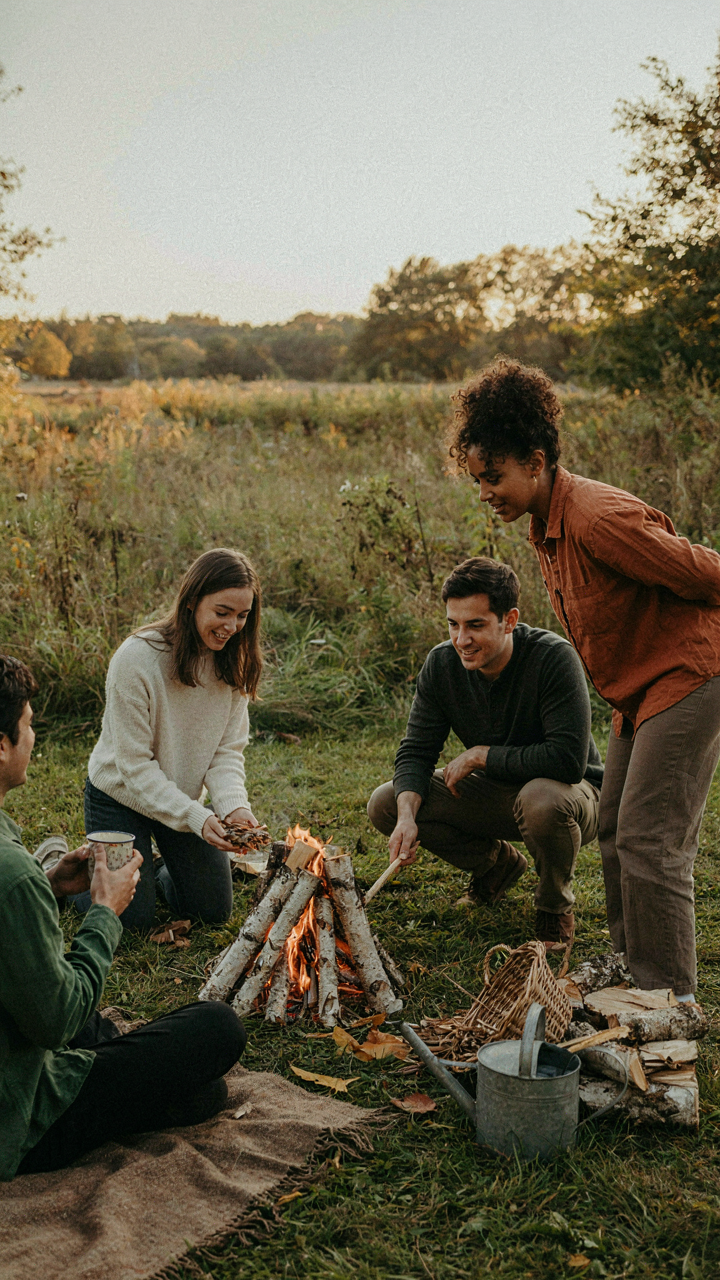
Moments Matter More Than Menu Options
You want guests to remember your event, not forget it by Tuesday. The real mechanism is that people bond through shared participation, not consumption. An outdoor birthday treat bar works when it forces interaction, not when it offers passive browsing. A bonfire graduation setup creates natural gathering points. You’re not designing a buffet. You’re designing the reason people cluster, talk, and stay.
Position the treat bar perpendicular to the fire, not parallel. This creates two distinct zones: the fire for warmth and sight lines, the bar for activity. Guests move between them instead of camping at one spot. The walking pattern itself generates conversation. Small talk happens in transit. You’ve just built a social engine using placement alone, not decoration.
One Theme Beats Everything Else
The temptation to mix themes kills focus and dilutes memory. Neuroscience calls this the signal-to-noise problem: too many stimuli, no single coherent image remains. Pick one element and saturate it. A s’mores-only bar works better than “summer treats.” A hot chocolate station with three variations works better than fifteen dessert options. The constraint forces specificity. Specificity creates clarity. Clarity is what people actually remember and photograph.
One theme forces your prep decisions down a narrow path. You buy less, make less, waste less. You nail execution instead of spreading thin across seven mediocre stations. The graduation bonfire with a single themed treat bar becomes the event. Not the fire. Not the crowd. The specific thing everyone came back for three years later.
The S’mores Bar Blueprint: Strategic Simplicity
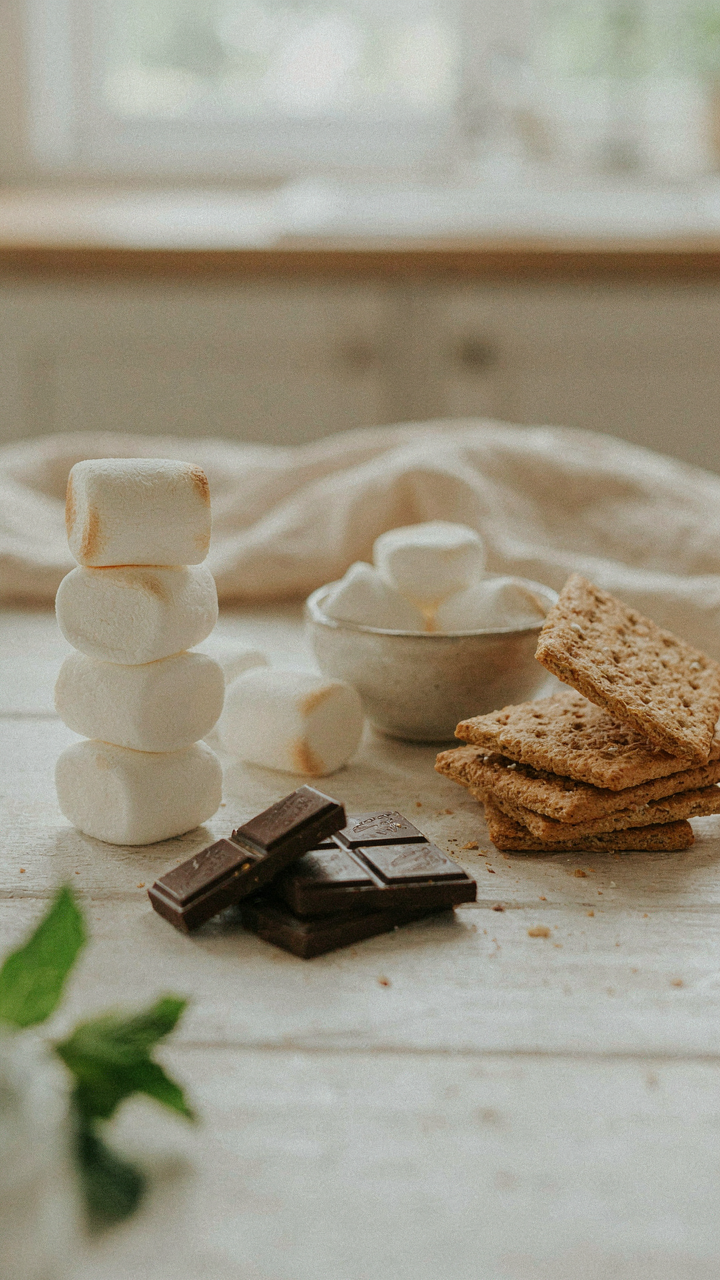
What Actually Goes On The Table
You want people to think your setup is effortless, which means you’re terrified of looking like you didn’t prepare enough. The real mechanism is constraint, borrowed from systems design: removing options forces better decisions and faster throughput. A s’mores bar works because it eliminates choice paralysis while looking intentional.
- Graham crackers: Stock two varieties—honey and regular. Honey adds perceived sophistication without complication. Pre-break regular crackers in half to reduce hand mess and speed consumption.
- Chocolate: Use quality chocolate squares or bars broken into quarters. Cheaper chocolate melts unevenly and creates texture problems that guests notice but won’t articulate.
- Marshmallows: Offer standard size and mini. Standard roasts faster for impatient guests; mini creates a second-assembly option that increases per-person throughput.
- Roasting sticks: Provide eight to twelve sticks minimum for groups under thirty people. Dowels work as well as branded sticks and cost less. Sharpen one end slightly but not to a point that pierces marshmallow skins prematurely.
- Heat source: Tabletop fire pit or citronella candles in wide jars work best. Avoid propane where wind is unpredictable. Maintain flame height at wrist level—too high creates char, too low means uneven roasting.
Abundance signals care, but oversupply creates waste and decision fatigue. A well-stocked s’mores bar has exactly what people need with one backup of each component. Nothing sits untouched, nothing runs out mid-assembly.
Creating Movement Without Congestion
Most guides tell you to “arrange items in a logical order,” which is useless advice because nobody moves through a treat bar in a line. People cluster, they double back, they block each other. Use traffic flow logic from retail design: position the heat source as the final station, not the first.
Guests should grab graham crackers and chocolate first, roast their marshmallow second, then assemble at the flame. This sequence prevents bottlenecks at the heat source and eliminates people waiting while holding components. Position the table so the roasting area faces outward, not inward—guests roast toward open space, not toward the table where others stand. The assembly happens in their hands, not on the surface. This single shift cuts wait time and eliminates the scramble for table real estate that kills group engagement.
Your Fear Isn’t Running Out Of Treats; It’s Running Out Of Genuine Connection

You’re not building an outdoor birthday treat bar. You’re building a reason for people to stop scrolling through their phones and actually talk to each other. The treats are just the excuse. Most hosts obsess over perfect cupcakes when they should obsess over creating moments where strangers become friends. Stop asking if you have enough candy. Ask if you’ve designed a space where people naturally gather and linger. That’s the real win. Your treat bar succeeds the moment someone forgets they came for the desserts and remembers they came for the people.