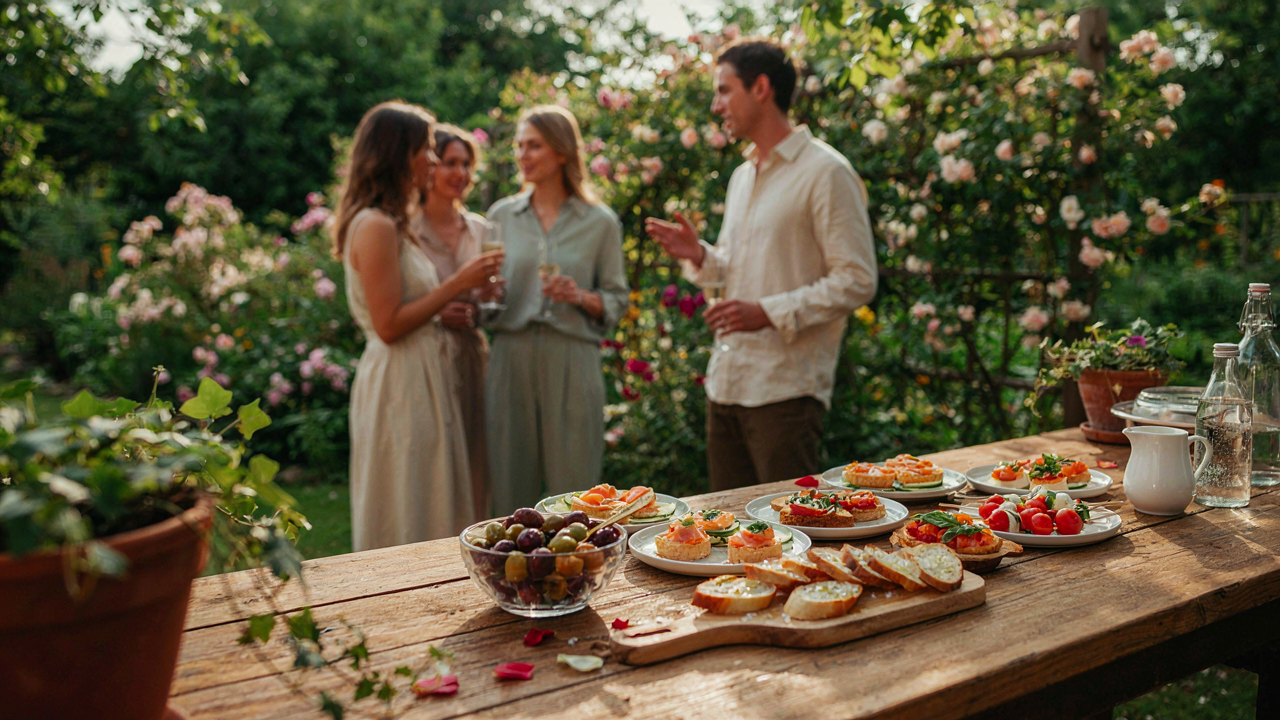
The Zero Prep Staging Protocol
Components That Need No Heat
You want to skip the kitchen because you’re afraid of looking frazzled in front of people who matter. The mechanism is simple: ready-to-serve items eliminate the gap between guest arrival and food availability. Buying pre-made components isn’t lazy—it’s logistics. Cured meats, aged cheeses, fresh fruit, and quality crackers require zero transformation. They sit on a board and work. The staging happens before guests arrive, not during.
Charcuterie boards work because they’re built on constraint, not abundance. You’re not cooking. You’re arranging things that already taste finished. Cherry tomatoes, olives, nuts, and cured fish need only placement. Stack them in clusters, not scattered rows. The visual density signals intention. Buy blocks of cheese and cut them yourself rather than pre-sliced. The knife marks look intentional. Assembled boards sit in the fridge for hours without degradation. They’re the closest thing to a food system that doesn’t punish timing mistakes.
Sauces Staged Before The First Guest Arrives
Every dip and sauce prepped hours ahead means you’re not standing over the stove when people want to eat. This is borrowed from restaurant mise en place—the principle of having everything in its position before service begins. Your dips are your operational reserve. Make them the morning of, not the afternoon. Hummus, olive tapenade, romesco, and tzatziki all improve when they sit. The flavors integrate. Transfer them to serving bowls with lids and refrigerate. When guests arrive, you remove the lid and place the bowl on the table. That’s the entire operation.
Sauce timing changes the entire dynamic of a party. Pre-batched dips mean you’re not suddenly trapped in the kitchen while people stand around the food table waiting. Cold sauces hold for hours. Yogurt-based dips stay stable. Oil-based sauces separate slightly but remix with a spoon in seconds. Label each bowl discreetly if anyone has restrictions. Pair specific dips with specific items beforehand—herbed cream cheese with crudités, romesco with bread—so guests don’t stand paralyzed by choice. Set them all out together, let them figure it out.
Garden Party Finger Food Ideas: The Outdoor Assembly Line
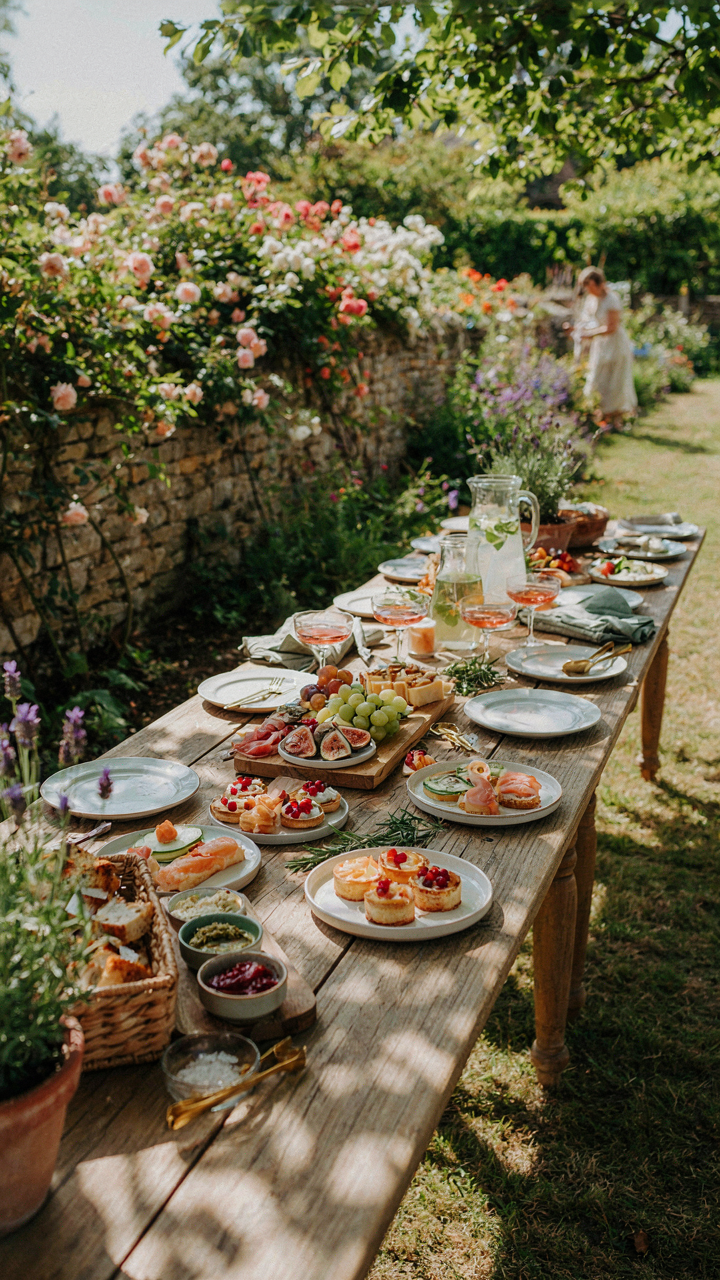
Set Up Stations, Not A Kitchen

You want to look relaxed while hosting, not sweating through your shirt in a cramped kitchen. The real mechanic here is logistics: treat your garden like a manufacturing floor with input stations, production zones, and output points. Each dish station handles one task only. Cold items stay cold. Hot items stay hot. Movement stops wasting time.
Position your charcuterie and cheese spreads on a shaded table with natural airflow. Set up your dips and vegetables on a separate station with ice underneath. Keep bread, crackers, and pastries on a third table away from moisture. Position hot items like skewers or tartlets on a fourth station near power if you’re using a portable warmer. Each guest gravitates toward their preferred station without bottlenecking at one spot.
Plate And Move With Purpose
Everyone says prep ahead and you’ll be fine. That’s incomplete. The issue is flow state once guests arrive. You need a sequence where each item hands off to the next without doubling back. Think of this like assembly line timing in manufacturing: every station waits for the previous one, so lag at one point stalls the entire output.
Move cold items to their tables first, then hot items last. Refill from back to front so guests never see empty trays. Station yourself at the hot item area only. Delegate cold refills to one other person who follows a fixed route. This prevents multiple people creating congestion and confusion. The moment you stop moving between stations unnecessarily, your guests see a host in control, not a worker in chaos.
Party Food Platters: The Charcuterie Board As Ecosystem
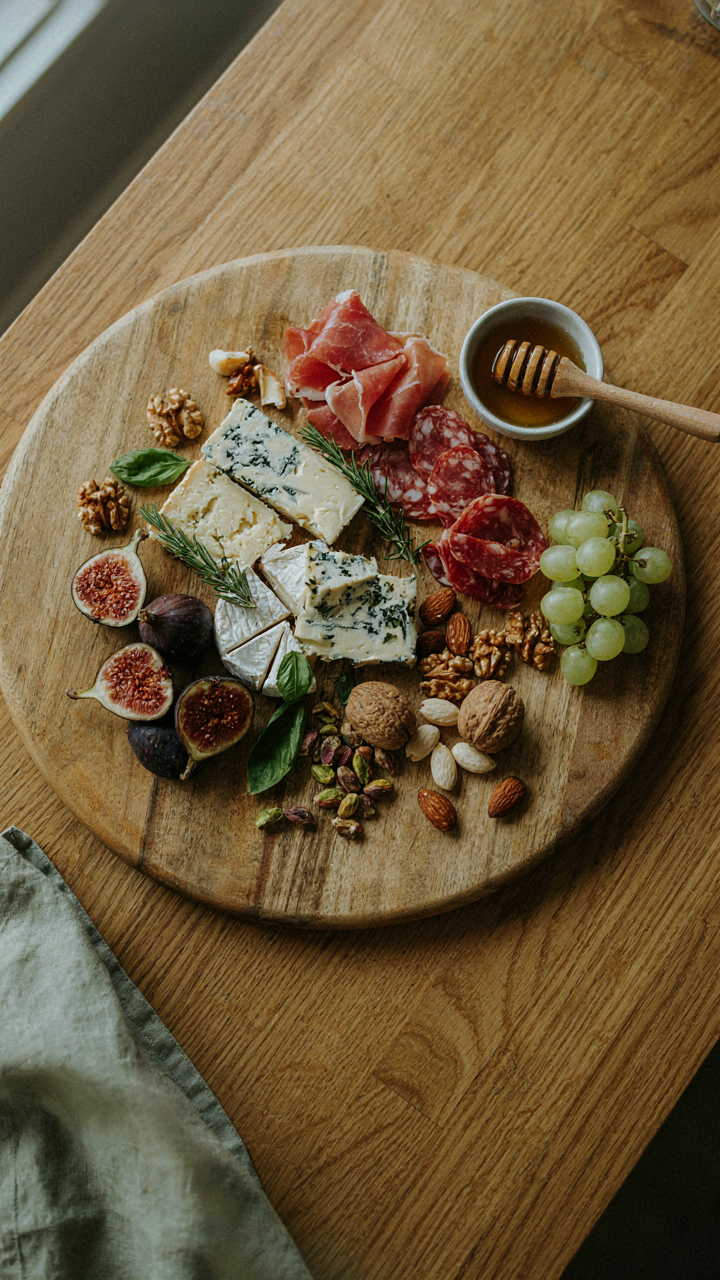
Balance Components, Minimize Repetition

You want the board to look abundant without effort. That’s the real reason you’re reading this. Most advice tells you to “add variety,” which means nothing. Ecology offers the actual mechanism: balanced trophic levels mean energy flows efficiently through a system instead of pooling in dead zones. On a charcuterie board, this means protein, fat, starch, and acid must each occupy roughly a third of the real estate. Cheeses alone create visual clutter and appetite fatigue by the fourth piece.
The structure protects you from waste. A board heavy on cured meats dries out. One stacked with bread goes stale. Position proteins (cheese, charcuterie) at cardinal points. Fill quadrants between them with starches (crackers, toasted bread rounds) and acids (pickled vegetables, fruit, jams). This isn’t decoration. It’s a distribution system that forces guests to eat across categories instead of exhausting one component first.
Trophic Hierarchy Creates Visual Momentum
Ecology uses trophic levels to describe energy transfer: producers feed consumers, consumers feed predators. A charcuterie board works the same way, but inverted. Crackers and bread are your base layer, they go down first and anchor the board. Cheeses and meats form the middle tier, placed directly on or leaning against the carbs. Garnishes and accents sit on top, catching light and drawing the eye. This creates perceived complexity without complexity.
The visual hierarchy also solves a practical problem: items placed lowest survive longest. Crackers absorb moisture from the board’s surface. Meats and cheeses slow oxidation when stacked or overlapped. Delicate garnishes placed high stay crisp until eaten. Build vertically, not flat. A board that looks three-dimensional reads as more intentional and commands attention longer than a sprawl of items at one level.
Charcuterie Recipes: Beyond The Board
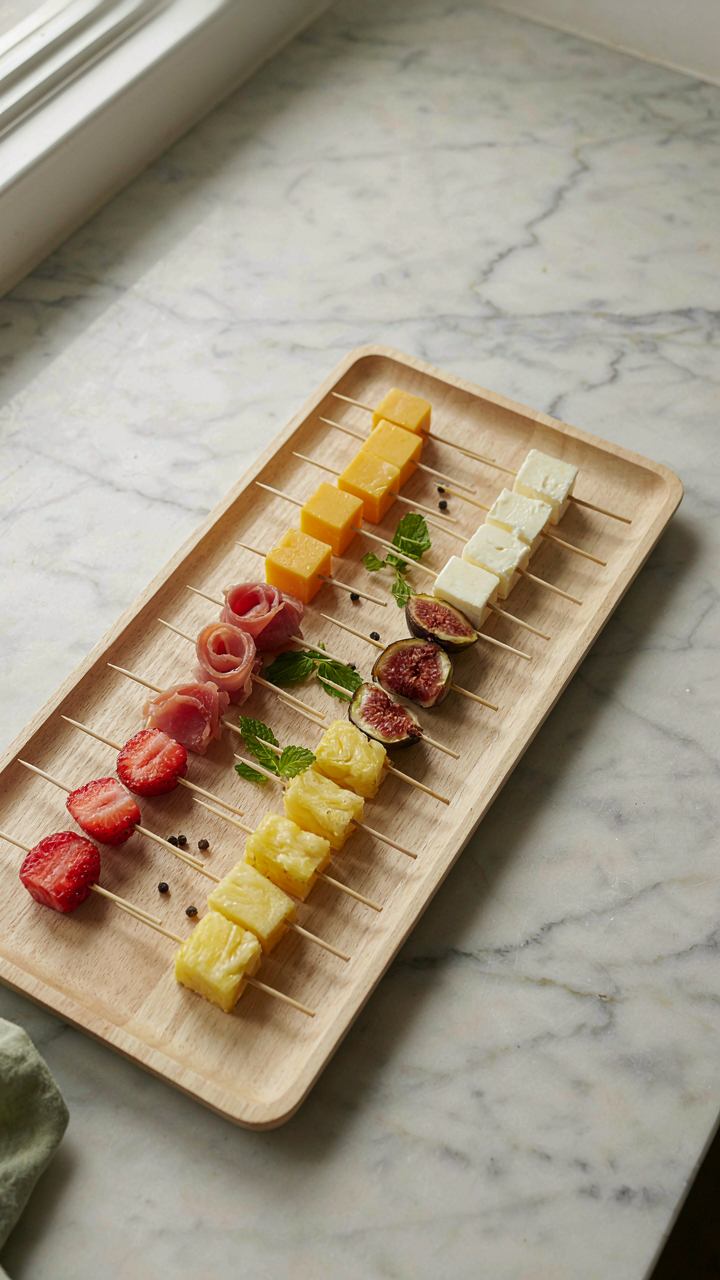
Individual Bites Beat The Board

You want the social proof of a charcuterie spread without looking like you’re serving leftovers arranged on wood. The mechanism is simple: when you deconstruct charcuterie into single-bite portions, you solve the actual problem—guests eat with one hand while holding a drink, and they don’t want to commit to a full cracker-to-meat-to-cheese assembly mid-conversation.
Build portions around what sticks together without collapse. Prosciutto wrapped around a single marcona almond. Cubed manchego skewered with a cornichon. Salami folded once around soft cheese piped onto crostini. Each piece works solo. You prep them in advance on a platter, guests grab and go, your kitchen stays empty while the party moves forward.
Crunch Against Soft Wins The Bite
Textural opposition isn’t aesthetic preference—it’s neurology. Your mouth expects consistency and rejects it. The contrast between hard and soft, dry and creamy, triggers the reward signal that makes someone reach for a second piece instead of one polite bite.
Stack thinly sliced fennel seed salami over whipped ricotta on toast points. Layer crispy prosciutto shards atop creamed white beans on endive leaves. Pair toasted breadcrumbs with soft goat cheese and fig jam on crostini. The textural shift happens inside the bite, not between separate components on a board. This forces engagement. The guest doesn’t just consume—they register the intentional build, which reads as effort without requiring you to stand in a kitchen proving it.
English Garden Party Food: Mastering The Minimalist Menu
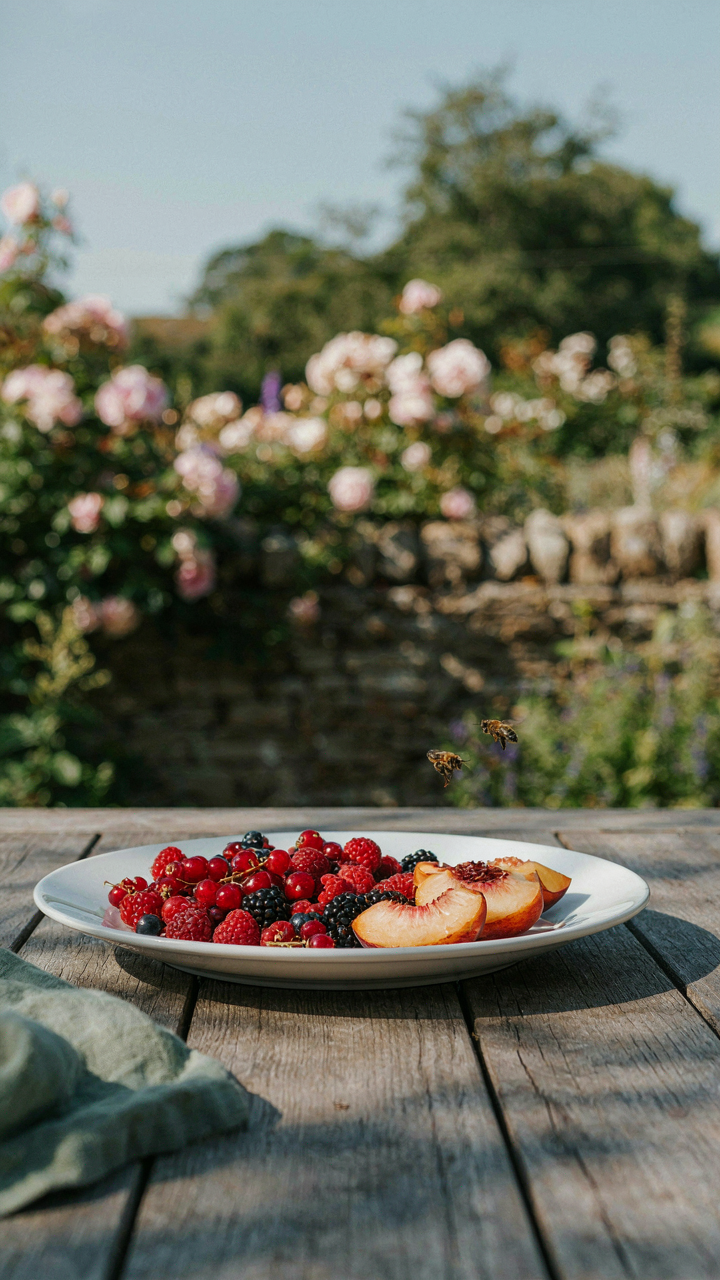
Buy What’s Actually In Season

You want the food to look effortless because you think that signals taste and refinement. The real mechanism is simpler: peak-season ingredients require almost no technique to taste good, which means you spend zero time in the kitchen while guests assume you’re skilled. The moment you buy asparagus in December or strawberries in March, you’re fighting biology. Out-of-season produce tastes flat because it traveled thousands of miles and sat in storage. It demands heavy seasoning, fancy preparation, sauces to mask the deficit. You lose the entire advantage.
Local growers at farmers markets time their harvest for flavor density, not shelf life. A June tomato from fifty miles away tastes nothing like a January import. Buy what grew in the last two weeks within your region. Cucumber, stone fruit, berries, fresh herbs, quality cheese. These are your anchors. The food practically assembles itself because the ingredients already contain the flavor your guests came for.
Strip Away The Fussy Technique
The standard advice says minimalist menus mean “simple ingredients, elevated technique.” That’s backwards. Elevated technique is exactly what locks you in the kitchen during a garden party. The real move borrows from restaurant economics: you reduce complexity at the production stage, not the plating stage. Restaurants call this mise en place efficiency. You’re doing the same thing, but inverted. Instead of having everything prepped and ready to assemble, you have everything assembled and ready to serve, straight from the garden or the counter.
A wedge of aged cheddar with a knife. Prosciutto draped on a white plate. Fresh figs split open. Grilled bread rubbed with garlic and olive oil. Radish with fleur de sel and cold butter. These aren’t “simple” in the sense of being boring. They’re simple in the sense that you’re not cooking them. The ingredients do the work. You show up clean, remove the plastic wrap, and you’re done.
Easy Food Art: Aesthetics Of Effortless Design
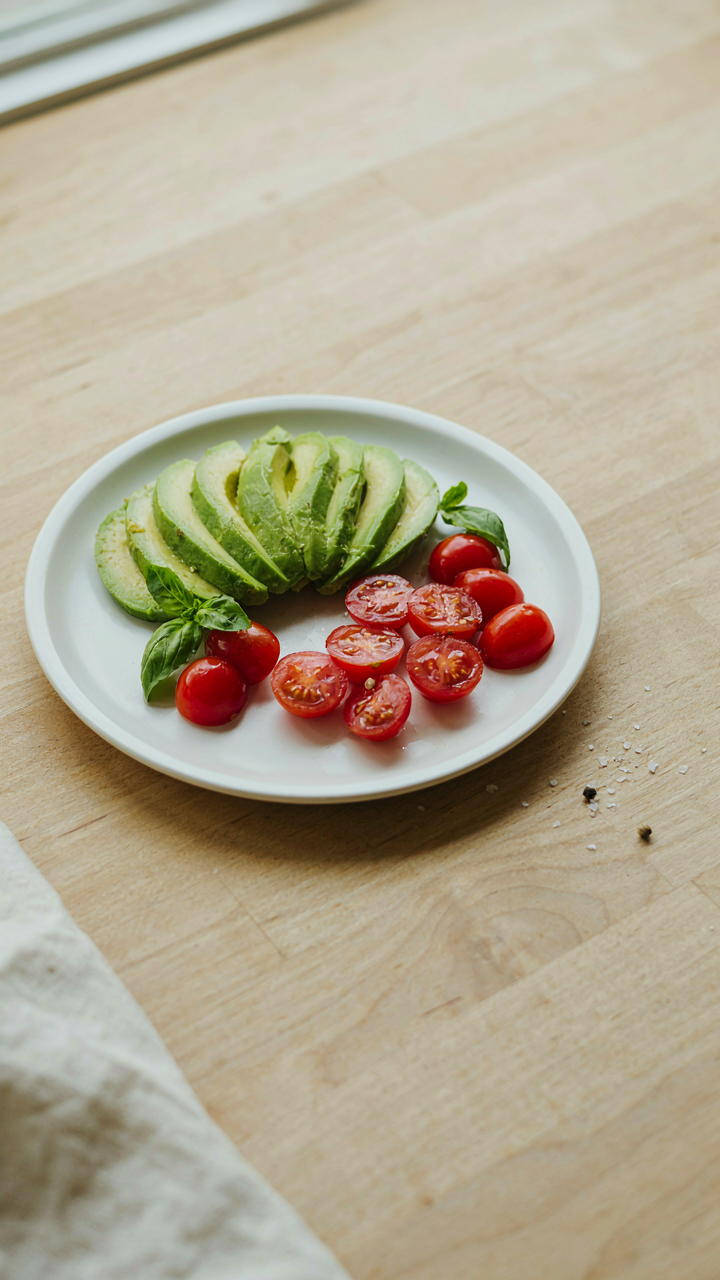
Color And Shape Without The Fuss

You want people to assume you spent hours plating. The mechanism is contrast. Your brain registers visual difference before it registers effort, so a plate with one dominant color and one accent color reads as intentional while a monochrome spread reads as lazy. Nature handles this for you. Cherry tomatoes against burrata. Prosciutto against melon. Herbs against white cheese. Stop fighting the colors you already have.
The constraint is your advantage here. Garden party finger food lives in the hand, not on a plate, which means you skip the plating theater entirely. Arrange items by their natural shapes instead of forcing uniformity. Stones have one shape. Berries have another. Breadsticks have another. Stack them by type, not by height or symmetry. This reads as curated because it respects the ingredient’s form rather than flattening it.
Garnish With Precision
The common advice is to sprinkle herbs everywhere for color. Wrong. One herb on one type of food does more work than scattered greens across five dishes. Herb garnish is like artillery in military strategy: concentrated firepower beats distributed coverage every time. One basil leaf on a caprese skewer. One tarragon frond on a deviled egg. One chive on a smoked salmon canapé.
The payoff compounds because guests notice the specificity. They don’t see “herbs.” They see choice. A single edible flower placed on a single item creates the impression of curation far more than bunches of mixed greens. Purchase one premium garnish and deploy it on your highest-value bites. The visual signal is disproportionate to the actual work.
Party Food Appetizers: The Strategic Snack Selection
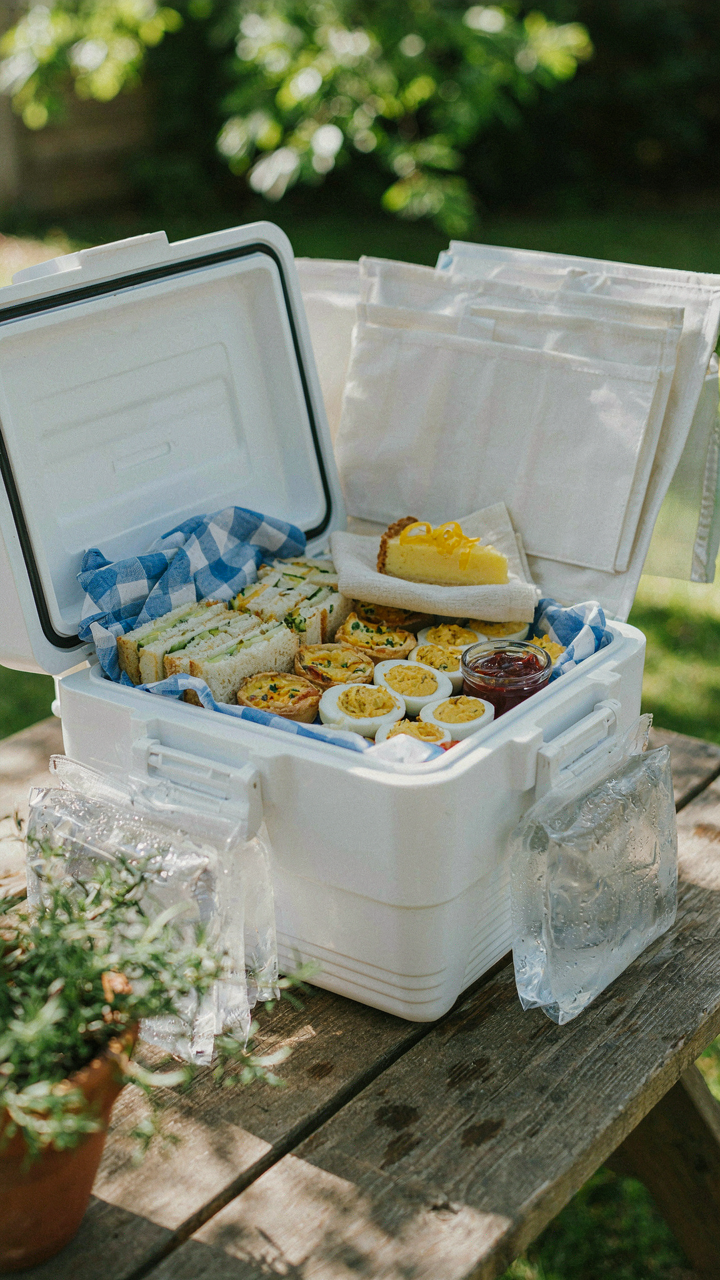
What Actually Survives Outside

You want finger food that doesn’t force you into the kitchen every ten minutes because you’re terrified it’s spoiling. Here’s the mechanism: temperature stability determines how long food stays safe and edible outdoors. Foods with low water content, high salt, or high acid don’t deteriorate as fast as items that need refrigeration the moment they warm up.
- Cured meats and hard cheeses: Salt acts as a preservative. Prosciutto, salami, and aged cheddar resist heat for hours without degradation. Pair them on boards and let guests self-serve.
- Nuts and seeds: Zero moisture loss. Roasted almonds, candied pecans, and sunflower seeds stay stable for the entire party. Provide in small bowls spaced across tables.
- Bread-based items with low-moisture fillings: Crostini with tapenade, olive paste, or dry pesto survive longer than cream-based spreads. The bread acts as a moisture barrier.
- Pickled vegetables: Vinegar is a preservative. Cornichons, pickled onions, and marinated artichoke hearts stay shelf-stable for hours at room temperature or warmer.
- Dried fruit and chocolate: Both resist temperature swings. Apricots, figs, and dark chocolate hold structure outdoors where berries or mousse would collapse within 90 minutes.
The mistake most people make is treating outdoor food like indoor food with a timer. You’re not managing temperature through vigilance. You’re choosing foods that don’t require it in the first place. Load your selection with items that tolerate neglect, and you actually enjoy hosting instead of running logistics.
The Flavor Sequence That Keeps Guests Eating
The common advice says “offer variety.” That’s incomplete. Economics calls this the concept of complementary goods. Apply that here: sweet foods trigger more appetite for savory ones, acidic items reset the palate, and savory foods make sweet items taste better. You’re not just offering options. You’re engineering a sequence that keeps people reaching for more.
Stack your spread intentionally. Start with salty, umami-forward items like cured meats and aged cheese. Follow with acidic elements like pickled vegetables or citrus-dressed shrimp. Finish with subtle sweetness like honey-drizzled nuts or chocolate-dipped fruit. One flavor category alone makes guests eat mechanically. The rotation makes them eat deliberately and longer. Guests who move through this sequence stay at the table instead of drifting toward the bar or leaving early.
Fairy Appetizers, Hippy Party Food Ideas: Unleashing The Unconventional
Edible Flowers And Foraged Elements

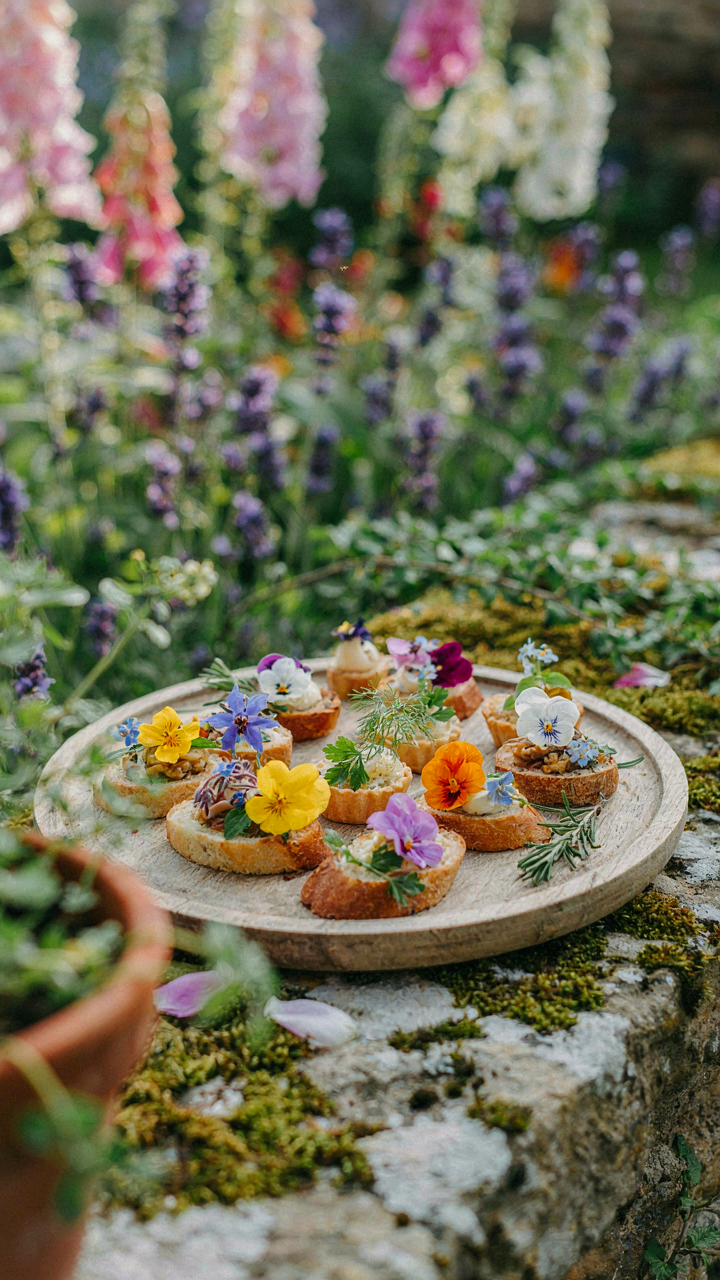
You want people to think you’re cultured without actually spending the afternoon in the kitchen. Here’s the mechanism: edible flowers signal effort and taste to observers while requiring zero cooking skill. The real leverage isn’t the flower itself. It’s that flowers transform ordinary spreads into gallery pieces. Nasturtiums, pansies, and borage flowers cost three dollars and sit on top of cream cheese. Guests photograph them. Nobody photographs hummus.
Foraging isn’t romantic. It’s pattern recognition applied to your yard. Mint, chives, and sorrel grow in most climates without intervention. Lamb’s quarters and chickweed appear in spring. Dandelion greens have a peppery bite that beats store-bought salad. The tactical move is knowing your zone and what grows wild there. Visit your local extension office or a field guide specific to your region. Clip what you recognize. Serve it on butter crackers with soft cheese. The story matters more than the ingredient.
Unexpected Flavor Pairings That Break Pattern
Common advice says pair complementary flavors. That’s why every charcuterie board looks identical. The mechanism here borrows from design thinking: constraint breeds innovation. Limiting yourself to three flavors forces deliberate choices. Beet and horseradish. Strawberry and black pepper. Anchovy and white chocolate. These combinations work because they create tension instead of comfort. The palate expects one direction and travels another. That jolt registers as sophistication.
Build three pairings maximum per event. Too many confuses guests and kills the impact. Anchor each pairing to something familiar so the unexpected flavor doesn’t read as a mistake. Smoked trout on rye with a thin layer of dill cream and lemon zest works because rye and fish are known allies. The lemon zest breaks the pattern. Make your pairings taste intentional. Write a one-sentence description on a card if you must. Stop there. The food speaks or it doesn’t.
The Real Obstacle Isn’t Your Cooking Skills, But Your Misplaced Belief That Effort Equals Value. It Doesn’t

Most hosts kill themselves in the kitchen because they confuse sweat with sophistication. Garden party finger food wins when you stop performing labor and start making choices. Pick three items you can assemble cold the night before. Buy one thing already made. Delegate the rest to your guests through potluck slots you send today. The entire game shifts when you realize your job isn’t to exhaust yourself into respect. Your job is to orchestrate ease, and ease is what people actually remember.