The Illusion Of Effortless Charm
What Instagram Meadows Actually Hide
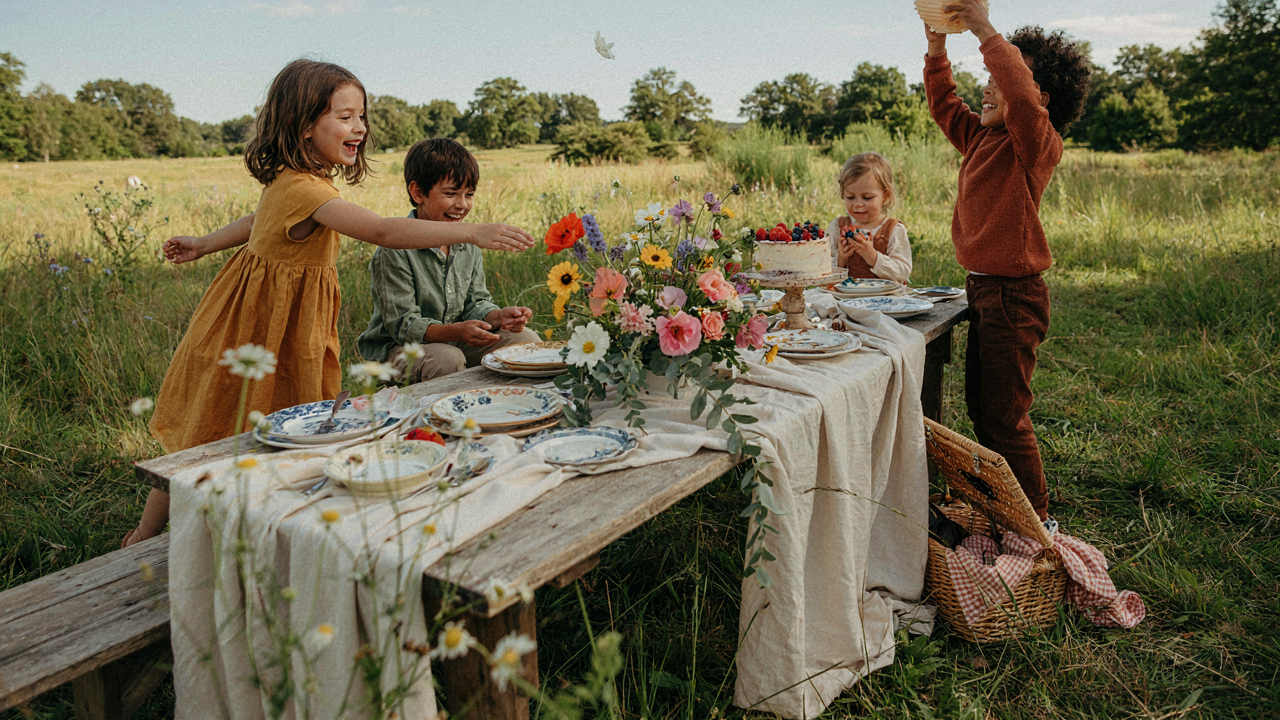
You want people to think you didn’t try. That’s the real fear underneath wanting a meadow birthday party that looks like it grew itself. The mechanism is simple: curated meadow photos are staged environments with massive labor and cost erased from the frame. Professional setups use imported sod, strategic flower placement, controlled lighting, and often happen on private land during golden hour when conditions align perfectly. The photo shows blooms. It doesn’t show the three hours of setup, the dead flowers replaced hourly, or the $2,000 in florals hidden outside the shot.
Real meadows have bare patches, weeds, uneven terrain, and inconsistent bloom timing. They look chaotic because they are. Instagram meadows look perfect because someone spent money and time making imperfection impossible. The gap between the two isn’t small. It’s the difference between a styled photo shoot and actual nature. Understanding this gap is where you stop wasting energy trying to replicate an image and start designing a party that works with reality instead of against it.
Stopping The Fake Flower Trap
The common advice says to use artificial florals if real ones won’t cooperate. That’s incomplete. Artificial turf and plastic petals fail for one reason: they signal effort masquerading as ease. Guests see them and know immediately that the space was manufactured. The uncanny valley of fake meadows reveals the deception faster than real imperfection ever would. You’re better off leaning into what’s actually there.
Real grass, wildflowers in their actual blooming phase, and native plants create visual honesty that reads as intentional design rather than failed imitation. If your timeline or location doesn’t align with peak bloom, work backward from that constraint. Host in spring or late summer when your region’s wildflowers peak naturally. Use container plantings of annuals in complementary colors instead of trying to fake an entire landscape. The setup becomes clearer and easier because you’re not fighting against what plants actually do.
Wildflower Birthday: The Scarcity Principle In Action
Doing Less Looks Like More

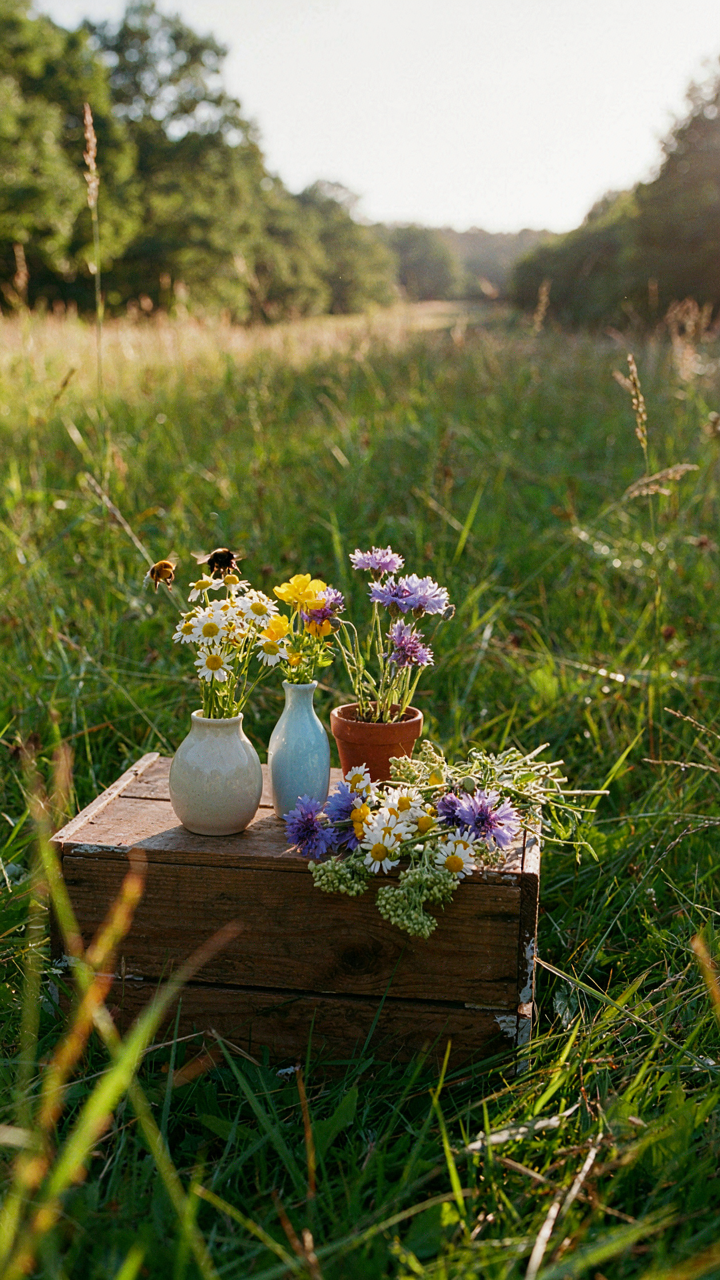
You want people to think you put in effort without actually exhausting yourself. Economics calls this the scarcity principle: limited supply increases perceived value. A meadow birthday party exploits this exactly. When you strip away the clutter and leave only essential wildflower elements, guests assume deliberation happened. Restraint reads as intentionality. They don’t see the shortcuts; they see the concept.
Most backyard parties fail because hosts treat decoration as a volume game. More balloons, more centerpieces, more stuff. This inverts the mechanism. A sparse meadow setup with ten wildflower clusters beats fifty generic store-bought arrangements. Guests notice absence before presence. Your job is making that absence feel like a choice, not a budget limitation. Use one color palette, repeat it three times, stop.
Scarcity Through Curation, Not Excess
The real leverage in a meadow birthday party lives in what you remove, not what you add. Choose five specific wildflower varieties, five accent colors, five design focal points. That constraint forces every element to work harder. When everything serves the theme, nothing competes for attention. Guests experience coherence instead of chaos.
Setup works like this: designate three zones instead of covering the whole yard. Entry area with wildflowers, seating cluster with blankets and low arrangements, food station with meadow-inspired styling. Each zone breathes. Each zone functions. The negative space between them makes the curated pieces feel intentional and valuable. That spacing is the real design work. Most people skip it and wonder why their party feels flat.
Rejecting The Themed Straitjacket For Garden Birthday
When Pinterest Rules Replace Actual Decisions

You want the party to look effortless because you’re afraid it won’t. The mechanism is simple: rigid themes create the illusion of control, but they actually steal flexibility. You commit to a color palette, a balloon arrangement, a specific flower species—and then you’re locked. The real cost isn’t time. It’s the inability to adapt when a vendor falls through, when the season shifts, or when you realize mid-setup that the vision doesn’t match the actual space. A meadow birthday party works because it’s the opposite of a straitjacket. It borrows from landscape design’s principle of layering—mixing intentional plantings with volunteer growth. Your job is curating what stays, not forcing every detail into predetermined slots.
Abandon the obsession with matching everything. Real meadows don’t coordinate. They succeed through composition and rhythm, not uniformity. You place clusters of wildflowers at different heights, let grass fill gaps, permit some plants to self-seed. This isn’t laziness disguised as authenticity. It’s structural restraint. The fewer arbitrary rules you set upfront, the more options you retain during execution. Start with a site assessment instead of a mood board. What grows naturally in your region? What’s already blooming? What will be ready by your party date? These constraints force better decisions than arbitrary aesthetics ever could.
Chaos As The Actual Design Principle
Real nature operates on succession, not symmetry. Meadows develop through ecological progression where early colonizers prepare soil for later species. Apply this to your setup: establish anchor elements first—the table placement, the central gathering spot, the food station—then let secondary details fill remaining space based on what actually works in the moment. The common advice is to plan every detail months ahead. That’s backwards for garden settings. Weather changes plant availability. Guest count fluctuates. Lighting shifts with sunset timing. A meadow birthday party that locks in specifics becomes fragile. One fails, the whole vision cracks.
Instead, build redundancy into your design. Bring extra flowers from a backup grower. Pack additional string lights you didn’t plan to use. Have a rain contingency that improves the space rather than just protecting it. The mechanism is buffer capacity—you need slack in the system so failures don’t cascade. When setup day arrives, you’re not executing a rigid plan. You’re making real-time decisions about where things go based on soil conditions, light angle, guest flow, and what’s actually available. The meadow theme survives because it absorbs deviation. You work with emergence, not against it.
Nature Themed Birthday Decorations: The “Less Is More” Protocol
Strategic Focal Points Drive Attention

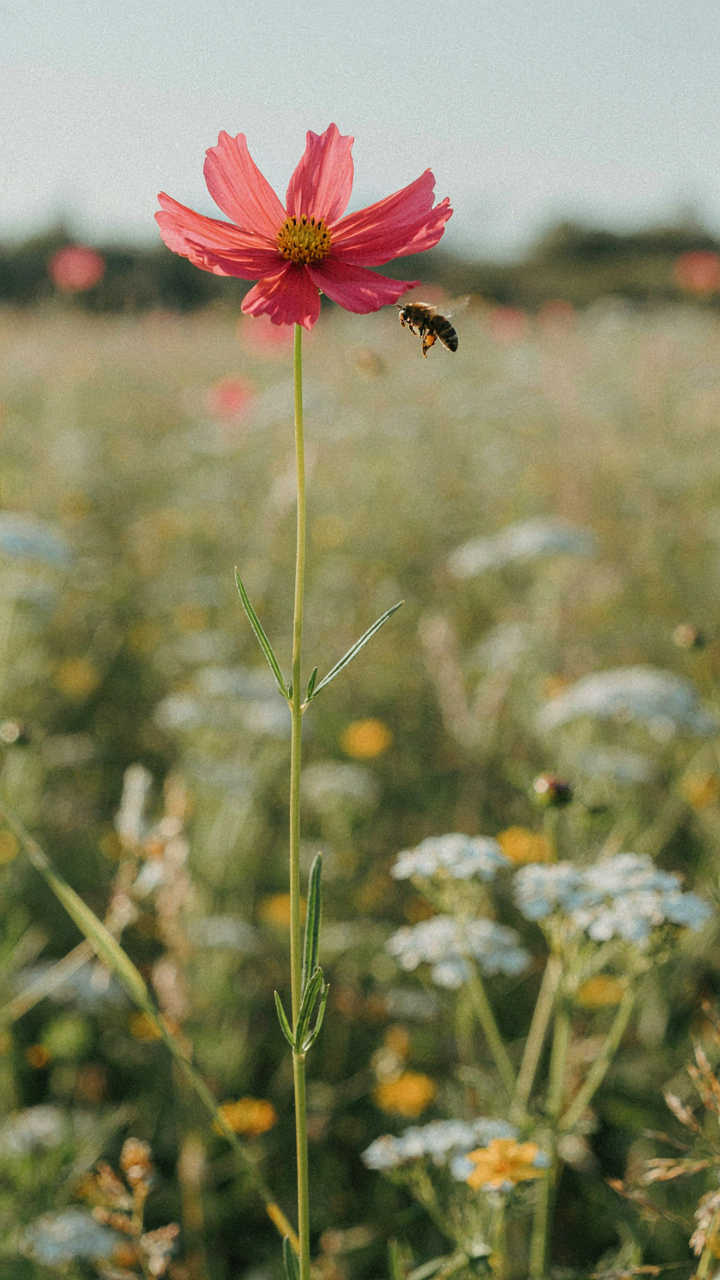
You want your meadow birthday party to look effortless, which means you’re actually afraid it will look cheap or unfinished if you don’t overcompensate. The mechanism is attention allocation. In design, focal points work like supply and demand: concentrate visual weight in one or two locations and the eye settles there with authority. Scatter decorations everywhere and you’ve created visual noise that reads as amateur.
Pick one anchor: a flower arch entrance, a long table centerline with cascading stems, or a seating cluster surrounded by height variation. Everything else recedes to support. This isn’t restraint for its own sake. It’s contrast. The human eye tracks difference. A single tall arrangement surrounded by open space commands more presence than six medium arrangements competing for real estate. Build the party around that principle, not around filling every surface.
Found Objects Build Texture Without Cost
The common advice here is wrong: people tell you to “use what nature gives you” as if it’s free decoration. It’s not free. It requires strategy, timing, and actual labor to source, clean, and position natural elements effectively. Think like a landscape architect designing for seasonal availability and structural integrity.
- Fallen branches and driftwood: Collect pieces with natural curves and asymmetrical shapes. Use them to frame pathways or create height variation in low arrangements without needing floral foam.
- Seed pods and grasses: Gather ornamental grasses weeks before the party. Seed pods from native plants add dimension and last longer than cut flowers in outdoor conditions.
- Stones and river rocks: Source varying sizes to anchor arrangements and define spaces. Stones hold moisture longer than soil in containers, keeping stems hydrated during outdoor events.
- Bark and moss: Layer these at the base of containers or along table edges. Both improve water retention and create a forest floor aesthetic without requiring maintenance.
- Fallen leaves and evergreen clippings: Collect seasonal foliage the day before setup. Layer under or around floral arrangements to add color and texture while requiring zero watering.
The real work is pre-party sourcing. Spend two weeks collecting. Clean everything the night before. Arrange by height and color type so setup becomes assembly, not improvisation. Position objects where they anchor sight lines, not where they clutter the periphery.
Picnic Birthday Party: The Al Fresco Advantage
Ground Level Changes The Social Dynamic

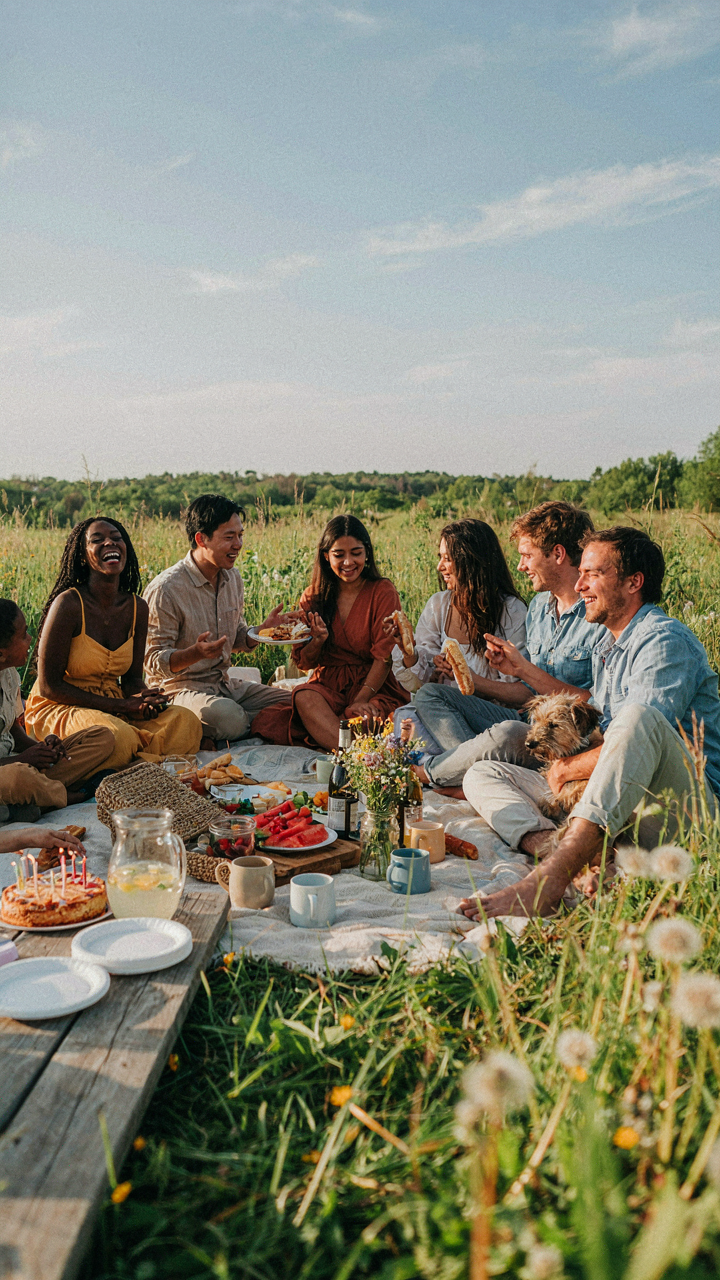
You want people to feel like they belong at your party, not like they’re attending an obligation. That’s the real driver here. Borrowing from proxemics—the study of physical space and social distance—ground-level dining collapses the hierarchy that tables and chairs impose. Everyone sits at the same plane. No head of the table. No visual ranking based on seat position.
When guests recline or sit low on blankets and cushions, they lower their defensive posture. Eye contact becomes easier. Conversations drift sideways instead of across. The meadow setting amplifies this because the landscape itself has no focal point—your attention spreads outward, not inward to a centerpiece. This layout forces genuine interaction instead of performing for an audience.
Feed Them Simply, Get Them Present
The standard advice says Martha Stewart-level food presentation proves you care. That’s backwards. Elaborate menus trap you in the kitchen and fracture your presence the entire party. Simple food—sandwiches, fruit, cheese boards—takes thirty minutes to prepare, not three hours. You’re actually there.
Hand-held food matters tactically. Guests eat without needing a plate, fork, or lap management. Their hands stay free for gesturing, holding drinks, or gesturing kids toward activities. No one fidgets with utensils or makes excuses to leave early because they’re uncomfortable balancing things. The meadow birthday party works because the simplicity of the food matches the simplicity of the setting—everything stays low-friction and low-demand.
The Biome Mimicry Method For Wildflower Birthday Ideas
How Nature Designs Itself

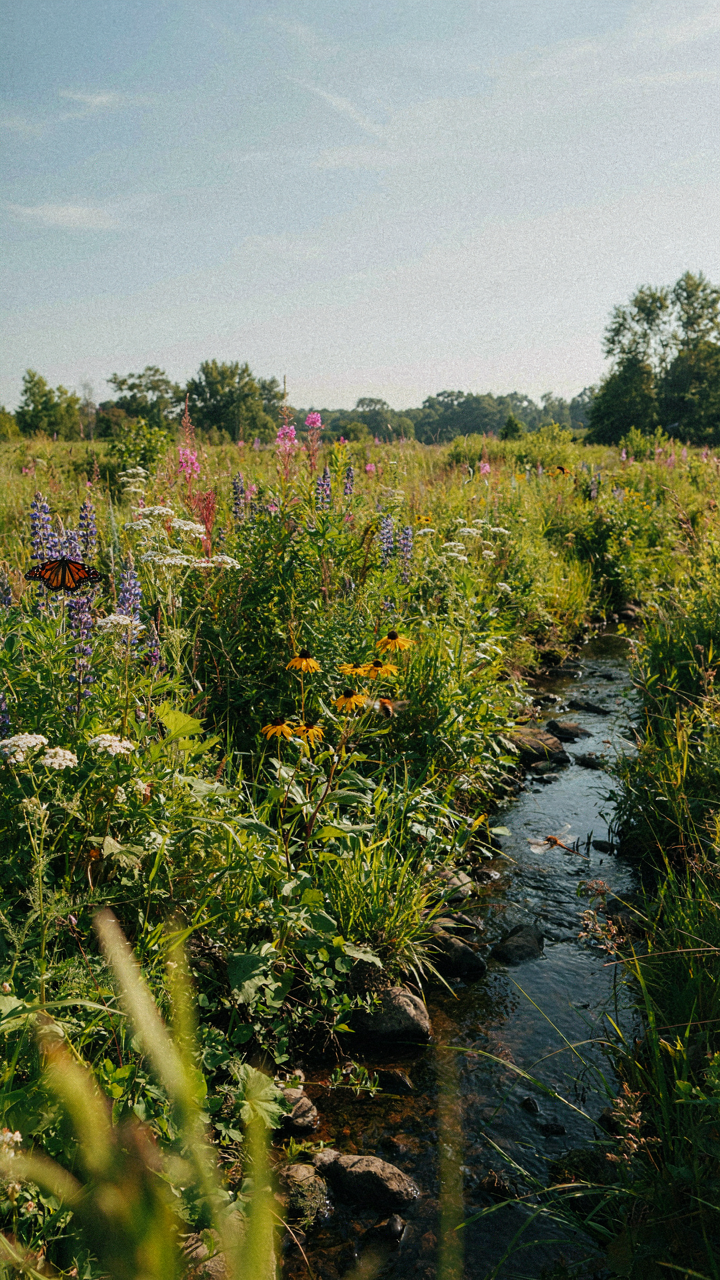
You want this party to feel effortless and real, not like you spent three hours arranging things. That’s the real motive here. Ecology teaches us that natural systems don’t optimize for aesthetics—they optimize for function and succession. A meadow birthday party works the same way. Instead of placing decorations randomly, you replicate how wildflowers actually establish themselves: clustering by height, spacing by root depth, and grouping by bloom time. When you mimic these processes, the layout looks intentional without feeling staged.
The mechanism is this: wildflowers self-organize around resource availability and competition. Apply this to your setup by anchoring tall flowers (zinnias, sunflowers, delphiniums) at the back or edges where they won’t shade shorter plantings. Mid-height flowers (cosmos, rudbeckia, coneflowers) fill the middle zone. Low growers (alyssum, portulaca, marigolds) occupy the foreground. This isn’t decoration—it’s structural design borrowed from plant ecology. Your guests move through these zones naturally, and the party develops depth and rhythm without you having to orchestrate it.
Where Comfort Hides In Plain Sight
Most meadow birthday setups fail here: they treat the space as one flat zone and expect guests to stand in sun for four hours. Real meadows have microclimates. You need shade pockets, sun patches, and semi-hidden areas where people actually want to linger. These aren’t nice-to-haves. They’re functional requirements for a party that doesn’t fall apart after the first hour.
Map your yard for three distinct zones before you buy anything. Place a canopy or market umbrella where the sun peaks mid-afternoon—this becomes the food and drink station. Identify existing shade from trees or structures; that’s your seating and conversation hub. Leave one open, sunny patch with blankets for lawn games or younger kids. The hidden nook—behind a trellis, beside a garden shed, or under a pergola—gives guests a reason to explore and creates natural traffic flow. Plant accordingly: shade-tolerant flowers under trees, sun-demanding varieties in open areas, and transition species in between zones.
Beyond The Girl First Birthday: Universal Appeal
When Pink Stops Working

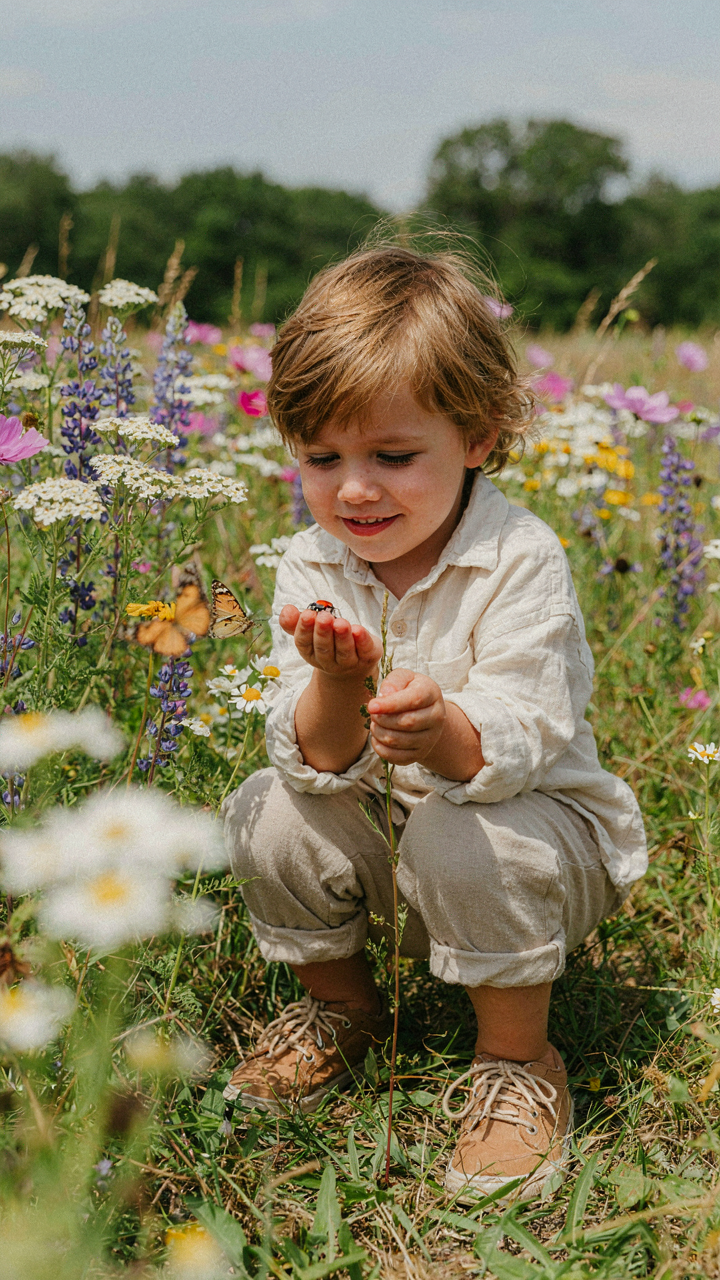
You’re worried that a meadow theme reads as “too girly” and limits your options, so you’re searching for permission to use it anyway. Here’s the mechanism: gendered aesthetics don’t come from nature or design principle—they come from marketing departments deciding what sells to which demographic. Meadow imagery predates modern gender coding by centuries. Wildflowers, grasses, and open fields appear in Renaissance paintings, medieval tapestries, and children’s literature across all cultures without apology to market segmentation.
The constraint isn’t the meadow. It’s the assumption that certain colors or themes belong to certain genders. Strip that away and a meadow birthday party becomes what it actually is: an outdoor environment that works for a toddler, a teenager, or a mixed-age gathering. Botanical themes don’t require pastel framing or floral cuteness to function. They work because they’re spatially interesting, they’re tied to real ecosystems, and they give guests something to do beyond sit at tables.
Design For Function, Not Assumptions
Stop designing for what you think people expect based on age or gender. Design for what people actually notice and engage with. A meadow setup with native plants, natural seating levels, and sight lines that reward exploration works identically whether your guest list skews four years old or forty. The variables that matter are scale, safety, and stimulus—not whether someone prefers traditionally masculine or feminine aesthetics.
Meadow birthday parties function across demographics because they solve real problems: kids need space to move, adults need conversation areas separate from play zones, mixed groups need structure that doesn’t feel forced. Build your party around these mechanics instead of guessing what demographic you’re designing for. Organize seating by function—high ground for supervision, low ground for play, transition zones between them. This approach scales to any guest composition.
Cultivating The Wild: True Meadow Mentality
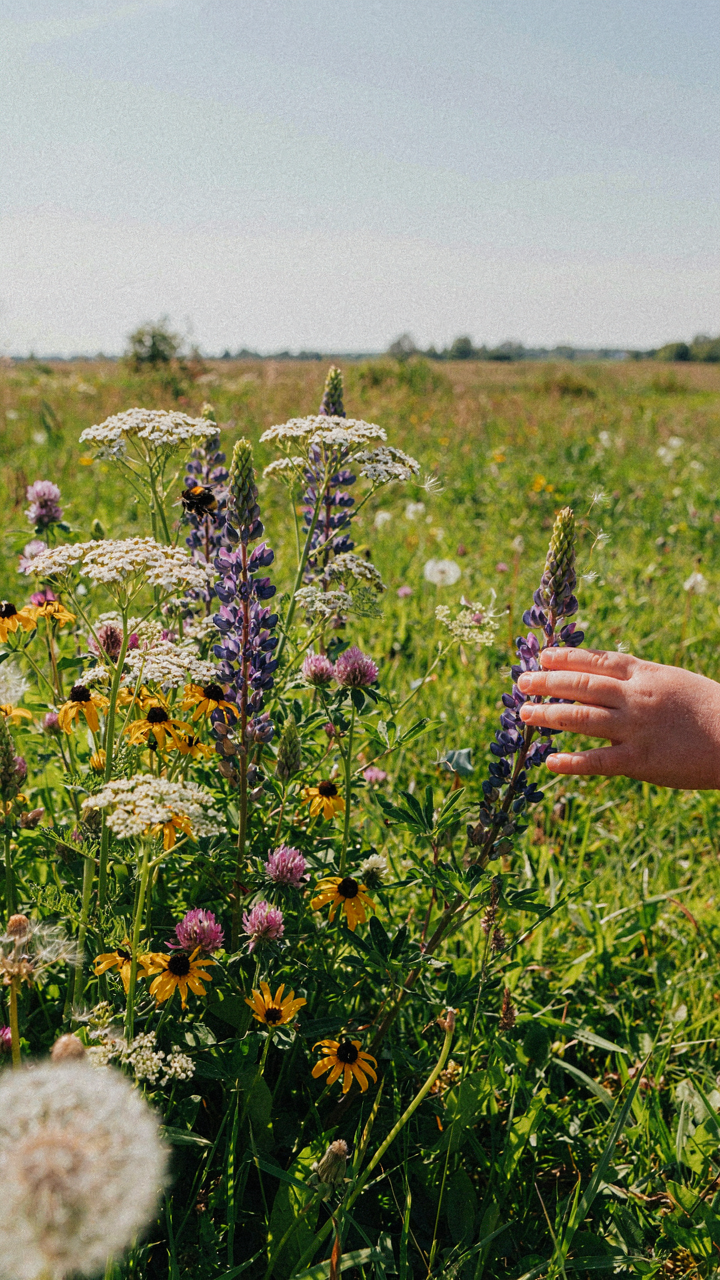
Stop Performing Perfection

You want this to feel authentic because you’re tired of throwing parties that look like everyone else’s. The real mechanism: people detect the difference between curated control and actual ecosystem. A meadow birthday party works because it abandons the forced narrative. Wildflowers don’t apologize for their spacing or bloom times. They coexist without a master plan. Your job is to set conditions, not micromanage outcomes.
This means ditching the color-coordinated everything trend. Stop treating the meadow like a studio backdrop. Real meadows have asymmetry, dead stems, weeds, variation in height and density. Guests notice this instantly because their brains recognize it as genuine rather than designed. The shift from “I arranged this perfectly” to “I created the space where this happens naturally” changes how people experience the event. That difference is invisible until you name it, then it becomes the only thing that matters.
When Nature Writes The Script
Ecology teaches us about succession, the process where systems evolve toward complexity without central direction. A meadow birthday party applies this principle directly: you seed the environment, then adapt to what emerges. Wind shifts flower placement. Pollinators show up uninvited. Shadows move. Rain changes the ground texture. These aren’t failures to prevent. They’re the actual content of the experience.
The common advice says to “have a backup plan for weather.” That’s incomplete. Real preparation means designing the party so weather variations enhance rather than derail it. An afternoon thunderstorm darkens the wildflowers and makes the colors pop differently. Unexpected wind creates movement and sound. Morning dew extends the fresh aesthetic another few hours. Document what actually happens instead of lamenting deviations from the script. That documentation becomes the honest record of the day rather than a curated highlight reel.
Your Party Isn’t A Mood Board; It’s An Experience. Stop Decorating, Start Designing
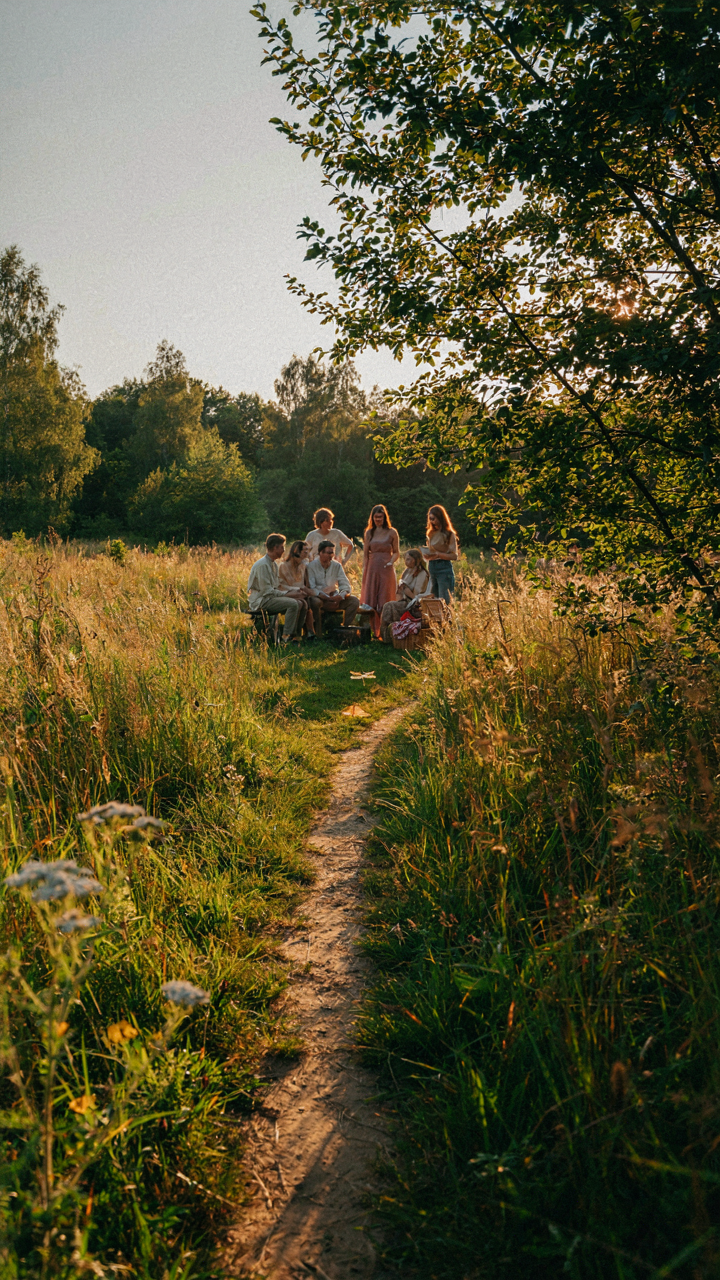
Most people throw a meadow birthday party and stop at wildflowers. They miss the point. The real design lives in what guests do when they arrive. Pick one moment to engineer: maybe it’s the walk through tall grass to find their seat, or the smell of fresh-cut stems hitting them first. Design that moment ruthlessly. Everything else supports it. Your job isn’t to make Instagram jealous. Your job is to make people forget they’re at a backyard party at all. Start there today, and watch everything else click into place.