The Illusion Of Choice: Why Less Is More For Your Ice Cream Sundae Bar
When Your Brain Breaks At The Toppings Table
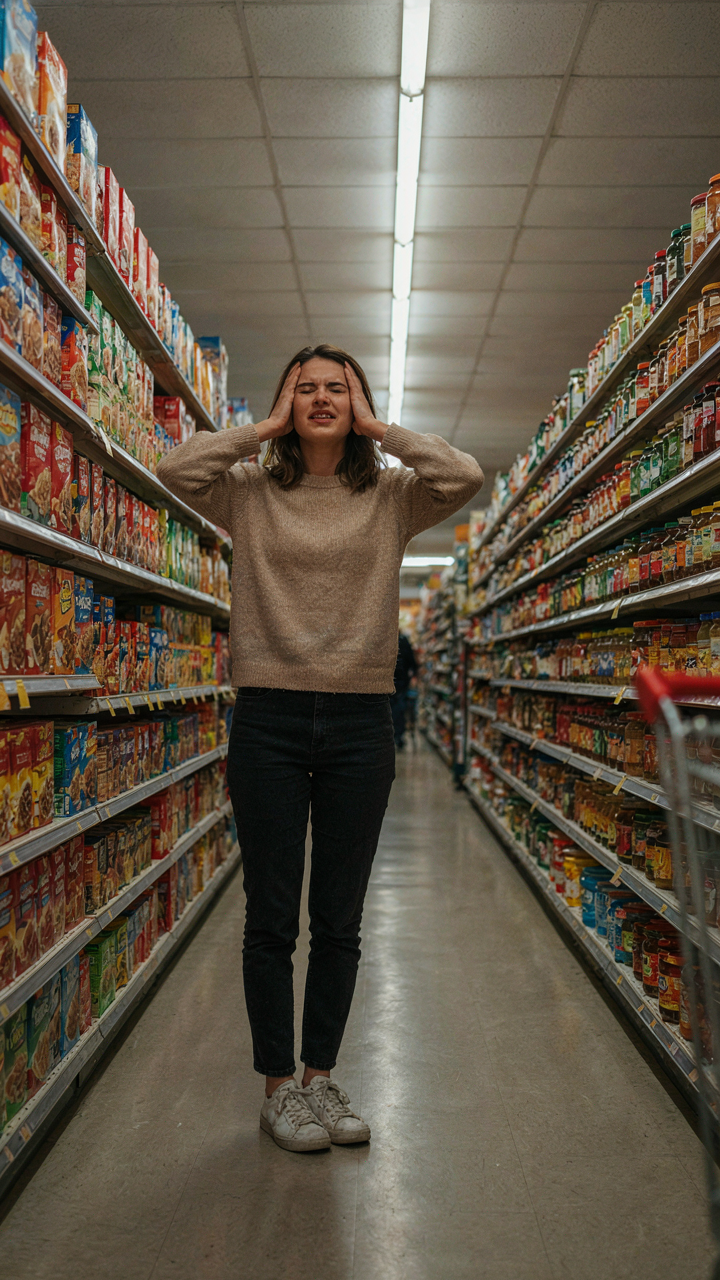
You want guests to feel like they have options because you think abundance signals generosity. The mechanism is different. Psychologists call it decision fatigue, and it’s real enough that it tanks party satisfaction. When someone faces too many toppings, their brain burns through cognitive resources just to choose. They end up either paralyzed or making a rushed, unsatisfying decision. Then they blame the experience, not themselves. Your sundae bar becomes the scapegoat for their mental exhaustion.
The practical result is predictable. Guests spend five minutes staring at thirty toppings instead of two minutes enjoying their sundae. They leave feeling drained rather than delighted. The math is simple: more choices do not create more happiness past a threshold of around seven options. You hit that threshold fast with a sundae bar. Cut the toppings to what actually works together, and watch satisfaction increase while setup time and cost drop.
Curation Beats Chaos Every Time
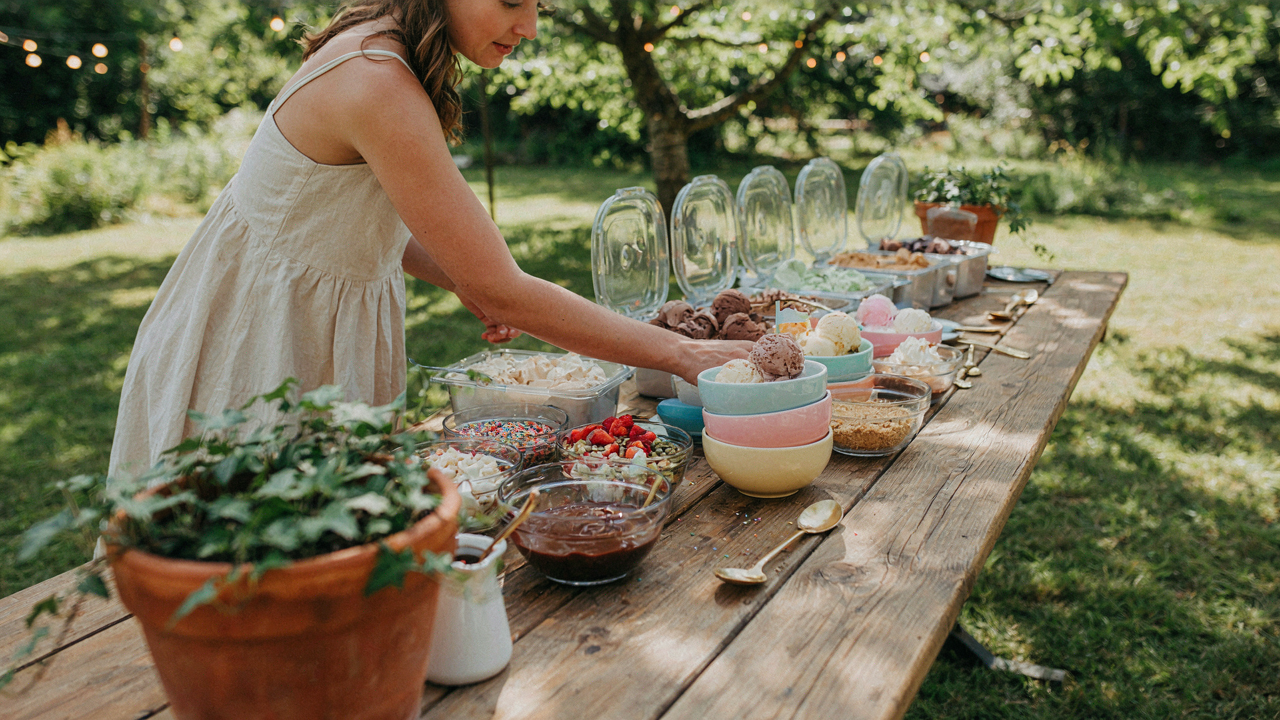
Most people stock a sundae bar like they’re running a buffet. They pile on every topping they can find because they assume variety equals value. This is wrong. A curated selection means you’ve made deliberate choices about what complements vanilla, chocolate, and strawberry ice cream. Chaotic selection means you threw in everything and hoped something stuck.
The difference shows in execution. A curated bar has six to eight toppings that work. Hot fudge, caramel, crushed oreos, sprinkles, whipped cream, chopped nuts, maraschino cherries, and fresh berries. Each one plays a role. Each one pairs. A chaotic bar has those items plus gummy bears, cookie dough bites, two types of sprinkles, three sauces that nobody uses, and toppings that are stale before the party ends. Your job is to make every single item earn its place on the table.
The “Sundae Bar Protocol”: Engineering A Flawless Ice Cream Station
Flow Architecture For Guest Movement

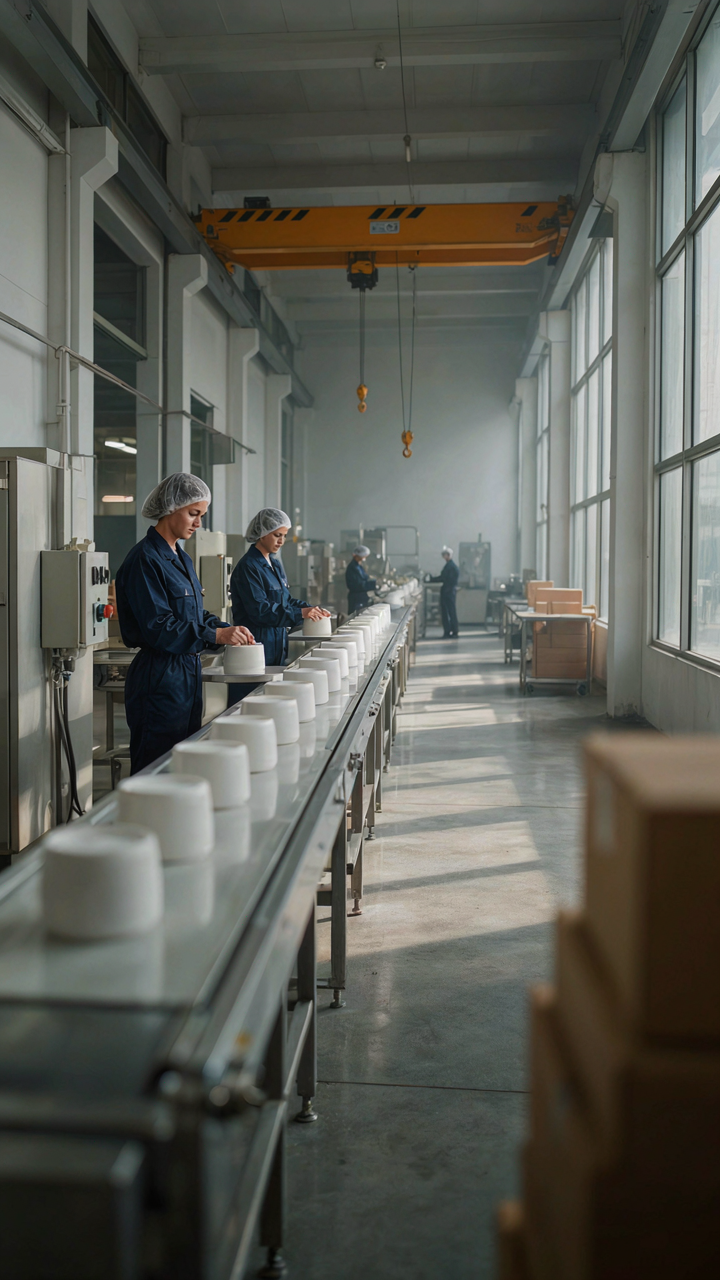
You want people to think you’re organized. What actually matters is that nobody waits in a bottleneck while their ice cream melts. This is pure operations—think of guest flow as throughput optimization in manufacturing. Your sundae bar’s architecture determines how many people move through per minute without collision or decision paralysis.
The entry point and exit point cannot be the same. Route guests in one direction: approach ice cream first, then toppings left to right, then sauces, then plating area. Position the ice cream bin on the approach end, not centered. This eliminates the traffic jam where someone stands frozen deciding between mint chip and cookie dough while five people stack up behind them. Space between the ice cream station and topping station should be at least two feet.
Component Placement For Maximum Efficiency
Most setups fail because people arrange by what looks balanced, not by what guests actually need. Ice cream belongs at the start because it’s the decision point—guests commit here or they don’t. Toppings come next: sprinkles, nuts, candy, chocolate chips in that order, arranged left to right by density, not color.
Place sauces on a separate small table or shelf positioned after toppings but before the plating zone. Guests grab a bowl from a stack at the entry point, not the end. This prevents the gridlock of someone hunting for a bowl while holding a loaded spoon. Keep napkins and spoons in three locations: entry, mid-station, and exit. Single placement means one person monopolizes them. Cold holding for ice cream stays separate from the topping and sauce prep, typically two to three feet away, so guests don’t jostle around refrigeration equipment.
Beyond Basic: Elevating Your Ice Cream Bar With Intentional Toppings

Why Flavor Combinations Actually Matter

You want your sundae bar to look like you know what you’re doing. Here’s what nobody tells you: flavor pairing works like contrast in design. You need tension between elements, not harmony. Sweet ice cream plus sweet toppings creates sensory monotony. The brain stops registering the experience halfway through. Bitter, salty, and acidic elements force your palate to stay engaged. They’re the mechanism that separates a forgettable dessert from one people remember.
The classics work because they obey this rule. Vanilla plus hot fudge works because heat against cold matters. But the fudge’s slight bitterness against vanilla’s sweetness is what locks in the flavor. Salted caramel became popular because salt interrupts sugar’s dominance on your tongue. Stock your bar with this principle in mind: pair one sweet element with something that pushes against it. Sour makes sweet taste sweeter. Salt makes sweet taste more complex. Bitterness makes sweetness feel earned. This isn’t theory. This is how taste receptors work.
Savory And Spice Change The Game
Most sundae bars treat savory and spicy toppings as novelty. They’re not. They’re structural. Cayenne pepper on chocolate ice cream doesn’t taste weird because heat amplifies flavor perception. Chili powder doesn’t clash with vanilla because capsaicin compounds create actual neural firing that enhances sweetness detection. Crispy bacon works because the salt and smoke cut through richness. Miso caramel works because umami provides depth ice cream alone cannot deliver.
Your guests expect a topping that tastes like it belongs there, not something that surprises them for shock value. The difference is intention. Offer crispy soy-glazed nuts instead of plain almonds. Include a small bowl of tajín seasoning, not just cinnamon. Set out candied jalapeños or crispy shallots. Position these near toppings they complement: the tajín near citrus, the bacon near chocolate, the miso near salted options. The mechanism is simple. Guests who use these toppings report higher satisfaction because they’ve solved a flavor equation, not just assembled a plate.
The Party Ice Cream Bar Economy: Resource Allocation For Maximum Impact
Where More Toppings Stop Mattering

You want to look generous without bleeding money on items nobody touches. That’s the real reason you’re reading this. Economics calls this diminishing returns, and your sundae bar hits that wall hard. Add topping number eight and attendance doesn’t increase. Satisfaction doesn’t climb. You just own more inventory that spoils. The mechanism is simple: people max out around five to seven toppings before choice becomes friction instead of freedom.
Most setups fail here by stocking twenty toppings and calling it variety. That’s lazy planning dressed as abundance. A guest confronted with sixteen sauce options experiences decision paralysis, not delight. They grab three toppings fast and move on. The economic principle applies directly: each additional topping costs you money and storage space while delivering zero measurable return after the saturation point. Your constraint is the guest’s actual consumption capacity, not your ability to source items.
Premium Versus Standard: The Math That Matters
Forget the advice that premium toppings impress more. That misses what actually drives perceived value at a gathering. Cost per guest determines whether you break even or waste margin on items that sit untouched. Standard toppings like sprinkles, hot fudge, and whipped cream see ninety percent attachment rates. Premium additions like artisanal sauces or exotic nuts see thirty to forty percent. The gap between cost and usage is where your money disappears.
Run the calculation backwards from your budget. If you’re feeding fifty people and spending two hundred dollars, that’s four dollars per person. Allocate seventy percent to base ice cream and standard toppings, thirty percent to premium options. This ensures you hit satisfaction thresholds without overcommitting to low-use items. The protocol: buy premium in smaller quantities, positioned for visibility, then rely on volume on the basics. Your guests remember the experience, not the topping they skipped.
Preservation & Presentation: The Unsung Heroes Of A Successful Sundae Bar

The Cold Chain That Stops Melting

You care about this because melting ice cream signals failure to your guests, and you’ll spend the entire event watching it collapse instead of enjoying the gathering. Temperature control is pure thermodynamics: ice cream exists in a state of managed decay, and your job is slowing that decay to a predictable timeline. Most people dump ice cream in a bowl and hope. That’s not a strategy.
Keep ice cream at 6 to 10 degrees Fahrenheit for serving. Use a shallow bowl nested inside a larger bowl filled with ice and rock salt, which lowers the melting point of ice and maintains colder temperatures longer than ice alone. Replace the ice layer every 30 to 45 minutes depending on ambient temperature and sun exposure. Direct sunlight can raise the temperature of an exposed bowl by 10 to 15 degrees in under an hour.
Arrangement That Controls The Eye
What you arrange first gets eaten first, and what sits in the back gets ignored. This isn’t aesthetic preference, it’s behavioral design. Place toppings at eye level in descending order of richness: nuts and sprinkles first, then sauces, then whipped cream. Position the ice cream itself as the anchor that everything orbits around, not as an afterthought tucked to the side.
Use shallow containers for toppings so guests can reach the bottom without digging through product. Group similar items together: all sauces in one zone, all crunchy elements in another. This reduces decision paralysis and increases the perceived quality of your bar. When someone can find what they want in two seconds, they assume you thought this through on purpose.
The “Ice Cream Social” Blueprint: Guest Experience Design

Removing Friction Before It Happens

You want people to think your event is effortless, which means you’re actually obsessed with removing every small friction point before guests notice it exists. The mechanism here borrows from operations management: reduce queue time through parallel processing. Instead of one line of ten people waiting for ice cream, you run three simultaneous stations, each with its own scoop and toppings subset.
Position the sundae bar so guests approach from multiple angles simultaneously. Dedicate one station to speed (vanilla, chocolate, strawberry only). Run a second for experimentation (unusual flavors, mix-ins). A third handles high-volume toppings like sprinkles and sauce. This prevents the bottleneck where one person takes five minutes deciding while eight others wait. Guests never feel trapped. Waiting feels like choice.
Designing The Conversation Node
Most advice says “make it social” without explaining what that actually means operationally. It doesn’t mean proximity alone. It means you’re architecting a reason for strangers to interact while they’re already committed to standing in one place. The sundae bar becomes a forced pause where people have legitimate reason to talk.
The bar itself should have shoulder-width spacing between stations so guests naturally stand shoulder-to-shoulder while building sundaes. Stack toppings in open bowls, not covered containers, so people reach across each other. This creates micro-moments where someone says “excuse me” and conversation starts. Place the bar perpendicular to seating areas, not parallel. Perpendicular forces people to stop and face the activity. You’re not just feeding people. You’re creating a gathering point with built-in social permission.
Efficiency & Cleanup: The Overlooked “Ice Cream Party” Advantage

Set It Up Once, Run It All Night

You want this section because you’re afraid of looking unprepared or scrambling mid-party while guests watch. The real mechanism is operational leverage: a sundae bar compounds effort on the front end so you extract value passively for hours. Most hosts treat setup as a chore. It’s actually your only control point.
Deploy stations in a linear progression that mirrors how guests move. Place ice cream at the start, toppings in the middle, dishes and utensils at the end. This flow stops bottlenecks before they form. Use shallow hotel pans instead of deep bowls for toppings because guests see what they want without digging, which accelerates throughput and prevents contamination from repeated utensil plunging.
Waste Reduction Through Constraint Design
Everyone assumes you minimize waste by buying less. That’s incomplete. You minimize waste by making the container size match the serving reality. Small ramekins for wet toppings like caramel or fudge force portion control without signaling stinginess. Wide, shallow bowls for nuts or sprinkles let gravity work against over-scooping. Constraint design beats willpower every time.
Pre-portion toppings into individual servings before guests arrive if you’re hosting more than twenty people. This eliminates the mental load guests feel when facing bulk containers and cuts cleanup time by half because you’re not scraping dried toppings from ten different bowls. Use disposable containers for wet toppings, durable ones for dry items. Stack dirty dishes in one corner with a trash bin beside it so guests self-organize cleanup without you directing traffic.
Beyond The Scoop: Creative Vessels And Utensils For Your Sundae Bar Ideas
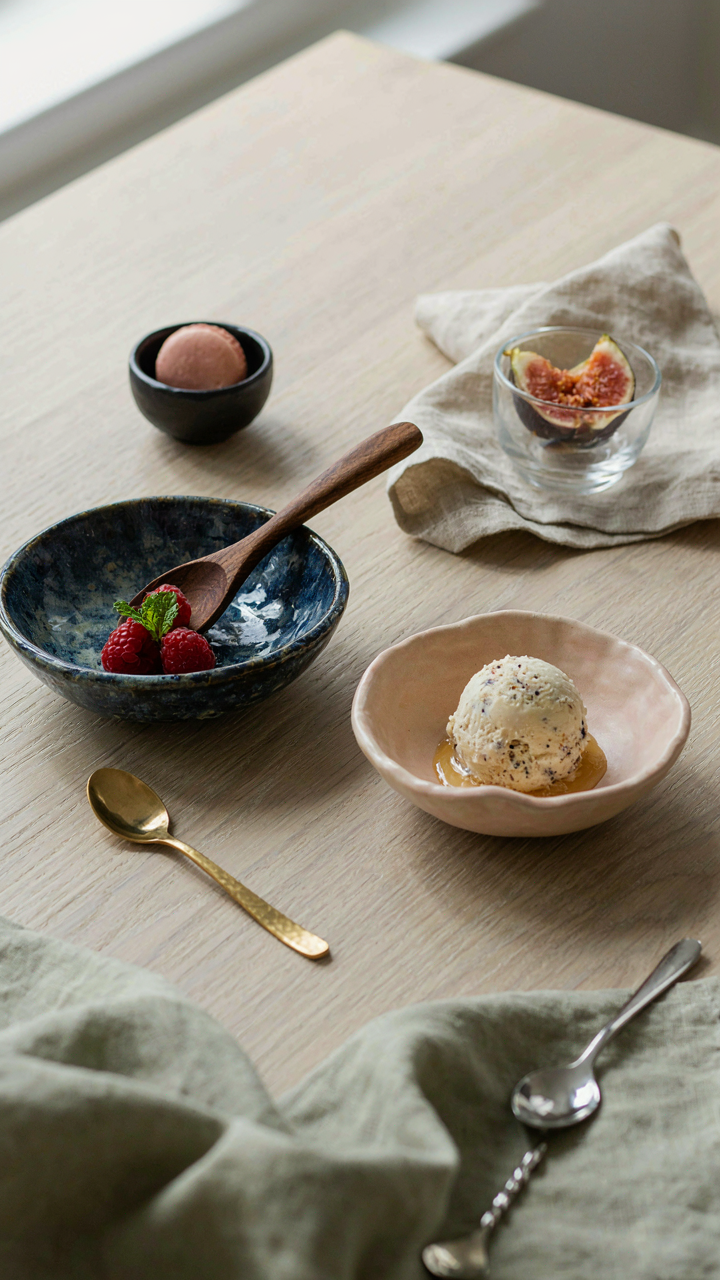
What Actually Holds Your Sundae

You want the vessel to signal that you put thought into this. That’s the real reason you’re reading this. The mechanism is simple: the container itself becomes part of the experience, and people eat with their eyes first. Standard bowls broadcast indifference. The right vessel does the work for you.
- Coupe glasses: Stemmed, shallow bowls that elevate the visual presentation. The stem keeps hands away from the ice cream, reducing melting from body heat. Classic glassware communicates intentionality without effort.
- Martini glasses: Wider opening than coupes, deeper bowl. Works well for layered sundaes where you want toppings visible at different heights. Guests understand immediately this isn’t a casual setup.
- Waffle cones and edible bowls: Sugar cones serve dual purpose as vessel and snack. Edible bowls made from waffle or pretzel material eliminate dishwashing friction and add texture variety that traditional bowls cannot match.
- Vintage teacups and saucers: Mismatched or matched sets signal a curated aesthetic. The saucer catches drips and gives guests a place to set utensils. Creates informal elegance without pretension.
- Small cast iron skillets: Miniature versions hold a single serving. The thermal mass keeps ice cream colder longer than glass, and the unusual vessel generates conversation and perceived effort.
Temperature and material interact like supply and demand in economics. Glass holds cold but conducts it away fast. Metal retains cold but requires heating the serving area first. Your choice determines how quickly the sundae degrades.
Reusable Vessels That Stack Return On Investment
Outdoor gatherings create waste pressure that hosts feel but don’t often name directly. Reusable systems solve this at setup, not cleanup. You eliminate the decision-making of which disposable to grab because you’ve already committed to a single set of vessels.
Silicone bowls and cups handle temperature swings without cracking. They stack flat for storage and weigh almost nothing for transport. Stainless steel spoons and tongs don’t pit or rust like cheap disposables do. Buy a set of twelve once, use them for years. The math is cleaner than renting glassware and simpler than managing single-use inventory. When you stop buying new vessels every event, you stop thinking about them entirely, which means your brain focuses on what actually matters: the ice cream and toppings.
Mastering The Ice Cream Sundae Bar Experience: Less Is Not A Compromise

Define Your Signature, Then Stop Adding

You want to look like you have it all figured out, so you keep expanding the topping menu. That’s the trap. The real mechanism is constraint as signal. Economics calls this “choice architecture”—the idea that limiting options increases perceived value and decision confidence. A sundae bar with forty toppings creates paralysis and confusion. A curated bar with eight to twelve toppings positioned intentionally signals expertise and taste.
Your signature sundae bar should anchor the experience. Pick a base combination that works: vanilla or chocolate ice cream, a sauce that ties flavors together, one crunchy element, one soft element. Then add three to five optional toppings that let guests customize without drowning in decisions. This isn’t restraint. It’s clarity. People feel smarter when they understand what they’re choosing from.
The Work That Compounds Over Time
Common advice says “more options make guests happier.” It doesn’t. Thoughtful curation makes guests feel known. The lasting impression comes from restraint that demonstrates you thought about what matters. When someone remembers your sundae bar a week later, they’re not thinking about the thirty toppings they forgot existed. They’re thinking about the combination that felt intentional.
Deploy this at your next outdoor gathering: stock three ice cream flavors maximum, choose two complementary sauces, and arrange toppings in a line that guides people toward a natural order. Label each topping clearly so guests don’t hesitate. The bar that feels effortless to navigate is the bar people actually enjoy using.
The Only Thing Limiting Your Sundae Bar Is Your Imagination, Not Your Budget
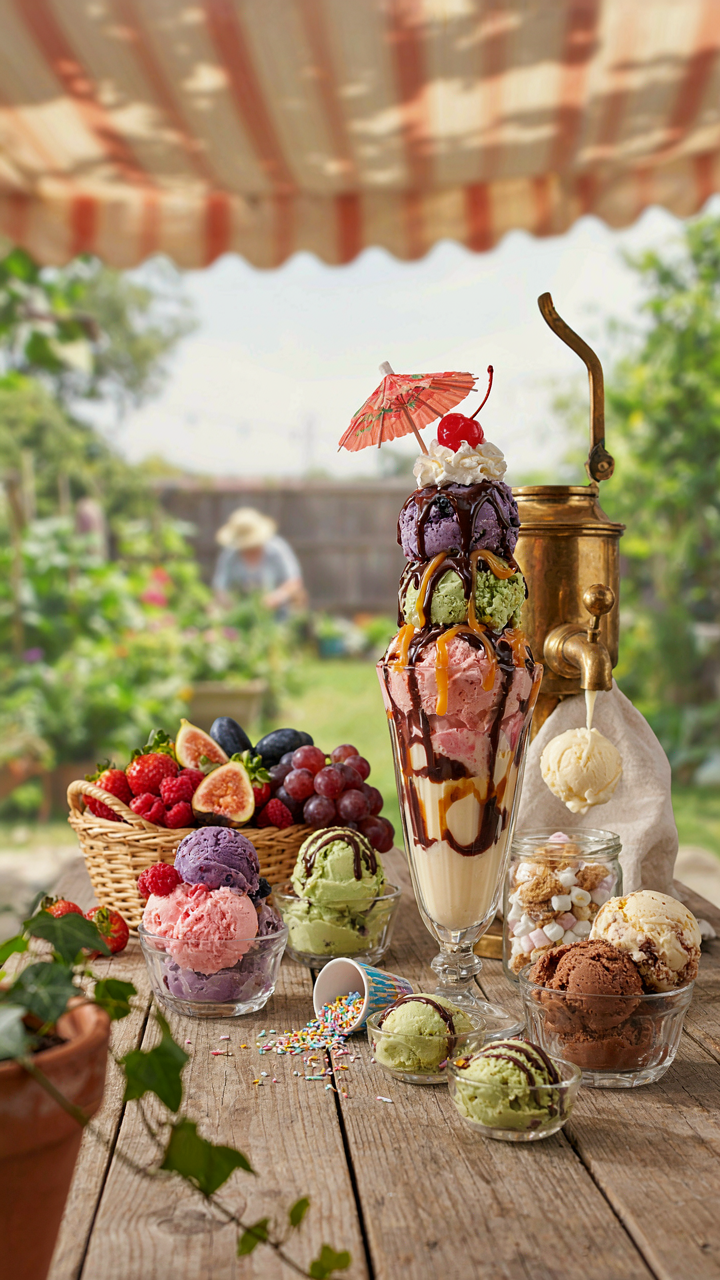
Most people treat a sundae bar like a checkbox. They buy five toppings, call it done. Wrong move. Your sundae bar becomes the centerpiece of your entire gathering the moment you stop thinking about toppings and start thinking about combinations. Pick three base flavors, five unexpected toppings, and one wildcard nobody expects. Then watch people stop scrolling their phones. Stop building a sundae bar. Start building the reason people actually show up.