Beyond The Buzz: Why Most Bee Birthday Parties Fail
The Instagram Trap
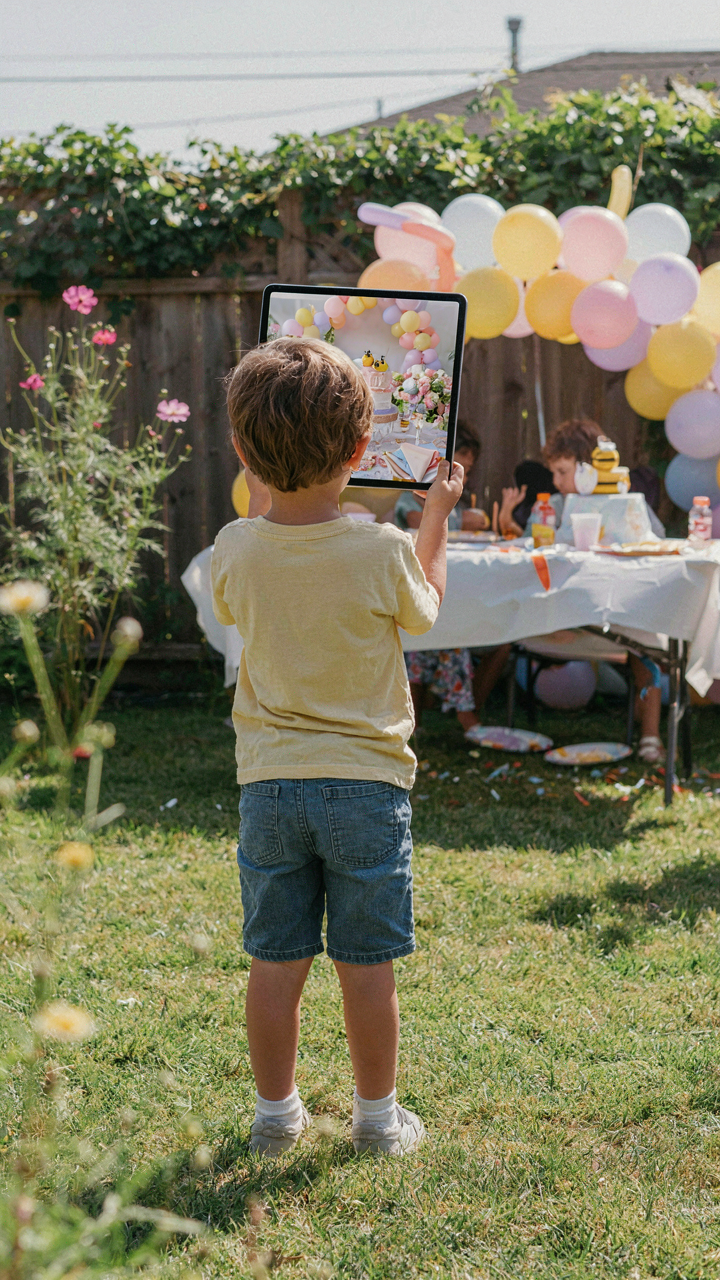
You want this party to look good on camera because you think it proves you’re a capable parent. Here’s the mechanism: you’re optimizing for an audience of strangers instead of the actual child in the room. Pinterest shows you a flawlessly styled garden with hand-painted decorations, custom cakes, and perfectly arranged flowers. It does not show you a bored seven-year-old waiting for something to happen.
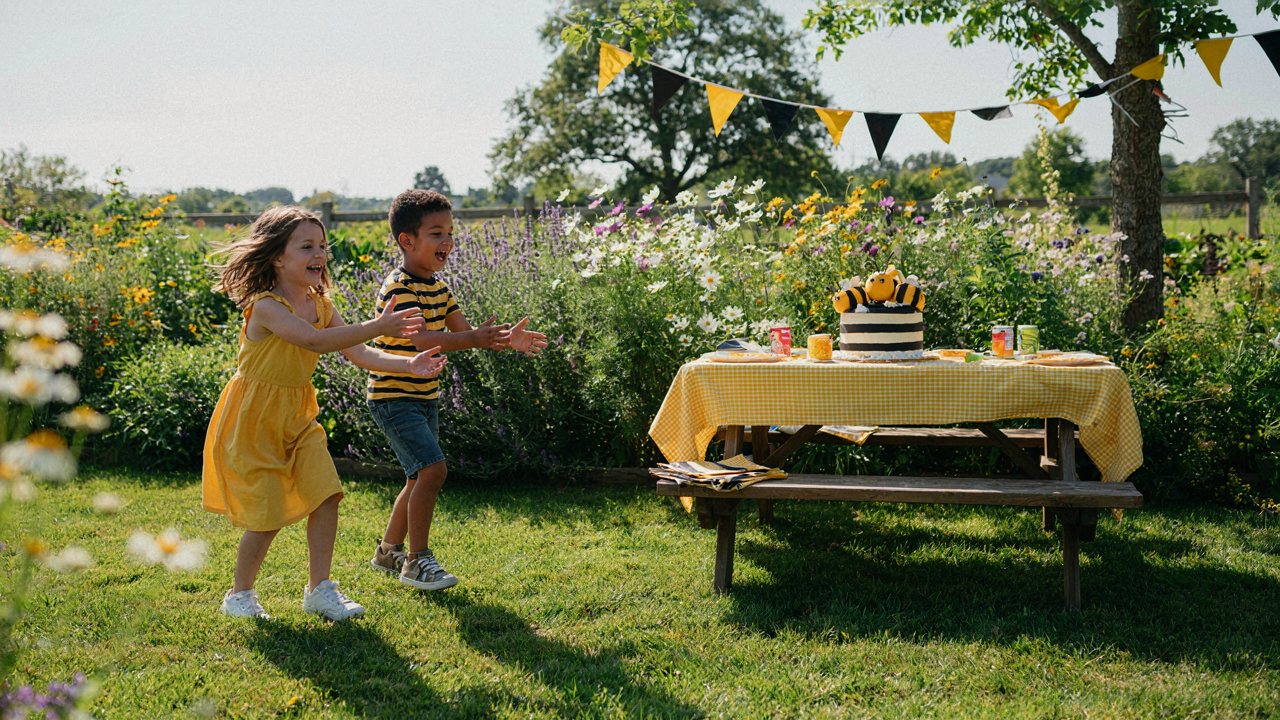
The gap between aesthetic and experience is where most bee parties collapse. You spend three weeks sourcing yellow-and-black striped rentals and hanging paper honeycomb from trees. The kids eat cake for eight minutes, then scatter. The photos look great. The memory for your child is forgettable. The real work is invisible: activities that hold attention, games with clear rules, moments that make the day distinct from every other afternoon.
The Child Disappears
Ignoring what your specific child actually enjoys is the second failure point, and it’s deliberate avoidance masquerading as theme commitment. You picked bumblebees because the theme is trending, not because your kid cares about pollinators. Then you build the entire day around bee imagery rather than around what makes that child move, laugh, or engage.
Ask direct questions first: Does this child like bugs or avoid them? Do they prefer building things, competing, moving around, or sitting and making art? A bee garden party for a five-year-old who loves digging is completely different from one for an eight-year-old who wants to win games. The theme is the container. The child’s actual interests are what fills it. Match the activities to the child’s wiring, then layer the bee elements on top. That’s the protocol.
The Pollinator Protocol: Engineering Engagement, Not Just Decor
Activity Flow Like An Ecosystem

You want the party to feel effortless, which means you’re terrified of dead air and bored kids destroying your vision. Here’s the mechanism: treat the garden space like an actual ecosystem with energy moving through zones, not a static setup where everyone gathers in one spot and waits for the next thing.
Position stations at different elevations and sight lines. A low flower-arranging table near the entrance, a middle-height nectar-mixing station by the garden beds, and a higher viewing platform or seating area for observation points. Kids flow between them naturally because each location triggers the next activity without you announcing it. No bottlenecks, no restless clusters, no dead zones where boredom breeds chaos.
Scarcity Drives Real Participation
Everyone says make activities “inclusive,” which actually means diluting engagement until nothing matters. Economics teaches us that artificial scarcity creates demand and attention. Apply this directly: limit pollinator identification cards to twelve, not thirty. Restrict the nectar-mixing station to four kids at a time. Ration the face-paint bee designs to one per guest.
When something has a line, kids care about it. They want access more than they wanted the thing before you made it scarce. Rotate kids through limited stations on a timer, not on a free-for-all basis. This prevents both entitlement and the paralysis of too many choices. The constraint becomes the mechanism that keeps the party moving and each activity feeling earned.
First Birthday Hive: The Sensory Overload Sweet Spot
Texture, Sound, And Taste Build Memory
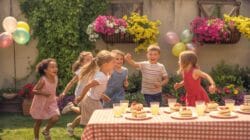
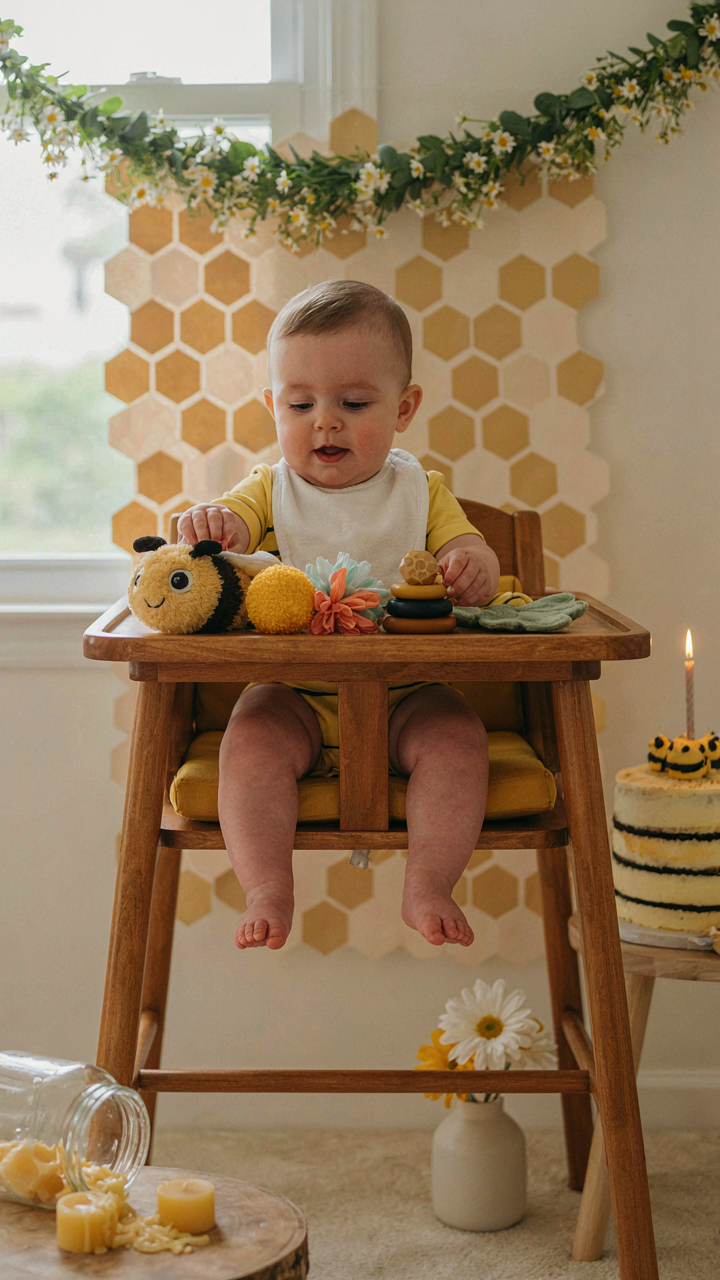
You want your kid to remember this. That fear drives most first birthday planning, but memory doesn’t work through decoration alone. Neurobiology teaches us that memory encodes through novelty and repetition across sensory channels simultaneously. A bumble bee garden birthday uses this principle: instead of passive observation, you layer distinct tactile, auditory, and gustatory experiences in one location. The mechanism is encoding redundancy. When a child touches a soft bee wing prop, hears a buzzer, and tastes honey-sweetened snack at the same moment, three neural pathways fire together. That’s retention.
Station one: texture. Soft materials matter. Real garden soil (sterilized), flower petals, fuzzy fabric cut into bee shapes, smooth river rocks. Children one year old learn through touch first. Station two: sound. A small buzzer or bee-sound toy at each corner of the party space creates spatial audio markers. Not loud. Just present. Station three: taste. Mild honey diluted into yogurt, bee-themed fruit shapes, age-appropriate cracker textures. The combination creates a sensory anchor that outlasts the day.
What Overwhelm Actually Means
The common advice says “keep it simple,” which is lazy nonsense because it doesn’t define what “simple” means neurologically. Overwhelm happens when stimuli exceed a child’s ability to process novelty at that moment. For a one-year-old, overwhelm threshold sits around 40-60 minutes of sustained multi-sensory input before cortisol spikes. This is measurable. It’s not opinion.
You don’t reduce stimulation. You sequence it. Design the party in 12-15 minute blocks: sensory station one, free play, sensory station two, food break, outdoor time. This rhythm prevents the shutdown response. Keep the guest list under 15 people. Too many bodies create unpredictable noise patterns that interfere with intended sensory design. The protocol is simple: plan station duration, monitor the child’s engagement level every 10 minutes, shift activities before exhaustion sets in.
Bee Themed Birthday Party: The Authenticity Algorithm
Themed, Not Suffocated
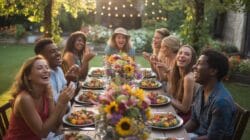
You want the party to look intentional without screaming “I tried too hard.” Real bumble bees operate on constraint: they visit specific flowers because those flowers solve a resource problem. Apply ecological design here. The mechanism is substrate specificity—the party should feel like it happened because the environment demanded it, not because you forced a concept onto an empty space.
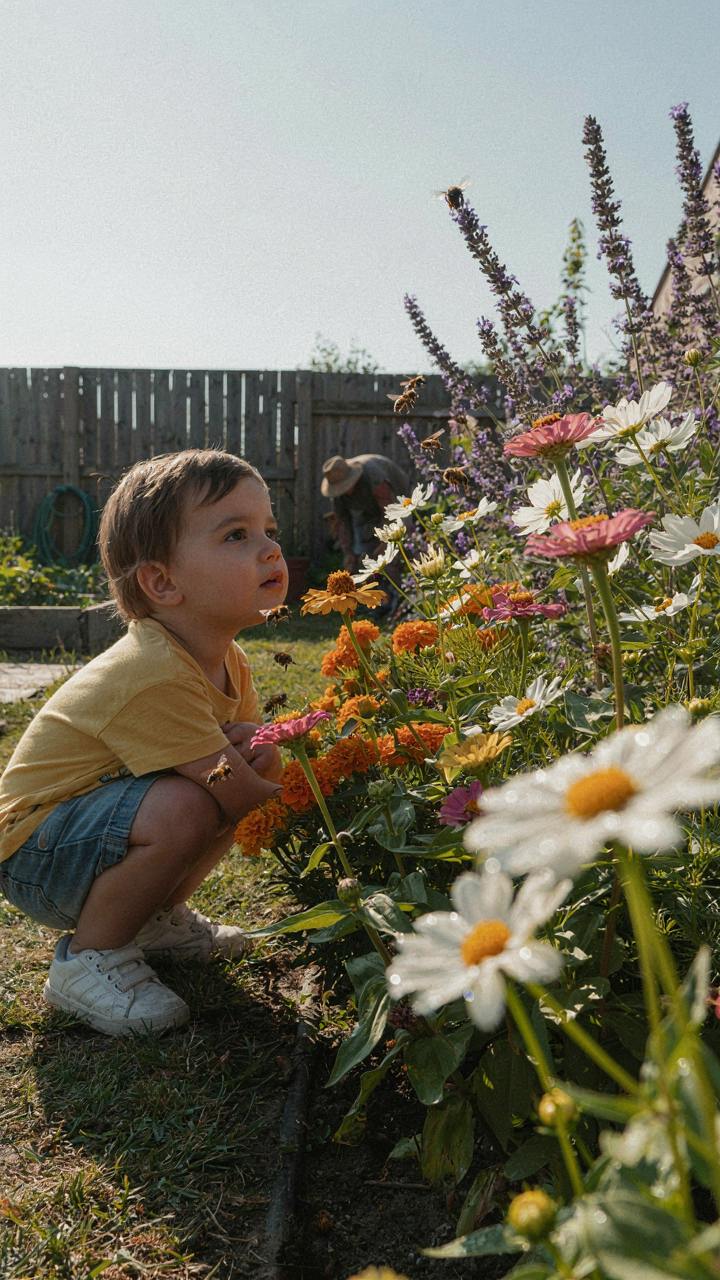
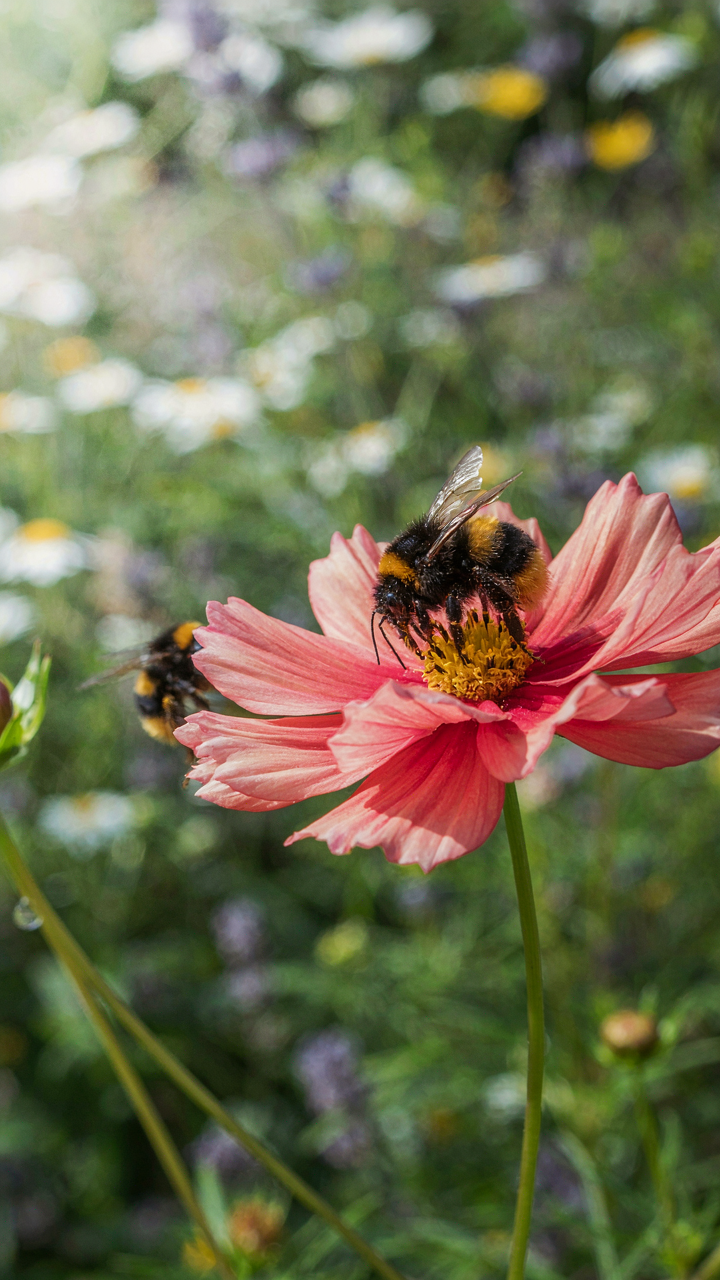
Start with the garden itself. If you have flowering plants that actually attract bumble bees—lavender, borage, sage, verbena—you’ve already won. The bees arrive as part of the ecology. Decor should follow, not lead. One or two hand-painted wooden signs. A yellow and black color palette in the linens. Maybe striped paper straws. The restraint is what makes it register as real rather than costume-like.
Build What Only You Can Make
Most parties fail because people outsource everything and end up with the same rented catalog items everyone else uses. The real differentiation lives in what you make yourself, not what you buy. Delegate catering or balloons if you must, but own the core experience.
Make the bee-themed cake yourself or work with a local baker who’ll iterate with you on what bumble bees actually look like—fuzzy, round, with visible pollen sacs on their hind legs. Make paper flower decorations for the garden using tissue paper and wire. Build a simple observation station with a magnifying glass and identification chart so kids can spot real bees during the party. The friction of making these things yourself is where the party gets its character. Delegate the logistics. Build the meaning.
Spring Birthday: Weatherproofing Your Outdoor Vision
The Backup Plan Is Your Real Plan

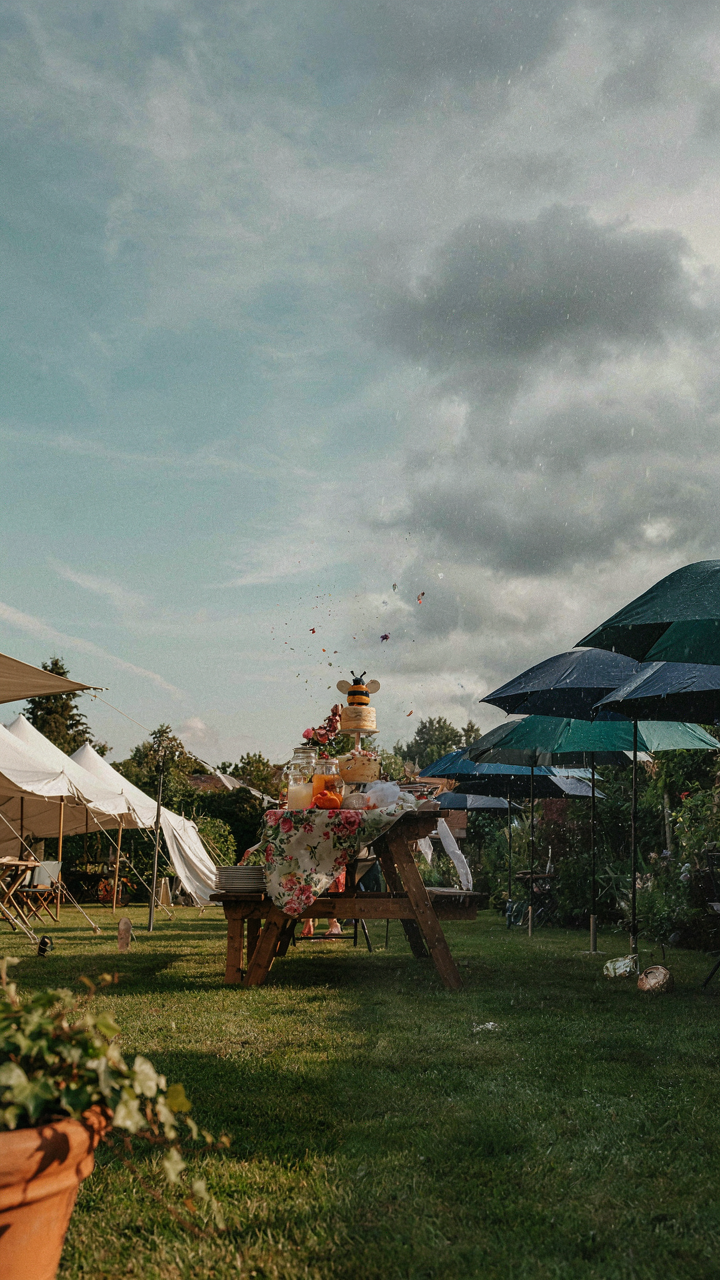
You want the party to look effortless on the day it happens. The mechanism is simple: you’re trying to control an uncontrollable variable, so you stop trying to control it and instead prepare for every outcome. Most people treat contingency planning as insurance they hope to never use. That’s backwards. Your backup setup should be so rehearsed that switching to it takes fifteen minutes, not an emergency phone call at noon.
The bumble bee garden birthday exists in two states simultaneously until the weather decides which one you’re living in. Build both versions now. That means a full rain shelter ready to deploy, tables positioned for quick cover, decorations mounted so wind doesn’t scatter them, and a clear decision tree for what gets packed away and when. You execute this the morning of the party with zero ambiguity about who does what.
Every Variable Demands Its Own Contingency
Temperature swings hit spring gardens hard, and you can’t reverse them. Wind pushes decorations sideways and guests inward. Sun exposure changes every hour. Treat these as independent problems, not one weather problem. A bumble bee garden birthday at sixty degrees feels different than one at seventy-five degrees because guest comfort compresses into a tighter window. You need shade structures that work when it’s hot and wind blocks that work when it’s cold, and you can’t always have both active simultaneously.
Position your main gathering area where you control at least one variable: south-facing for warmth in cool weather, north-facing or under tree cover when sun intensity peaks. Set up drink stations at two different spots so guests naturally spread out, reducing the chance a sudden wind gust sends decorations into everyone at once. Run a test walk-through the day before, noting exactly where the sun hits at party time and where wind funnels through your garden. Your job is to eliminate the surprises that make people uncomfortable.
Bumble Bee Birthday: The Resource Allocation Reality
Money Talks, Everything Else Whispers
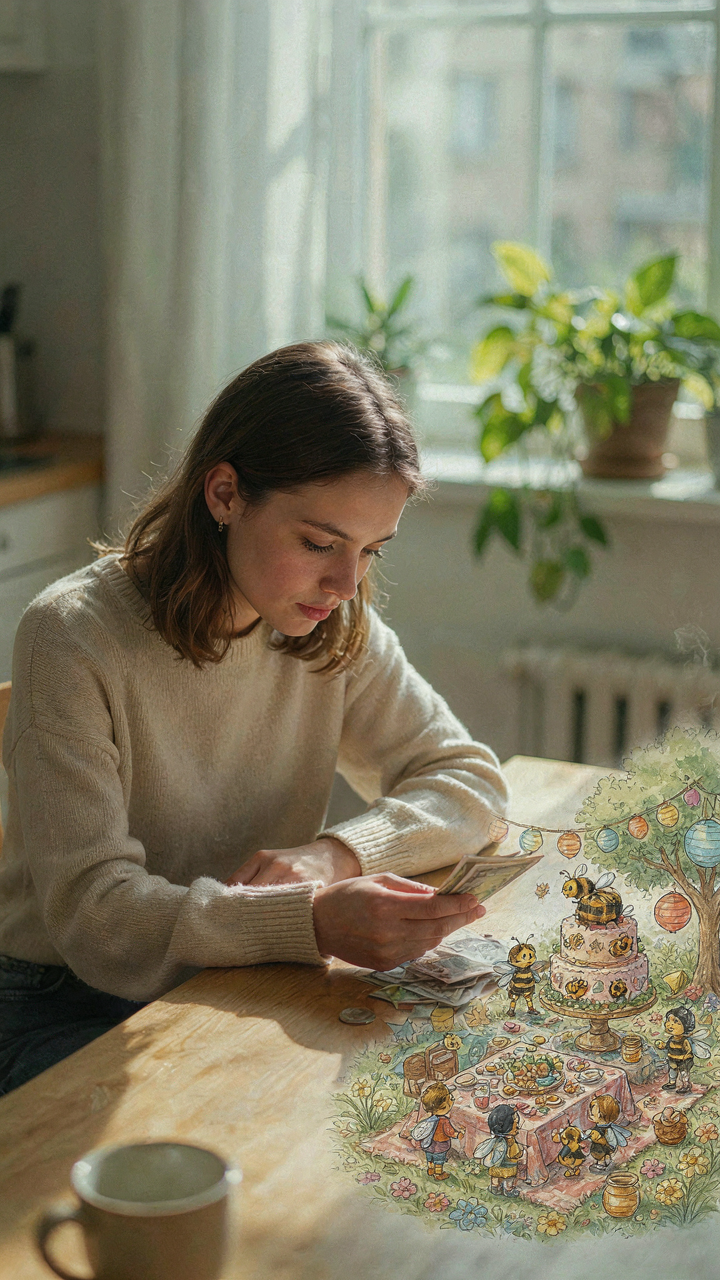
You want this party to feel effortless and Instagram-worthy without actually spending what that costs. Here’s the mechanism: budget isn’t a number you discover after planning. It’s the constraint that forces real decisions. Think of budget like carrying capacity in logistics—you can’t move more than your vehicle holds, so you decide what matters first. Most people plan everything, price it out, panic, then hack away randomly. You reverse this. You name a number now. That number becomes your filter for every choice.
A bumble bee garden party at a reasonable cost means abandoning two or three things people expect. Printed invitations? Cut. Hired entertainment? Cut. Imported specialty decor? Cut. What you keep: flowers that actually attract bumble bees, food that tastes good, and clear sight lines so guests see each other. The rest is noise. Write down what you’re spending per guest. That number forces clarity on what a celebration actually requires versus what makes you feel like you’ve “done enough.”
Time Is Your Real Constraint
Everyone has the same 168 hours a week, but nobody talks about where bumble bee garden birthday planning actually eats time. You lose hours to: researching flowers that bloom on your party date, waiting for online orders, rearranging logistics when something arrives late, and obsessing over details that guests won’t notice. The common advice says “start planning early.” Wrong. Useless. Early planning without a time budget just stretches the work across more weeks.
Set a hard stop date for decisions—ideally three weeks before the party. After that, you execute, not redesign. Bumble bee garden parties fail not from bad ideas but from endless tweaking and second-guessing. Buy flowers from a local nursery five to seven days before the party, not six weeks out. Prepare food the day before. Assemble decorations the morning of. This compressed timeline kills perfectionism because you have no time to indulge it. You move fast, commit, and move on.
Party Bee: The Guest Experience Funnel
Arrival To Departure: The Movement Map

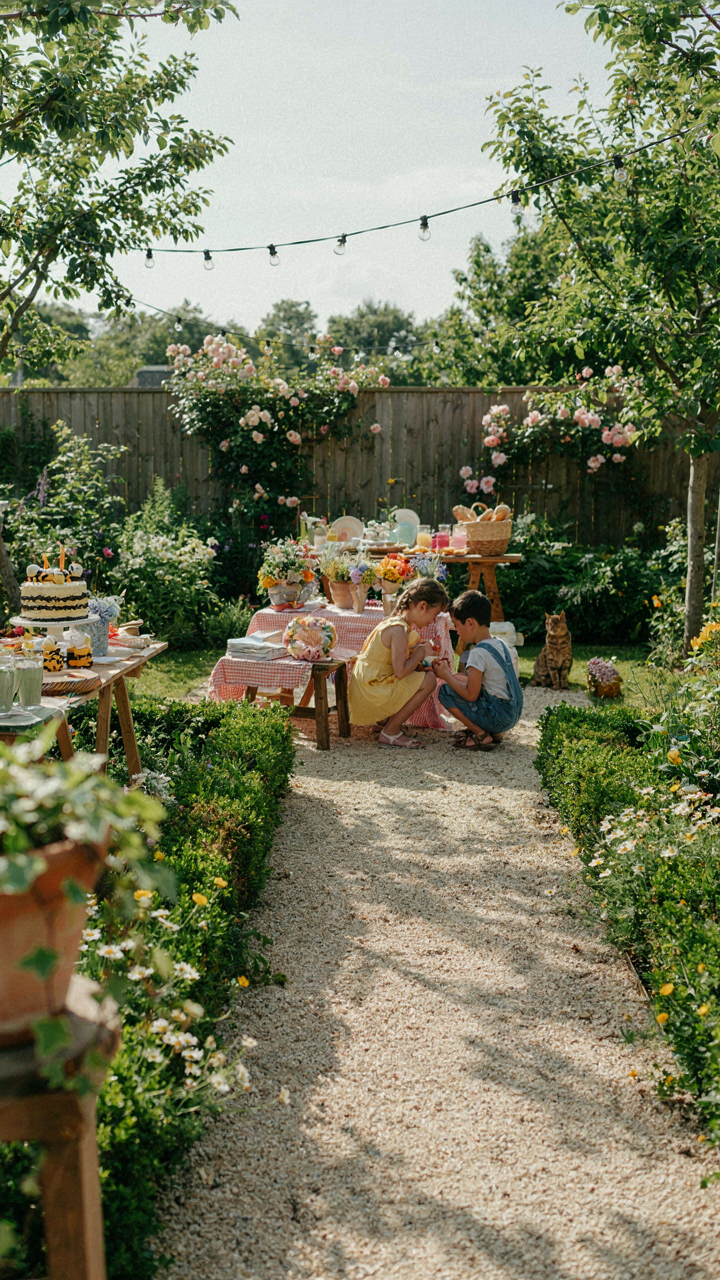
You’re worried guests will get bored or feel lost, which tanks your reputation as an organizer. What actually matters is choreography: every guest moves through a predetermined sequence of stations that builds energy, never lets attention collapse, and creates natural exit points. This isn’t decoration—it’s operational design. Map the physical flow first. Entry point leads to activity zone one. Zone one feeds into zone two. Each zone has a clear purpose and a built-in transition cue that signals when guests should move. Without this, you get clusters of dead space, bored teenagers on phones, and parents checking their watches.
The mechanism is simple: friction kills momentum. If guests have to navigate unstructured time or search for what’s next, you’ve lost them. Design a path that moves people through the garden like a production line, not a theme park where they wander. Station one: bee-themed craft or game (15 minutes max). Station two: food and beverage hub (20 minutes). Station three: main garden activity—bee observation, pollinator walk, or scavenger hunt (25 minutes). Station four: cake and wind-down (15 minutes). The total arc is known. Guests flow through without gaps. Post arrival details—where to put bags, where restrooms are, what the first instruction is—on a simple printed card in each guest’s hand before they enter the garden proper.
Separate Adult And Child Zones Within The Same Space
Adults don’t want to supervise children’s activities all day; children don’t want adults hovering. The common advice says “have something for everyone,” which is vague and useless. What works is spatial separation with line-of-sight connection. Use garden architecture—a hedge row, a fence line, a pergola—to create two adjacent zones. Children occupy one section with active games, the craft station, and the scavenger hunt. Adults occupy an adjacent section with seating, conversation space, and visibility of the children’s zone. Each group has autonomy. Parents can relax. Kids can run without constant monitoring. The sight lines prevent chaos while the distance prevents interference.
Station the cake and birthday moment in a neutral area between the two zones so both groups converge naturally. Run the main bee-themed activity—a pollinator walk or a bee hotel building project—in the children’s zone during the middle hour. If you have budget, position a responsible adult facilitator in the kids’ zone to manage transitions and handle logistics. Adults in their zone handle their own refreshments and conversation. The separation creates perceived order and genuine relief for both groups. Adults won’t resent the party. Kids won’t feel managed to death. Everyone stays engaged in their own context for the duration of the party.
Bee Birthday Party Ideas: From Concept To Combat Readiness
Which Ideas Actually Move The Needle

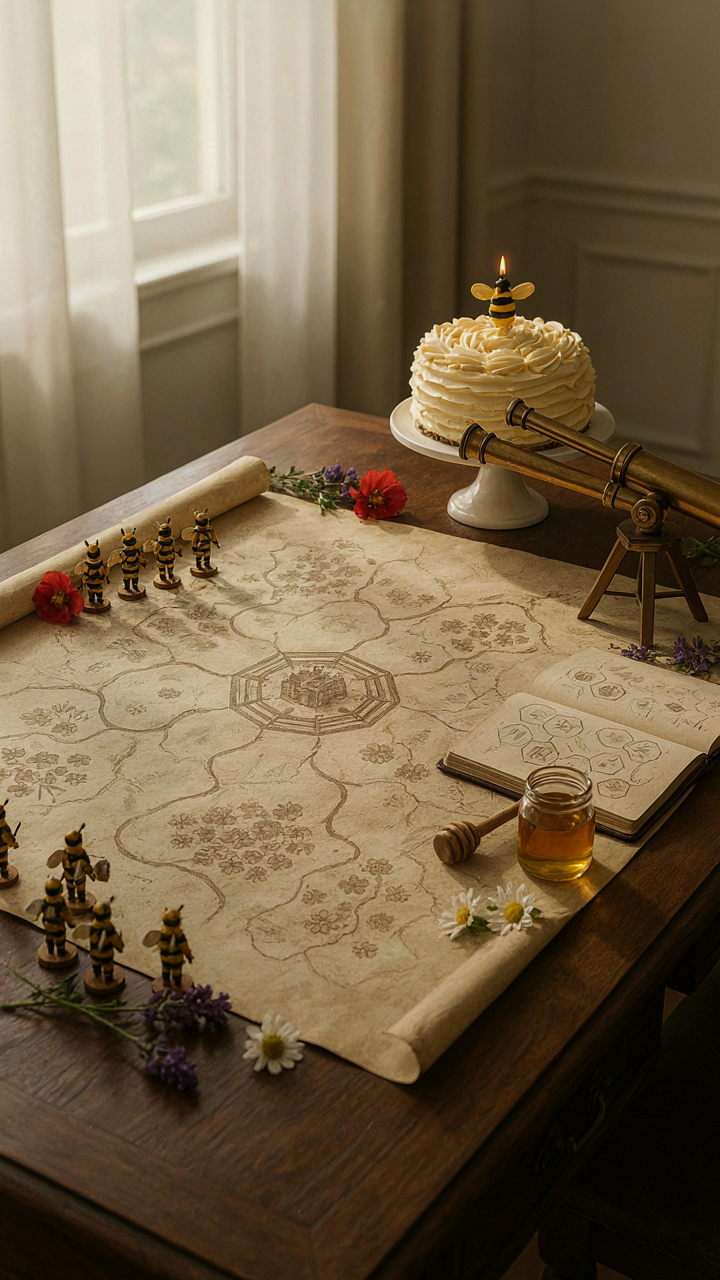
You’re worried your party will feel generic. That fear is warranted because most people copy decorations instead of building around what guests actually do. Think in terms of military strategy: concentrate your resources on decisive terrain, not scattered positions. For a bumble bee garden birthday, the decisive terrain is the activity that makes people stay engaged and talk about it afterward. Strip away themed napkins and centerpieces. They’re noise. Keep only ideas that create interaction, memory, or photo evidence that justifies the theme.
Start by listing every idea you’ve considered. Rate each one on two axes: does it require the bumble bee theme to work, and would it hold a distracted guest’s attention for ten minutes? Ideas that score low on both axes get cut. You eliminate 80% and keep the 20% that actually justify throwing a themed party instead of a standard backyard gathering. For a bumble bee garden birthday, this usually means a hands-on activity tied to pollination or bee biology, an actual garden tour or scavenger hunt through plantings, or food built around honey and nectar. Everything else becomes filler that costs time and money without adding real value.
Execution Timeline And Logistics
Move through this checklist in order because sequence matters. You cannot set up decorations before you’ve identified your activity zones. Pre-event work starts two weeks out by confirming your garden space and weather contingency. One week before, finalize your guest list, send invitations with arrival instructions, and verify your activity supplies are in stock. Three days before, create a site map showing where people enter, where the activity happens, where food is served, and where bathrooms are located. This prevents bottlenecks and keeps the party flowing.
- Garden walkthrough and activity zone setup: Identify which plants attract real bees, test your scavenger hunt route, mark any hazards or obstacles, and ensure pathways accommodate your guest count without crowding.
- Supplies procurement and storage: Source honey-based snacks, activity materials like bee identification cards, any props, and store items in labeled bins organized by setup order, not by category.
- Day-of setup sequence: Start four hours before guests arrive by placing activity tables first, then food and beverage stations, then decorations last so they don’t get moved during prep work.
- Guest flow management: Assign one person as the activity guide and one as the time keeper to move groups through zones every fifteen to twenty minutes, preventing logjams at popular stations.
- Weather contingency execution: If rain occurs, identify which indoor space holds your activity, pre-position backup supplies there the day before, and communicate the pivot to guests immediately upon arrival.
The day-of command runs on a printed timeline with specific times for each transition. Hand this to anyone helping you run the party. At ten minutes before the scheduled activity start, do a final walk-through of your garden to confirm setup is complete and nothing has been disturbed. Execute your first guest welcome and activity briefing at the planned start time regardless of whether everyone has arrived yet. Latecomers join the next rotation.
The Bumble Bee Garden Birthday Aftermath: Post Party Profit
Thank You Notes That Actually Mean Something
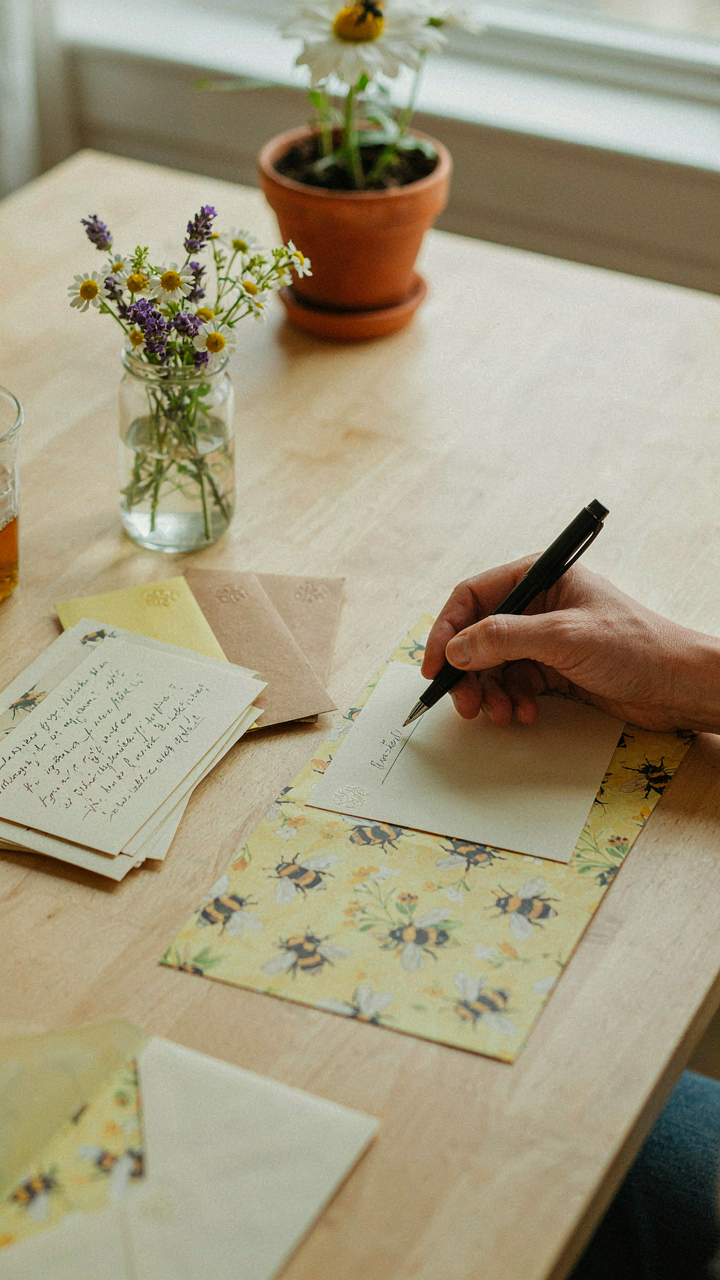
You want people to remember you hosted a good party, not forget you existed the moment they left. That’s the real driver here. The mechanism is simple: a handwritten note creates asymmetry in a world of digital noise. It signals you spent time on the person, not just their attendance. People keep physical notes. They delete emails.
Write three sentences. Name the specific thing they did or brought. Mail it within five days. That’s the protocol. Generic thank yous read like obligation, which defeats the entire point. A person knows when you’re checking a box versus when you actually noticed them. Skip the pre-printed cards. Handwriting matters because it’s harder to fake at scale.
Curated Photos Beat The Entire Camera Roll
The common advice to dump fifty photos on social media or send them all to parents is lazy. You end up with visual clutter that nobody actually processes. Think like an editor, not a collector. In information design, signal-to-noise ratio determines whether content gets consumed or ignored. A bumble bee garden birthday party produces dozens of moments, but maybe four or five of them matter visually.
Select six to ten photos maximum. One overhead shot of the food setup. Two or three of kids interacting with the garden or activity. One group photo. One close-up detail shot. The rest disappear. Send the curated set via email link or private album to parents within two days while the memory is current. This approach respects everyone’s time and actually gets viewed instead of archived.
The Only Thing Holding Back Your Legendary Bee Birthday Is Your Addiction To External Validation
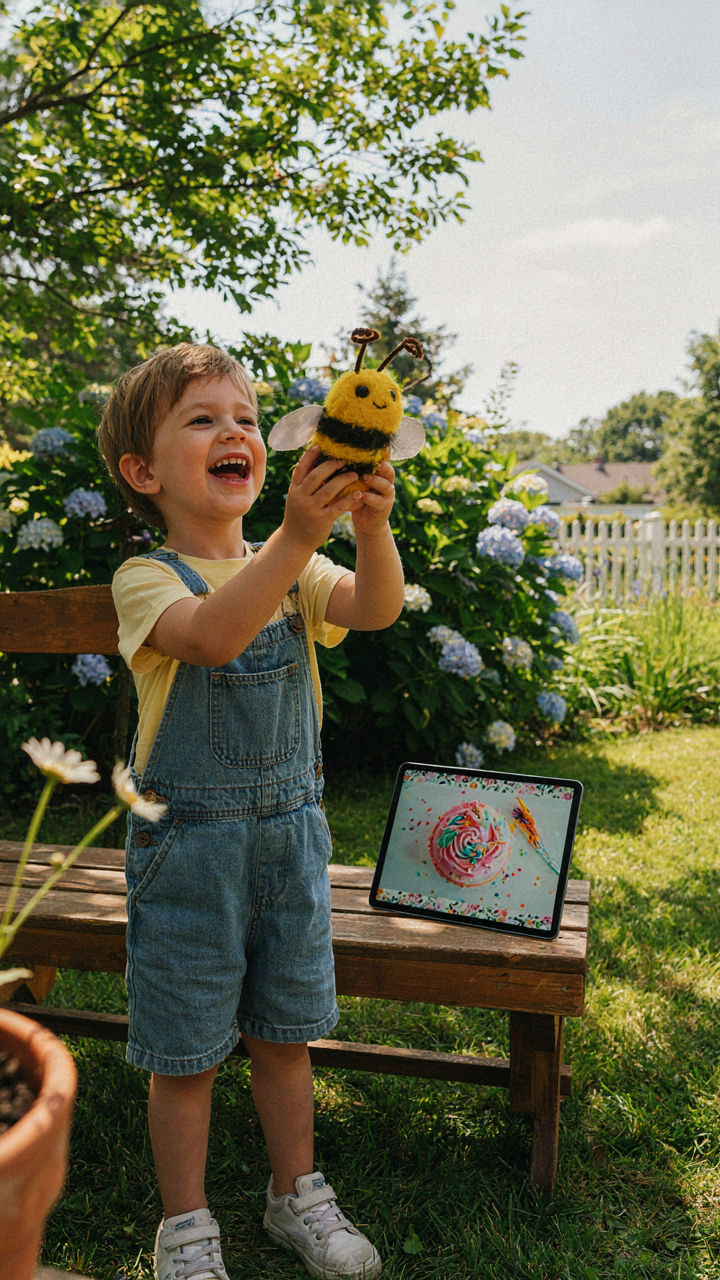
You’re waiting for permission to throw the bumble bee garden birthday nobody’s seen before. Stop. Your kid doesn’t care if Pinterest validates your vision. They care that you built something real for them. Pick one detail today that feels authentically yours, not borrowed from some aesthetic blog, and commit to it completely. The magic isn’t in perfection. It’s in the defiance of boring.