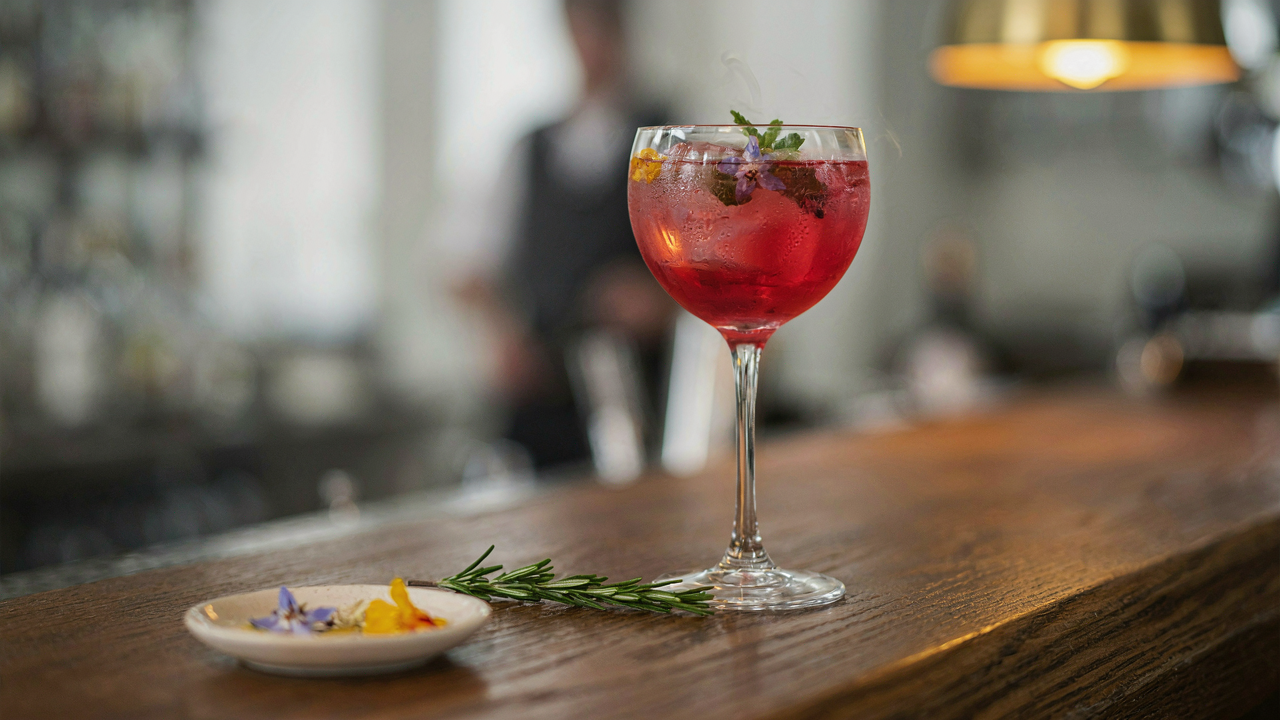
Beyond Basic: The “Fancy Ice Cubes” Fallacy
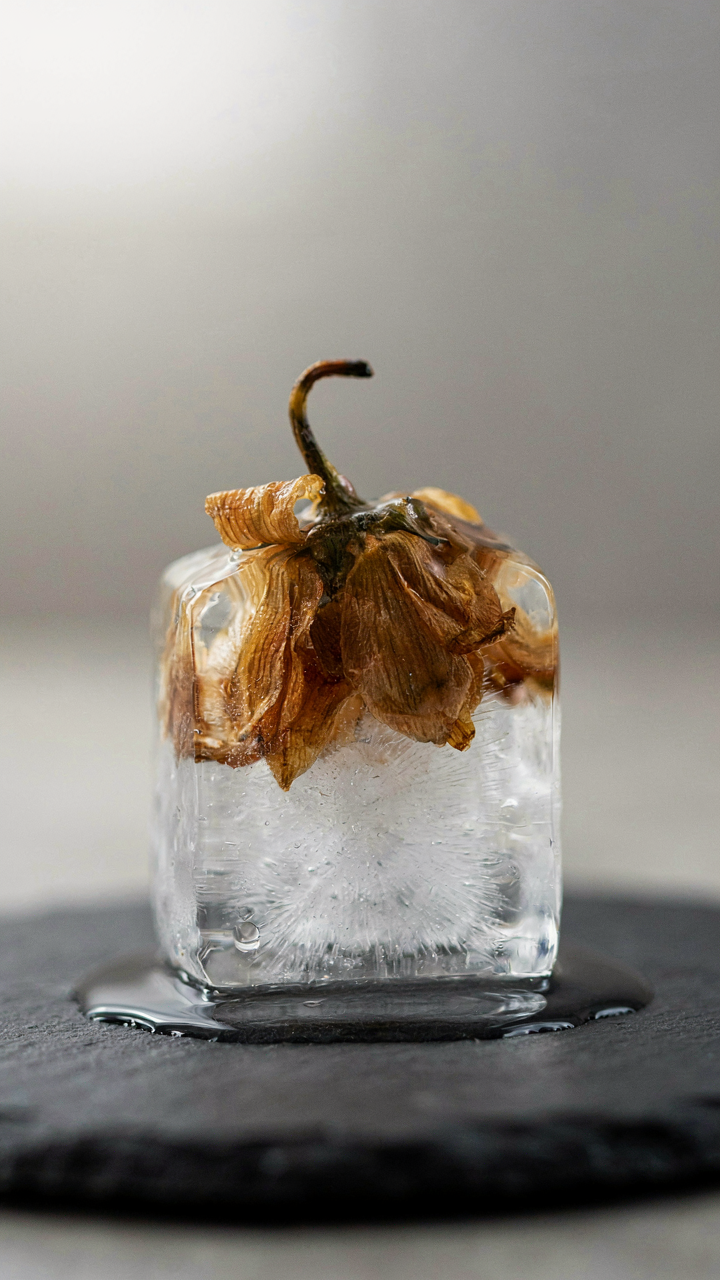
The Real Reason Floral Ice Fails
You want people to notice the effort you put in. That’s the actual motive here, and it’s why most floral and herb ice cubes disappoint. The mechanism is simple: freezing flowers and herbs kills their visual impact. Color fades. Petals brown. Leaves lose definition. What looked vibrant in your planning document looks muted in the glass because water freezes from the outside in, and ice crystals scatter light differently than liquid does. The freeze changes everything.
Most guides tell you to use fresh flowers and herbs, then wonder why the result looks dull. They’re right about the input but wrong about the physics. You need to understand that ice is a diffuser, not a display case. The light scattering through frozen water obscures detail. Thin petals become shadows. Delicate herb leaves vanish into the crystalline matrix. Start freezing flowers anyway and you’ll learn this the hard way. Better to know the constraint upfront.
Visual Impact Beats Decoration By Design
Contrast is not decoration. It’s the operating principle of visual systems in design and neurology alike. Your eye locks onto edges, color shifts, and density changes, not on objects floating inside objects. This is why a single dark petal registers more than a full bouquet buried in ice. Sparse placement works because it creates visual tension. Crowding the cube with botanicals creates visual noise that reads as “tried too hard” or worse, “nothing to see.”
The protocol is ruthless simplification. Choose one element per cube. One herb sprig. One flower head. Position it near the surface where light actually hits it. Freeze in stages if needed, building layers so your botanical sits at the interface between ice and water, where refraction works for you instead of against you. This isn’t decoration. It’s strategic placement. Execute this and your ice cube becomes a talking point instead of a throwaway detail.
The Botanical Alchemy: Crafting Floral Ice Cubes That Impress
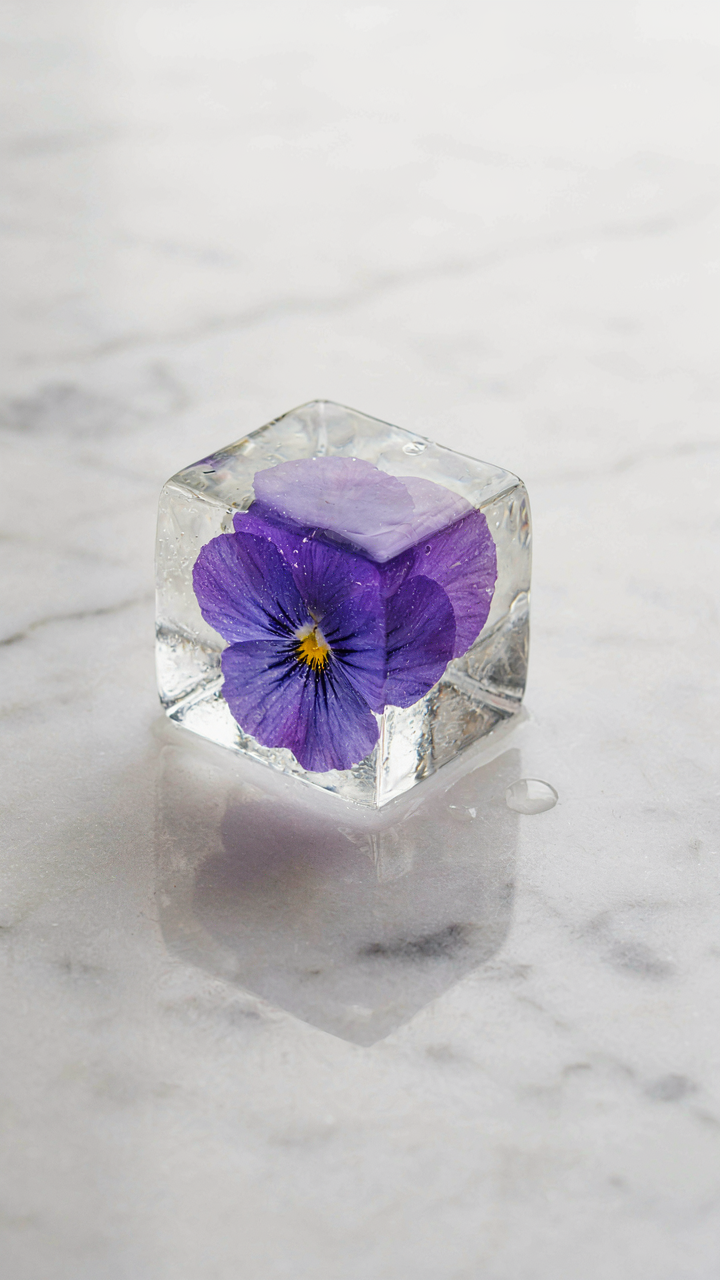
Which Flowers Actually Work
You want people to notice the flowers in your ice. That’s the real reason you’re reading this section. The mechanism is simple: not all edible flowers survive freezing without turning brown or dissolving. The cell structure matters. Pansies, violas, and roses have thick enough petals to hold shape and color through the freeze-thaw cycle. Nasturtiums and calendula work too. The key is sourcing from places that didn’t spray them with pesticides meant for ornamental use, not consumption. Buy from specialty food suppliers or grow them yourself. One flower per cube looks intentional. Overcrowding looks like you didn’t plan this.
Freezing happens in stages. Position the flower after the first shallow freeze, when water is slushy but not solid. This keeps petals centered and prevents them from floating to the top. A two to four hour initial freeze, then flower placement, then another twelve hours creates the cleanest result. Clear ice matters here more than anywhere else in the decorative game. Cloudy ice hides botanical detail. Use distilled water and freeze slowly in a standard freezer compartment to minimize cloudiness. The flower becomes the focal point only if you can actually see it clearly.
Herb Strategy Beyond Flavor
Herbs function like botanical architecture in ice, not seasoning delivery systems. The distinction is critical. You’re not trying to infuse flavor that will taste like a mojito. You’re using herbs as visual structure that hints at a flavor direction. Mint, basil, rosemary, and thyme freeze well because they’re sturdy. Their leaves don’t collapse or discolor. They photograph clearly and signal intentionality to the drinker before taste even enters.
Placement determines whether herbs read as accidental or designed. A single sprig running vertically through the cube’s center creates visual hierarchy. Multiple herb fragments scattered throughout look chaotic. Layer herbs at different freeze stages if you want them distributed: place some at the initial slush stage, more at the halfway point, then final placement before the last freeze block. This spreads them through three dimensions instead of clustering at one level. The herb releases minimal flavor into the drink, maybe a whisper of its oil on the first sip. That’s the point. The ice should be seen first, tasted second.
The Crystal Clarity Protocol: Unlocking Aesthetic Ice Cubes
Directional Freezing For Transparent Blocks

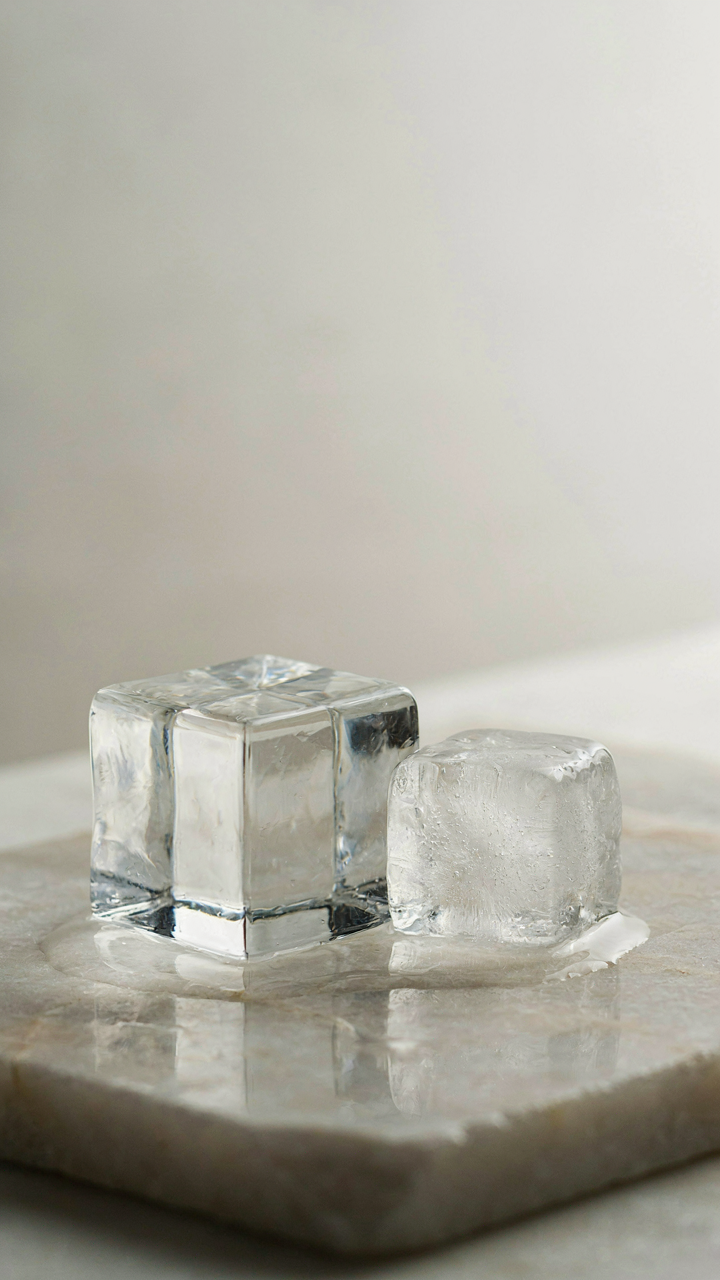
You want clear ice because cloudiness signals amateur hour, and nobody admits they’re serving cloudy ice at a dinner party. Here’s the mechanism: directional freezing mimics heat transfer physics. Heat always moves from warm to cold. When you freeze ice uniformly from all directions at once, dissolved gases and impurities get trapped in the middle as they have nowhere to escape. Directional freezing forces those contaminants toward one end, leaving the rest transparent.
The method is simple. Fill a cooler with ice, then place your mold or container on top so only one side freezes down into the cold. Water freezes from bottom upward. Impurities concentrate at the top surface you can discard later. This works because you’ve created a heat gradient that moves in one direction only. Commercial ice makers use this principle. You replicate it with basic insulation and patience, freezing over 18 to 24 hours instead of 4 to 6.
The Boiling Water Method Debunked
The advice to boil water before freezing is everywhere and mostly wrong. Boiling removes some dissolved gases, but it doesn’t stop new air from entering when the water cools. What actually matters is mineral content and freezing speed. Distilled or filtered water produces clearer results than tap water because it has fewer dissolved solids to scatter light. But boiling tap water doesn’t turn it into distilled water.
The real alternative is filtration before freezing. Run tap water through a standard pitcher filter or buy distilled water outright. Combine this with directional freezing and you eliminate the primary culprits of cloudiness. Skip the boiling ritual. Buy the right water, control the freeze direction, and accept that perfect clarity takes time. This is the actual protocol: filter, freeze slowly in one direction, then cut away the cloudy end if needed.
The “Beautiful Ice Cubes” Engineering Principle

How Light Bends Through Frozen Water

You want people to think you’re the kind of person who notices details. That’s the real reason you care about this section. Here’s what actually matters: physics calls this refraction, and decorative ice cubes are just frozen vessels for controlling how light behaves inside a drink.
Clear ice bends light differently than cloudy ice. The density and crystal structure determine the angle at which light enters and exits the cube. A flower suspended inside creates multiple surfaces for light to pass through, multiply, and scatter. When light hits the flower through ice, it refracts at the ice-water boundary, at the flower surface itself, then again as it exits. This layering creates depth perception. The cube stops being a solid object and becomes a prism that makes the flower appear larger, closer, or more vivid than it actually is. You’re not paying for ice. You’re paying for controlled light manipulation.
How Placement And Symmetry Shape Perception
Nobody talks about this directly, so here it is: the human eye reads order as intentionality, and intentionality reads as competence. Placement of the flower or herb inside the ice cube isn’t decorative. It’s a positioning system that determines whether the viewer’s attention lands on the object or drifts away.
Center placement triggers recognition instantly. The eye locks on. Off-center placement creates visual tension, which makes the brain work harder to process what it sees, which means more memory encoding. A flower pressed against one wall of the cube reads as trapped or studied. A flower floating in the middle reads as weightless or suspended in time. The symmetry of the cube itself does the heavy lifting here. Your brain expects balance in geometric objects. When you deliver that expectation met, the viewer perceives quality without consciously knowing why. Freeze the flower slightly off-center but with clear space on all sides, and you trigger maximum visual interest with zero extra effort.
Flowers In Ice Cubes: Beyond The Garnish, Towards Intentional Design
Strategic Flower Placement For Maximum Drama

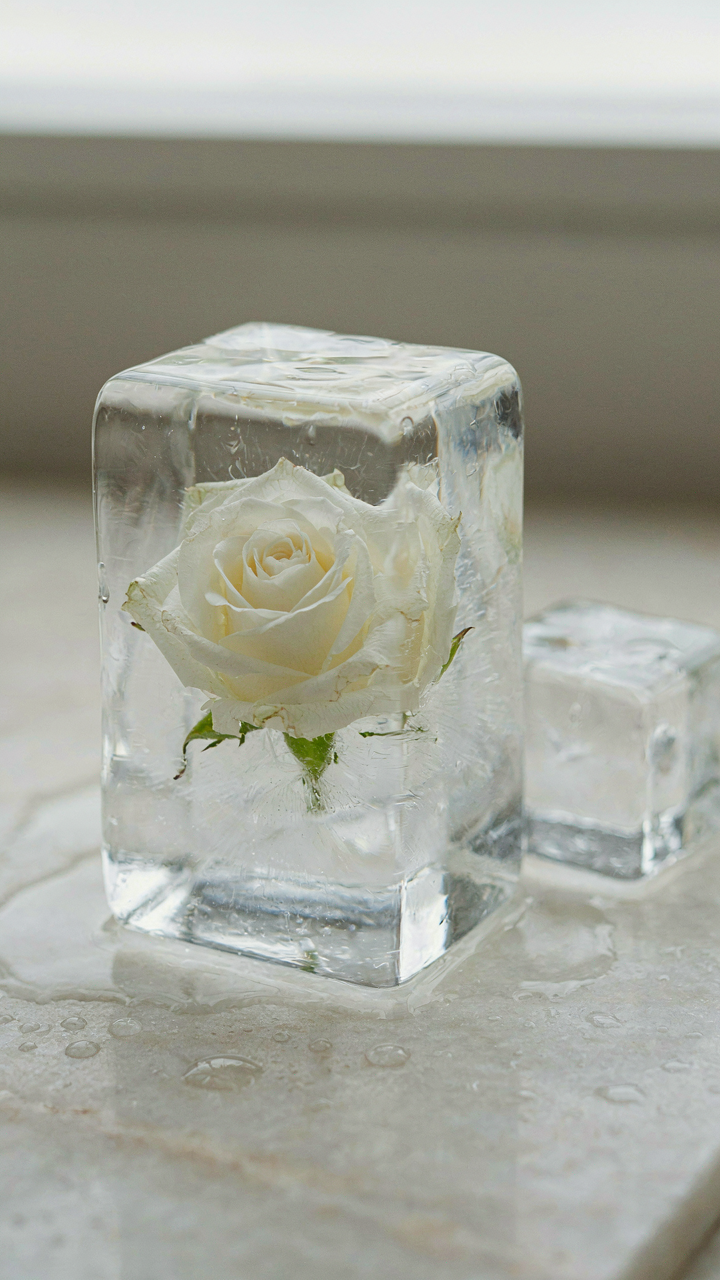
You want people to notice what you made. That’s the real reason you care about placement. The mechanism is simple: human vision processes contrast and centrality before detail. A flower buried in the cube reads as accident. A flower positioned at the surface dome or suspended at eye level reads as intent.
Placement determines whether the flower becomes a design element or visual noise. Flowers frozen at the top third of the cube catch light first and occupy the viewer’s focal point when the glass sits on a table. Position matters because it controls what the eye lands on before the brain registers anything else. The flower must be visible the moment the drink arrives.
Layering Techniques: Depth And Visual Storytelling
Graphic design uses the principle of foreground, middle ground, and background to create visual hierarchy. Ice cubes use the same principle through vertical freezing stages. Most people freeze everything at once and wonder why it looks flat. The real answer: you build depth by freezing in sequential layers, which places objects at different visual distances even though they’re in the same cube.
Freeze the bottom layer solid with water only. Add your first flower or herb to the second layer when ice reaches halfway. Finish with a clear top layer or a contrasting botanical element. This creates apparent depth that makes the cube read as intentional composition rather than random suspension. The layering protocol turns a cube into a three-dimensional frame where each element occupies its own visual plane.
The “Pretty Ice Cubes” Paradox: Simplicity As Sophistication

One Element, Maximum Impact

You want people to notice the effort without seeing the work. That’s the real motive here. Most people load decorative ice cubes with too many elements because they confuse busy with impressive. It doesn’t work. The mechanism is constraint, borrowed from graphic design: removing options forces each remaining element to carry all the weight.
A single edible flower suspended in clear ice reads as intentional. Add three flowers, a sprig of mint, and a berry, and it reads as indecision. Professional bartenders and event designers learned this decades ago. One element forces clarity. The viewer’s eye doesn’t scatter. The ice cube becomes a focal point instead of visual noise.
Negative Space And Restraint
Empty space is not wasted space. It’s the inverse of what most hosts assume. The gap between the flower and the edge of the cube matters more than the flower itself. This principle comes from Japanese design philosophy, which treats emptiness as active composition, not absence.
A cube that’s fifty percent ice and fifty percent air around a single petal reads premium. A cube packed solid reads desperate. The viewer interprets negative space as confidence. You’re not compensating for anything. You’re making a choice. Freeze a small pansy in the center of a clear cube, leaving the perimeter empty and clean. That’s the standard protocol.
Advanced Formulations: Fancy Ice Cubes Ideas For The Elite Host
Fruit And Citrus Integration For Visual Depth

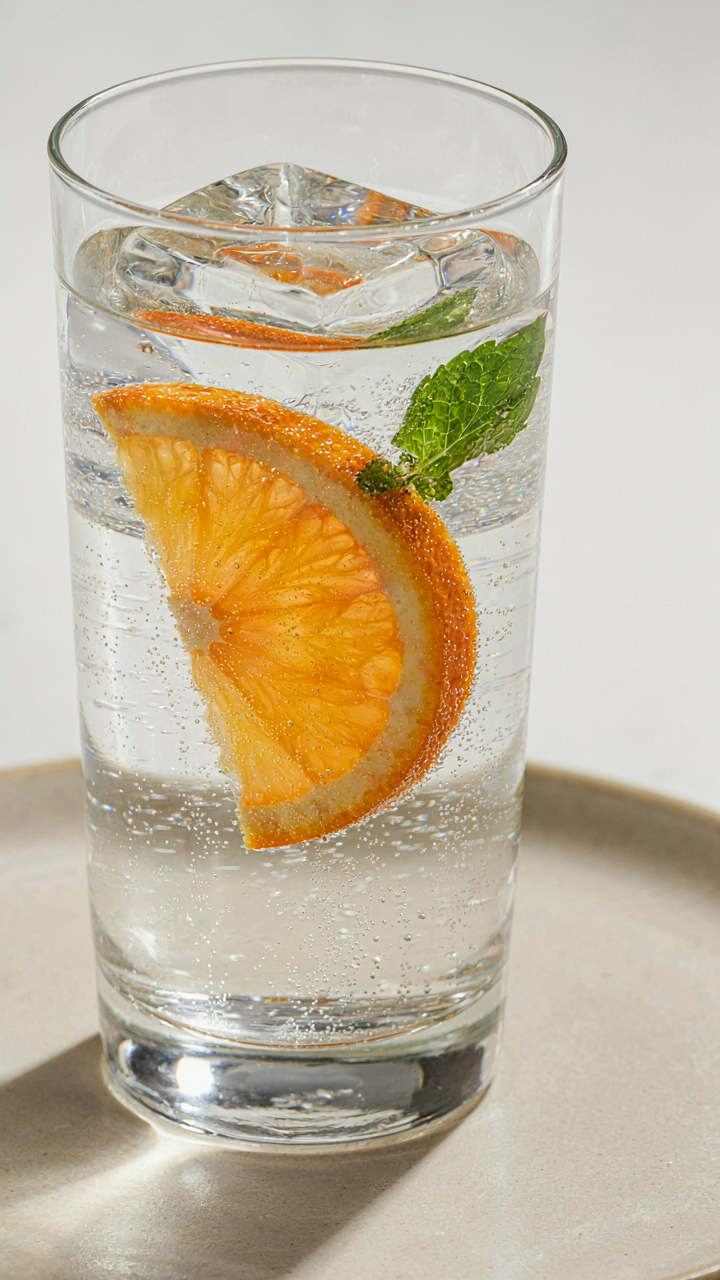
You want people to notice your ice. That’s the real reason you’re reading this section. The mechanism is simple: contrast. Fruit and citrus trapped in ice create visual separation between the drink and the cube itself, which signals intentionality. Generic clear ice reads as negligence. Embedded fruit reads as control.
The common move is to freeze a whole strawberry or raspberry and call it done. That’s lazy. The fruit oxidizes, browns, and loses color integrity within hours of freezing. Blanch citrus slices in boiling water for 30 seconds before freezing. This sets the color, kills bacteria, and prevents browning. Use thin slices, not wheels. Thin geometry freezes uniformly and creates the visual layering effect that actually catches light in a glass.
Spices And Extracts For Sensory Disruption
Think of flavor layering like chemistry: each compound has a melting point and a release mechanism. Spices in ice are a delivery system, not decoration. Whole spices (star anise, cardamom, cinnamon stick) survive the freeze intact and release gradually as the cube melts into the drink. Ground spices cloud the ice and muddy the visual effect, which defeats the entire purpose.
Extracts require precision. A single drop of high-quality vanilla or almond extract per cube is enough. Too much and the ice tastes medicinal. The extract distributes unevenly in water, so freeze it in a thin syrup base first, then pour that mixture into your mold. This ensures even dispersal. Freeze in stages if needed: syrup base first, let it set partially, then top with plain water. The result is ice that transforms the drink’s flavor profile as it melts, not ice that overpowers it from the first sip.
The “Floral Ice” Preservation System
Airtight Containment Stops Freezer Burn

You want your ice to look flawless when guests arrive because melted or cloudy ice signals you didn’t plan ahead. Here’s the mechanism: freezer burn happens when water sublimes directly from ice to vapor in dry air. Think of sublimation as physics’ version of erosion—the solid skips the liquid phase and disappears into the atmosphere. Flowers and herbs trapped inside become visible casualties of this process, their colors fading and edges drying out.
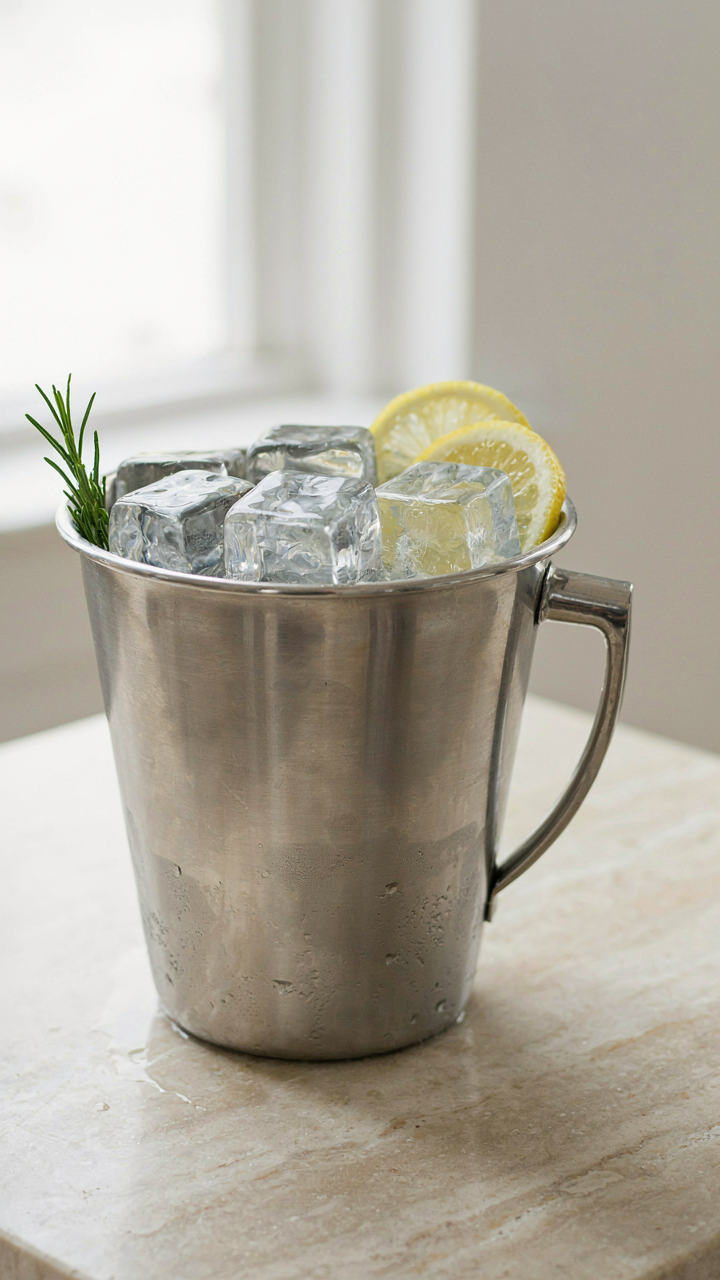
Store finished cubes in airtight containers, not loose in bins. Freezer bags work if sealed properly, but rigid containers with locking lids create the true barrier. Stack cubes in a single layer when possible to prevent pressure damage. The seal matters more than the temperature. Ice stored at zero degrees Fahrenheit in an open tray degrades faster than ice stored at five degrees in a sealed container because airflow accelerates sublimation.
Timing The Freeze For Maximum Clarity
The common advice about “freezing in stages” is incomplete. What actually matters is water temperature and mineral content when you start. Distilled water freezes clearer than tap water because it contains fewer dissolved particles that scatter light and create cloudiness. Freeze your floral inserts in the first stage, then add your base liquid in the second stage to prevent flowers from floating or shifting positions.
Make your cubes no more than four hours before serving. Ice doesn’t deteriorate instantly, but every hour in a freezer exposes it to humidity fluctuations and temperature cycling from the door opening. Store cubes at the back of the freezer where temperature remains most stable. Remove them only when you’re ready to use them. The longer ice sits exposed to air between removal and serving, the faster sublimation accelerates.
The Decorative Ice Cubes Deployment Strategy
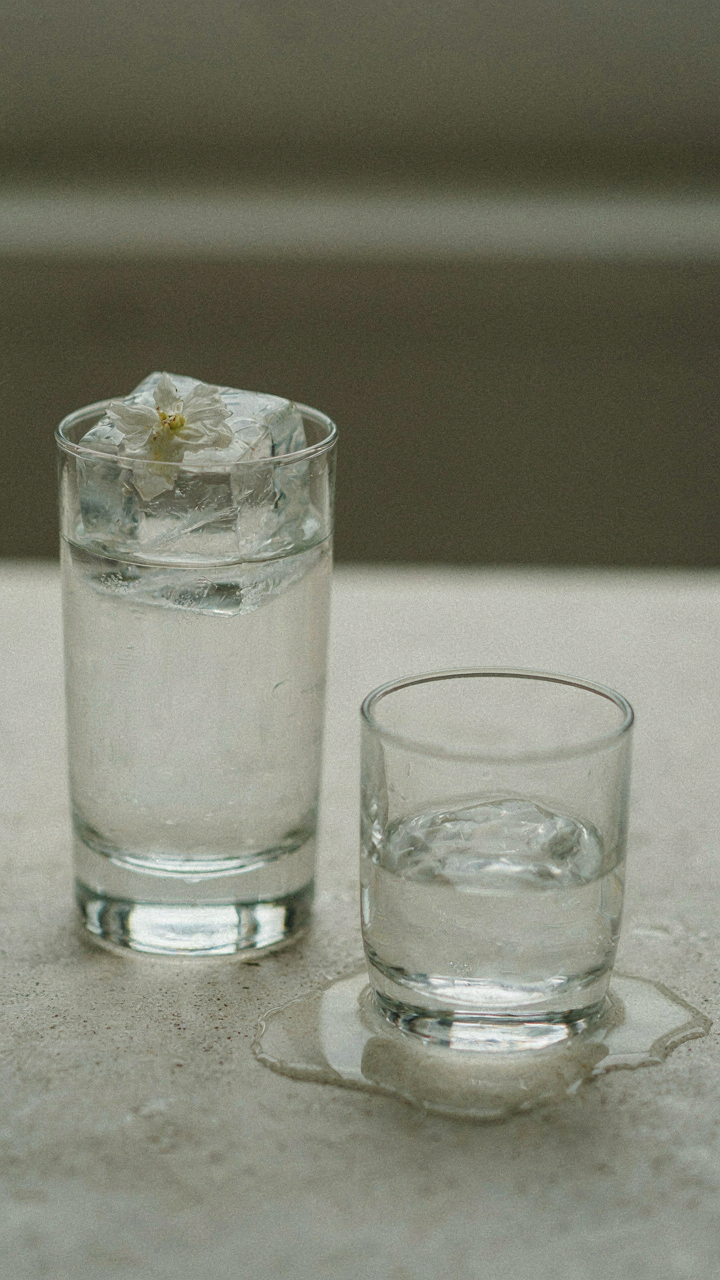
Matching Ice To Drink Profile

You want people to think you sweated the details. That’s the real reason you’re reading this. The mechanism is simple: ice composition and cube size determine melt rate, dilution speed, and visual clarity, which either complement or sabotage your drink’s flavor profile.
Spirits-forward drinks (whiskey, mezcal, cognac) need slow melt. Larger cubes or dense ice blocks reduce surface area and preserve proof longer. Cocktails with citrus or modifiers tolerate faster melt because dilution actually brightens acidity. Decorative cubes with embedded botanicals work best in lower-ABV drinks where the visual element carries weight without the melt becoming a liability. The ice isn’t decoration first. It’s a functional component that either enhances or destroys what’s in the glass.
Pre Batching And Service Logistics For Events
Batch-making decorative ice cubes eliminates the bottleneck that kills event flow. Most hosts freeze cubes the morning of, then wonder why they’re gone by hour two. The real play is production timing and storage protocol.
- Freeze in layers: Pour plain water first, freeze solid, then add your floral or herb layer on top. This prevents botanicals from floating and ensures visual clarity at the cube’s surface where it matters.
- Start production 48 hours ahead: One batch per day minimum. Decorative cubes take longer to set than standard ice because embedding material slows freezing. Buffer for failure or melt.
- Store in sealed containers: Stack finished cubes between parchment in airtight boxes. Exposure to freezer air causes frost buildup and cloudiness that ruins the visual payoff.
- Calculate by drink volume, not guest count: One 2-inch cube per 2 ounces of liquid. A 100-person event with mixed drink sizes needs 400-500 cubes minimum. Most people underestimate by 40 percent.
- Transfer to insulated buckets 30 minutes before service: Don’t serve from the freezer. Cubes sweat in room-temperature buckets and separate visually from each other, making them easier to grab and reducing melt-together clumping.
The difference between smooth service and chaos is knowing exactly how many cubes you need and when they’ll be ready. Set a production calendar the week before. Assign one person to monitor inventory during the event. Refill the service bucket every 45 minutes, not when it’s empty.
Beyond The Cube: The “Flower Ice Cubes” End Game

What Happens After The Melt
You want to feel like you didn’t waste money on a single-use product. That’s the real tension here. The mechanism is simple: melted flower ice cubes leave behind botanical material and diluted liquid that most people dump without thinking. But that runoff has actual uses if you design the freezing process with extraction in mind.
When flowers freeze in distilled water, they release subtle compounds as they thaw. Collect this liquid separately and use it as a base for simple syrups, tea infusions, or even skin toner if you used culinary flowers. The spent petals themselves work as compost accelerators or dried tea blend components. This transforms waste into a secondary product stream rather than garbage.
The Mold Question Nobody Wants To Answer
Reusable molds cost three to five times more upfront but eliminate the resource drag of single-use plastic molds. That’s economics speaking, not environmentalism. Most people buy disposable trays because the pain is immediate but invisible, while reusable molds require repetitive washing and storage space that feel like friction.
The real trade-off: silicone molds last indefinitely but collect residue in crevices and require aggressive cleaning between batches. Plastic disposable molds create landfill debt but demand zero maintenance. If you’re making flower ice weekly, reusable wins on cost and material volume within six months. If you’re doing it twice a year, disposable molds waste less of your time. Pick based on frequency, not guilt.
The Real Problem Isn’t Your Ice; It’s Your Fear Of Standing Out
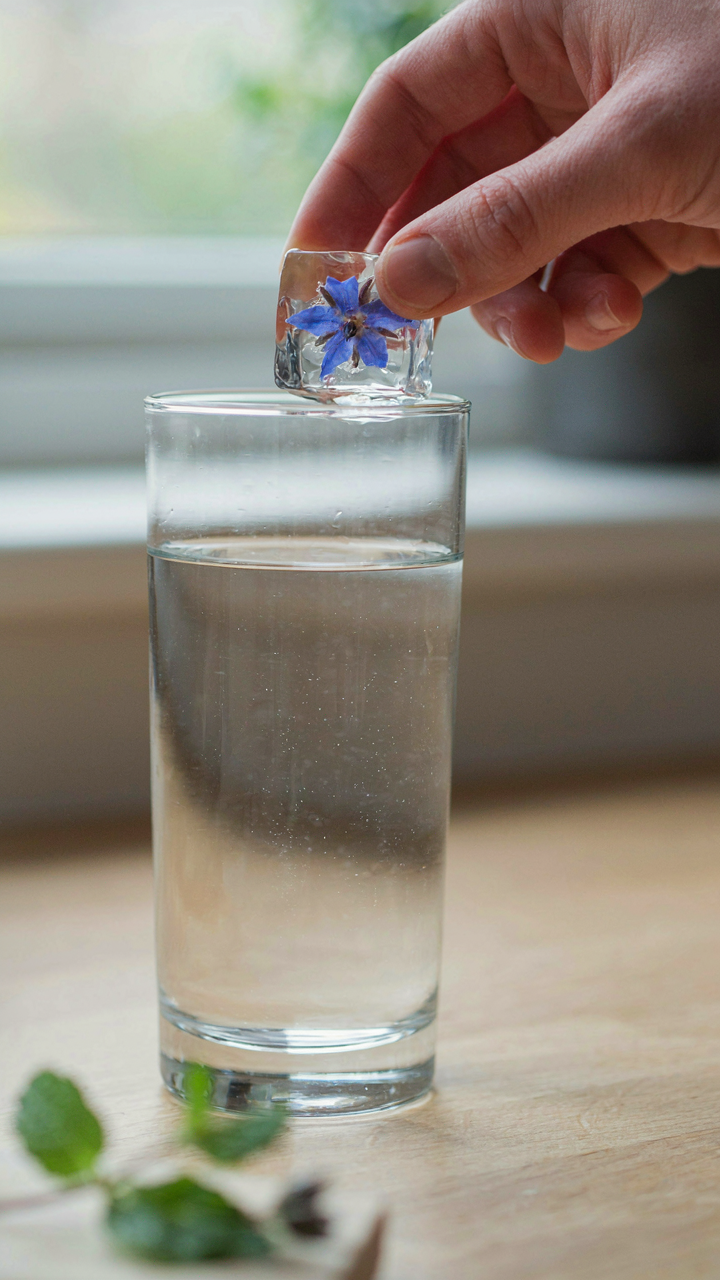
Most people serve forgettable drinks because they’re terrified of looking like they tried. A flower frozen in ice isn’t pretentious. It’s permission. Tonight, fill one ice cube tray with water, drop in edible flowers or mint, freeze it, and serve one drink differently. Watch what happens when someone actually notices something at your table. The difference between memorable and invisible isn’t effort. It’s deciding your guests matter enough to care.