
Email Marketing Strategies for Event and Garden Businesses
Email marketing is a powerful tool that can drive success in both event planning and home garden businesses. By crafting targeted and clear messages, you can attract more customers and keep them engaged. This article will cover specific strategies for email marketing campaigns suited to these industries.
You’ll learn how to set up your email campaigns, what content works best, and how to measure success. Whether you’re new or experienced in email marketing, these steps will help you improve your results and grow your audience.
Setup Email List Essentials
Building and organizing an email list for event planning and home garden businesses involves more than just gathering addresses. You want a list that’s accurate, up-to-date, and made up of people genuinely interested in what you offer. This means obtaining consent is crucial. Think about crafting clear signup messages explaining what subscribers should expect—newsletters, offers, or event updates.
For event planners, segmenting based on event types—weddings, corporate events, or local workshops—can be useful. Meanwhile, home garden enthusiasts might fall into groups like vegetable growers, flower lovers, or landscape designers. These divisions help you send tailored content that resonates.

Also, maintain your list by pruning inactive emails periodically. That keeps your campaign’s engagement strong. It’s tempting to keep every email, but quality beats quantity in this game.
Methods To Collect Quality Emails
Getting quality email addresses requires precision and respect for privacy. Use signup forms on your website where visitors clearly see what subscribing involves. For event planners, forms embedded on event registration pages can be gold mines. Social media platforms offer another channel—posting links to your signup form or running contests asking for emails works well.
Don’t overlook offline methods either. If you host a gardening workshop or a pop-up event, capture emails with physical signup sheets or digital tablets. Always inform people how you intend to use their addresses; this builds trust and fosters longer-term relationships.
Segmenting Lists For Better Results


Segmentation isn’t just a nice-to-have; it’s key to hitting the right notes with your audience. Why send generic messages when you can talk directly to a group’s specific interest? You could split your list by customer behavior—past event attendees, recent buyers, or those who’ve clicked particular links.
Imagine sending an exclusive gardening tips newsletter to customers who purchased seeds last season, while event planners get insider invites to upcoming expos. It’s about relevance, and that’s what drives opens and clicks.
Of course, choosing the right criteria can be tricky and sometimes the lines blur—someone might be into garden events as well as home planting. A bit of overlap is normal and can be strategically used to cross-promote.
Craft Clear And Compelling Content

When you write emails for event planning or home garden audiences, your words carry weight. The tricky part is capturing attention quickly. Emails live in crowded inboxes. So, your content must be easy to scan, interesting enough to pause on, and strong enough to push action.

Keep sentences short and to the point. Long, winding explanations lose readers fast. Say what matters upfront, then offer necessary details without wandering off topic. Think about your reader’s time—make it count every line.
A clear call to action directs what the reader should do next. Don’t make them guess. Use commands like “RSVP now,” “Get your seeds,” or “Reserve your spot.” These phrases guide and prompt readers to respond immediately, rather than wait or forget.
Personalization isn’t just tossing in a name. That’s basic. Better, refer to something specific like a past event they attended or a gardening product they purchased before. This kind of relevance sparks more interest and makes the message feel less generic.
For example, mentioning “We noticed you enjoyed last year’s spring planting workshop…” connects better than a cold, “Join our workshop.” Personal touches require some effort but often lead to higher open and conversion rates.
Schedule Emails At Optimal Times


Timing your emails can make a noticeable difference in how many people actually open and click through them. In event planning, folks often check their emails mid-morning or early afternoon—maybe around 10 a.m. or 2 p.m.—when they’re settled in but not yet swamped. For home garden enthusiasts, evenings might work better since they may browse emails after dinner, around 7 or 8 p.m. But these aren’t hard rules. Audience habits can vary quite a bit.
Looking at data, emails sent on Tuesdays and Thursdays tend to get more attention across various industries. Weekends, surprisingly, often see lower engagement, perhaps because people disconnect or focus elsewhere. Yet, some garden-focused campaigns get decent opens early Saturday mornings when aficionados plan their weekend projects. It’s an interesting twist worth remembering.
Instead of sticking rigidly to popular time frames, try different sending windows. Send emails at several times over a few weeks, then compare open and click rates. You might discover, say, your event planning clients respond better on Friday afternoons, or your gardening community is more engaged first thing Monday. Testing is the key here. Don’t assume your audience matches general trends. Experiment with timing; it’s one of the simplest ways to tweak your campaign’s impact without extra cost or fuss.
Avoid Spam Filters And Failures
You’re probably wondering why some of your emails vanish into spam folders while others land perfectly in the inbox. It’s a tricky business. A big part comes down to your email reputation—basically, how trusted your sending domain and IP address are by email providers. If recipients mark your emails as spam even a few times, your reputation takes a hit and future emails face a tougher time.

Content also plays a crucial role. Emails overloaded with suspicious links, oddly phrased text, or lots of images compared to words may raise red flags. And, let’s not forget the technical foundation. If you haven’t set up proper authentication records like DKIM (DomainKeys Identified Mail) and SPF (Sender Policy Framework), it’s easier for providers to mark your emails as spam. These records essentially tell email servers, “Yes, this email is legit.”
To be honest, dodging spam isn’t an exact science. Even a careful approach might fail sometimes. But taking care with your reputation, content, and technical setup will make your emails perform a lot better in the long run.
Technical Setup To Improve Deliverability
Authentication records are more than just technical jargon—they’re your ticket to trust. SPF records, for instance, specify which servers can send emails on your behalf. Without these, your emails might look suspicious.
Then there’s DKIM, a method that adds a digital signature to your emails, proving they haven’t been tampered with. Setting these up usually involves adding specific DNS records through your domain provider. Yes, it might sound a bit daunting, but most email services provide straightforward guides or support to get you through.
Once properly implemented, these records increase the likelihood of your email reaching the inbox instead of being diverted.
Content Practices To Stay Out Of Spam

Content-wise, picky filters watch for certain “spammy” phrases like “free,” “guaranteed,” or “act now.” Using these repeatedly can backfire. Instead, aim for natural language and honest offers.
Balance between text and images matters too. An all-image email might look nice but can trigger filters because spammers often disguise messages this way. A good rule is to keep at least 60% of your email as readable text.
Other tips include limiting the use of excessive punctuation (no triple exclamation marks), avoiding large attachments, and making sure your unsubscribe link is clear. After all, respecting your reader’s choices goes a long way.
Track Email Metrics Effectively

When it comes to event planning and home garden businesses, some email metrics deserve your close attention more than others. Open rates, for example, tell you how many recipients actually viewed your email. This matters because if people don’t even open your message, nothing else counts. You might find typical open rates hover around 20% to 30%, but it really varies. If your rate dips below that, it’s time to reevaluate your subject lines or sender name.

Click rates reveal if your content interests readers enough to engage further. For home garden newsletters, a click on a DIY tutorial link or plant sale works differently than for event invites where attendees might register or RSVP. If clicks are low, maybe your call-to-action isn’t clear or appealing enough.
Bounce rates measure emails that couldn’t be delivered. A high bounce rate could mean outdated contact lists or typos. Keeping this in check is essential for maintaining your sender reputation and ensuring future messages land in inboxes.
Key Metrics To Monitor
Here’s a quick rundown of what to watch:
- Open Rate: Indicates interest in your subject line and sender identity. Benchmark generally around 20-30%.
- Click-Through Rate: Shows engagement with your email content. Typically lower, around 2-5% is common.
- Bounce Rate: Reflects email deliverability issues. Aim for under 2%.
Tracking these helps you identify where your campaign falters.
Using Data To Improve Campaigns
After collecting your metrics, don’t just stare at numbers—act on them. If your open rates are disappointing, experiment with different subject lines—try questions or urgency. Content-wise, mixing up text and visuals could boost clicks. Timing plays a part. Sending emails early mornings versus evenings might yield surprising differences. Also, segmenting your audience—separating loyal customers from casual browsers—can personalize messaging and improve results.

You might feel overwhelmed at times, but even small tweaks can create noticeable improvements. What if your bounce rate spikes suddenly? That could signal bad data, which means it’s time to clean your email list. Consistent monitoring feeds smarter decisions, but beware: some patterns aren’t clear-cut. Balancing data interpretation and intuition matters as much as numbers themselves.
Compare Email Platforms For Your Needs
Picking the right email marketing platform can feel a bit like a puzzle, especially when your needs span event planning and home gardening. Mailchimp is often the go-to, with a user-friendly interface and plenty of templates. For smaller teams or solo planners, its free tier is pretty appealing, though the pricing escalates for larger lists. Constant Contact leans into reliable customer support and easy event integration, but its design options might feel a bit limited if you want something flashier.
Others like Sendinblue offer solid automation features and a pay-as-you-go pricing model, which could be handy if your email frequency varies. On the flip side, platforms like ActiveCampaign provide powerful segmentation and CRM tools, though they come with a steeper learning curve — not ideal if you’re not tech-savvy.
Here’s a more practical way to think about it:
- Small teams or solo: Mailchimp or Constant Contact — easier to use and budget-friendly.
- Growing teams with some marketing skill: Sendinblue offers decent automation without overwhelming complexity.
- Established businesses with dedicated marketers: ActiveCampaign or HubSpot can handle advanced needs but take longer to master.
So, what really matters? If you’re juggling a busy event schedule or seasonal garden promotions, you might prioritize ease of use and template variety. If you want to segment your audience finely — say, separating hardcore gardeners from casual plant enthusiasts — then advanced features can pay off. Pricing often depends on subscriber count, so be cautious about platforms that lure you in with low starting rates that spike quickly as your list grows.
Have you noticed how some platforms seem straightforward but hide costs or limit what you can do? It’s worth trying free trials before deciding. Sometimes, a simpler tool gets the job done better than a complex but feature-packed one you barely use.
Steps To Build Audience Trust

Building trust with your audience through email marketing isn’t just a checkbox task—it’s more like a slow, careful dance. You start with transparency. Being upfront about who you are and what subscribers can expect from your emails goes a long way. For example, when planning events or sharing home gardening tips, clearly state how often you’ll be emailing and what kind of content will come their way. Nobody likes surprises in their inbox.
Consistency in delivering value keeps people opening your emails. Regularly sharing practical, relevant content helps too. If your subscribers know they’ll get useful event-planning checklists or handy gardening advice each week, they’re less likely to drift away. Maybe toss in some personal touches, like a quick story about how a gardening tip worked out in your backyard. It makes your messages feel less robotic.
Respecting subscriber preferences matters more than you might think. Always make unsubscribing easy and painless. Yes, it can feel counterintuitive—why let people go? But forcing them to stay risks damaging your sender reputation. A clean, willing audience is better than a large, unhappy one. When someone opts out, you’re actually showing respect for their choice, which can leave a positive impression, even if they don’t stick around.
Checklist For Launching Campaigns
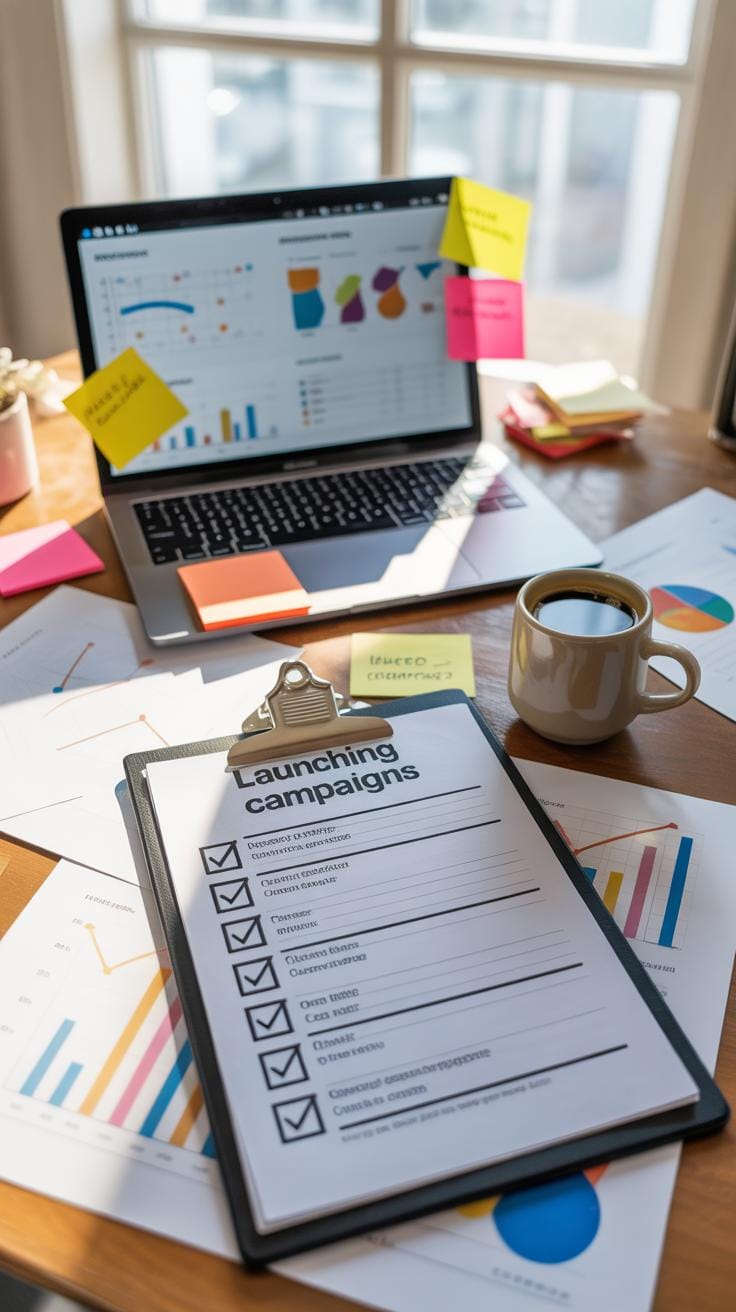
Pre Launch Steps
Before you hit send, there’s quite a bit to do. Start by building and segmenting your email lists carefully. Not everyone interested in home gardening will be keen on event planning updates, so segment by interest, past behavior, or location. This actually improves engagement, believe it or not.
Next, focus on drafting your content. Be clear about your message and goals. You might want to include tips for garden care or early bird ticket offers for events. Don’t forget to set up automation workflows. They save you time and can send follow-ups, reminders, and even birthday wishes — all automatic, which feels personal but effortless.
Testing And Launch
Testing is crucial. Send your email to yourself on different devices. Desktops, tablets, smartphones — each displays emails a little differently. You want your content to look as good on a tiny phone screen as on a desktop. Check images, links, and load times. Does your call to action stand out? Are your subject lines clear?
Finally, run through a sending checklist. Confirm your segments are correct, personalization tags work right, and unsubscribe options are visible. Only then do you truly launch. It can feel daunting, but these steps help you avoid common pitfalls that could tank your campaign before it begins.
Case Study Email Campaign Success

Let’s take a closer look at a campaign by “GreenThumb Events,” a small business that designs outdoor garden-themed parties. Their goal was simple: to boost bookings for their spring event packages and build a stronger connection with gardening enthusiasts often overwhelmed by cluttered inboxes. They focused on a well-defined audience—people aged 30 to 50 who enjoy gardening and want nature-inspired social gatherings.
The strategy was crafted around a series of emails showcasing their unique event setups with vivid photos, plus tips on seasonal plants. They timed each email to coincide with peak gardening times, like early spring and just before major holidays, keeping content timely but not pushy. What caught my attention was their use of subtle personalization—they didn’t just insert names but referenced local plant hardiness zones, making it feel tailored without sounding robotic.
Execution hinged on clean, mobile-friendly design and concise calls to action—no fluff, just clear reasons to book or inquire. The open rates climbed steadily, reaching 40 percent by the end of the campaign, alongside a 15 percent rise in booked events. The key takeaway? Knowing the audience’s rhythm and preferences—and respecting it—seems critical, much more than just blasting discounts or flashy graphics.
Conclusions
Effective email marketing campaigns require clear goals, relevant content, and regular evaluation. By applying focused strategies from this article, you can increase engagement and sales in event planning and home garden niches. Keep messages straightforward and tailored to your audience’s needs.
Test different approaches, track key metrics, and refine your campaigns for continuous improvement. With consistent effort, your email efforts will become a valuable asset to your business growth.